

Vodka and water
Common food

Photo: Wikipedia
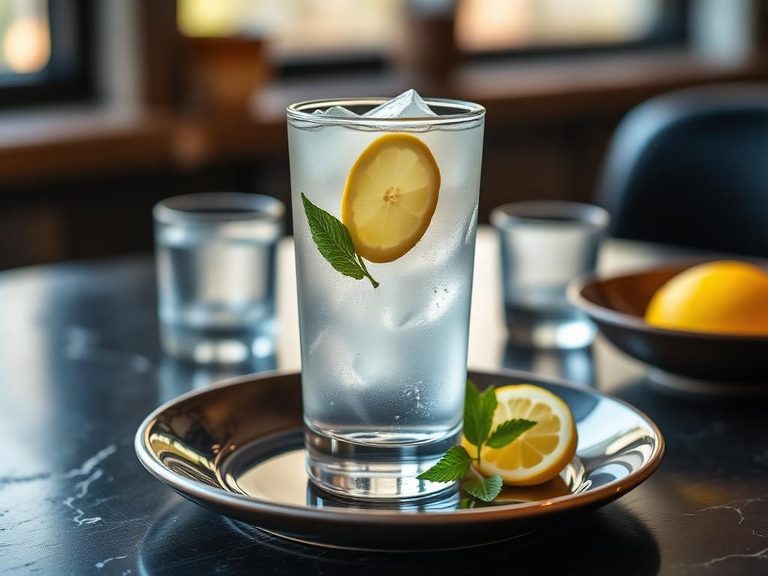
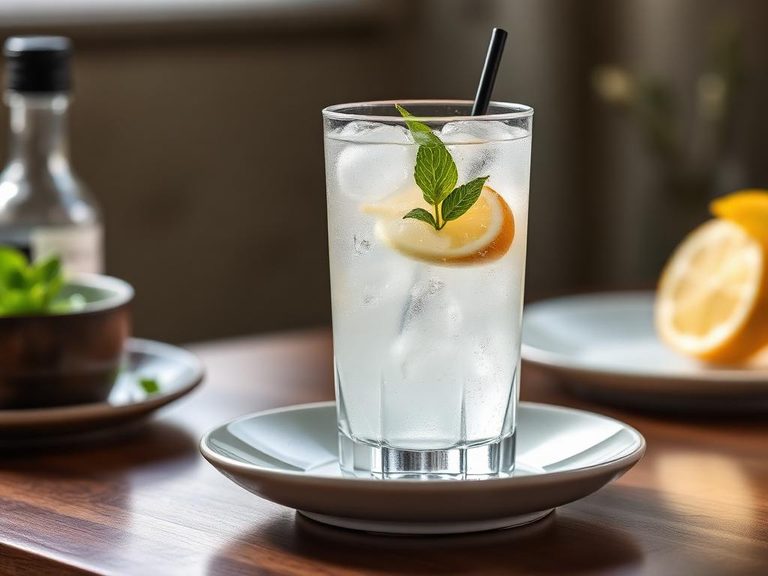
A simple, clear spirit-and-water mix, vodka and water is a crisp, clean, and often chilled beverage with a smooth, slightly sharp alcoholic bite. Nutritionally, it is essentially empty calories, providing 59 kcal per 100g with zero protein, carbs, fat, or micronutrients.
💚 Why it's loved
People love it for its pure, unadulterated simplicity that highlights the clean taste of the vodka itself, and for its cultural role as a straightforward, no-fuss drink often associated with Eastern European and Russian traditions.
⚠️ Watch-outs & how to enjoy it better
The primary downside is the empty calories and potential for intoxication without nutritional benefit, and the alcohol can dehydrate and irritate the digestive system. To counteract this, alternate with a full glass of plain water, consume with a meal containing protein and fat to slow alcohol absorption, and practice strict portion control.
Key benefits
- Low-calorie alcoholic option compared to sugary cocktails
- Gluten-free when made from potatoes, grapes, or corn
- No sugar or carbohydrates
- Hydration benefit from the water component
- Simple, fast to prepare
🍽️ Popular dishes
🌍 Where it's eaten
💡 Did you know?
The name 'vodka' derives from the Slavic word 'voda' meaning water, literally translating to 'little water'.
Full nutrition (USDA data · scales with serving)
| Water | 91.4 g |
| Energy | 59.0 kcal |
| Protein | 0.00 g |
| Total lipid (fat) | 0.00 g |
| Carbohydrate, by difference | 0.00 g |
| Fiber, total dietary | 0.00 g |
| Total Sugars | 0.00 g |
| Calcium, Ca | 2.0 mg |
| Iron, Fe | 0.01 mg |
| Magnesium, Mg | 1.0 mg |
| Phosphorus, P | 1.0 mg |
| Potassium, K | 1.0 mg |
| Sodium, Na | 3.0 mg |
| Zinc, Zn | 0.02 mg |
| Copper, Cu | 0.01 mg |
| Selenium, Se | 0.00 ug |
| Vitamin C, total ascorbic acid | 0.00 mg |
| Thiamin | 0.00 mg |
| Riboflavin | 0.00 mg |
| Niacin | 0.00 mg |
| Vitamin B-6 | 0.00 mg |
| Folate, total | 0.00 ug |
| Folic acid | 0.00 ug |
| Folate, food | 0.00 ug |
| Folate, DFE | 0.00 ug |
| Choline, total | 0.00 mg |
| Vitamin B-12 | 0.00 ug |
| Vitamin B-12, added | 0.00 ug |
| Vitamin A, RAE | 0.00 ug |
| Retinol | 0.00 ug |
| Carotene, beta | 0.00 ug |
| Carotene, alpha | 0.00 ug |
| Cryptoxanthin, beta | 0.00 ug |
| Lycopene | 0.00 ug |
| Lutein + zeaxanthin | 0.00 ug |
| Vitamin E (alpha-tocopherol) | 0.00 mg |
| Vitamin E, added | 0.00 mg |
| Vitamin D (D2 + D3) | 0.00 ug |
| Vitamin K (phylloquinone) | 0.00 ug |
| Alcohol, ethyl | 8.5 g |
| Caffeine | 0.00 mg |
| Theobromine | 0.00 mg |
Fat & fatty acid profile (per 100g)
| Fatty acids, total saturated | 0.00 g |
| SFA 4:0 | 0.00 g |
| SFA 6:0 | 0.00 g |
| SFA 8:0 | 0.00 g |
| SFA 10:0 | 0.00 g |
| SFA 12:0 | 0.00 g |
| SFA 14:0 | 0.00 g |
| SFA 16:0 | 0.00 g |
| SFA 18:0 | 0.00 g |
| Fatty acids, total monounsaturated | 0.00 g |
| MUFA 16:1 | 0.00 g |
| MUFA 18:1 | 0.00 g |
| MUFA 20:1 | 0.00 g |
| MUFA 22:1 | 0.00 g |
| Fatty acids, total polyunsaturated | 0.00 g |
| PUFA 18:2 | 0.00 g |
| PUFA 18:3 | 0.00 g |
| PUFA 18:4 | 0.00 g |
| PUFA 20:4 | 0.00 g |
| PUFA 20:5 n-3 (EPA) | 0.00 g |
| PUFA 22:5 n-3 (DPA) | 0.00 g |
| PUFA 22:6 n-3 (DHA) | 0.00 g |
| Cholesterol | 0.00 mg |
Amino acid profile (per 100g)
Estimated from Alcoholic beverage, distilled, all (gin, rum, vodka, whiskey) 86 proof — USDA does not publish this profile for Vodka and water.
| Tryptophan | 0.00 g |
| Threonine | 0.00 g |
| Isoleucine | 0.00 g |
| Leucine | 0.00 g |
| Lysine | 0.00 g |
| Methionine | 0.00 g |
| Cystine | 0.00 g |
| Phenylalanine | 0.00 g |
| Tyrosine | 0.00 g |
| Valine | 0.00 g |
| Arginine | 0.00 g |
| Histidine | 0.00 g |
| Alanine | 0.00 g |
| Aspartic acid | 0.00 g |
| Glutamic acid | 0.00 g |
| Glycine | 0.00 g |
| Proline | 0.00 g |
| Serine | 0.00 g |
FAQ
Is vodka and water gluten-free?
Pure distilled vodka, even from gluten-containing grains like wheat, is generally considered gluten-free due to the distillation process, but those with severe celiac disease may opt for voddas made from potatoes, grapes, or corn for absolute certainty.
Does adding water to vodka reduce its calorie content?
Yes, diluting vodka with water reduces the overall calorie density per volume of the drink, making it a lower-calorie choice than undiluted spirits or sugary mixers.
Is this a good drink for hydration?
While the water component adds hydration, the alcohol is a diuretic that can counteract it. It is not an effective hydrating beverage; plain water is superior.
Nutrient density (calculated · NRF9.3)
Nutrient Rich Foods index: beneficial nutrients (protein, fiber, vitamins, minerals) minus saturated fat, added sugar & sodium, per 100 kcal.
NRF9.3 index — Fulgoni, Keast & Drewnowski, 2009. Computed from USDA nutrients.
Weight-loss friendliness (composite index)
Energy density 0.59 kcal/g · 0% calories from protein · 0.0 g fiber · 0.0 g sugar per 100 g.
Composite of energy density (Rolls et al., 1999), protein & fiber satiety, minus sugar. A calculated heuristic — ranks satiety-per-calorie, not a clinical measure.
Dietary load (calculated from USDA values)
Potential renal acid load. Positive = acid-forming, negative = alkaline-forming.
Sodium-to-potassium ratio: 3.00 (lower is better — aim for ≤ 1)
Sodium:potassium per WHO potassium guidance. Computed from USDA nutrients.