

Vegetables, mixed, canned, solids and liquids
Whole food · Vegetables and Vegetable Products
This is a convenient medley of vegetables like carrots, peas, corn, and green beans, preserved in a light brine or water. The texture is uniformly tender, offering a soft, slightly starchy bite with a mild, savory flavor. It's a low-calorie, fiber-rich staple that provides a quick source of complex carbohydrates.
Calorie split: 16% protein · 78% carbs · 6% fat
↓ Full nutrition💚 Why it's loved
People love it for its ultimate convenience and reliability, offering a ready-to-eat vegetable boost to soups, stews, and casseroles. Its mild flavor makes it a versatile, crowd-pleasing base that complements many dishes without overpowering them.
⚠️ Watch-outs & how to enjoy it better
The canning process can lead to a softer, less vibrant texture and flavor compared to fresh or frozen. It often contains added sodium for preservation, which can be a concern for those monitoring salt intake. To counteract, rinse the vegetables thoroughly under cold water to reduce sodium by up to 40%, and consider pairing with fresh, crisp ingredients to restore textural contrast.
Key benefits
- Excellent source of dietary fiber for digestive health.
- Very low in fat and calories, aiding weight management.
- Provides a convenient mix of plant-based nutrients.
- Long shelf life reduces food waste.
- Quick and easy to incorporate into meals.
🍽️ Popular dishes
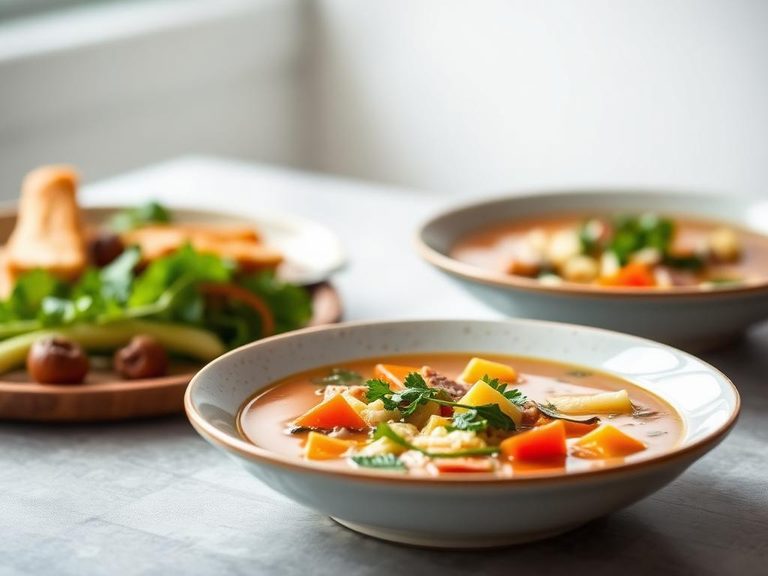
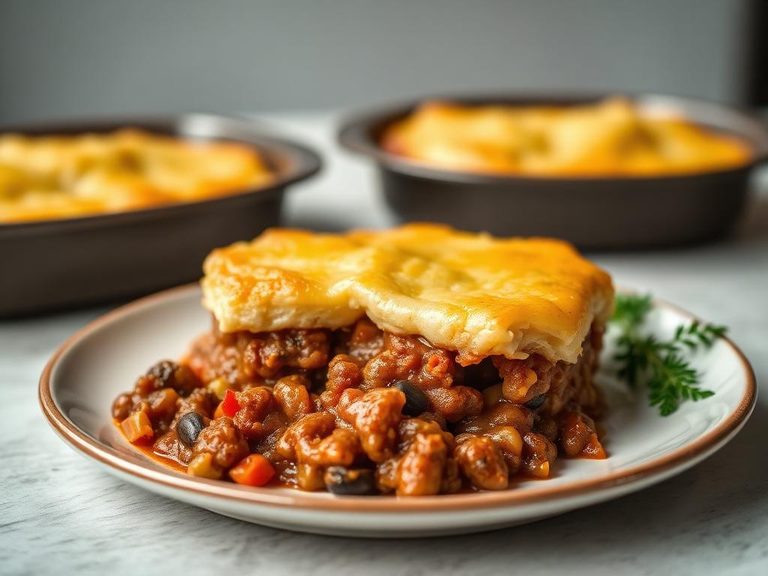

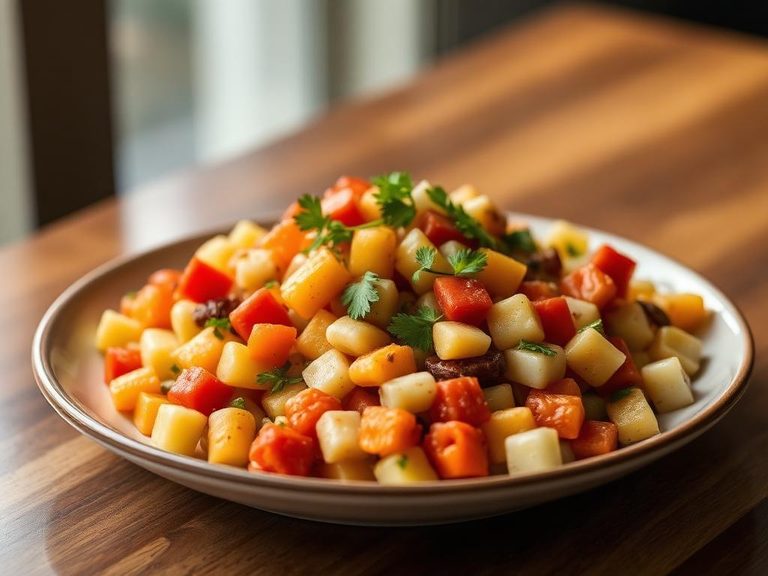
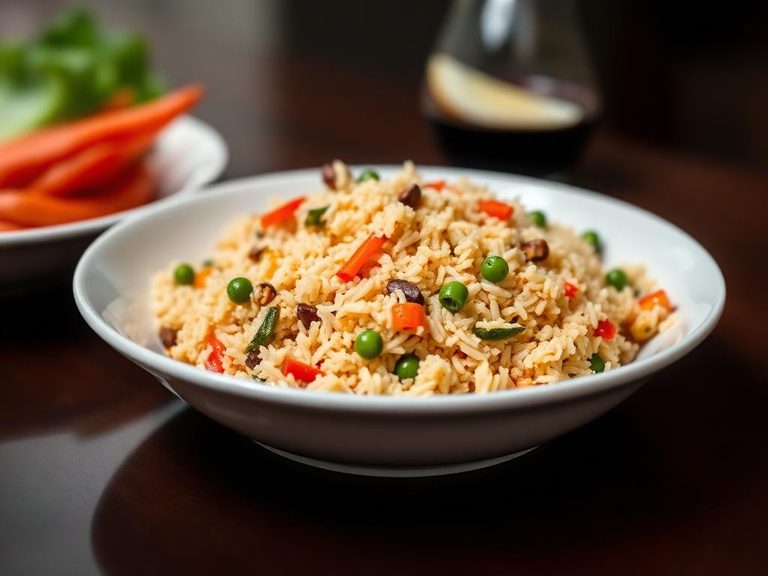
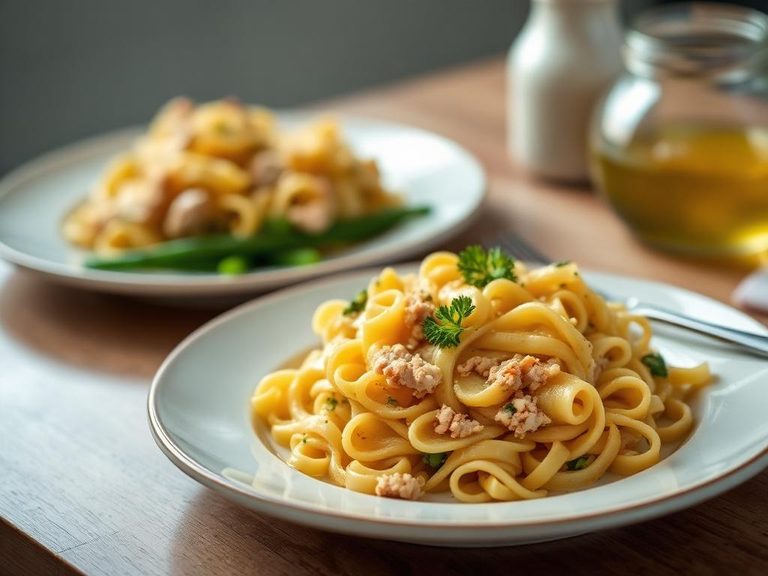
🌍 Where it's eaten
💡 Did you know?
The practice of canning mixed vegetables was popularized for military rations during World War II, providing a stable, nutrient-dense food source for troops worldwide.
Full nutrition (USDA data · scales with serving)
| Water | 90.2 g |
| Energy | 36.0 kcal |
| Energy | 151 kj |
| Protein | 1.4 g |
| Total lipid (fat) | 0.25 g |
| Ash | 0.96 g |
| Carbohydrate, by difference | 7.1 g |
| Fiber, total dietary | 3.8 g |
| Calcium, Ca | 21.0 mg |
| Iron, Fe | 0.65 mg |
| Magnesium, Mg | 15.0 mg |
| Phosphorus, P | 37.0 mg |
| Potassium, K | 138 mg |
| Sodium, Na | 224 mg |
| Zinc, Zn | 0.51 mg |
| Copper, Cu | 0.10 mg |
| Manganese, Mn | 0.43 mg |
| Selenium, Se | 0.20 ug |
| Fluoride, F | 37.0 ug |
| Vitamin C, total ascorbic acid | 3.8 mg |
| Thiamin | 0.03 mg |
| Riboflavin | 0.04 mg |
| Niacin | 0.48 mg |
| Pantothenic acid | 0.11 mg |
| Vitamin B-6 | 0.08 mg |
| Folate, total | 18.0 ug |
| Folic acid | 0.00 ug |
| Folate, food | 18.0 ug |
| Folate, DFE | 18.0 ug |
| Vitamin B-12 | 0.00 ug |
| Retinol | 0.00 ug |
| Vitamin A, IU | 5081 iu |
| Vitamin D (D2 + D3), International Units | 0.00 iu |
| Vitamin D (D2 + D3) | 0.00 ug |
| Alcohol, ethyl | 0.00 g |
Fat & fatty acid profile (per 100g)
| Fatty acids, total saturated | 0.05 g |
| SFA 4:0 | 0.00 g |
| SFA 6:0 | 0.00 g |
| SFA 8:0 | 0.00 g |
| SFA 10:0 | 0.00 g |
| SFA 12:0 | 0.00 g |
| SFA 14:0 | 0.00 g |
| SFA 16:0 | 0.04 g |
| SFA 18:0 | 0.01 g |
| Fatty acids, total monounsaturated | 0.02 g |
| MUFA 16:1 | 0.00 g |
| MUFA 18:1 | 0.01 g |
| MUFA 20:1 | 0.00 g |
| MUFA 22:1 | 0.00 g |
| Fatty acids, total polyunsaturated | 0.12 g |
| PUFA 18:2 | 0.09 g |
| PUFA 18:3 | 0.03 g |
| PUFA 18:4 | 0.00 g |
| PUFA 20:4 | 0.00 g |
| PUFA 20:5 n-3 (EPA) | 0.00 g |
| PUFA 22:5 n-3 (DPA) | 0.00 g |
| PUFA 22:6 n-3 (DHA) | 0.00 g |
| Fatty acids, total trans | 0.00 g |
| Cholesterol | 0.00 mg |
Amino acid profile (per 100g)
| Tryptophan | 0.01 g |
| Threonine | 0.06 g |
| Isoleucine | 0.07 g |
| Leucine | 0.10 g |
| Lysine | 0.09 g |
| Methionine | 0.02 g |
| Cystine | 0.01 g |
| Phenylalanine | 0.06 g |
| Tyrosine | 0.04 g |
| Valine | 0.07 g |
| Arginine | 0.10 g |
| Histidine | 0.04 g |
| Alanine | 0.06 g |
| Aspartic acid | 0.15 g |
| Glutamic acid | 0.19 g |
| Glycine | 0.05 g |
| Proline | 0.04 g |
| Serine | 0.07 g |
FAQ
Are canned mixed vegetables as nutritious as fresh?
They can be. Canning preserves vegetables at peak ripeness, locking in nutrients like fiber, vitamins A and C, and minerals. Some water-soluble vitamins may be slightly reduced, but the overall nutritional profile remains strong, especially for fiber and complex carbs.
Why do my canned vegetables taste salty?
Salt (sodium chloride) is commonly added as a preservative and flavor enhancer during canning. You can significantly reduce the sodium content by draining and rinsing the vegetables in a colander before use, or by choosing 'no salt added' versions.
What's the best way to use canned mixed vegetables?
They are ideal for cooked dishes where a softer texture is acceptable, like soups, stews, casseroles, and sauces. For a better texture in salads or stir-fries, add them at the very end of cooking just to heat through, or consider frozen vegetables instead.
Nutrient density (calculated · NRF9.3)
Nutrient Rich Foods index: beneficial nutrients (protein, fiber, vitamins, minerals) minus saturated fat, added sugar & sodium, per 100 kcal.
NRF9.3 index — Fulgoni, Keast & Drewnowski, 2009. Computed from USDA nutrients.
Weight-loss friendliness (composite index)
Energy density 0.36 kcal/g · 16% calories from protein · 3.8 g fiber · 0.0 g sugar per 100 g.
Composite of energy density (Rolls et al., 1999), protein & fiber satiety, minus sugar. A calculated heuristic — ranks satiety-per-calorie, not a clinical measure.
Dietary load (calculated from USDA values)
Potential renal acid load. Positive = acid-forming, negative = alkaline-forming.
Sodium-to-potassium ratio: 1.62 (lower is better — aim for ≤ 1)
Sodium:potassium per WHO potassium guidance. Computed from USDA nutrients.