

Turnip greens, fresh, cooked, fat added
Common food

Photo: Wikipedia
Cooked turnip greens are tender, dark leafy greens with a robust, slightly peppery flavor and a silky, melt-in-your-mouth texture when simmered. Their deep green color signals a powerhouse of nutrients, particularly vitamins K and A, from a relatively low-calorie base. The addition of fat, often bacon drippings or olive oil, not only enriches their earthy taste but also helps your body absorb their fat-soluble vitamins.
Calorie split: 10% protein · 37% carbs · 54% fat
↓ Full nutrition💚 Why it's loved
People cherish turnip greens for their deeply savory, comforting flavor that forms the soul of many slow-cooked dishes. Their ability to absorb the flavors of smoky meats, garlic, and vinegar makes them a versatile and beloved side, especially in Southern and soul food traditions.
⚠️ Watch-outs & how to enjoy it better
Their high vitamin K content can interact with blood-thinning medications like warfarin, requiring consistent intake. They also contain oxalates, which can contribute to kidney stones in susceptible individuals; pairing with calcium-rich foods and staying well-hydrated can help mitigate this. For those watching sodium, be mindful of the salt often used in cooking or added via cured meats.
Key benefits
- Exceptionally high in vitamin K, crucial for bone health and blood clotting.
- Rich in vitamin A (as beta-carotene), supporting vision and immune function.
- Good source of dietary fiber, promoting digestive health.
- Contains antioxidants like lutein and zeaxanthin, beneficial for eye health.
- Provides essential minerals such as calcium and manganese.
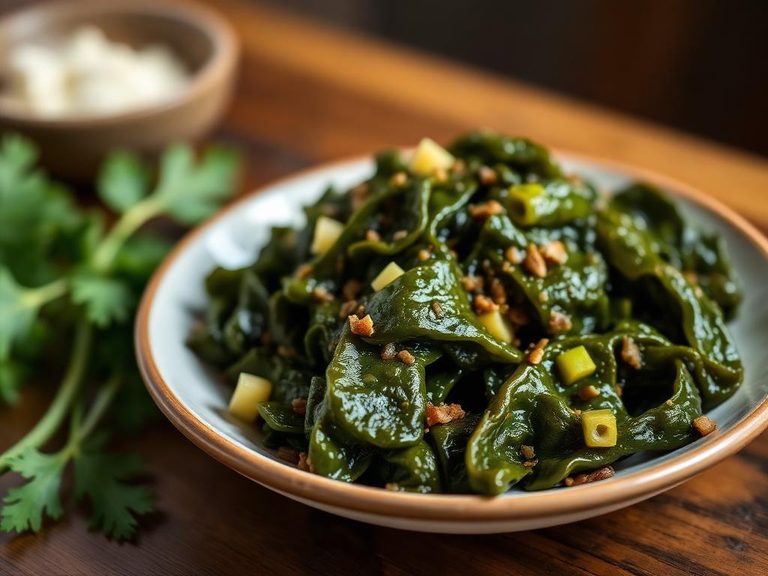
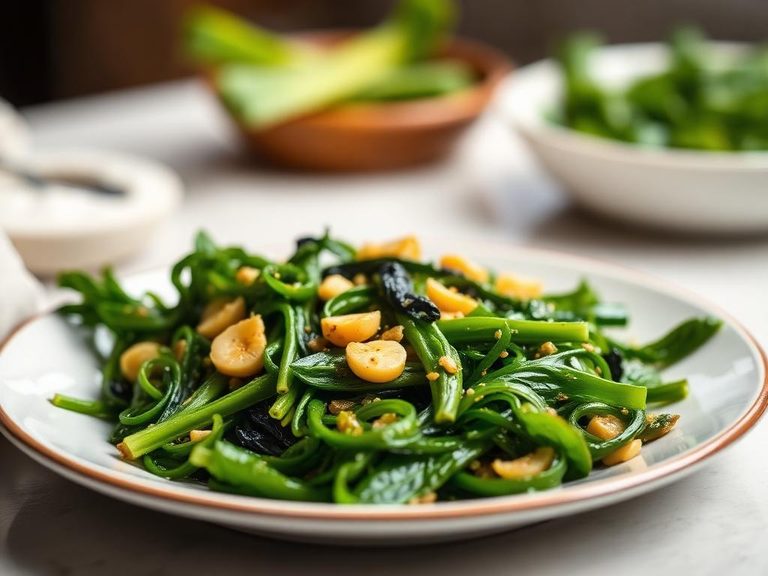
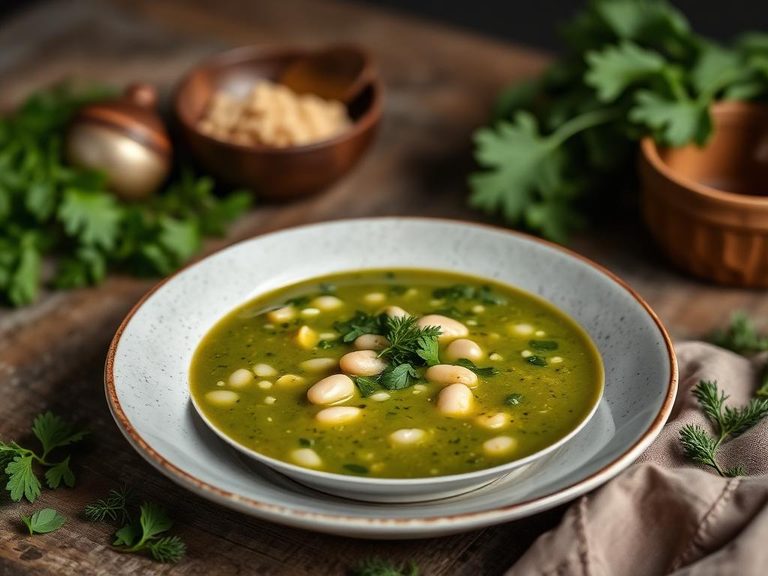
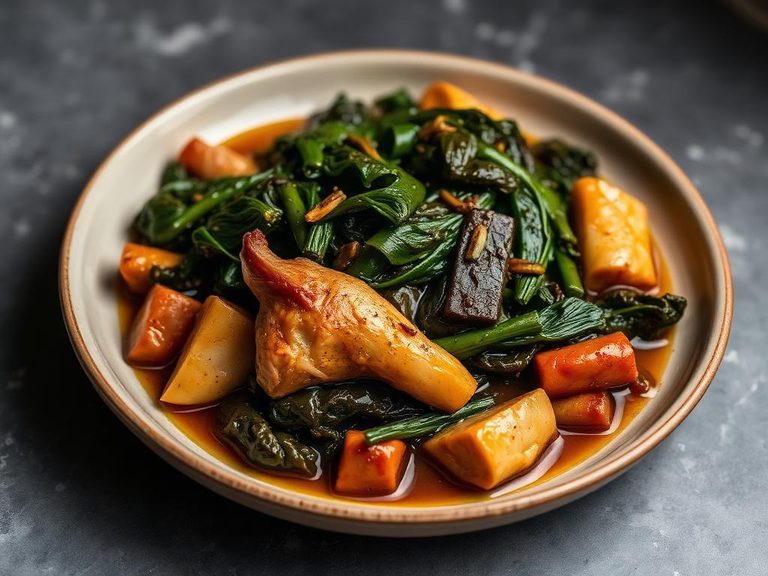
🍽️ Popular dishes

🌍 Where it's eaten
💡 Did you know?
The entire turnip plant is edible; while the root is a classic storage vegetable, the greens were historically the more commonly consumed part in many cultures before the root's popularity soared.
Full nutrition (USDA data · scales with serving)
| Water | 90.5 g |
| Energy | 42.0 kcal |
| Protein | 1.1 g |
| Total lipid (fat) | 2.8 g |
| Carbohydrate, by difference | 4.2 g |
| Fiber, total dietary | 3.4 g |
| Total Sugars | 0.52 g |
| Calcium, Ca | 133 mg |
| Iron, Fe | 0.78 mg |
| Magnesium, Mg | 21.0 mg |
| Phosphorus, P | 28.0 mg |
| Potassium, K | 197 mg |
| Sodium, Na | 149 mg |
| Zinc, Zn | 0.14 mg |
| Copper, Cu | 0.24 mg |
| Selenium, Se | 0.90 ug |
| Vitamin C, total ascorbic acid | 26.5 mg |
| Thiamin | 0.04 mg |
| Riboflavin | 0.07 mg |
| Niacin | 0.40 mg |
| Vitamin B-6 | 0.19 mg |
| Folate, total | 114 ug |
| Folic acid | 0.00 ug |
| Folate, food | 114 ug |
| Folate, DFE | 114 ug |
| Choline, total | 0.50 mg |
| Vitamin B-12 | 0.00 ug |
| Vitamin B-12, added | 0.00 ug |
| Vitamin A, RAE | 380 ug |
| Retinol | 11.0 ug |
| Carotene, beta | 4434 ug |
| Carotene, alpha | 0.00 ug |
| Cryptoxanthin, beta | 0.00 ug |
| Lycopene | 0.00 ug |
| Lutein + zeaxanthin | 8170 ug |
| Vitamin E (alpha-tocopherol) | 2.2 mg |
| Vitamin E, added | 0.00 mg |
| Vitamin D (D2 + D3) | 0.00 ug |
| Vitamin K (phylloquinone) | 358 ug |
| Alcohol, ethyl | 0.00 g |
| Caffeine | 0.00 mg |
| Theobromine | 0.00 mg |
Fat & fatty acid profile (per 100g)
| Fatty acids, total saturated | 0.72 g |
| SFA 4:0 | 0.02 g |
| SFA 6:0 | 0.01 g |
| SFA 8:0 | 0.01 g |
| SFA 10:0 | 0.02 g |
| SFA 12:0 | 0.02 g |
| SFA 14:0 | 0.07 g |
| SFA 16:0 | 0.40 g |
| SFA 18:0 | 0.14 g |
| Fatty acids, total monounsaturated | 0.92 g |
| MUFA 16:1 | 0.03 g |
| MUFA 18:1 | 0.87 g |
| MUFA 20:1 | 0.01 g |
| MUFA 22:1 | 0.00 g |
| Fatty acids, total polyunsaturated | 0.82 g |
| PUFA 18:2 | 0.68 g |
| PUFA 18:3 | 0.14 g |
| PUFA 18:4 | 0.00 g |
| PUFA 20:4 | 0.00 g |
| PUFA 20:5 n-3 (EPA) | 0.00 g |
| PUFA 22:5 n-3 (DPA) | 0.00 g |
| PUFA 22:6 n-3 (DHA) | 0.00 g |
| Cholesterol | 2.0 mg |
Amino acid profile (per 100g)
Estimated from Turnip greens, raw — USDA does not publish this profile for Turnip greens.
| Tryptophan | 0.03 g |
| Threonine | 0.08 g |
| Isoleucine | 0.08 g |
| Leucine | 0.14 g |
| Lysine | 0.10 g |
| Methionine | 0.03 g |
| Cystine | 0.02 g |
| Phenylalanine | 0.09 g |
| Tyrosine | 0.06 g |
| Valine | 0.10 g |
| Arginine | 0.09 g |
| Histidine | 0.04 g |
| Alanine | 0.10 g |
| Aspartic acid | 0.16 g |
| Glutamic acid | 0.20 g |
| Glycine | 0.09 g |
| Proline | 0.07 g |
| Serine | 0.06 g |
FAQ
Are turnip greens the same as collard greens?
No, they are different plants in the same Brassica family. Turnip greens have a more peppery, assertive flavor and slightly more tender leaves, while collards are milder and tougher, requiring longer cooking.
Why do you add fat when cooking them?
Fat serves two key purposes: it carries flavor, making the greens richer, and it significantly increases the absorption of fat-soluble vitamins (A and K) present in the leaves.
How can I reduce the bitterness?
A common technique is to blanch the greens in boiling water for a few minutes, discard the water, and then proceed with your recipe. This helps draw out some of the bitter compounds.
Nutrient density (calculated · NRF9.3)
Nutrient Rich Foods index: beneficial nutrients (protein, fiber, vitamins, minerals) minus saturated fat, added sugar & sodium, per 100 kcal.
NRF9.3 index — Fulgoni, Keast & Drewnowski, 2009. Computed from USDA nutrients.
Weight-loss friendliness (composite index)
Energy density 0.42 kcal/g · 11% calories from protein · 3.4 g fiber · 0.5 g sugar per 100 g.
Composite of energy density (Rolls et al., 1999), protein & fiber satiety, minus sugar. A calculated heuristic — ranks satiety-per-calorie, not a clinical measure.
Dietary load (calculated from USDA values)
Potential renal acid load. Positive = acid-forming, negative = alkaline-forming.
Sodium-to-potassium ratio: 0.76 (lower is better — aim for ≤ 1)
Sodium:potassium per WHO potassium guidance. Computed from USDA nutrients.