

Turnip greens, frozen, cooked, no added fat
Common food

Photo: Wikipedia
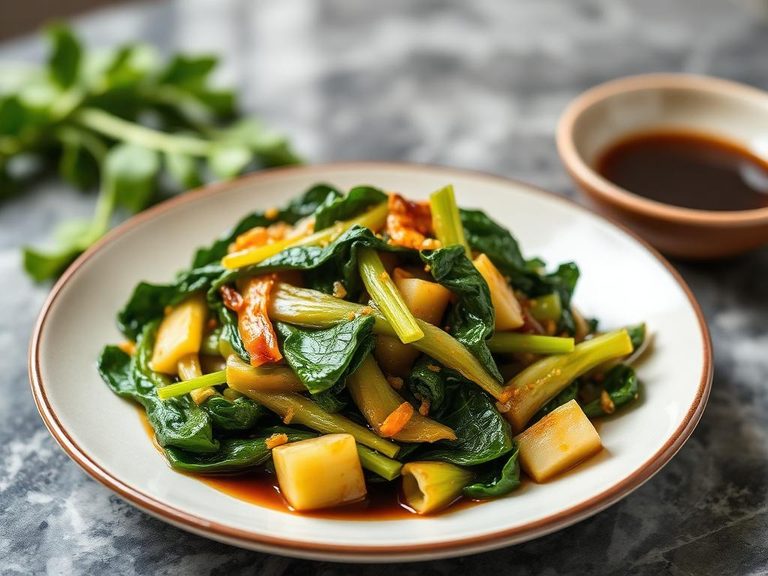
Frozen turnip greens are the tender, dark-green leaves of the turnip plant, harvested at peak freshness and quickly locked in ice. When cooked, they develop a robust, earthy flavor with a slightly peppery bite and a silky, tender texture. They are a nutritional powerhouse, packing over 3 grams of protein and nearly 3.5 grams of fiber into a low-calorie package.
Calorie split: 36% protein · 54% carbs · 10% fat
↓ Full nutrition💚 Why it's loved
People love them for their deep, complex flavor that stands up to bold seasonings like garlic, bacon, or vinegar. They are a beloved staple in Southern U.S. cuisine, often served as a comforting, nutritious side dish.
⚠️ Watch-outs & how to enjoy it better
Their high vitamin K content can interact with blood-thinning medications like warfarin. They also contain natural oxalates, which can contribute to kidney stones in susceptible individuals. To mitigate, those on blood thinners should maintain consistent intake and consult a doctor; for oxalates, cooking and discarding the cooking water can reduce levels, and pairing with calcium-rich foods can help.
Key benefits
- Excellent source of plant-based protein for a leafy green.
- Very high in dietary fiber, promoting digestive health.
- Rich in vitamins K, A, and C, plus essential minerals.
- Extremely low in calories and naturally fat-free.
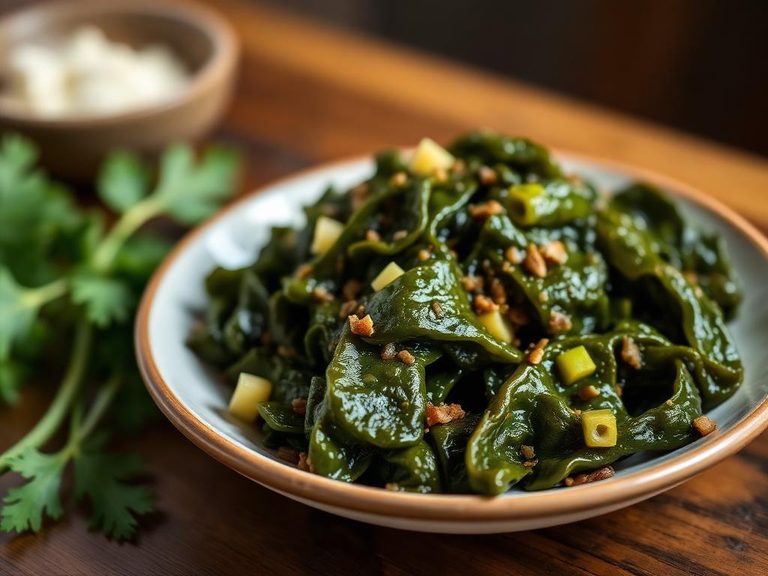
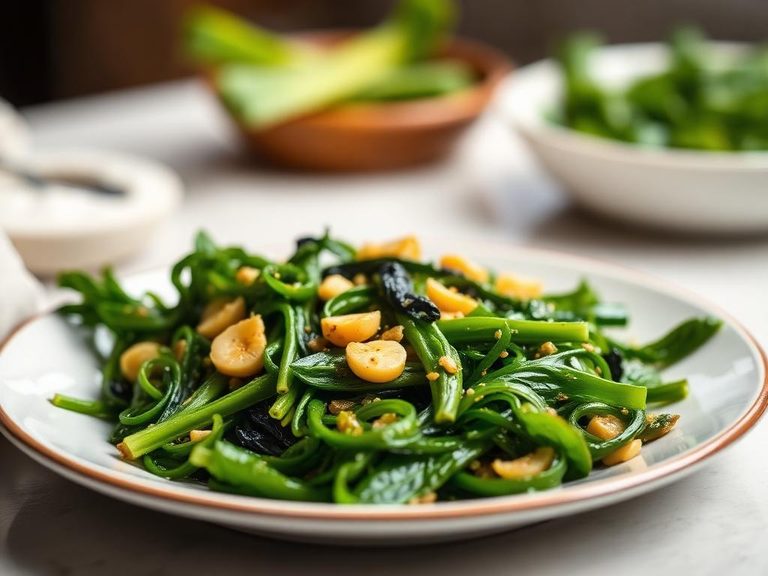
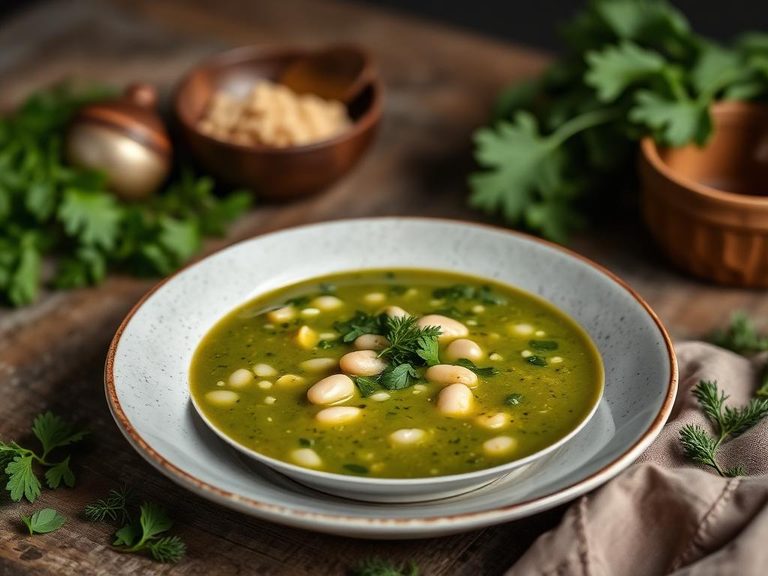
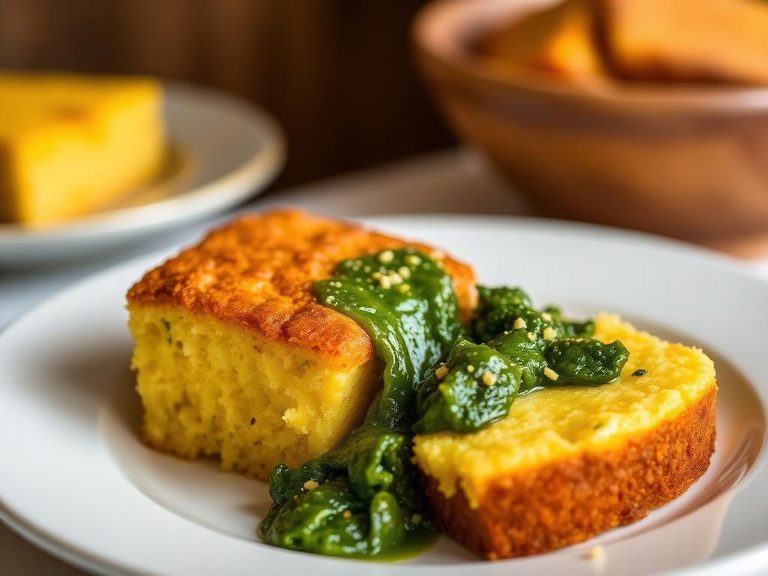
🍽️ Popular dishes
🌍 Where it's eaten
💡 Did you know?
The same plant that gives us the peppery turnip root provides these nutritious leaves; historically, the greens were often more valued than the root itself.
Full nutrition (USDA data · scales with serving)
| Water | 90.1 g |
| Energy | 29.0 kcal |
| Protein | 3.3 g |
| Total lipid (fat) | 0.42 g |
| Carbohydrate, by difference | 5.0 g |
| Fiber, total dietary | 3.4 g |
| Total Sugars | 0.75 g |
| Calcium, Ca | 152 mg |
| Iron, Fe | 1.9 mg |
| Magnesium, Mg | 26.0 mg |
| Phosphorus, P | 34.0 mg |
| Potassium, K | 223 mg |
| Sodium, Na | 131 mg |
| Zinc, Zn | 0.41 mg |
| Copper, Cu | 0.15 mg |
| Selenium, Se | 1.2 ug |
| Vitamin C, total ascorbic acid | 21.7 mg |
| Thiamin | 0.05 mg |
| Riboflavin | 0.07 mg |
| Niacin | 0.47 mg |
| Vitamin B-6 | 0.07 mg |
| Folate, total | 39.0 ug |
| Folic acid | 0.00 ug |
| Folate, food | 39.0 ug |
| Folate, DFE | 39.0 ug |
| Choline, total | 0.50 mg |
| Vitamin B-12 | 0.00 ug |
| Vitamin B-12, added | 0.00 ug |
| Vitamin A, RAE | 536 ug |
| Retinol | 0.00 ug |
| Carotene, beta | 6440 ug |
| Carotene, alpha | 0.00 ug |
| Cryptoxanthin, beta | 0.00 ug |
| Lycopene | 0.00 ug |
| Lutein + zeaxanthin | 11879 ug |
| Vitamin E (alpha-tocopherol) | 2.6 mg |
| Vitamin E, added | 0.00 mg |
| Vitamin D (D2 + D3) | 0.00 ug |
| Vitamin K (phylloquinone) | 517 ug |
| Alcohol, ethyl | 0.00 g |
| Caffeine | 0.00 mg |
| Theobromine | 0.00 mg |
Fat & fatty acid profile (per 100g)
| Fatty acids, total saturated | 0.10 g |
| SFA 4:0 | 0.00 g |
| SFA 6:0 | 0.00 g |
| SFA 8:0 | 0.00 g |
| SFA 10:0 | 0.00 g |
| SFA 12:0 | 0.00 g |
| SFA 14:0 | 0.00 g |
| SFA 16:0 | 0.08 g |
| SFA 18:0 | 0.01 g |
| Fatty acids, total monounsaturated | 0.03 g |
| MUFA 16:1 | 0.02 g |
| MUFA 18:1 | 0.01 g |
| MUFA 20:1 | 0.00 g |
| MUFA 22:1 | 0.00 g |
| Fatty acids, total polyunsaturated | 0.17 g |
| PUFA 18:2 | 0.05 g |
| PUFA 18:3 | 0.12 g |
| PUFA 18:4 | 0.00 g |
| PUFA 20:4 | 0.00 g |
| PUFA 20:5 n-3 (EPA) | 0.00 g |
| PUFA 22:5 n-3 (DPA) | 0.00 g |
| PUFA 22:6 n-3 (DHA) | 0.00 g |
| Cholesterol | 0.00 mg |
Amino acid profile (per 100g)
Estimated from Turnip greens, raw — USDA does not publish this profile for Turnip greens.
| Tryptophan | 0.03 g |
| Threonine | 0.08 g |
| Isoleucine | 0.08 g |
| Leucine | 0.14 g |
| Lysine | 0.10 g |
| Methionine | 0.03 g |
| Cystine | 0.02 g |
| Phenylalanine | 0.09 g |
| Tyrosine | 0.06 g |
| Valine | 0.10 g |
| Arginine | 0.09 g |
| Histidine | 0.04 g |
| Alanine | 0.10 g |
| Aspartic acid | 0.16 g |
| Glutamic acid | 0.20 g |
| Glycine | 0.09 g |
| Proline | 0.07 g |
| Serine | 0.06 g |
FAQ
How do frozen turnip greens compare to fresh?
Frozen greens are often nutritionally equivalent or even superior to 'fresh' greens that have traveled long distances, as they are flash-frozen shortly after harvest, locking in nutrients.
Do I need to thaw them before cooking?
No, you can cook them directly from frozen. Simply add them to a pot with a bit of water, broth, or oil and cook until tender, which may take a few minutes longer than fresh.
Why are they sometimes called 'turnip tops'?
That's a common name, especially in the UK and Ireland, referring to the leafy tops of the turnip plant.
Nutrient density (calculated · NRF9.3)
Nutrient Rich Foods index: beneficial nutrients (protein, fiber, vitamins, minerals) minus saturated fat, added sugar & sodium, per 100 kcal.
NRF9.3 index — Fulgoni, Keast & Drewnowski, 2009. Computed from USDA nutrients.
Weight-loss friendliness (composite index)
Energy density 0.29 kcal/g · 46% calories from protein · 3.4 g fiber · 0.8 g sugar per 100 g.
Composite of energy density (Rolls et al., 1999), protein & fiber satiety, minus sugar. A calculated heuristic — ranks satiety-per-calorie, not a clinical measure.
Dietary load (calculated from USDA values)
Potential renal acid load. Positive = acid-forming, negative = alkaline-forming.
Sodium-to-potassium ratio: 0.59 (lower is better — aim for ≤ 1)
Sodium:potassium per WHO potassium guidance. Computed from USDA nutrients.