

Turkey, NFS
Common food
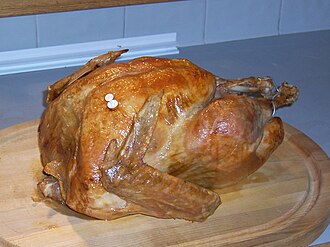
Photo: Wikipedia
Turkey, NFS (Not Further Specified) refers to the lean, white or dark meat of the domestic turkey, typically roasted or grilled. It has a mild, subtly sweet flavor with a firm yet tender texture, especially in the breast. Nutritionally, it's a powerhouse of high-quality protein with virtually no fat or carbohydrates.
Calorie split: 86% protein · 0% carbs · 14% fat
↓ Full nutrition💚 Why it's loved
People love turkey for its lean, clean protein that serves as a blank canvas for countless seasonings and cooking methods. It's deeply embedded in holiday traditions, especially in North America, symbolizing celebration and family gatherings.
⚠️ Watch-outs & how to enjoy it better
The lean breast meat can become dry and bland if overcooked. To counteract this, brining before cooking or using a meat thermometer to pull it at 165°F (74°C) helps retain moisture. Dark meat, while juicier, has slightly more fat. Those monitoring sodium intake should be aware of processed deli turkey, which can be high in salt.
Key benefits
- Excellent source of complete protein for muscle maintenance
- Very low in fat, especially saturated fat
- Naturally carbohydrate-free, suitable for low-carb diets
- Rich in B vitamins like niacin and B6 for energy metabolism
- Good source of selenium, an important antioxidant mineral
🍽️ Popular dishes
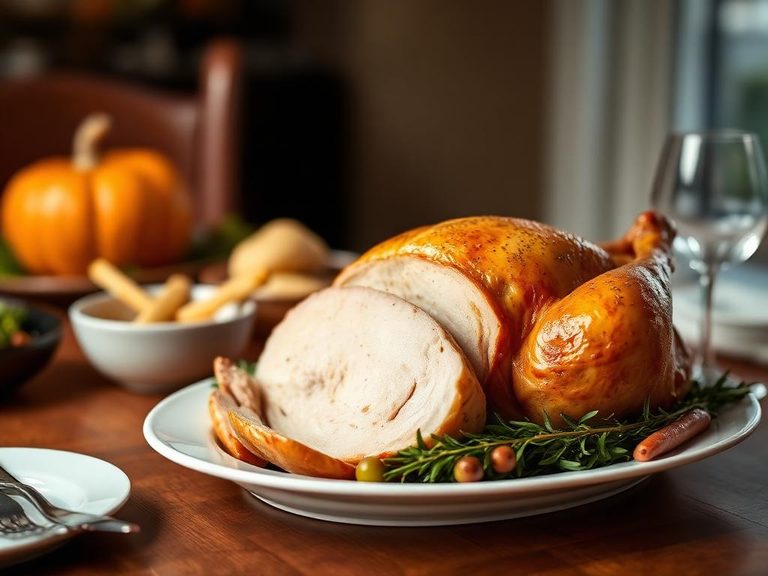
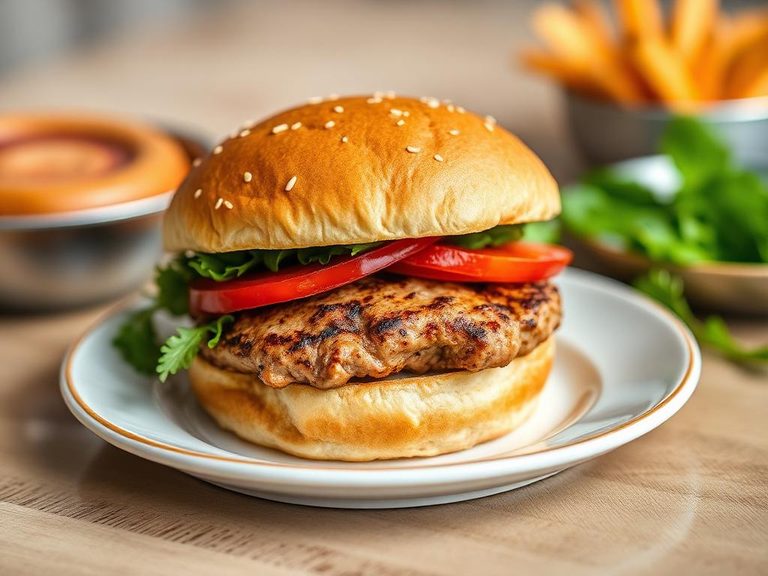
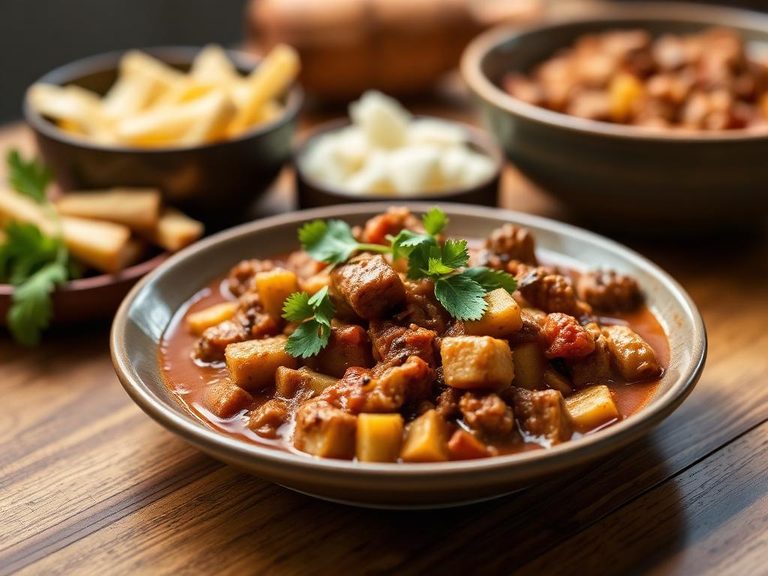
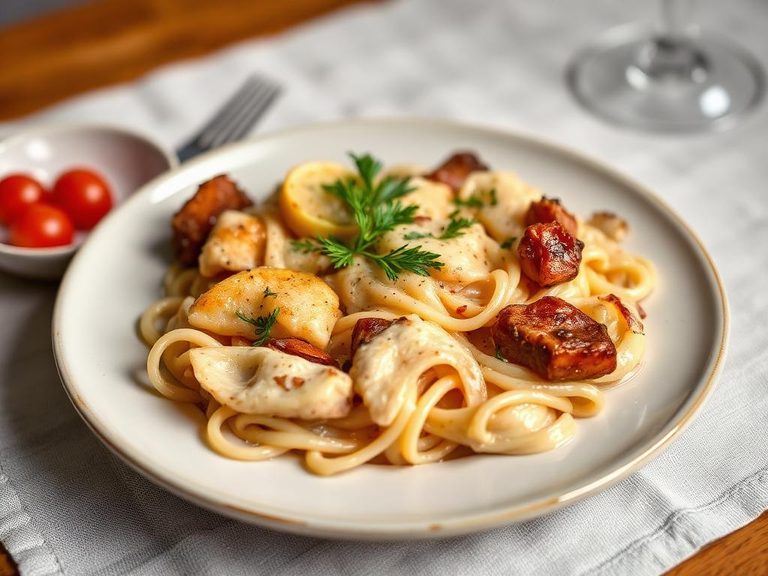
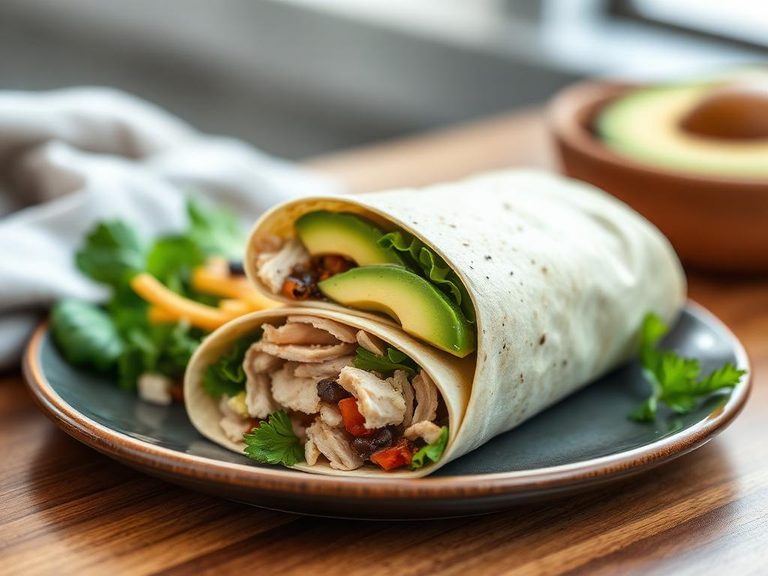
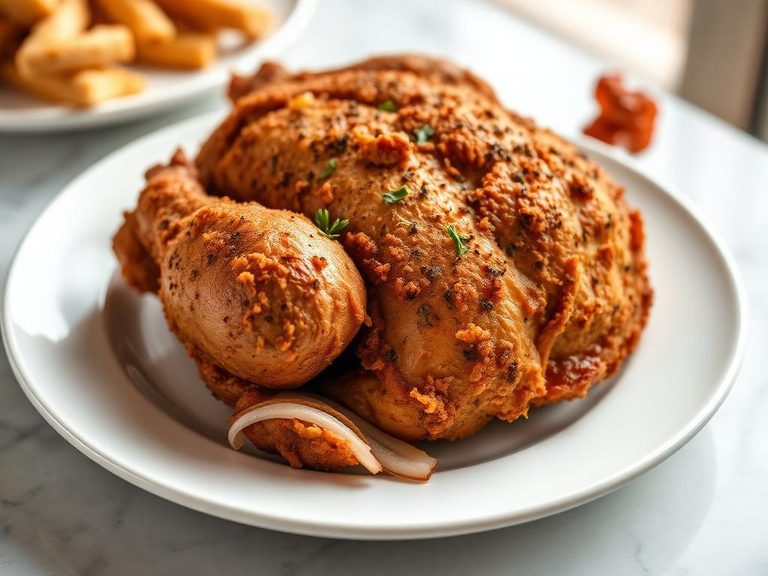
🌍 Where it's eaten
💡 Did you know?
Turkeys were domesticated by indigenous peoples of Mesoamerica over 2,000 years ago, long before they were introduced to Europe by Spanish conquistadors in the 16th century.
Full nutrition (USDA data · scales with serving)
| Water | 68.1 g |
| Energy | 139 kcal |
| Protein | 28.8 g |
| Total lipid (fat) | 2.1 g |
| Carbohydrate, by difference | 0.00 g |
| Fiber, total dietary | 0.00 g |
| Total Sugars | 0.00 g |
| Calcium, Ca | 11.0 mg |
| Iron, Fe | 0.65 mg |
| Magnesium, Mg | 31.0 mg |
| Phosphorus, P | 237 mg |
| Potassium, K | 247 mg |
| Sodium, Na | 467 mg |
| Zinc, Zn | 1.6 mg |
| Copper, Cu | 0.06 mg |
| Selenium, Se | 29.9 ug |
| Vitamin C, total ascorbic acid | 0.00 mg |
| Thiamin | 0.04 mg |
| Riboflavin | 0.20 mg |
| Niacin | 11.7 mg |
| Vitamin B-6 | 0.76 mg |
| Folate, total | 10.0 ug |
| Folic acid | 0.00 ug |
| Folate, food | 10.0 ug |
| Folate, DFE | 10.0 ug |
| Choline, total | 78.1 mg |
| Vitamin B-12 | 0.82 ug |
| Vitamin B-12, added | 0.00 ug |
| Vitamin A, RAE | 3.0 ug |
| Retinol | 3.0 ug |
| Carotene, beta | 0.00 ug |
| Carotene, alpha | 0.00 ug |
| Cryptoxanthin, beta | 0.00 ug |
| Lycopene | 0.00 ug |
| Lutein + zeaxanthin | 0.00 ug |
| Vitamin E (alpha-tocopherol) | 0.06 mg |
| Vitamin E, added | 0.00 mg |
| Vitamin D (D2 + D3) | 0.30 ug |
| Vitamin K (phylloquinone) | 0.00 ug |
| Alcohol, ethyl | 0.00 g |
| Caffeine | 0.00 mg |
| Theobromine | 0.00 mg |
Fat & fatty acid profile (per 100g)
| Fatty acids, total saturated | 0.59 g |
| SFA 4:0 | 0.00 g |
| SFA 6:0 | 0.00 g |
| SFA 8:0 | 0.00 g |
| SFA 10:0 | 0.00 g |
| SFA 12:0 | 0.01 g |
| SFA 14:0 | 0.02 g |
| SFA 16:0 | 0.37 g |
| SFA 18:0 | 0.18 g |
| Fatty acids, total monounsaturated | 0.62 g |
| MUFA 16:1 | 0.06 g |
| MUFA 18:1 | 0.55 g |
| MUFA 20:1 | 0.01 g |
| MUFA 22:1 | 0.00 g |
| Fatty acids, total polyunsaturated | 0.52 g |
| PUFA 18:2 | 0.43 g |
| PUFA 18:3 | 0.02 g |
| PUFA 18:4 | 0.00 g |
| PUFA 20:4 | 0.04 g |
| PUFA 20:5 n-3 (EPA) | 0.00 g |
| PUFA 22:5 n-3 (DPA) | 0.01 g |
| PUFA 22:6 n-3 (DHA) | 0.00 g |
| Cholesterol | 76.0 mg |
Amino acid profile (per 100g)
Estimated from Turkey, mechanically deboned, from turkey frames, raw — USDA does not publish this profile for Turkey.
| Tryptophan | 0.11 g |
| Threonine | 0.64 g |
| Isoleucine | 0.50 g |
| Leucine | 1.1 g |
| Lysine | 1.2 g |
| Methionine | 0.37 g |
| Cystine | 0.10 g |
| Phenylalanine | 0.55 g |
| Tyrosine | 0.47 g |
| Valine | 0.54 g |
| Arginine | 0.87 g |
| Histidine | 0.50 g |
| Alanine | 0.87 g |
| Aspartic acid | 1.4 g |
| Glutamic acid | 2.2 g |
| Glycine | 0.78 g |
| Proline | 0.65 g |
| Serine | 0.62 g |
FAQ
What does 'NFS' mean on a nutrition label?
NFS stands for 'Not Further Specified.' It indicates the data is for the basic, unprocessed food item (like roasted turkey meat) without added ingredients, sauces, or specific preparation methods that would alter its core nutritional profile.
Is white meat or dark meat healthier?
White meat (breast) is leaner and lower in calories and fat. Dark meat (thigh, drumstick) has more fat, which gives it more flavor and moisture, and also contains slightly more iron and zinc. Both are excellent protein sources.
How can I keep turkey from drying out?
Key methods include brining (soaking in salt water), not overcooking (use a meat thermometer), and letting the meat rest after cooking. For ground turkey, mixing in a little moisture like broth or grated onion can help.
Nutrient density (calculated · NRF9.3)
Nutrient Rich Foods index: beneficial nutrients (protein, fiber, vitamins, minerals) minus saturated fat, added sugar & sodium, per 100 kcal.
NRF9.3 index — Fulgoni, Keast & Drewnowski, 2009. Computed from USDA nutrients.
Weight-loss friendliness (composite index)
Energy density 1.39 kcal/g · 83% calories from protein · 0.0 g fiber · 0.0 g sugar per 100 g.
Composite of energy density (Rolls et al., 1999), protein & fiber satiety, minus sugar. A calculated heuristic — ranks satiety-per-calorie, not a clinical measure.
Dietary load (calculated from USDA values)
Potential renal acid load. Positive = acid-forming, negative = alkaline-forming.
Sodium-to-potassium ratio: 1.89 (lower is better — aim for ≤ 1)
Sodium:potassium per WHO potassium guidance. Computed from USDA nutrients.