

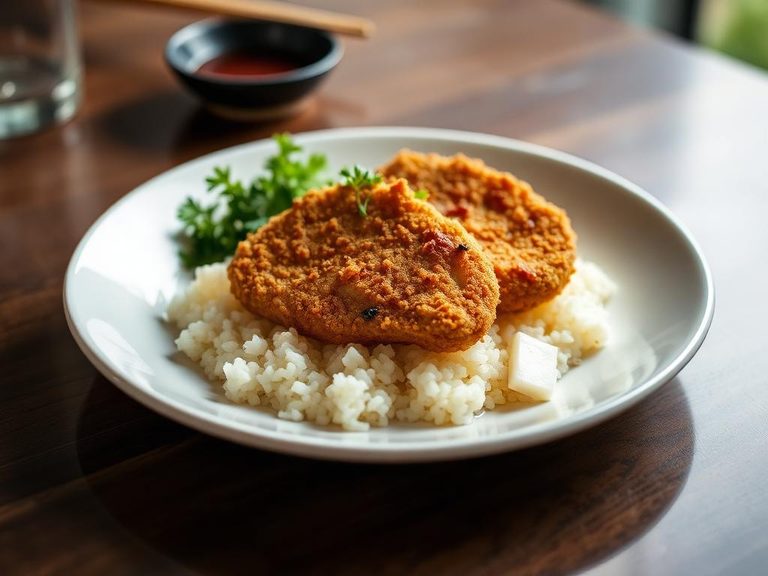
Turkey, light meat, breaded, baked or fried, skin eaten
Common food

Photo: Wikipedia
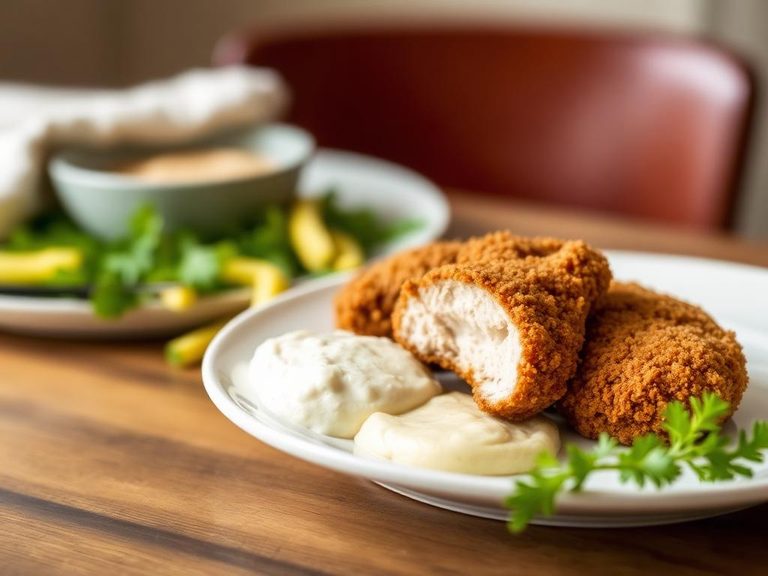
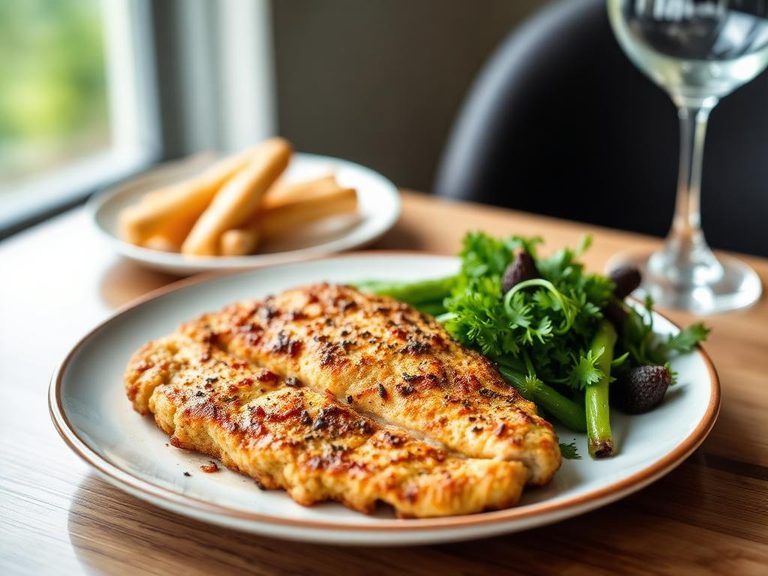
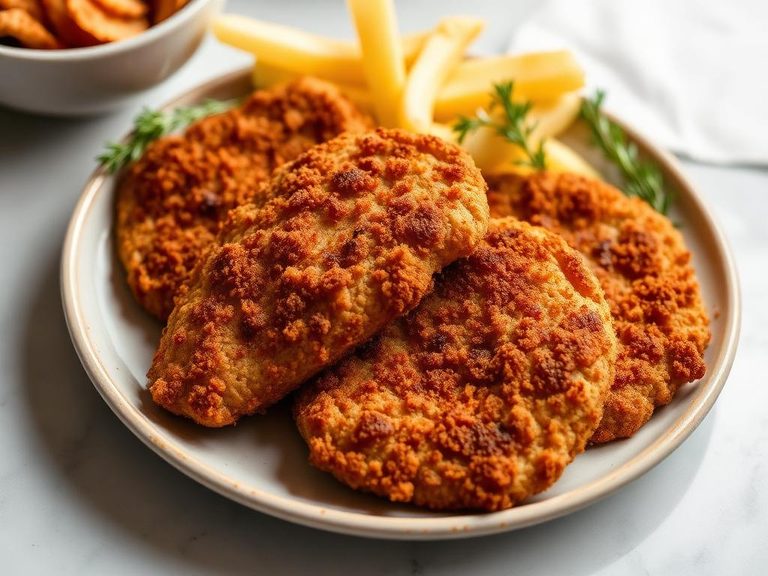
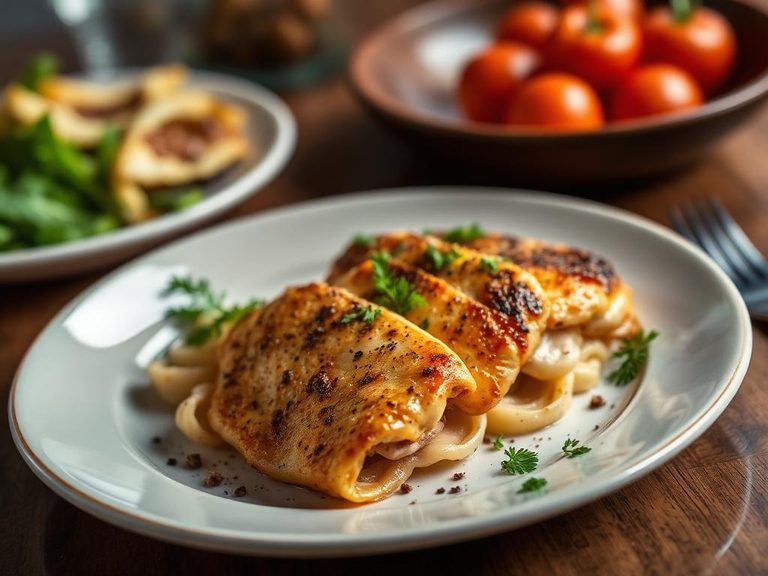
This is lean turkey breast that has been coated in a crispy breading and cooked until golden, offering a satisfying crunch that contrasts with the tender, mild white meat inside. It is a protein-packed powerhouse, delivering nearly 27 grams of protein per 100 grams while remaining relatively low in calories and fat. The result is a savory, comforting food that feels indulgent without the heavy caloric load of many fried meats.
Calorie split: 55% protein · 13% carbs · 32% fat
↓ Full nutrition💚 Why it's loved
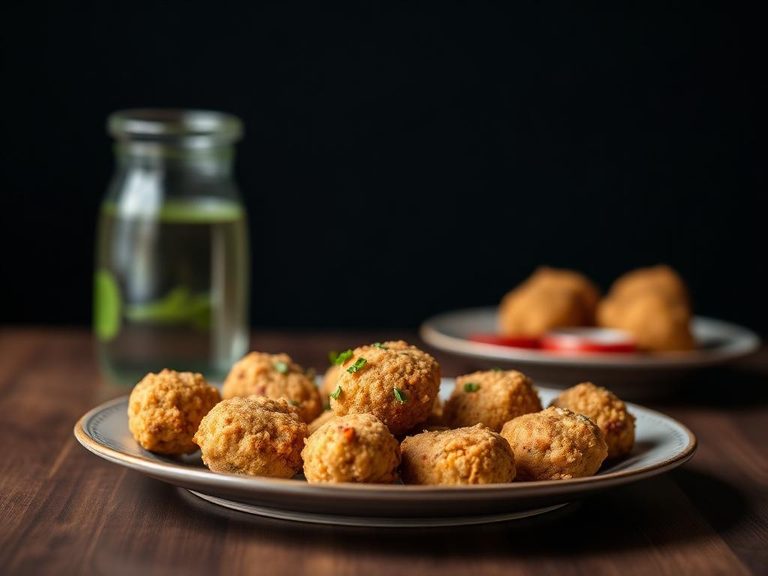
People love it for the irresistible contrast between the crunchy, seasoned breading and the juicy, lean meat, making it a comfort food staple. It is incredibly versatile, easily adapting to various dipping sauces, seasonings, and side dishes from fries to salads.
⚠️ Watch-outs & how to enjoy it better
The breading can significantly increase sodium content, and the cooking method (especially frying) can add unhealthy fats and calories. To counteract this, opt for baked or air-fried versions, pair with fiber-rich vegetables to slow digestion, and control portion sizes to manage sodium intake.
Key benefits
- Exceptionally high protein content supports muscle maintenance and satiety.
- Low in fat and calories, making it suitable for weight management diets.
- Rich in B vitamins, particularly niacin and B6, which aid energy metabolism.
- Provides selenium and phosphorus for immune and bone health.
🍽️ Popular dishes
🌍 Where it's eaten
💡 Did you know?
Turkey breast meat is so lean that it can dry out quickly; breading and frying or baking helps lock in moisture, which is why this preparation became popular for lean poultry.
Full nutrition (USDA data · scales with serving)
| Water | 59.4 g |
| Energy | 200 kcal |
| Protein | 26.8 g |
| Total lipid (fat) | 6.8 g |
| Carbohydrate, by difference | 6.5 g |
| Fiber, total dietary | 0.40 g |
| Total Sugars | 0.56 g |
| Calcium, Ca | 27.0 mg |
| Iron, Fe | 1.1 mg |
| Magnesium, Mg | 32.0 mg |
| Phosphorus, P | 228 mg |
| Potassium, K | 241 mg |
| Sodium, Na | 198 mg |
| Zinc, Zn | 1.6 mg |
| Copper, Cu | 0.08 mg |
| Selenium, Se | 28.5 ug |
| Vitamin C, total ascorbic acid | 0.00 mg |
| Thiamin | 0.12 mg |
| Riboflavin | 0.23 mg |
| Niacin | 10.9 mg |
| Vitamin B-6 | 0.67 mg |
| Folate, total | 17.0 ug |
| Folic acid | 7.0 ug |
| Folate, food | 10.0 ug |
| Folate, DFE | 22.0 ug |
| Choline, total | 71.6 mg |
| Vitamin B-12 | 0.84 ug |
| Vitamin B-12, added | 0.00 ug |
| Vitamin A, RAE | 9.0 ug |
| Retinol | 9.0 ug |
| Carotene, beta | 0.00 ug |
| Carotene, alpha | 0.00 ug |
| Cryptoxanthin, beta | 0.00 ug |
| Lycopene | 0.00 ug |
| Lutein + zeaxanthin | 0.00 ug |
| Vitamin E (alpha-tocopherol) | 0.15 mg |
| Vitamin E, added | 0.00 mg |
| Vitamin D (D2 + D3) | 0.40 ug |
| Vitamin K (phylloquinone) | 1.3 ug |
| Alcohol, ethyl | 0.00 g |
| Caffeine | 0.00 mg |
| Theobromine | 0.00 mg |
Fat & fatty acid profile (per 100g)
| Fatty acids, total saturated | 1.9 g |
| SFA 4:0 | 0.00 g |
| SFA 6:0 | 0.00 g |
| SFA 8:0 | 0.00 g |
| SFA 10:0 | 0.00 g |
| SFA 12:0 | 0.01 g |
| SFA 14:0 | 0.05 g |
| SFA 16:0 | 1.2 g |
| SFA 18:0 | 0.57 g |
| Fatty acids, total monounsaturated | 2.4 g |
| MUFA 16:1 | 0.17 g |
| MUFA 18:1 | 2.2 g |
| MUFA 20:1 | 0.03 g |
| MUFA 22:1 | 0.00 g |
| Fatty acids, total polyunsaturated | 2.0 g |
| PUFA 18:2 | 1.8 g |
| PUFA 18:3 | 0.12 g |
| PUFA 18:4 | 0.00 g |
| PUFA 20:4 | 0.05 g |
| PUFA 20:5 n-3 (EPA) | 0.00 g |
| PUFA 22:5 n-3 (DPA) | 0.01 g |
| PUFA 22:6 n-3 (DHA) | 0.00 g |
| Cholesterol | 76.0 mg |
Amino acid profile (per 100g)
Estimated from Turkey, mechanically deboned, from turkey frames, raw — USDA does not publish this profile for Turkey.
| Tryptophan | 0.11 g |
| Threonine | 0.64 g |
| Isoleucine | 0.50 g |
| Leucine | 1.1 g |
| Lysine | 1.2 g |
| Methionine | 0.37 g |
| Cystine | 0.10 g |
| Phenylalanine | 0.55 g |
| Tyrosine | 0.47 g |
| Valine | 0.54 g |
| Arginine | 0.87 g |
| Histidine | 0.50 g |
| Alanine | 0.87 g |
| Aspartic acid | 1.4 g |
| Glutamic acid | 2.2 g |
| Glycine | 0.78 g |
| Proline | 0.65 g |
| Serine | 0.62 g |
FAQ
Is breaded turkey healthier than breaded chicken?
Turkey breast is generally leaner than chicken breast, but the difference is minimal once breaded and cooked. The healthiness depends more on the cooking method (baked vs. fried) and the type of breading used.
Can I make this dish gluten-free?
Yes, you can substitute the breading with gluten-free alternatives like almond flour, crushed gluten-free crackers, or panko made from rice or corn.
How do I keep breaded turkey moist?
Brining the turkey before breading, using a binder like egg or buttermilk, and not overcooking it (aim for an internal temperature of 165°F/74°C) will help retain moisture.
Nutrient density (calculated · NRF9.3)
Nutrient Rich Foods index: beneficial nutrients (protein, fiber, vitamins, minerals) minus saturated fat, added sugar & sodium, per 100 kcal.
NRF9.3 index — Fulgoni, Keast & Drewnowski, 2009. Computed from USDA nutrients.
Weight-loss friendliness (composite index)
Energy density 2.00 kcal/g · 54% calories from protein · 0.4 g fiber · 0.6 g sugar per 100 g.
Composite of energy density (Rolls et al., 1999), protein & fiber satiety, minus sugar. A calculated heuristic — ranks satiety-per-calorie, not a clinical measure.
Dietary load (calculated from USDA values)
Potential renal acid load. Positive = acid-forming, negative = alkaline-forming.
Sodium-to-potassium ratio: 0.82 (lower is better — aim for ≤ 1)
Sodium:potassium per WHO potassium guidance. Computed from USDA nutrients.