

Tuna salad with egg
Common food

Photo: Wikipedia
A classic, creamy salad combining flaked tuna with chopped hard-boiled eggs, typically bound with mayonnaise. The texture is a satisfying mix of tender fish and soft egg, with a rich, savory flavor profile. Nutritionally, it's a powerhouse of high-quality protein and healthy fats, with minimal carbohydrates.
Calorie split: 22% protein · 6% carbs · 73% fat
↓ Full nutrition💚 Why it's loved
People love it for its perfect balance of savory, creamy flavors and its incredible versatility—it's equally at home in a sandwich, on a bed of greens, or as a dip. It's a nostalgic comfort food in many Western cultures, representing a simple, satisfying, and protein-packed meal.
⚠️ Watch-outs & how to enjoy it better
The mayonnaise-based dressing can be high in calories and sodium, and some tuna varieties may contain mercury. To counteract this, use light mayo or Greek yogurt, choose lower-sodium canned tuna, and opt for smaller, lower-mercury fish like skipjack. It's also a common allergen due to fish and eggs.
Key benefits
- Excellent source of complete protein for muscle maintenance
- Rich in omega-3 fatty acids from tuna
- Provides choline from egg yolks for brain health
- Low in carbohydrates, suitable for low-carb diets
- Quick and no-cook meal preparation
🍽️ Popular dishes
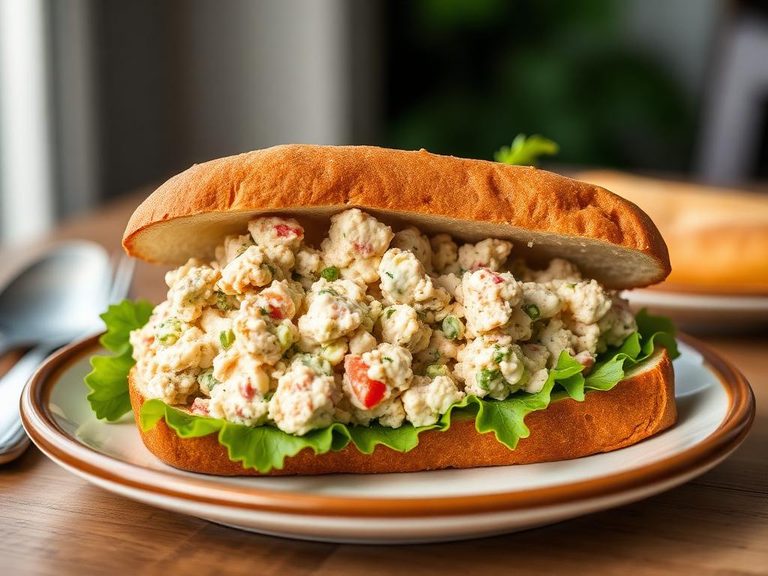
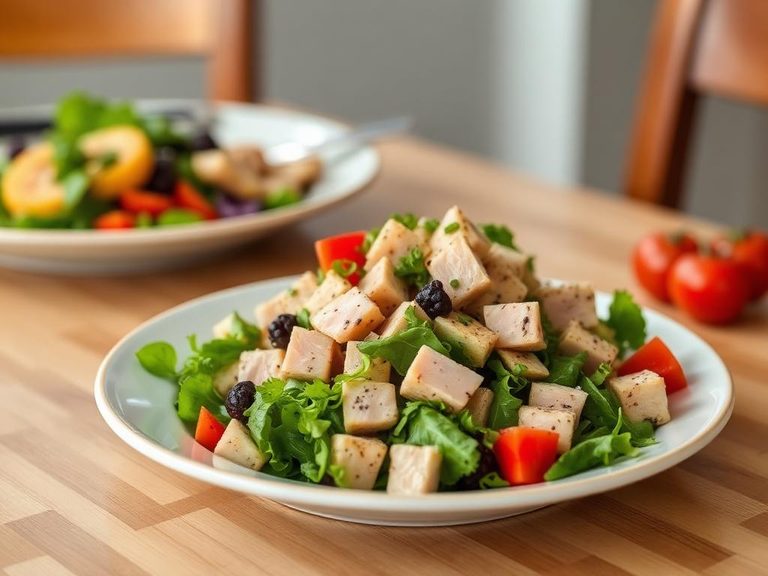
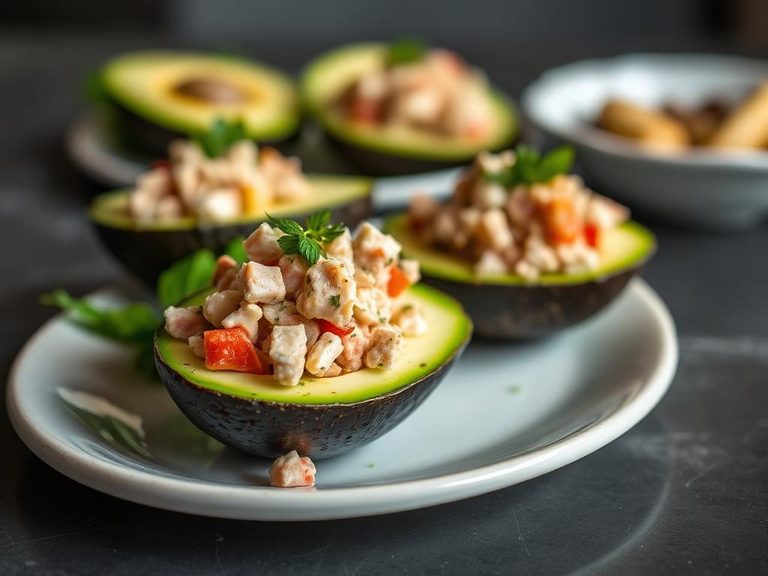
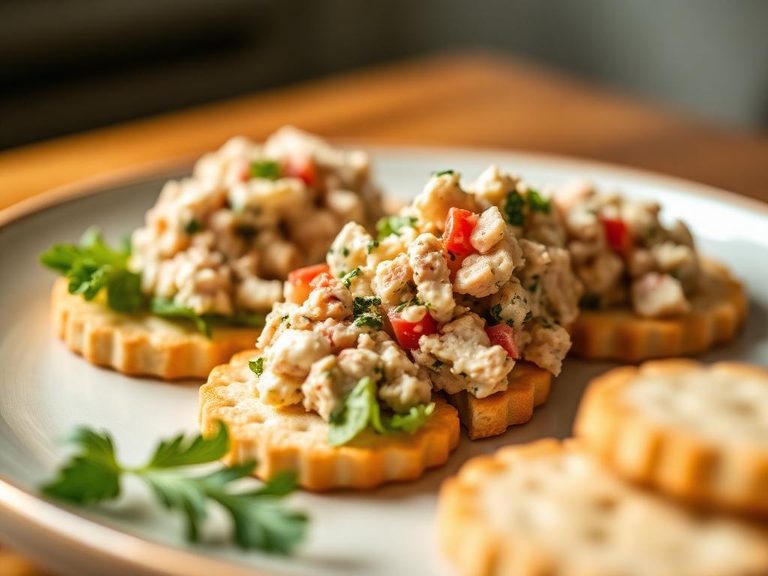
🌍 Where it's eaten
💡 Did you know?
The modern tuna salad we know was popularized in the United States in the early 20th century, coinciding with the rise of canned tuna as an affordable, shelf-stable protein source.
Full nutrition (USDA data · scales with serving)
| Water | 70.1 g |
| Energy | 190 kcal |
| Protein | 10.3 g |
| Total lipid (fat) | 15.4 g |
| Carbohydrate, by difference | 2.7 g |
| Fiber, total dietary | 0.40 g |
| Total Sugars | 2.0 g |
| Calcium, Ca | 24.0 mg |
| Iron, Fe | 0.97 mg |
| Magnesium, Mg | 14.0 mg |
| Phosphorus, P | 88.0 mg |
| Potassium, K | 152 mg |
| Sodium, Na | 393 mg |
| Zinc, Zn | 0.45 mg |
| Copper, Cu | 0.03 mg |
| Selenium, Se | 34.9 ug |
| Vitamin C, total ascorbic acid | 0.70 mg |
| Thiamin | 0.03 mg |
| Riboflavin | 0.10 mg |
| Niacin | 4.7 mg |
| Vitamin B-6 | 0.17 mg |
| Folate, total | 14.0 ug |
| Folic acid | 0.00 ug |
| Folate, food | 14.0 ug |
| Folate, DFE | 14.0 ug |
| Choline, total | 46.6 mg |
| Vitamin B-12 | 1.3 ug |
| Vitamin B-12, added | 0.00 ug |
| Vitamin A, RAE | 31.0 ug |
| Retinol | 23.0 ug |
| Carotene, beta | 84.0 ug |
| Carotene, alpha | 7.0 ug |
| Cryptoxanthin, beta | 17.0 ug |
| Lycopene | 0.00 ug |
| Lutein + zeaxanthin | 104 ug |
| Vitamin E (alpha-tocopherol) | 0.94 mg |
| Vitamin E, added | 0.00 mg |
| Vitamin D (D2 + D3) | 0.80 ug |
| Vitamin K (phylloquinone) | 40.9 ug |
| Alcohol, ethyl | 0.00 g |
| Caffeine | 0.00 mg |
| Theobromine | 0.00 mg |
Fat & fatty acid profile (per 100g)
| Fatty acids, total saturated | 2.6 g |
| SFA 4:0 | 0.00 g |
| SFA 6:0 | 0.00 g |
| SFA 8:0 | 0.00 g |
| SFA 10:0 | 0.00 g |
| SFA 12:0 | 0.00 g |
| SFA 14:0 | 0.02 g |
| SFA 16:0 | 1.8 g |
| SFA 18:0 | 0.68 g |
| Fatty acids, total monounsaturated | 3.6 g |
| MUFA 16:1 | 0.05 g |
| MUFA 18:1 | 3.4 g |
| MUFA 20:1 | 0.05 g |
| MUFA 22:1 | 0.01 g |
| Fatty acids, total polyunsaturated | 8.6 g |
| PUFA 18:2 | 7.4 g |
| PUFA 18:3 | 1.0 g |
| PUFA 18:4 | 0.00 g |
| PUFA 20:4 | 0.03 g |
| PUFA 20:5 n-3 (EPA) | 0.01 g |
| PUFA 22:5 n-3 (DPA) | 0.00 g |
| PUFA 22:6 n-3 (DHA) | 0.10 g |
| Cholesterol | 56.0 mg |
Amino acid profile (per 100g)
Estimated from Fish, tuna salad — USDA does not publish this profile for Tuna salad with egg.
| Tryptophan | 0.18 g |
| Threonine | 0.70 g |
| Isoleucine | 0.74 g |
| Leucine | 1.3 g |
| Lysine | 1.5 g |
| Methionine | 0.47 g |
| Cystine | 0.17 g |
| Phenylalanine | 0.63 g |
| Tyrosine | 0.54 g |
| Valine | 0.82 g |
| Arginine | 0.97 g |
| Histidine | 0.47 g |
| Alanine | 0.96 g |
| Aspartic acid | 1.6 g |
| Glutamic acid | 2.4 g |
| Glycine | 0.77 g |
| Proline | 0.56 g |
| Serine | 0.66 g |
FAQ
How long does tuna salad last in the fridge?
When stored in an airtight container, it's generally safe for 3-4 days. Always check for any off smells or changes in texture before consuming.
Can I make tuna salad healthier?
Absolutely. Swap some or all of the mayonnaise for mashed avocado or plain Greek yogurt to reduce saturated fat and add fiber or probiotics. Load it up with extra chopped veggies like celery, onion, or bell peppers for added crunch and nutrients.
What's the best tuna to use?
For flavor and sustainability, many recommend packed-in-water albacore or skipjack tuna. For a richer taste, tuna packed in olive oil is excellent, but be mindful of the added calories and fat.
Nutrient density (calculated · NRF9.3)
Nutrient Rich Foods index: beneficial nutrients (protein, fiber, vitamins, minerals) minus saturated fat, added sugar & sodium, per 100 kcal.
NRF9.3 index — Fulgoni, Keast & Drewnowski, 2009. Computed from USDA nutrients.
Weight-loss friendliness (composite index)
Energy density 1.90 kcal/g · 22% calories from protein · 0.4 g fiber · 2.0 g sugar per 100 g.
Composite of energy density (Rolls et al., 1999), protein & fiber satiety, minus sugar. A calculated heuristic — ranks satiety-per-calorie, not a clinical measure.
Dietary load (calculated from USDA values)
Potential renal acid load. Positive = acid-forming, negative = alkaline-forming.
Sodium-to-potassium ratio: 2.59 (lower is better — aim for ≤ 1)
Sodium:potassium per WHO potassium guidance. Computed from USDA nutrients.