

Topping from vegetable pizza
Common food
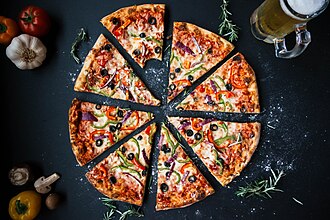
Photo: Wikipedia
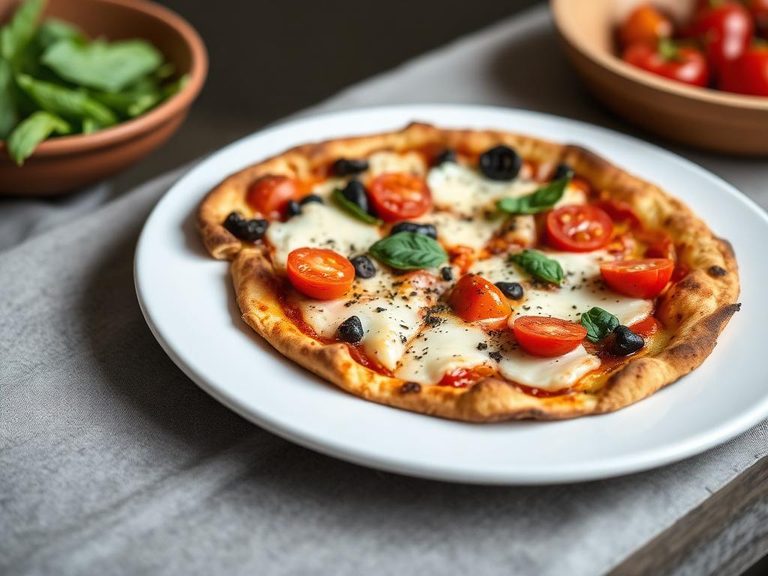
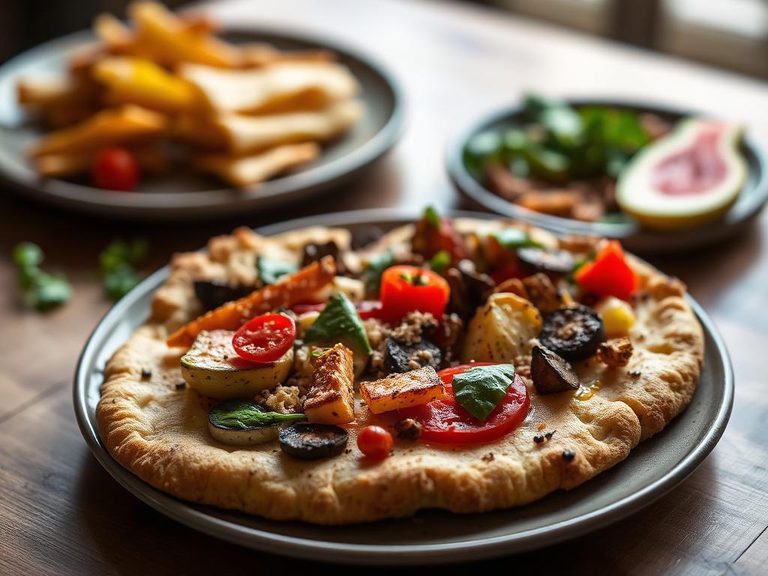
This is the savory, aromatic crown of a vegetable pizza, a colorful medley of roasted or fresh toppings like bell peppers, onions, mushrooms, olives, and sometimes artichokes or spinach. The texture is a delightful contrast: tender-crisp vegetables, sometimes with a slight char, against a soft, melted cheese backdrop. Nutritionally, it's a concentrated source of plant-based protein and healthy fats from the cheese and olive oil, with a moderate carb content from the vegetables themselves.
Calorie split: 25% protein · 19% carbs · 56% fat
↓ Full nutrition💚 Why it's loved
People love it for the burst of savory, umami-rich flavor from the melted cheese and the sweet, earthy notes of the roasted vegetables. It's a versatile canvas that allows for endless customization, from a simple Margherita to a loaded supreme, making it a beloved centerpiece of casual dining and social gatherings.
⚠️ Watch-outs & how to enjoy it better
The high sodium content from cheese and processed toppings like olives can be a concern for those monitoring blood pressure. The combination of refined carbs (crust) and high fat can lead to overconsumption. To counteract, opt for a thin, whole-grain crust, load up on extra vegetables, and pair with a side salad to increase fiber and volume, promoting fullness.
Key benefits
- Provides plant-based protein from cheese and vegetables
- Source of dietary fiber from vegetable toppings
- Contains vitamins A and C from bell peppers and tomatoes
- Offers healthy monounsaturated fats from olive oil
- Can be a good source of antioxidants like lycopene
🍽️ Popular dishes
🌍 Where it's eaten
💡 Did you know?
The classic 'vegetable pizza' as a distinct menu item in the U.S. gained major popularity in the 1970s and 80s, coinciding with the rise of health-conscious eating and the availability of frozen pizza.
Full nutrition (USDA data · scales with serving)
| Water | 52.8 g |
| Energy | 247 kcal |
| Protein | 15.6 g |
| Total lipid (fat) | 15.6 g |
| Carbohydrate, by difference | 12.2 g |
| Fiber, total dietary | 1.9 g |
| Total Sugars | 5.8 g |
| Calcium, Ca | 455 mg |
| Iron, Fe | 2.2 mg |
| Magnesium, Mg | 31.0 mg |
| Phosphorus, P | 348 mg |
| Potassium, K | 311 mg |
| Sodium, Na | 805 mg |
| Zinc, Zn | 2.4 mg |
| Copper, Cu | 0.15 mg |
| Selenium, Se | 17.1 ug |
| Vitamin C, total ascorbic acid | 17.3 mg |
| Thiamin | 0.04 mg |
| Riboflavin | 0.26 mg |
| Niacin | 2.2 mg |
| Vitamin B-6 | 0.21 mg |
| Folate, total | 25.0 ug |
| Folic acid | 0.00 ug |
| Folate, food | 25.0 ug |
| Folate, DFE | 25.0 ug |
| Choline, total | 18.5 mg |
| Vitamin B-12 | 0.54 ug |
| Vitamin B-12, added | 0.00 ug |
| Vitamin A, RAE | 146 ug |
| Retinol | 121 ug |
| Carotene, beta | 304 ug |
| Carotene, alpha | 6.0 ug |
| Cryptoxanthin, beta | 2.0 ug |
| Lycopene | 6399 ug |
| Lutein + zeaxanthin | 317 ug |
| Vitamin E (alpha-tocopherol) | 2.0 mg |
| Vitamin E, added | 0.00 mg |
| Vitamin D (D2 + D3) | 0.20 ug |
| Vitamin K (phylloquinone) | 10.6 ug |
| Alcohol, ethyl | 0.00 g |
| Caffeine | 0.00 mg |
| Theobromine | 0.00 mg |
Fat & fatty acid profile (per 100g)
| Fatty acids, total saturated | 7.6 g |
| SFA 4:0 | 0.24 g |
| SFA 6:0 | 0.20 g |
| SFA 8:0 | 0.13 g |
| SFA 10:0 | 0.30 g |
| SFA 12:0 | 0.35 g |
| SFA 14:0 | 1.1 g |
| SFA 16:0 | 3.7 g |
| SFA 18:0 | 1.3 g |
| Fatty acids, total monounsaturated | 4.8 g |
| MUFA 16:1 | 0.23 g |
| MUFA 18:1 | 4.7 g |
| MUFA 20:1 | 0.03 g |
| MUFA 22:1 | 0.00 g |
| Fatty acids, total polyunsaturated | 0.89 g |
| PUFA 18:2 | 0.84 g |
| PUFA 18:3 | 0.09 g |
| PUFA 18:4 | 0.00 g |
| PUFA 20:4 | 0.02 g |
| PUFA 20:5 n-3 (EPA) | 0.00 g |
| PUFA 22:5 n-3 (DPA) | 0.01 g |
| PUFA 22:6 n-3 (DHA) | 0.00 g |
| Cholesterol | 40.0 mg |
Amino acid profile (per 100g)
Estimated from Fast Food, Pizza Chain, 14" pizza, meat and vegetable topping, regular crust — USDA does not publish this profile for Topping from vegetable pizza.
| Tryptophan | 0.11 g |
| Threonine | 0.40 g |
| Isoleucine | 0.48 g |
| Leucine | 0.92 g |
| Lysine | 0.61 g |
| Methionine | 0.22 g |
| Cystine | 0.18 g |
| Phenylalanine | 0.55 g |
| Tyrosine | 0.39 g |
| Valine | 0.58 g |
| Arginine | 0.51 g |
| Histidine | 0.33 g |
| Alanine | 0.45 g |
| Aspartic acid | 0.86 g |
| Glutamic acid | 2.9 g |
| Glycine | 0.42 g |
| Proline | 1.1 g |
| Serine | 0.60 g |
| Hydroxyproline | 0.01 g |
FAQ
Is vegetable pizza healthier than meat pizza?
Generally, yes. Vegetable pizza is typically lower in saturated fat and calories while being higher in fiber and certain vitamins. However, the cheese content and crust type significantly impact the overall nutritional profile.
Can I make a low-carb version?
Absolutely. Use a cauliflower crust, a cheese-based 'fathead' dough, or simply bake the toppings on a portobello mushroom cap or in a bell pepper half to drastically reduce carbohydrates.
What are the best vegetables for pizza topping?
Popular choices include bell peppers, onions, mushrooms, spinach, olives, artichokes, and fresh tomatoes. Pre-cooking watery vegetables like zucchini or spinach helps prevent a soggy crust.
Nutrient density (calculated · NRF9.3)
Nutrient Rich Foods index: beneficial nutrients (protein, fiber, vitamins, minerals) minus saturated fat, added sugar & sodium, per 100 kcal.
NRF9.3 index — Fulgoni, Keast & Drewnowski, 2009. Computed from USDA nutrients.
Weight-loss friendliness (composite index)
Energy density 2.47 kcal/g · 25% calories from protein · 1.9 g fiber · 5.8 g sugar per 100 g.
Composite of energy density (Rolls et al., 1999), protein & fiber satiety, minus sugar. A calculated heuristic — ranks satiety-per-calorie, not a clinical measure.
Dietary load (calculated from USDA values)
Potential renal acid load. Positive = acid-forming, negative = alkaline-forming.
Sodium-to-potassium ratio: 2.59 (lower is better — aim for ≤ 1)
Sodium:potassium per WHO potassium guidance. Computed from USDA nutrients.