

Topping, butterscotch or caramel
Common food

Photo: Wikipedia
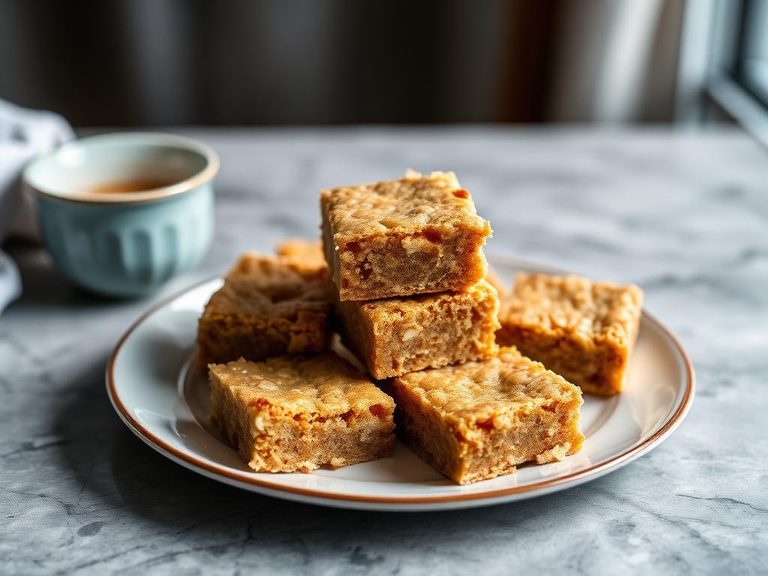
A rich, amber-hued sauce made by caramelizing sugar and blending it with butter and cream, butterscotch and caramel toppings offer a deeply sweet, buttery flavor with a smooth, viscous texture. Nutritionally, it is a dense source of pure carbohydrates, providing 57g of sugar and 216 kcal per 100g, with no fat or protein. Its intense sweetness and glossy finish make it a classic indulgent finish for desserts and beverages.
Calorie split: 2% protein · 98% carbs · 0% fat
↓ Full nutrition💚 Why it's loved
People love it for its comforting, nostalgic sweetness that evokes feelings of warmth and indulgence. Its versatility allows it to elevate everything from ice cream sundaes to coffee drinks, making it a beloved staple in dessert culture worldwide.
⚠️ Watch-outs & how to enjoy it better
The high sugar content (57g per 100g) can lead to rapid blood-sugar spikes, making it unsuitable for those managing diabetes or insulin resistance. To mitigate this, pair it with protein or healthy fats (like nuts or yogurt) to slow sugar absorption, and practice strict portion control by using it as a drizzle rather than a base. It is also calorie-dense, so moderation is key.
Key benefits
- Provides a quick source of energy from simple carbohydrates
- Enhances the flavor profile of desserts with rich, buttery notes
- Adds a visually appealing glossy finish to dishes
- Versatile for both hot and cold applications
- Can be used as a flavoring agent in small quantities
🍽️ Popular dishes

🌍 Where it's eaten
💡 Did you know?
The term 'butterscotch' is believed to have originated in the town of Doncaster, England, in the 19th century, where it was first sold as a hard candy, not a sauce.
Full nutrition (USDA data · scales with serving)
| Water | 40.6 g |
| Energy | 216 kcal |
| Protein | 1.2 g |
| Total lipid (fat) | 0.00 g |
| Carbohydrate, by difference | 57.0 g |
| Fiber, total dietary | 0.00 g |
| Total Sugars | 57.0 g |
| Calcium, Ca | 49.0 mg |
| Iron, Fe | 0.00 mg |
| Magnesium, Mg | 5.0 mg |
| Phosphorus, P | 39.0 mg |
| Potassium, K | 66.0 mg |
| Sodium, Na | 341 mg |
| Zinc, Zn | 0.00 mg |
| Copper, Cu | 0.00 mg |
| Selenium, Se | 1.3 ug |
| Vitamin C, total ascorbic acid | 0.50 mg |
| Thiamin | 0.00 mg |
| Riboflavin | 0.00 mg |
| Niacin | 0.00 mg |
| Vitamin B-6 | 0.00 mg |
| Folate, total | 2.0 ug |
| Folic acid | 0.00 ug |
| Folate, food | 2.0 ug |
| Folate, DFE | 2.0 ug |
| Choline, total | 6.6 mg |
| Vitamin B-12 | 0.18 ug |
| Vitamin B-12, added | 0.00 ug |
| Vitamin A, RAE | 19.0 ug |
| Retinol | 19.0 ug |
| Carotene, beta | 0.00 ug |
| Carotene, alpha | 0.00 ug |
| Cryptoxanthin, beta | 0.00 ug |
| Lycopene | 0.00 ug |
| Lutein + zeaxanthin | 0.00 ug |
| Vitamin E (alpha-tocopherol) | 0.05 mg |
| Vitamin E, added | 0.00 mg |
| Vitamin D (D2 + D3) | 0.00 ug |
| Vitamin K (phylloquinone) | 0.00 ug |
| Alcohol, ethyl | 0.00 g |
| Caffeine | 0.00 mg |
| Theobromine | 0.00 mg |
Fat & fatty acid profile (per 100g)
| Fatty acids, total saturated | 0.00 g |
| SFA 4:0 | 0.00 g |
| SFA 6:0 | 0.00 g |
| SFA 8:0 | 0.00 g |
| SFA 10:0 | 0.00 g |
| SFA 12:0 | 0.00 g |
| SFA 14:0 | 0.00 g |
| SFA 16:0 | 0.00 g |
| SFA 18:0 | 0.00 g |
| Fatty acids, total monounsaturated | 0.00 g |
| MUFA 16:1 | 0.00 g |
| MUFA 18:1 | 0.00 g |
| MUFA 20:1 | 0.00 g |
| MUFA 22:1 | 0.00 g |
| Fatty acids, total polyunsaturated | 0.00 g |
| PUFA 18:2 | 0.00 g |
| PUFA 18:3 | 0.00 g |
| PUFA 18:4 | 0.00 g |
| PUFA 20:4 | 0.00 g |
| PUFA 20:5 n-3 (EPA) | 0.00 g |
| PUFA 22:5 n-3 (DPA) | 0.00 g |
| PUFA 22:6 n-3 (DHA) | 0.00 g |
| Cholesterol | 0.00 mg |
Amino acid profile (per 100g)
Estimated from Dessert topping, semi solid, frozen — USDA does not publish this profile for Topping.
| Tryptophan | 0.02 g |
| Threonine | 0.05 g |
| Isoleucine | 0.08 g |
| Leucine | 0.12 g |
| Lysine | 0.10 g |
| Methionine | 0.04 g |
| Cystine | 0.01 g |
| Phenylalanine | 0.07 g |
| Tyrosine | 0.07 g |
| Valine | 0.09 g |
| Arginine | 0.05 g |
| Histidine | 0.04 g |
| Alanine | 0.04 g |
| Aspartic acid | 0.09 g |
| Glutamic acid | 0.28 g |
| Glycine | 0.03 g |
| Proline | 0.14 g |
| Serine | 0.08 g |
FAQ
What's the difference between butterscotch and caramel?
Butterscotch is traditionally made with brown sugar and butter, giving it a deeper, more molasses-like flavor, while caramel is made with white sugar that is caramelized, resulting in a more straightforward sweet, slightly bitter taste.
Can I use this topping for savory dishes?
While primarily sweet, caramel can be used in small amounts in savory glazes for meats like pork or in vinaigrettes to balance acidity, but it should be used sparingly.
How should I store this topping?
Store it in an airtight container in the refrigerator for up to 2 weeks. It may thicken when cold, so gently reheat it in a microwave or saucepan before use.
Nutrient density (calculated · NRF9.3)
Nutrient Rich Foods index: beneficial nutrients (protein, fiber, vitamins, minerals) minus saturated fat, added sugar & sodium, per 100 kcal.
NRF9.3 index — Fulgoni, Keast & Drewnowski, 2009. Computed from USDA nutrients.
Weight-loss friendliness (composite index)
Energy density 2.16 kcal/g · 2% calories from protein · 0.0 g fiber · 57.0 g sugar per 100 g.
Composite of energy density (Rolls et al., 1999), protein & fiber satiety, minus sugar. A calculated heuristic — ranks satiety-per-calorie, not a clinical measure.
Dietary load (calculated from USDA values)
Potential renal acid load. Positive = acid-forming, negative = alkaline-forming.
Sodium-to-potassium ratio: 5.17 (lower is better — aim for ≤ 1)
Sodium:potassium per WHO potassium guidance. Computed from USDA nutrients.