

Tomatoes, canned, cooked
Common food
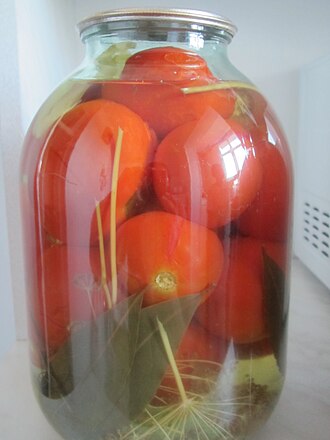
Photo: Wikipedia
Canned, cooked tomatoes are a pantry powerhouse, offering a deep, concentrated tomato flavor with a soft, yielding texture that's perfect for sauces and stews. Nutritionally, they provide a modest calorie base with a notable contribution of dietary fiber and the antioxidant lycopene, which becomes more bioavailable through the cooking process.
Calorie split: 8% protein · 30% carbs · 63% fat
↓ Full nutrition💚 Why it's loved
People love them for their consistent, rich umami flavor that forms the backbone of countless sauces, soups, and braises. Their convenience and long shelf life make them a reliable staple for quick, flavorful meals any time of year.
⚠️ Watch-outs & how to enjoy it better
Some canned varieties can be high in added sodium, which is a consideration for those monitoring blood pressure. To counteract this, look for 'no salt added' versions or rinse the tomatoes briefly. The natural acidity can also be an issue for those with acid reflux; pairing them with a small amount of baking soda in cooking or balancing with a pinch of sugar can help neutralize the acidity.
Key benefits
- Excellent source of the antioxidant lycopene
- Provides dietary fiber for digestive health
- Convenient, shelf-stable, and available year-round
- Rich in vitamins A and C from the tomato base
- Cooking process enhances nutrient absorption
🍽️ Popular dishes
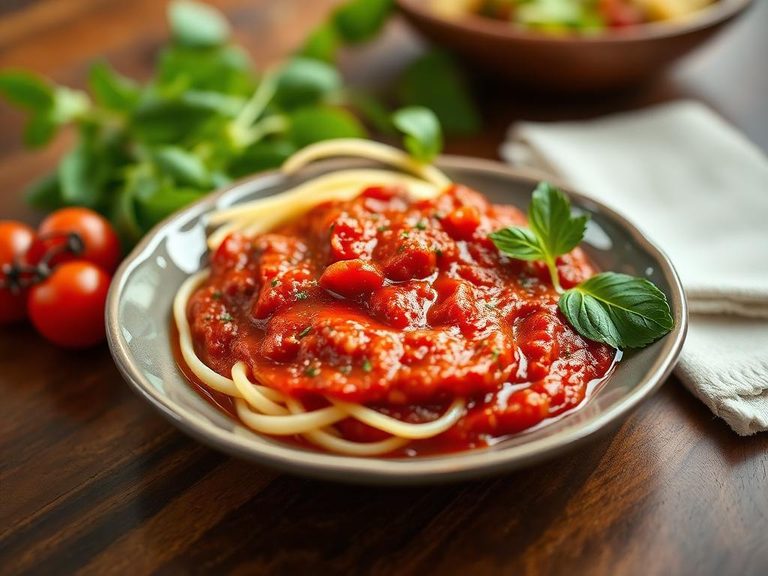


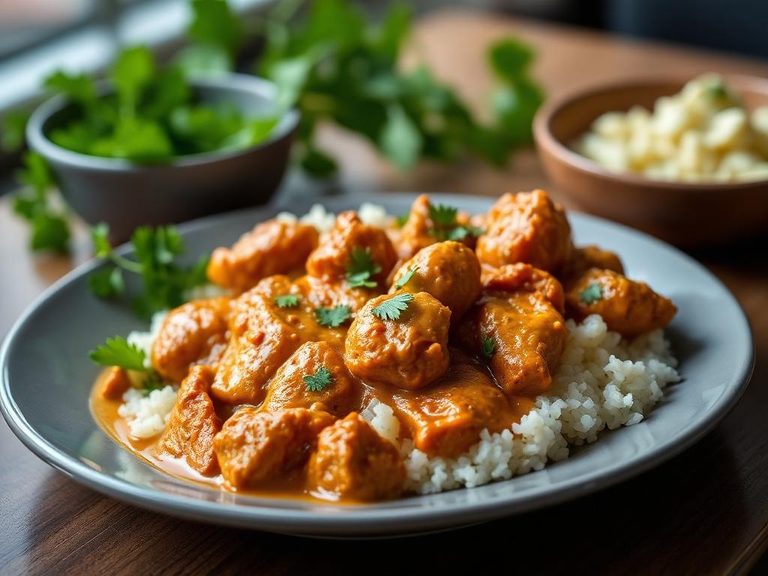
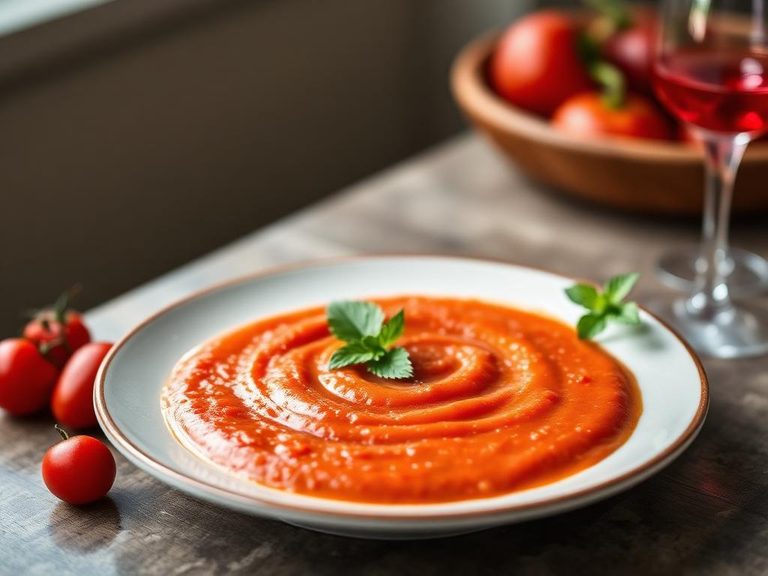
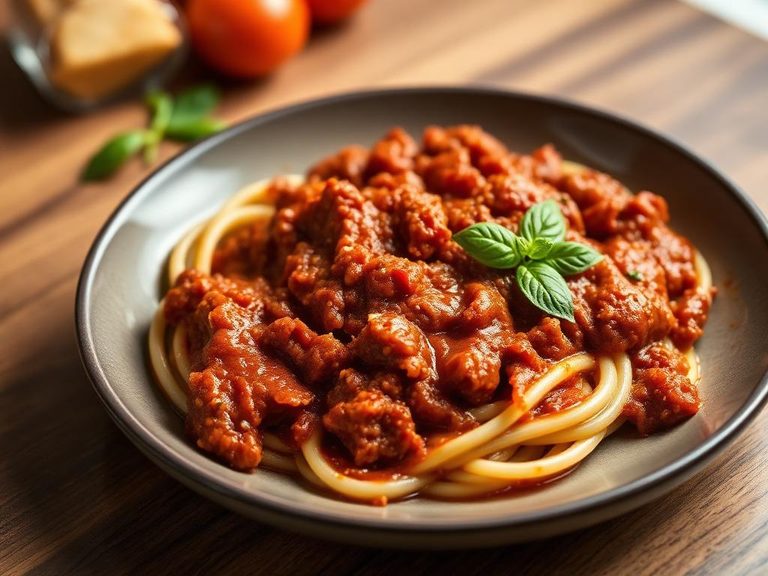
🌍 Where it's eaten
💡 Did you know?
The canning process, which involves high-heat sterilization, actually increases the bioavailability of lycopene, making your body better able to absorb this heart-healthy antioxidant compared to from some raw tomato products.
Full nutrition (USDA data · scales with serving)
| Water | 92.2 g |
| Energy | 43.0 kcal |
| Protein | 0.82 g |
| Total lipid (fat) | 3.0 g |
| Carbohydrate, by difference | 3.2 g |
| Fiber, total dietary | 1.8 g |
| Total Sugars | 2.9 g |
| Calcium, Ca | 29.0 mg |
| Iron, Fe | 0.56 mg |
| Magnesium, Mg | 10.0 mg |
| Phosphorus, P | 18.0 mg |
| Potassium, K | 193 mg |
| Sodium, Na | 130 mg |
| Zinc, Zn | 0.12 mg |
| Copper, Cu | 0.05 mg |
| Selenium, Se | 0.70 ug |
| Vitamin C, total ascorbic acid | 12.2 mg |
| Thiamin | 0.56 mg |
| Riboflavin | 0.05 mg |
| Niacin | 0.69 mg |
| Vitamin B-6 | 0.12 mg |
| Folate, total | 7.0 ug |
| Folic acid | 0.00 ug |
| Folate, food | 7.0 ug |
| Folate, DFE | 7.0 ug |
| Choline, total | 6.1 mg |
| Vitamin B-12 | 0.00 ug |
| Vitamin B-12, added | 0.00 ug |
| Vitamin A, RAE | 31.0 ug |
| Retinol | 11.0 ug |
| Carotene, beta | 243 ug |
| Carotene, alpha | 0.00 ug |
| Cryptoxanthin, beta | 0.00 ug |
| Lycopene | 2463 ug |
| Lutein + zeaxanthin | 76.0 ug |
| Vitamin E (alpha-tocopherol) | 0.96 mg |
| Vitamin E, added | 0.00 mg |
| Vitamin D (D2 + D3) | 0.00 ug |
| Vitamin K (phylloquinone) | 4.6 ug |
| Alcohol, ethyl | 0.00 g |
| Caffeine | 0.00 mg |
| Theobromine | 0.00 mg |
Fat & fatty acid profile (per 100g)
| Fatty acids, total saturated | 0.70 g |
| SFA 4:0 | 0.02 g |
| SFA 6:0 | 0.01 g |
| SFA 8:0 | 0.01 g |
| SFA 10:0 | 0.02 g |
| SFA 12:0 | 0.02 g |
| SFA 14:0 | 0.06 g |
| SFA 16:0 | 0.39 g |
| SFA 18:0 | 0.14 g |
| Fatty acids, total monounsaturated | 0.94 g |
| MUFA 16:1 | 0.02 g |
| MUFA 18:1 | 0.91 g |
| MUFA 20:1 | 0.01 g |
| MUFA 22:1 | 0.00 g |
| Fatty acids, total polyunsaturated | 0.83 g |
| PUFA 18:2 | 0.74 g |
| PUFA 18:3 | 0.09 g |
| PUFA 18:4 | 0.00 g |
| PUFA 20:4 | 0.00 g |
| PUFA 20:5 n-3 (EPA) | 0.00 g |
| PUFA 22:5 n-3 (DPA) | 0.00 g |
| PUFA 22:6 n-3 (DHA) | 0.00 g |
| Cholesterol | 2.0 mg |
Amino acid profile (per 100g)
Estimated from Tomatoes, sun-dried, packed in oil, drained — USDA does not publish this profile for Tomatoes.
| Tryptophan | 0.04 g |
| Threonine | 0.13 g |
| Isoleucine | 0.12 g |
| Leucine | 0.18 g |
| Lysine | 0.19 g |
| Methionine | 0.04 g |
| Cystine | 0.07 g |
| Phenylalanine | 0.13 g |
| Tyrosine | 0.09 g |
| Valine | 0.13 g |
| Arginine | 0.12 g |
| Histidine | 0.08 g |
| Alanine | 0.14 g |
| Aspartic acid | 0.70 g |
| Glutamic acid | 1.9 g |
| Glycine | 0.13 g |
| Proline | 0.10 g |
| Serine | 0.13 g |
FAQ
What's the difference between canned diced, crushed, and whole peeled tomatoes?
Diced tomatoes are cut into chunks and hold their shape, ideal for chili or stews. Crushed tomatoes are a thicker, smoother purée, perfect for sauces. Whole peeled tomatoes are the most versatile; you can crush them by hand for a rustic texture or blend them smooth.
Are canned tomatoes as nutritious as fresh?
Yes, often more so for certain nutrients. Canned tomatoes are processed at peak ripeness, locking in nutrients. The cooking process also makes lycopene more absorbable. Fresh tomatoes are superior for texture and vitamin C, which degrades with heat.
How can I use the liquid from the can?
The liquid, or 'tomato water,' is packed with flavor. Don't discard it! Use it as a base for soup, add it to risotto, or incorporate it into the sauce you're making to enhance the tomato depth without adding extra water.
Nutrient density (calculated · NRF9.3)
Nutrient Rich Foods index: beneficial nutrients (protein, fiber, vitamins, minerals) minus saturated fat, added sugar & sodium, per 100 kcal.
NRF9.3 index — Fulgoni, Keast & Drewnowski, 2009. Computed from USDA nutrients.
Weight-loss friendliness (composite index)
Energy density 0.43 kcal/g · 8% calories from protein · 1.8 g fiber · 2.9 g sugar per 100 g.
Composite of energy density (Rolls et al., 1999), protein & fiber satiety, minus sugar. A calculated heuristic — ranks satiety-per-calorie, not a clinical measure.
Dietary load (calculated from USDA values)
Potential renal acid load. Positive = acid-forming, negative = alkaline-forming.
Sodium-to-potassium ratio: 0.67 (lower is better — aim for ≤ 1)
Sodium:potassium per WHO potassium guidance. Computed from USDA nutrients.