

Tea, bubble
Common food
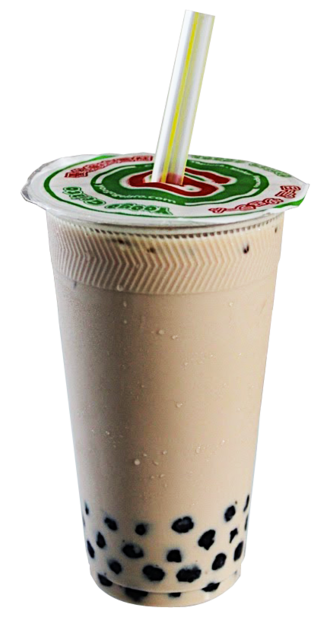
Photo: Wikipedia
Bubble tea is a sweet, chewy, and refreshing Taiwanese beverage that combines brewed tea with milk or fruit flavors and signature tapioca pearls. The pearls provide a satisfying, bouncy texture that contrasts with the smooth liquid, creating a uniquely playful drinking experience. Nutritionally, it is a low-protein, high-carb drink, with most of its energy coming from sugars and starches.
Calorie split: 3% protein · 75% carbs · 23% fat
↓ Full nutrition💚 Why it's loved
People love bubble tea for its fun, interactive texture and the endless variety of flavors, from classic milk tea to fruit-infused options. It's a beloved social drink and a cultural icon, often enjoyed as a treat or a pick-me-up.
⚠️ Watch-outs & how to enjoy it better
Bubble tea can be high in sugar and calories, which may cause blood sugar spikes, especially for those with insulin resistance. To mitigate this, opt for less sugar, choose a smaller size, or pair it with a protein-rich snack like nuts or yogurt to slow sugar absorption.
Key benefits
- Provides a quick source of energy from carbohydrates.
- Contains antioxidants from the tea base (e.g., catechins in green tea).
- Can be a source of calcium if made with dairy milk.
- Offers a customizable and enjoyable way to stay hydrated.
🍽️ Popular dishes
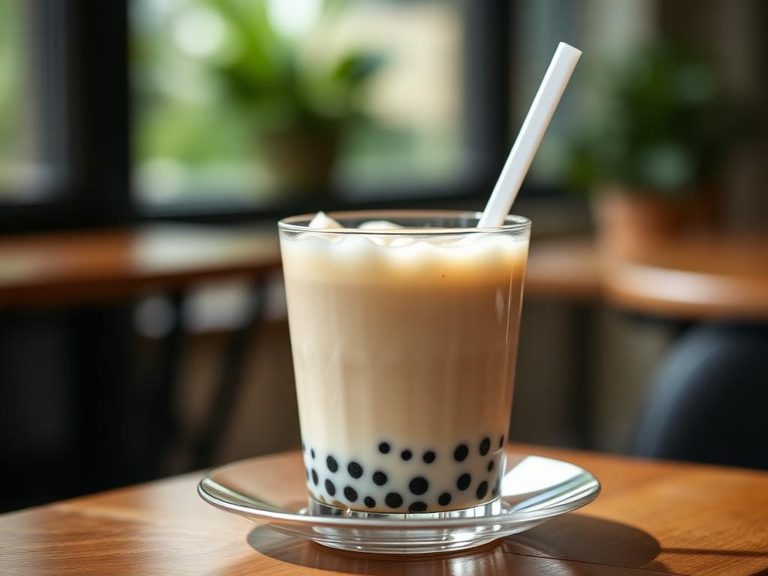

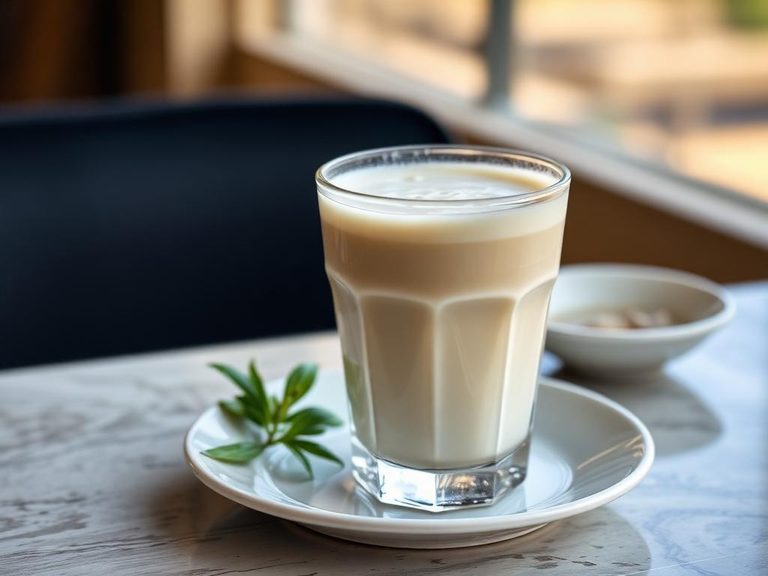
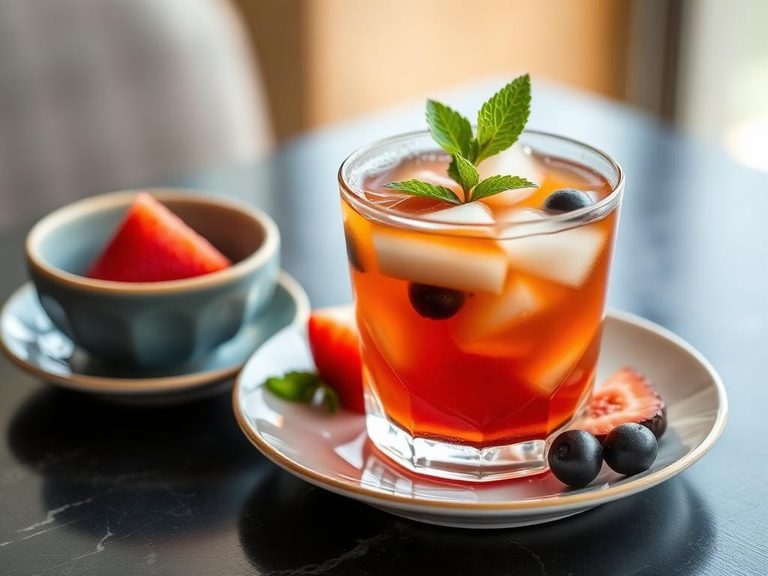
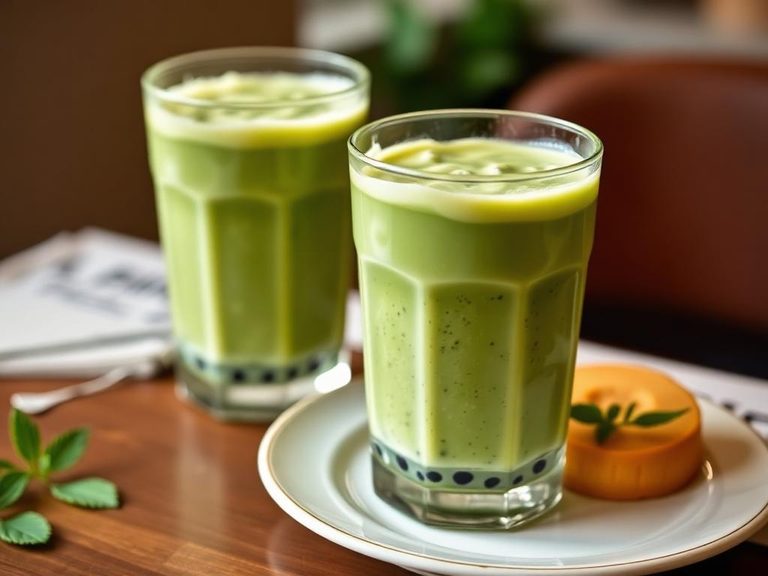
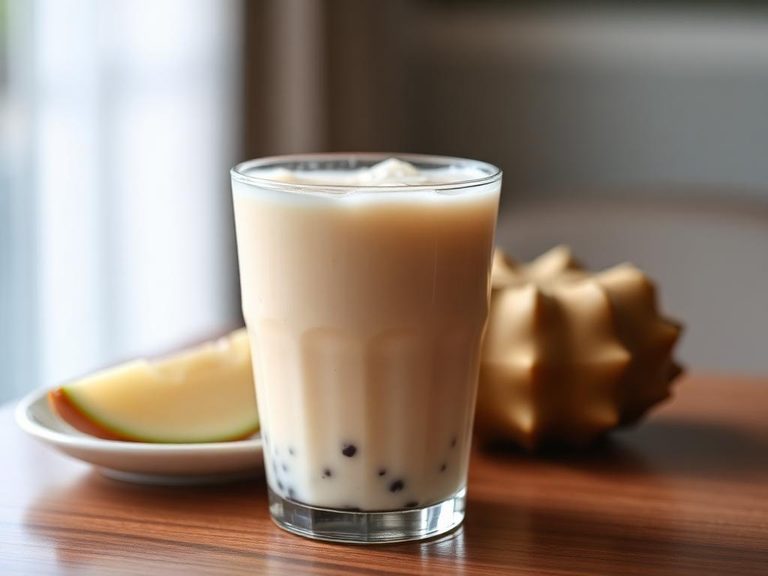
🌍 Where it's eaten
💡 Did you know?
The iconic tapioca pearls in bubble tea are made from cassava root starch, and their chewy texture is so prized that the drink's name in some languages literally translates to 'pearl milk tea'.
Full nutrition (USDA data · scales with serving)
| Water | 86.2 g |
| Energy | 55.0 kcal |
| Protein | 0.39 g |
| Total lipid (fat) | 1.4 g |
| Carbohydrate, by difference | 10.3 g |
| Fiber, total dietary | 0.10 g |
| Total Sugars | 3.5 g |
| Calcium, Ca | 15.0 mg |
| Iron, Fe | 0.13 mg |
| Magnesium, Mg | 1.0 mg |
| Phosphorus, P | 12.0 mg |
| Potassium, K | 17.0 mg |
| Sodium, Na | 9.0 mg |
| Zinc, Zn | 0.06 mg |
| Copper, Cu | 0.00 mg |
| Selenium, Se | 0.50 ug |
| Vitamin C, total ascorbic acid | 0.10 mg |
| Thiamin | 0.00 mg |
| Riboflavin | 0.02 mg |
| Niacin | 0.01 mg |
| Vitamin B-6 | 0.01 mg |
| Folate, total | 1.0 ug |
| Folic acid | 0.00 ug |
| Folate, food | 1.0 ug |
| Folate, DFE | 1.0 ug |
| Choline, total | 2.3 mg |
| Vitamin B-12 | 0.02 ug |
| Vitamin B-12, added | 0.00 ug |
| Vitamin A, RAE | 12.0 ug |
| Retinol | 11.0 ug |
| Carotene, beta | 3.0 ug |
| Carotene, alpha | 0.00 ug |
| Cryptoxanthin, beta | 0.00 ug |
| Lycopene | 0.00 ug |
| Lutein + zeaxanthin | 0.00 ug |
| Vitamin E (alpha-tocopherol) | 0.03 mg |
| Vitamin E, added | 0.00 mg |
| Vitamin D (D2 + D3) | 0.00 ug |
| Vitamin K (phylloquinone) | 0.20 ug |
| Alcohol, ethyl | 0.00 g |
| Caffeine | 8.0 mg |
| Theobromine | 0.00 mg |
Fat & fatty acid profile (per 100g)
| Fatty acids, total saturated | 0.84 g |
| SFA 4:0 | 0.03 g |
| SFA 6:0 | 0.02 g |
| SFA 8:0 | 0.01 g |
| SFA 10:0 | 0.04 g |
| SFA 12:0 | 0.04 g |
| SFA 14:0 | 0.14 g |
| SFA 16:0 | 0.39 g |
| SFA 18:0 | 0.15 g |
| Fatty acids, total monounsaturated | 0.40 g |
| MUFA 16:1 | 0.03 g |
| MUFA 18:1 | 0.35 g |
| MUFA 20:1 | 0.00 g |
| MUFA 22:1 | 0.00 g |
| Fatty acids, total polyunsaturated | 0.07 g |
| PUFA 18:2 | 0.06 g |
| PUFA 18:3 | 0.01 g |
| PUFA 18:4 | 0.00 g |
| PUFA 20:4 | 0.00 g |
| PUFA 20:5 n-3 (EPA) | 0.00 g |
| PUFA 22:5 n-3 (DPA) | 0.00 g |
| PUFA 22:6 n-3 (DHA) | 0.00 g |
| Cholesterol | 4.0 mg |
Amino acid profile (per 100g)
Estimated from Cookies, animal crackers (includes arrowroot, tea biscuits) — USDA does not publish this profile for Tea.
| Tryptophan | 0.10 g |
| Threonine | 0.19 g |
| Isoleucine | 0.26 g |
| Leucine | 0.47 g |
| Lysine | 0.24 g |
| Methionine | 0.12 g |
| Cystine | 0.15 g |
| Phenylalanine | 0.32 g |
| Tyrosine | 0.20 g |
| Valine | 0.30 g |
| Arginine | 0.26 g |
| Histidine | 0.14 g |
| Alanine | 0.21 g |
| Aspartic acid | 0.29 g |
| Glutamic acid | 2.3 g |
| Glycine | 0.23 g |
| Proline | 0.76 g |
| Serine | 0.36 g |
FAQ
Is bubble tea healthy?
Bubble tea is best enjoyed as an occasional treat. While it provides some energy and antioxidants from tea, it is typically high in sugar and calories. Choosing less sugar, smaller portions, or unsweetened tea can make it a healthier option.
What are the pearls in bubble tea made of?
The pearls, or boba, are primarily made from tapioca starch, which comes from the cassava root. They are cooked in sugar syrup to give them their sweet flavor and chewy texture.
Can I make bubble tea at home?
Yes, bubble tea can be made at home by brewing tea, mixing it with milk or a milk alternative, sweetening to taste, and adding cooked tapioca pearls. You can also experiment with different flavors and toppings like fruit jellies or pudding.
Nutrient density (calculated · NRF9.3)
Nutrient Rich Foods index: beneficial nutrients (protein, fiber, vitamins, minerals) minus saturated fat, added sugar & sodium, per 100 kcal.
NRF9.3 index — Fulgoni, Keast & Drewnowski, 2009. Computed from USDA nutrients.
Weight-loss friendliness (composite index)
Energy density 0.55 kcal/g · 3% calories from protein · 0.1 g fiber · 3.5 g sugar per 100 g.
Composite of energy density (Rolls et al., 1999), protein & fiber satiety, minus sugar. A calculated heuristic — ranks satiety-per-calorie, not a clinical measure.
Dietary load (calculated from USDA values)
Potential renal acid load. Positive = acid-forming, negative = alkaline-forming.
Sodium-to-potassium ratio: 0.53 (lower is better — aim for ≤ 1)
Sodium:potassium per WHO potassium guidance. Computed from USDA nutrients.