

Tamale, pork
Common food

Photo: Wikipedia
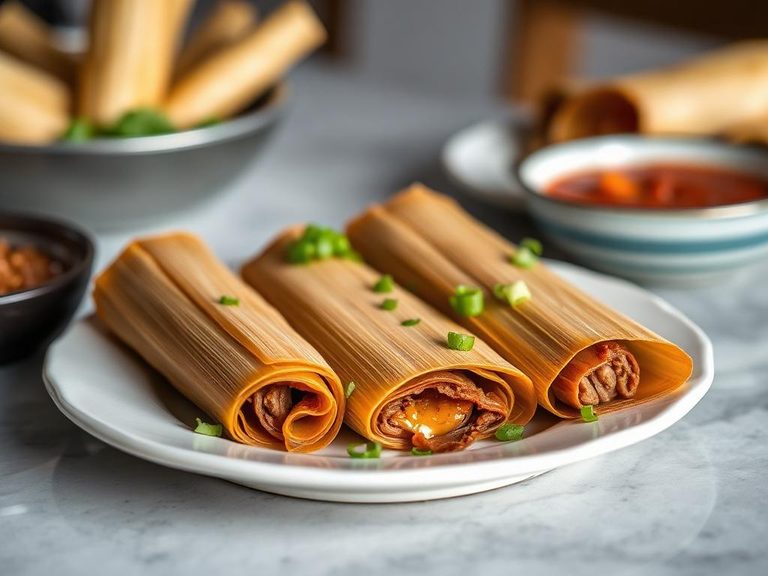
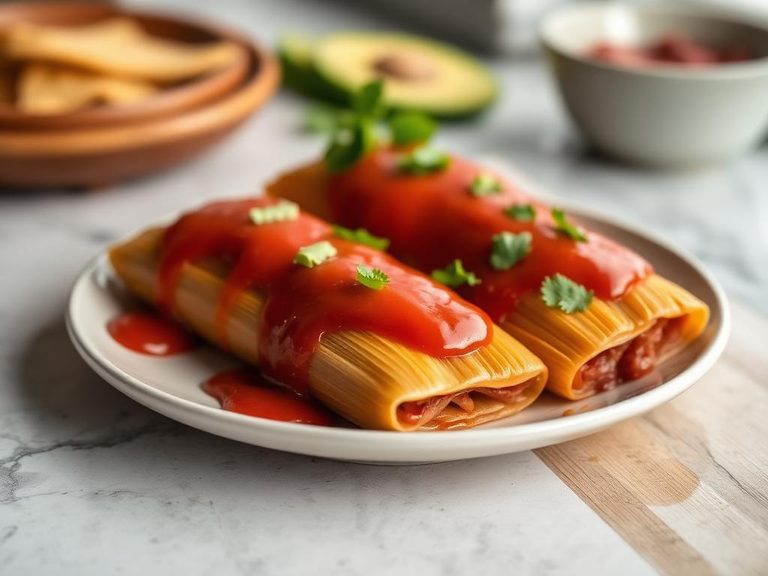
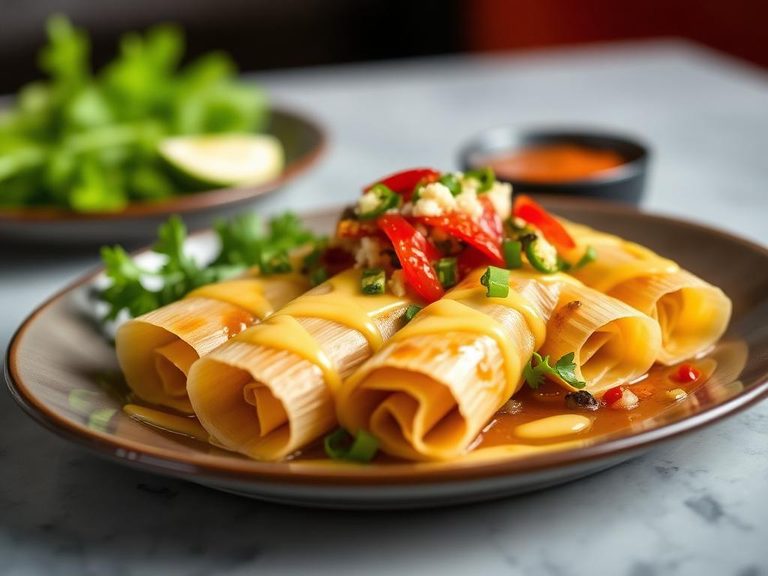
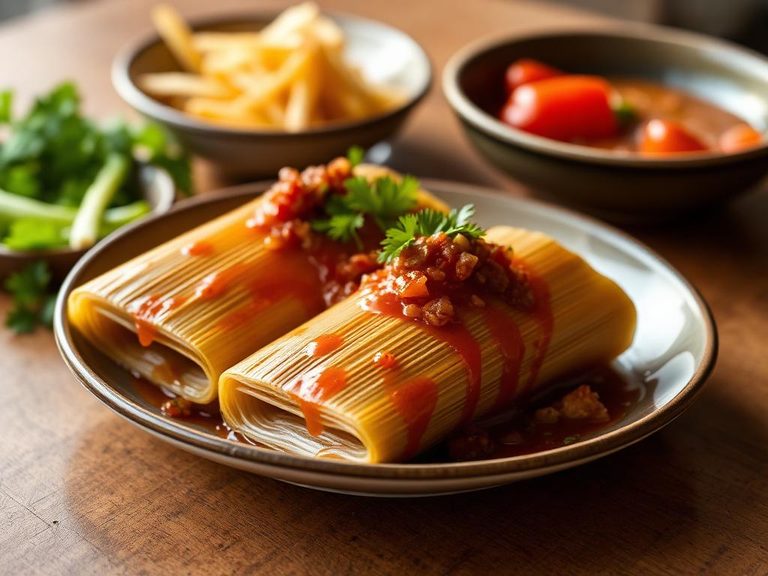
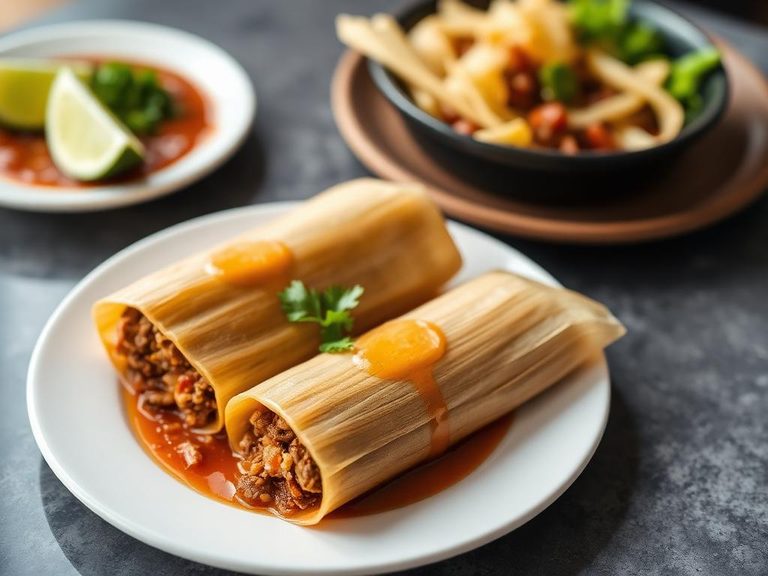
A tamale is a traditional Mesoamerican dish of masa (corn dough) steamed in a corn husk or banana leaf, here filled with savory, seasoned pork. The texture is uniquely soft and slightly spongy, with the masa yielding to the tender, spiced meat inside. Nutritionally, it provides a balanced mix of carbohydrates and protein, with a notable fat content that contributes to its rich mouthfeel.
Calorie split: 17% protein · 36% carbs · 47% fat
↓ Full nutrition💚 Why it's loved
People love tamales for their deeply savory, complex flavors and the comforting, festive ritual of making and eating them. They are a versatile canvas for regional fillings and are central to celebrations, especially in Mexican and Latin American cultures.
⚠️ Watch-outs & how to enjoy it better
Tamales can be high in sodium and saturated fat, especially with rich pork fillings, which may be a concern for those monitoring heart health or blood pressure. The dense carbohydrate content can also cause blood sugar spikes; pairing with non-starchy vegetables and controlling portion size helps mitigate this.
Key benefits
- Good source of plant-based protein from corn masa
- Provides dietary fiber from corn husk and masa
- Contains iron and B vitamins from pork and corn
- Naturally gluten-free if made traditionally
- Culturally significant comfort food
🍽️ Popular dishes
🌍 Where it's eaten
💡 Did you know?
The corn husk wrapper is not just for steaming; it imparts a subtle, earthy flavor to the masa and is traditionally discarded before eating, though some enjoy nibbling the softened edges.
Full nutrition (USDA data · scales with serving)
| Water | 66.0 g |
| Energy | 174 kcal |
| Protein | 7.4 g |
| Total lipid (fat) | 9.0 g |
| Carbohydrate, by difference | 15.8 g |
| Fiber, total dietary | 2.4 g |
| Total Sugars | 0.46 g |
| Calcium, Ca | 75.0 mg |
| Iron, Fe | 0.87 mg |
| Magnesium, Mg | 26.0 mg |
| Phosphorus, P | 120 mg |
| Potassium, K | 152 mg |
| Sodium, Na | 473 mg |
| Zinc, Zn | 1.2 mg |
| Copper, Cu | 0.05 mg |
| Selenium, Se | 9.8 ug |
| Vitamin C, total ascorbic acid | 16.4 mg |
| Thiamin | 0.04 mg |
| Riboflavin | 0.05 mg |
| Niacin | 1.3 mg |
| Vitamin B-6 | 0.13 mg |
| Folate, total | 39.0 ug |
| Folic acid | 30.0 ug |
| Folate, food | 9.0 ug |
| Folate, DFE | 60.0 ug |
| Choline, total | 8.8 mg |
| Vitamin B-12 | 0.12 ug |
| Vitamin B-12, added | 0.00 ug |
| Vitamin A, RAE | 12.0 ug |
| Retinol | 1.0 ug |
| Carotene, beta | 113 ug |
| Carotene, alpha | 0.00 ug |
| Cryptoxanthin, beta | 58.0 ug |
| Lycopene | 85.0 ug |
| Lutein + zeaxanthin | 110 ug |
| Vitamin E (alpha-tocopherol) | 0.53 mg |
| Vitamin E, added | 0.00 mg |
| Vitamin D (D2 + D3) | 0.30 ug |
| Vitamin K (phylloquinone) | 5.1 ug |
| Alcohol, ethyl | 0.00 g |
| Caffeine | 0.00 mg |
| Theobromine | 0.00 mg |
Fat & fatty acid profile (per 100g)
| Fatty acids, total saturated | 2.7 g |
| SFA 4:0 | 0.00 g |
| SFA 6:0 | 0.00 g |
| SFA 8:0 | 0.00 g |
| SFA 10:0 | 0.01 g |
| SFA 12:0 | 0.01 g |
| SFA 14:0 | 0.10 g |
| SFA 16:0 | 1.7 g |
| SFA 18:0 | 0.82 g |
| Fatty acids, total monounsaturated | 3.2 g |
| MUFA 16:1 | 0.15 g |
| MUFA 18:1 | 3.0 g |
| MUFA 20:1 | 0.06 g |
| MUFA 22:1 | 0.00 g |
| Fatty acids, total polyunsaturated | 2.0 g |
| PUFA 18:2 | 1.8 g |
| PUFA 18:3 | 0.10 g |
| PUFA 18:4 | 0.00 g |
| PUFA 20:4 | 0.03 g |
| PUFA 20:5 n-3 (EPA) | 0.00 g |
| PUFA 22:5 n-3 (DPA) | 0.01 g |
| PUFA 22:6 n-3 (DHA) | 0.00 g |
| Cholesterol | 20.0 mg |
Amino acid profile (per 100g)
Estimated from Tamales (Navajo) — USDA does not publish this profile for Tamale.
| Tryptophan | 0.05 g |
| Threonine | 0.24 g |
| Isoleucine | 0.27 g |
| Leucine | 0.57 g |
| Lysine | 0.43 g |
| Methionine | 0.15 g |
| Cystine | 0.08 g |
| Phenylalanine | 0.28 g |
| Tyrosine | 0.20 g |
| Valine | 0.32 g |
| Arginine | 0.39 g |
| Histidine | 0.20 g |
| Alanine | 0.42 g |
| Aspartic acid | 0.56 g |
| Glutamic acid | 1.0 g |
| Glycine | 0.38 g |
| Proline | 0.38 g |
| Serine | 0.27 g |
FAQ
What is masa?
Masa is a dough made from nixtamalized corn (corn treated with lime), which is the foundational ingredient for tamales, tortillas, and many other Latin American foods.
Why are tamales steamed instead of baked?
Steaming keeps the masa moist and tender, allowing it to cook evenly and absorb the flavors of the filling without drying out, which would happen in an oven.
Can tamales be made ahead?
Yes, tamales freeze exceptionally well. After steaming, let them cool completely, then freeze in airtight bags for up to 6 months. Re-steam or microwave to reheat.
Nutrient density (calculated · NRF9.3)
Nutrient Rich Foods index: beneficial nutrients (protein, fiber, vitamins, minerals) minus saturated fat, added sugar & sodium, per 100 kcal.
NRF9.3 index — Fulgoni, Keast & Drewnowski, 2009. Computed from USDA nutrients.
Weight-loss friendliness (composite index)
Energy density 1.74 kcal/g · 17% calories from protein · 2.4 g fiber · 0.5 g sugar per 100 g.
Composite of energy density (Rolls et al., 1999), protein & fiber satiety, minus sugar. A calculated heuristic — ranks satiety-per-calorie, not a clinical measure.
Dietary load (calculated from USDA values)
Potential renal acid load. Positive = acid-forming, negative = alkaline-forming.
Sodium-to-potassium ratio: 3.11 (lower is better — aim for ≤ 1)
Sodium:potassium per WHO potassium guidance. Computed from USDA nutrients.