

Tamale, NFS
Common food

Photo: Wikipedia
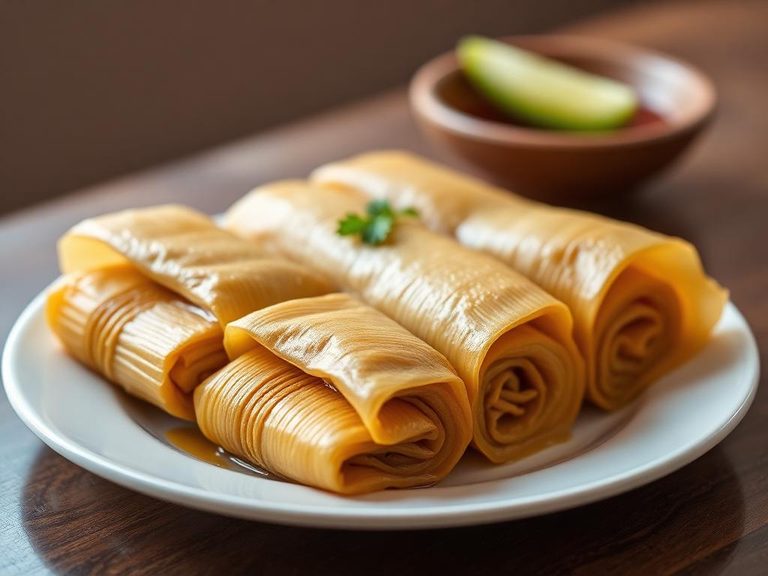
A tamale is a traditional Mesoamerican dish of masa (corn dough) filled with meats, cheeses, or chilies, wrapped in a corn husk or banana leaf and steamed. The texture is uniquely soft and slightly spongy, with a rich, savory flavor that can range from mildly sweet to deeply spicy. Nutritionally, it offers a balanced mix of complex carbohydrates and protein, with a moderate fat content that varies by filling.
Calorie split: 17% protein · 36% carbs · 47% fat
↓ Full nutrition💚 Why it's loved
People love tamales for their deeply savory, customizable flavors and the communal, festive tradition of making them, often called a 'tamalada'. The comforting, hearty texture and the way the corn husk or leaf imparts a subtle, earthy aroma make them a beloved staple.
⚠️ Watch-outs & how to enjoy it better
Tamales can be high in sodium and saturated fat depending on the filling (e.g., pork, lard). The dense carbohydrate content may cause blood-sugar spikes for some. To counteract this, pair with a fiber-rich vegetable side (like a salad) and choose lean protein fillings like chicken or beans. Portion control is key, as they are calorie-dense.
Key benefits
- Provides sustained energy from complex carbohydrates in masa.
- Good source of plant-based protein from corn and filling.
- Contains dietary fiber, aiding in digestion.
- Traditional preparation with steaming retains nutrients.
- Can be a culturally significant, celebratory food.
🍽️ Popular dishes
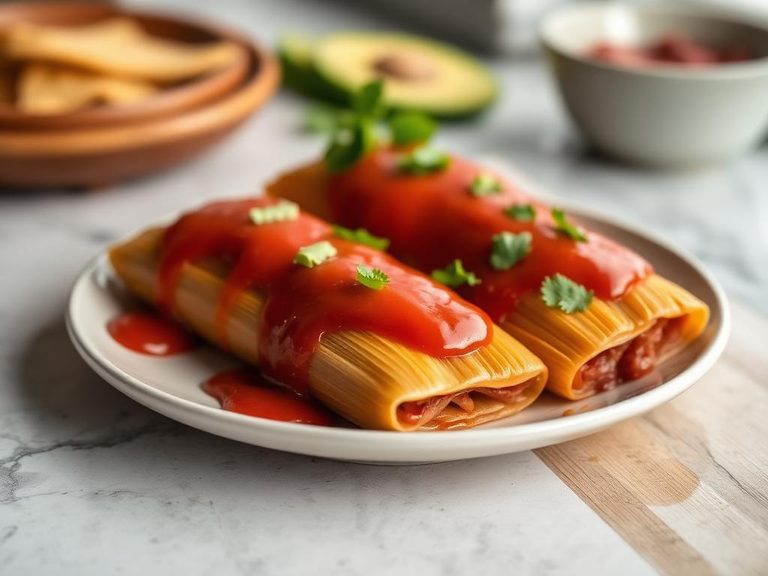
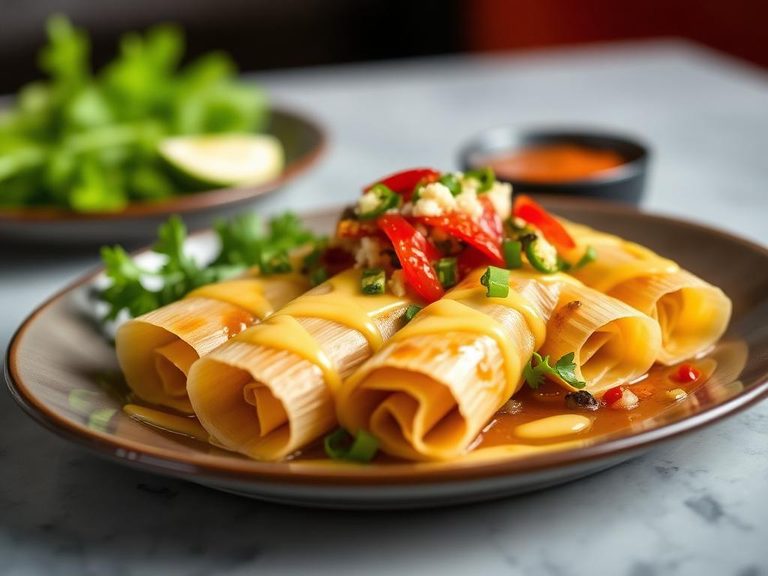
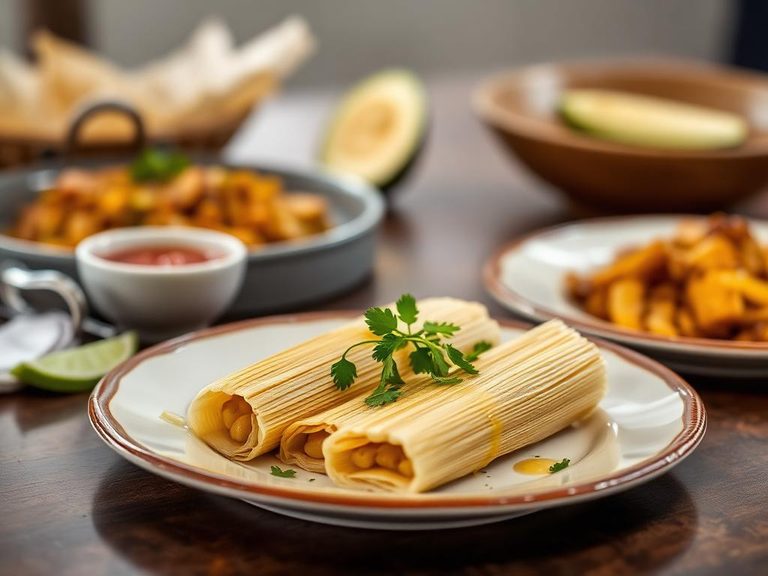
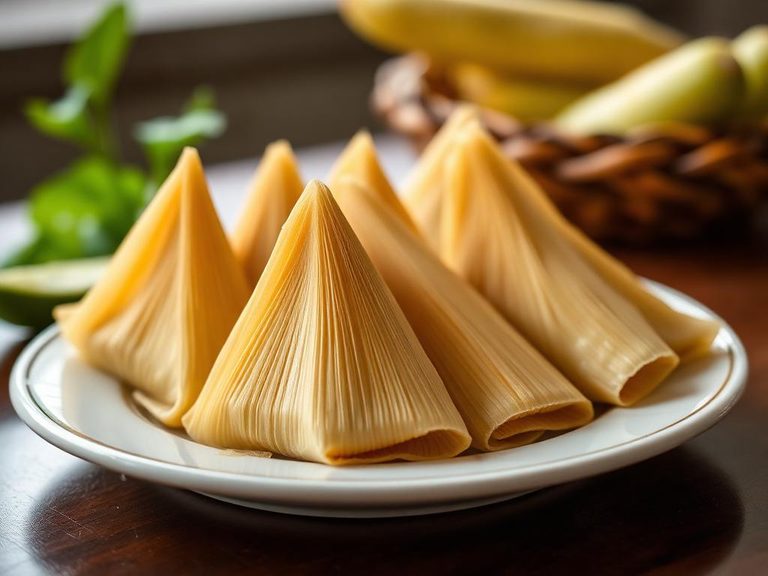
🌍 Where it's eaten
💡 Did you know?
The word 'tamale' comes from the Nahuatl word 'tamalli', meaning 'wrapped', and archaeological evidence suggests they were a portable food for Aztec and Maya warriors and hunters.
Full nutrition (USDA data · scales with serving)
| Water | 66.0 g |
| Energy | 174 kcal |
| Protein | 7.4 g |
| Total lipid (fat) | 9.0 g |
| Carbohydrate, by difference | 15.8 g |
| Fiber, total dietary | 2.4 g |
| Total Sugars | 0.46 g |
| Calcium, Ca | 75.0 mg |
| Iron, Fe | 0.87 mg |
| Magnesium, Mg | 26.0 mg |
| Phosphorus, P | 120 mg |
| Potassium, K | 152 mg |
| Sodium, Na | 473 mg |
| Zinc, Zn | 1.2 mg |
| Copper, Cu | 0.05 mg |
| Selenium, Se | 9.8 ug |
| Vitamin C, total ascorbic acid | 16.4 mg |
| Thiamin | 0.04 mg |
| Riboflavin | 0.05 mg |
| Niacin | 1.3 mg |
| Vitamin B-6 | 0.13 mg |
| Folate, total | 39.0 ug |
| Folic acid | 30.0 ug |
| Folate, food | 9.0 ug |
| Folate, DFE | 60.0 ug |
| Choline, total | 8.8 mg |
| Vitamin B-12 | 0.12 ug |
| Vitamin B-12, added | 0.00 ug |
| Vitamin A, RAE | 12.0 ug |
| Retinol | 1.0 ug |
| Carotene, beta | 113 ug |
| Carotene, alpha | 0.00 ug |
| Cryptoxanthin, beta | 58.0 ug |
| Lycopene | 85.0 ug |
| Lutein + zeaxanthin | 110 ug |
| Vitamin E (alpha-tocopherol) | 0.53 mg |
| Vitamin E, added | 0.00 mg |
| Vitamin D (D2 + D3) | 0.30 ug |
| Vitamin K (phylloquinone) | 5.1 ug |
| Alcohol, ethyl | 0.00 g |
| Caffeine | 0.00 mg |
| Theobromine | 0.00 mg |
Fat & fatty acid profile (per 100g)
| Fatty acids, total saturated | 2.7 g |
| SFA 4:0 | 0.00 g |
| SFA 6:0 | 0.00 g |
| SFA 8:0 | 0.00 g |
| SFA 10:0 | 0.01 g |
| SFA 12:0 | 0.01 g |
| SFA 14:0 | 0.10 g |
| SFA 16:0 | 1.7 g |
| SFA 18:0 | 0.82 g |
| Fatty acids, total monounsaturated | 3.2 g |
| MUFA 16:1 | 0.15 g |
| MUFA 18:1 | 3.0 g |
| MUFA 20:1 | 0.06 g |
| MUFA 22:1 | 0.00 g |
| Fatty acids, total polyunsaturated | 2.0 g |
| PUFA 18:2 | 1.8 g |
| PUFA 18:3 | 0.10 g |
| PUFA 18:4 | 0.00 g |
| PUFA 20:4 | 0.03 g |
| PUFA 20:5 n-3 (EPA) | 0.00 g |
| PUFA 22:5 n-3 (DPA) | 0.01 g |
| PUFA 22:6 n-3 (DHA) | 0.00 g |
| Cholesterol | 20.0 mg |
Amino acid profile (per 100g)
Estimated from Tamales (Navajo) — USDA does not publish this profile for Tamale.
| Tryptophan | 0.05 g |
| Threonine | 0.24 g |
| Isoleucine | 0.27 g |
| Leucine | 0.57 g |
| Lysine | 0.43 g |
| Methionine | 0.15 g |
| Cystine | 0.08 g |
| Phenylalanine | 0.28 g |
| Tyrosine | 0.20 g |
| Valine | 0.32 g |
| Arginine | 0.39 g |
| Histidine | 0.20 g |
| Alanine | 0.42 g |
| Aspartic acid | 0.56 g |
| Glutamic acid | 1.0 g |
| Glycine | 0.38 g |
| Proline | 0.38 g |
| Serine | 0.27 g |
FAQ
What is the difference between a tamale and a pupusa?
A tamale is masa dough that is filled, wrapped, and steamed, while a pupusa is a thick corn tortilla from El Salvador that is stuffed and then griddled or fried.
Why are tamales wrapped in corn husks or banana leaves?
The wrapping protects the masa during steaming, adds a subtle earthy flavor, and makes them easy to handle. Corn husks are common in Mexico, while banana leaves are used in Central and South America for a more pliable wrap.
Can tamales be made ahead and frozen?
Yes, tamales freeze exceptionally well. Cool them completely, then wrap individually and store in a freezer bag for up to 6 months. Reheat by steaming from frozen for about 20-30 minutes.
Nutrient density (calculated · NRF9.3)
Nutrient Rich Foods index: beneficial nutrients (protein, fiber, vitamins, minerals) minus saturated fat, added sugar & sodium, per 100 kcal.
NRF9.3 index — Fulgoni, Keast & Drewnowski, 2009. Computed from USDA nutrients.
Weight-loss friendliness (composite index)
Energy density 1.74 kcal/g · 17% calories from protein · 2.4 g fiber · 0.5 g sugar per 100 g.
Composite of energy density (Rolls et al., 1999), protein & fiber satiety, minus sugar. A calculated heuristic — ranks satiety-per-calorie, not a clinical measure.
Dietary load (calculated from USDA values)
Potential renal acid load. Positive = acid-forming, negative = alkaline-forming.
Sodium-to-potassium ratio: 3.11 (lower is better — aim for ≤ 1)
Sodium:potassium per WHO potassium guidance. Computed from USDA nutrients.