

Hallacas
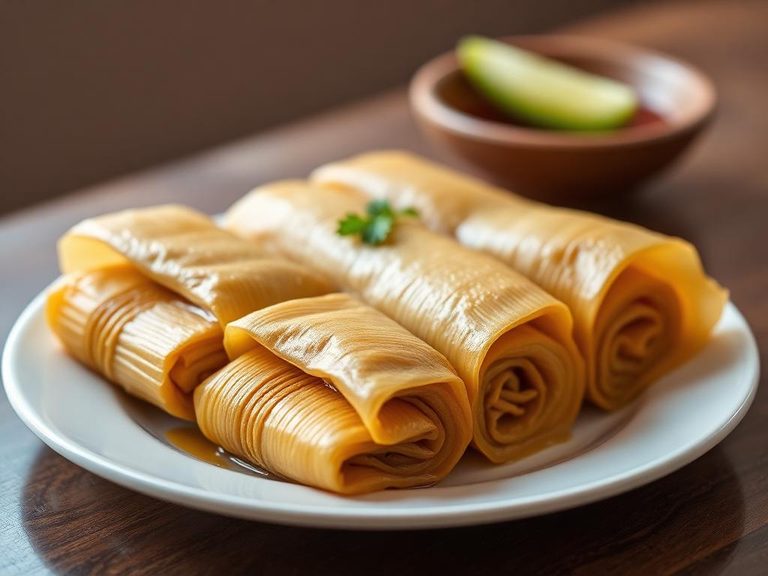
Hallacas are a beloved Venezuelan Christmas dish, essentially a type of tamale where a corn dough is filled with a savory stew of meats, olives, raisins, and capers, then wrapped in plantain leaves and tied with string. They are a centerpiece of holiday celebrations, representing a fusion of Indigenous, African, and European culinary traditions.
🍽️ Nutrition at a glance
Hallacas are a balanced but rich dish, providing a good mix of carbohydrates from the corn dough, protein from the meat filling, and fats from the cooking process and added ingredients like olives. A single hallaca typically ranges from 300 to 500 calories, offering significant energy along with vitamins and minerals from the diverse fillings.
Nutrition breakdown
| Calories | 450 kcal |
| Protein | 18 g |
| Carbs | 55 g |
| Fat | 18 g |
| Fiber | 4 g |
| Sugar | 8 g |
| Sodium | 850 mg |
| Iron | 4 mg |
| Potassium | 400 mg |
| Vitamin A | 250 mcg RAE |
| Vitamin C | 15 mg |
| Calcium | 80 mg |
| Phosphorus | 200 mg |
| Zinc | 3 mg |
| Vitamin B12 | 1.5 mcg |
Per 1 hallaca (approx. 250 g) · estimated, varies by recipe
💡 What's interesting
The unique wrapping in plantain leaves imparts a subtle, distinctive flavor and aroma that is central to the hallaca experience. Culturally, making hallacas is a major communal family event, often involving multiple generations working together in an assembly-line fashion, turning food preparation into a cherished holiday ritual.
AI estimate may be inaccurate · Terms