

Sweet potato, canned, fat added
Common food

Photo: Wikipedia
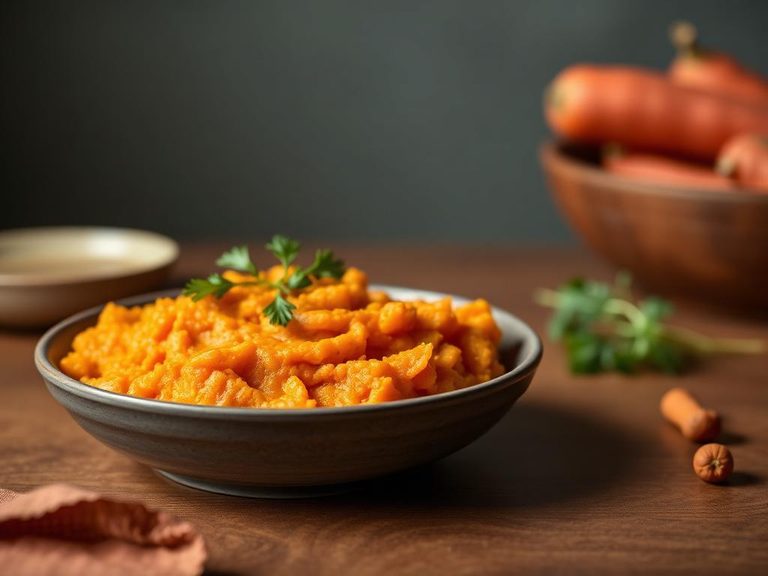
Canned sweet potatoes are soft, pre-cooked tubers preserved in syrup or water, often with added fat for richness. They offer a sweet, earthy flavor with a tender, sometimes mushy texture, and provide a notable source of Vitamin A (beta-carotene) alongside their calorie content.
Calorie split: 5% protein · 64% carbs · 31% fat
↓ Full nutrition💚 Why it's loved
People love them for their comforting, sweet flavor and effortless convenience as a ready-to-eat side dish or baking ingredient. They are a staple in holiday meals and soul food, evoking a sense of home cooking.
⚠️ Watch-outs & how to enjoy it better
The added syrup and fat significantly increase sugar and calorie content, which can cause blood-sugar spikes, and some brands are high in sodium. To counteract, choose varieties packed in water, rinse them, and pair with a protein or healthy fat (like nuts or lean meat) to slow sugar absorption.
Key benefits
- Excellent source of Vitamin A (beta-carotene)
- Provides dietary fiber for digestive health
- Convenient, pre-cooked, and long shelf-stable
- Contains potassium for electrolyte balance
- Offers quick energy from natural and added sugars
🍽️ Popular dishes
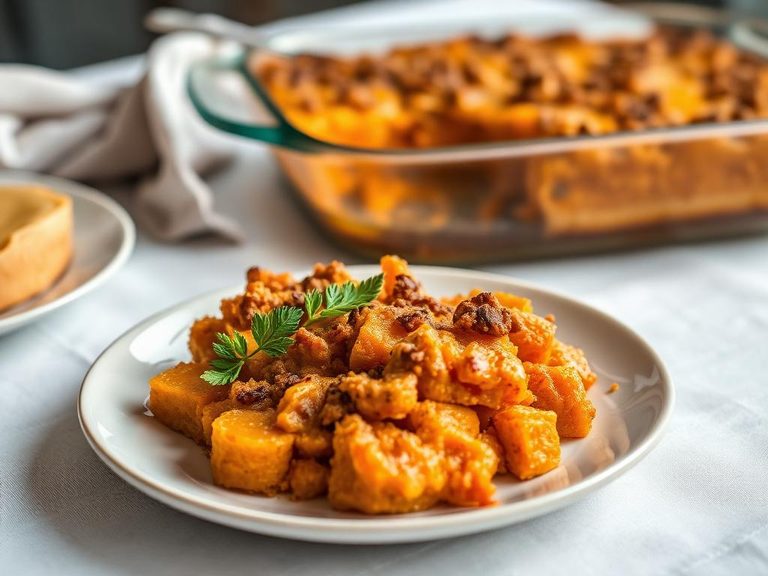
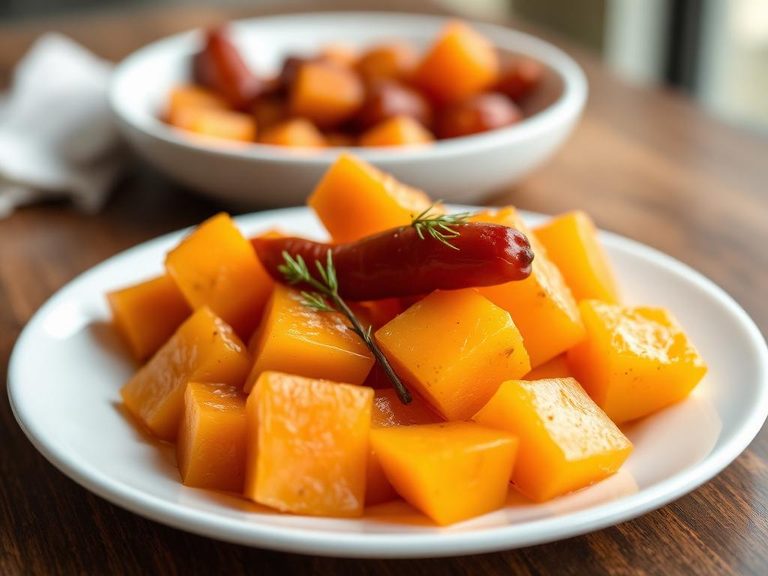
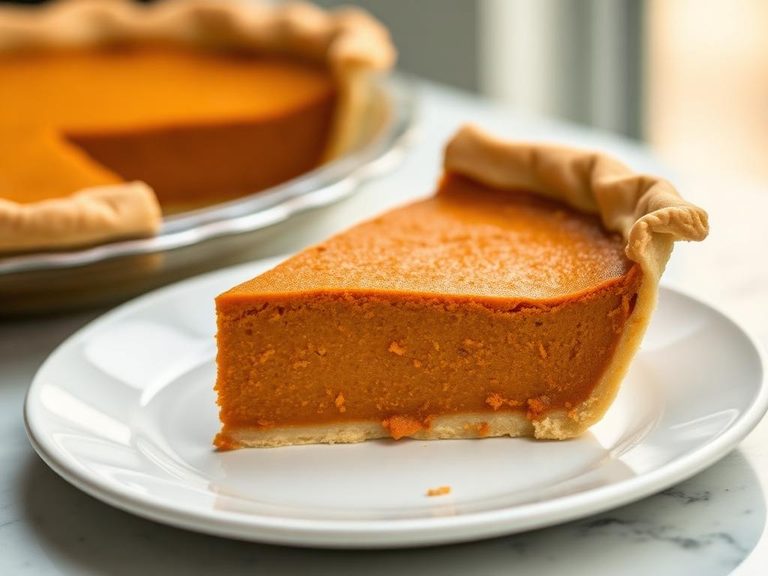
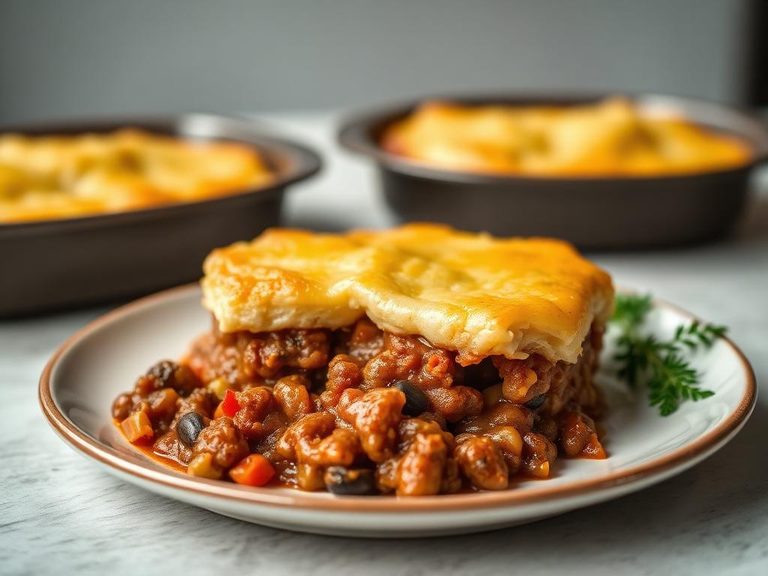
🌍 Where it's eaten
💡 Did you know?
The 'candied yams' popular in the American South are almost always made with orange-fleshed sweet potatoes, not true yams, which are a different, starchier tuber.
Full nutrition (USDA data · scales with serving)
| Water | 72.7 g |
| Energy | 124 kcal |
| Protein | 1.6 g |
| Total lipid (fat) | 4.3 g |
| Carbohydrate, by difference | 20.1 g |
| Fiber, total dietary | 1.7 g |
| Total Sugars | 4.8 g |
| Calcium, Ca | 22.0 mg |
| Iron, Fe | 0.85 mg |
| Magnesium, Mg | 21.0 mg |
| Phosphorus, P | 47.0 mg |
| Potassium, K | 297 mg |
| Sodium, Na | 211 mg |
| Zinc, Zn | 0.17 mg |
| Copper, Cu | 0.13 mg |
| Selenium, Se | 0.70 ug |
| Vitamin C, total ascorbic acid | 25.0 mg |
| Thiamin | 0.04 mg |
| Riboflavin | 0.05 mg |
| Niacin | 0.70 mg |
| Vitamin B-6 | 0.21 mg |
| Folate, total | 16.0 ug |
| Folic acid | 0.00 ug |
| Folate, food | 16.0 ug |
| Folate, DFE | 16.0 ug |
| Choline, total | 12.7 mg |
| Vitamin B-12 | 0.00 ug |
| Vitamin B-12, added | 0.00 ug |
| Vitamin A, RAE | 397 ug |
| Retinol | 18.0 ug |
| Carotene, beta | 4553 ug |
| Carotene, alpha | 0.00 ug |
| Cryptoxanthin, beta | 0.00 ug |
| Lycopene | 0.00 ug |
| Lutein + zeaxanthin | 0.00 ug |
| Vitamin E (alpha-tocopherol) | 1.6 mg |
| Vitamin E, added | 0.00 mg |
| Vitamin D (D2 + D3) | 0.00 ug |
| Vitamin K (phylloquinone) | 5.5 ug |
| Alcohol, ethyl | 0.00 g |
| Caffeine | 0.00 mg |
| Theobromine | 0.00 mg |
Fat & fatty acid profile (per 100g)
| Fatty acids, total saturated | 1.1 g |
| SFA 4:0 | 0.03 g |
| SFA 6:0 | 0.02 g |
| SFA 8:0 | 0.01 g |
| SFA 10:0 | 0.03 g |
| SFA 12:0 | 0.03 g |
| SFA 14:0 | 0.10 g |
| SFA 16:0 | 0.63 g |
| SFA 18:0 | 0.23 g |
| Fatty acids, total monounsaturated | 1.5 g |
| MUFA 16:1 | 0.02 g |
| MUFA 18:1 | 1.4 g |
| MUFA 20:1 | 0.02 g |
| MUFA 22:1 | 0.00 g |
| Fatty acids, total polyunsaturated | 1.3 g |
| PUFA 18:2 | 1.1 g |
| PUFA 18:3 | 0.14 g |
| PUFA 18:4 | 0.00 g |
| PUFA 20:4 | 0.00 g |
| PUFA 20:5 n-3 (EPA) | 0.00 g |
| PUFA 22:5 n-3 (DPA) | 0.00 g |
| PUFA 22:6 n-3 (DHA) | 0.00 g |
| Cholesterol | 3.0 mg |
Amino acid profile (per 100g)
Estimated from Snacks, sweet potato chips, unsalted — USDA does not publish this profile for Sweet potato.
| Tryptophan | 0.10 g |
| Threonine | 0.26 g |
| Isoleucine | 0.17 g |
| Leucine | 0.29 g |
| Lysine | 0.20 g |
| Methionine | 0.09 g |
| Cystine | 0.07 g |
| Phenylalanine | 0.28 g |
| Tyrosine | 0.11 g |
| Valine | 0.27 g |
| Arginine | 0.17 g |
| Histidine | 0.10 g |
| Alanine | 0.24 g |
| Aspartic acid | 1.2 g |
| Glutamic acid | 0.48 g |
| Glycine | 0.20 g |
| Proline | 0.16 g |
| Serine | 0.28 g |
FAQ
Are canned sweet potatoes as nutritious as fresh?
They retain most vitamins (like Vitamin A) and minerals, but can lose some heat-sensitive nutrients like Vitamin C. The main difference is often the added syrup, sugar, or fat, which changes the nutritional profile.
What's the difference between canned sweet potatoes and yams?
In the U.S., 'canned yams' are typically orange-fleshed sweet potatoes. True yams are a different, starchier tuber with brown skin and white or purple flesh, less common in American supermarkets.
How can I reduce the sugar in canned sweet potatoes?
Choose varieties packed in water or light syrup, then rinse them thoroughly under water. You can also mash or roast them without adding extra sugar or butter.
Nutrient density (calculated · NRF9.3)
Nutrient Rich Foods index: beneficial nutrients (protein, fiber, vitamins, minerals) minus saturated fat, added sugar & sodium, per 100 kcal.
NRF9.3 index — Fulgoni, Keast & Drewnowski, 2009. Computed from USDA nutrients.
Weight-loss friendliness (composite index)
Energy density 1.24 kcal/g · 5% calories from protein · 1.7 g fiber · 4.8 g sugar per 100 g.
Composite of energy density (Rolls et al., 1999), protein & fiber satiety, minus sugar. A calculated heuristic — ranks satiety-per-calorie, not a clinical measure.
Dietary load (calculated from USDA values)
Potential renal acid load. Positive = acid-forming, negative = alkaline-forming.
Sodium-to-potassium ratio: 0.71 (lower is better — aim for ≤ 1)
Sodium:potassium per WHO potassium guidance. Computed from USDA nutrients.