

Potato, canned, fat added, NS as to fat type
Common food
This is a humble yet versatile pantry staple: tender, pre-cooked potato chunks preserved in a light, savory broth with a small amount of added fat for richness. The texture is uniformly soft, almost creamy, making it perfect for quick mashes or stews. Nutritionally, it's a solid source of energy-dense carbs and dietary fiber, with a modest boost of fat to enhance satiety.
Calorie split: 6% protein · 54% carbs · 41% fat
↓ Full nutrition💚 Why it's loved
People love it for its ultimate convenience and comforting, mild flavor that acts as a blank canvas for bold seasonings. It's a trusted shortcut for creating creamy soups, hearty casseroles, and quick side dishes without peeling or boiling.
⚠️ Watch-outs & how to enjoy it better
The primary downside is the potential for added sodium in the packing liquid, which can be a concern for those monitoring salt intake. To counteract this, simply drain and rinse the potatoes before use. The soft texture and carbohydrate content may also require portion awareness for individuals managing blood sugar levels; pairing with protein or non-starchy vegetables can help balance a meal.
Key benefits
- Provides quick, convenient energy from complex carbohydrates.
- Contains dietary fiber which supports digestive health.
- Pre-cooked format saves significant preparation time.
- The added fat can aid in the absorption of fat-soluble vitamins.
- Offers a consistent, shelf-stable alternative to fresh potatoes.
🍽️ Popular dishes
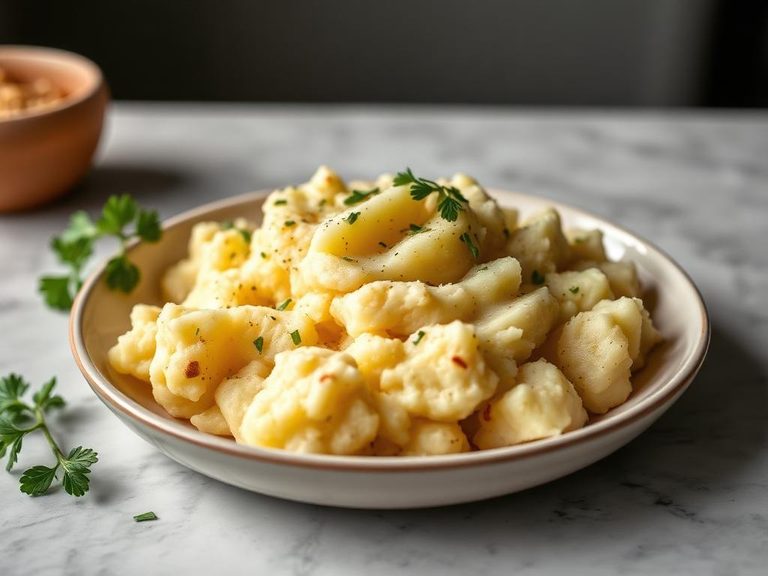
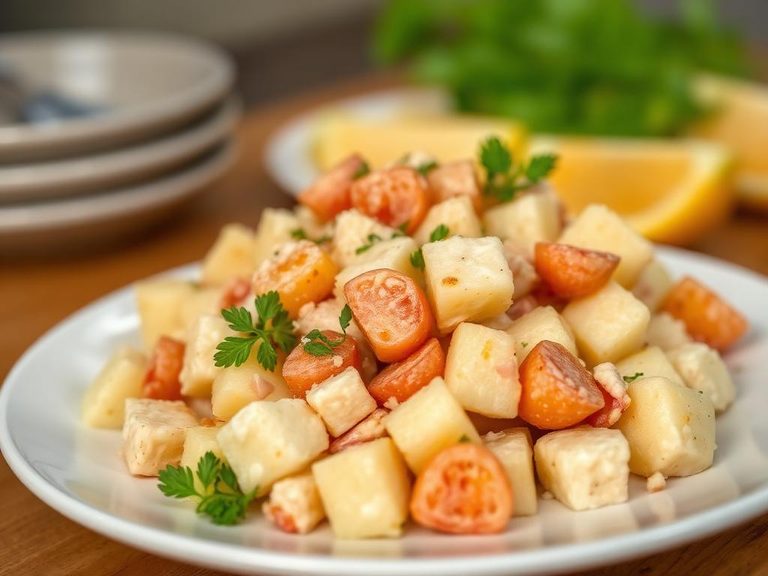
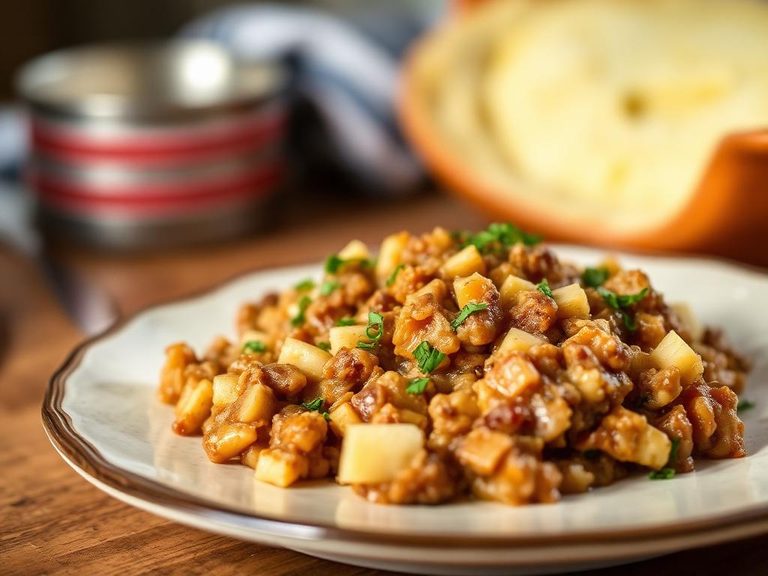
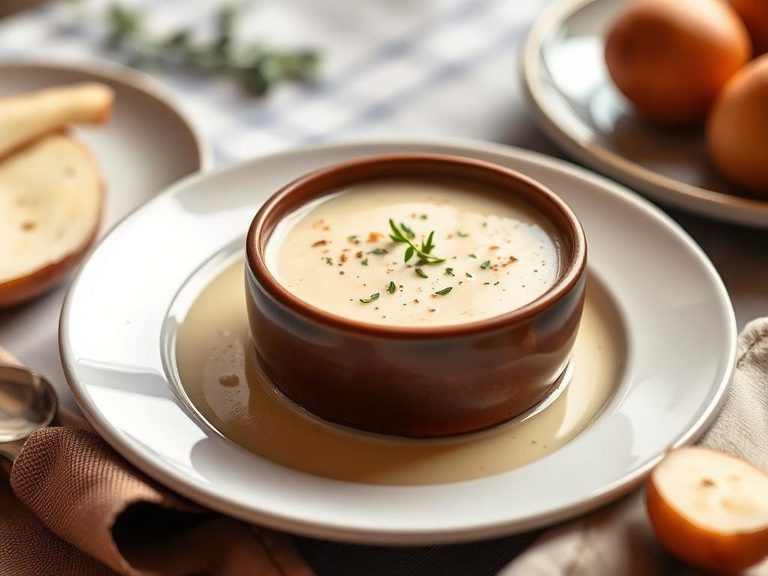
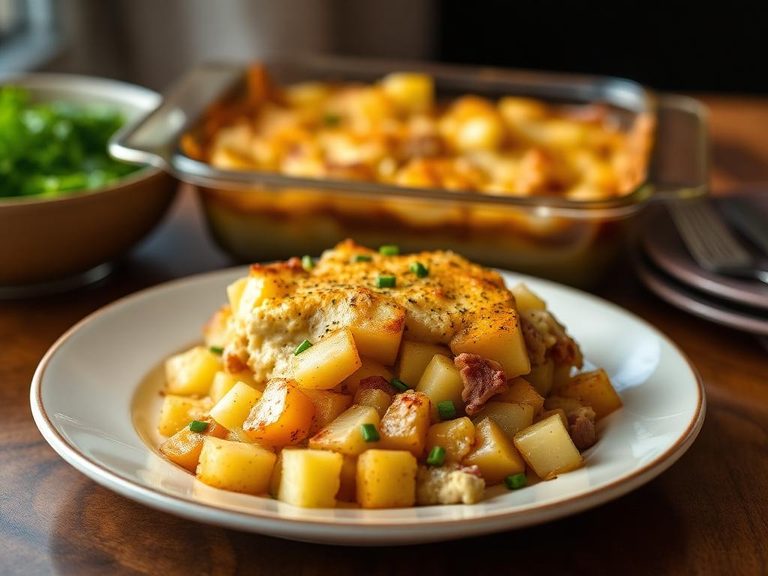
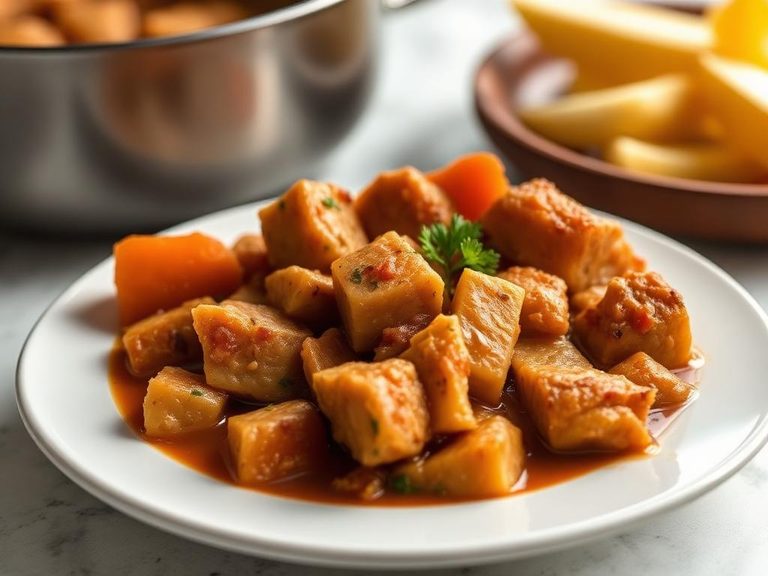
🌍 Where it's eaten
💡 Did you know?
The canning process for potatoes was heavily refined during World War II to provide a stable, nutritious, and non-perishable food source for troops, cementing its place in military rations and, later, home pantries.
Full nutrition (USDA data · scales with serving)
| Water | 80.5 g |
| Energy | 94.0 kcal |
| Protein | 1.3 g |
| Total lipid (fat) | 4.3 g |
| Carbohydrate, by difference | 12.9 g |
| Fiber, total dietary | 2.3 g |
| Total Sugars | 0.57 g |
| Calcium, Ca | 5.0 mg |
| Iron, Fe | 1.2 mg |
| Magnesium, Mg | 13.0 mg |
| Phosphorus, P | 27.0 mg |
| Potassium, K | 218 mg |
| Sodium, Na | 166 mg |
| Zinc, Zn | 0.27 mg |
| Copper, Cu | 0.05 mg |
| Selenium, Se | 0.90 ug |
| Vitamin C, total ascorbic acid | 4.8 mg |
| Thiamin | 0.07 mg |
| Riboflavin | 0.01 mg |
| Niacin | 0.87 mg |
| Vitamin B-6 | 0.21 mg |
| Folate, total | 6.0 ug |
| Folic acid | 0.00 ug |
| Folate, food | 6.0 ug |
| Folate, DFE | 6.0 ug |
| Choline, total | 9.1 mg |
| Vitamin B-12 | 0.00 ug |
| Vitamin B-12, added | 0.00 ug |
| Vitamin A, RAE | 19.0 ug |
| Retinol | 18.0 ug |
| Carotene, beta | 9.0 ug |
| Carotene, alpha | 0.00 ug |
| Cryptoxanthin, beta | 0.00 ug |
| Lycopene | 0.00 ug |
| Lutein + zeaxanthin | 6.0 ug |
| Vitamin E (alpha-tocopherol) | 0.67 mg |
| Vitamin E, added | 0.00 mg |
| Vitamin D (D2 + D3) | 0.00 ug |
| Vitamin K (phylloquinone) | 4.8 ug |
| Alcohol, ethyl | 0.00 g |
| Caffeine | 0.00 mg |
| Theobromine | 0.00 mg |
Fat & fatty acid profile (per 100g)
| Fatty acids, total saturated | 1.1 g |
| SFA 4:0 | 0.03 g |
| SFA 6:0 | 0.02 g |
| SFA 8:0 | 0.01 g |
| SFA 10:0 | 0.03 g |
| SFA 12:0 | 0.04 g |
| SFA 14:0 | 0.10 g |
| SFA 16:0 | 0.62 g |
| SFA 18:0 | 0.23 g |
| Fatty acids, total monounsaturated | 1.5 g |
| MUFA 16:1 | 0.03 g |
| MUFA 18:1 | 1.4 g |
| MUFA 20:1 | 0.02 g |
| MUFA 22:1 | 0.00 g |
| Fatty acids, total polyunsaturated | 1.3 g |
| PUFA 18:2 | 1.1 g |
| PUFA 18:3 | 0.15 g |
| PUFA 18:4 | 0.00 g |
| PUFA 20:4 | 0.00 g |
| PUFA 20:5 n-3 (EPA) | 0.00 g |
| PUFA 22:5 n-3 (DPA) | 0.00 g |
| PUFA 22:6 n-3 (DHA) | 0.00 g |
| Cholesterol | 3.0 mg |
Amino acid profile (per 100g)
Estimated from Snacks, potato chips, made from dried potatoes, reduced fat — USDA does not publish this profile for Potato.
| Tryptophan | 0.04 g |
| Threonine | 0.24 g |
| Isoleucine | 0.25 g |
| Leucine | 0.37 g |
| Lysine | 0.35 g |
| Methionine | 0.07 g |
| Cystine | 0.07 g |
| Phenylalanine | 0.26 g |
| Tyrosine | 0.22 g |
| Valine | 0.33 g |
| Arginine | 0.27 g |
| Histidine | 0.13 g |
| Alanine | 0.20 g |
| Aspartic acid | 1.1 g |
| Glutamic acid | 0.94 g |
| Glycine | 0.19 g |
| Proline | 0.20 g |
| Serine | 0.23 g |
FAQ
What's the difference between this and plain canned potatoes?
The key difference is the 'fat added' designation. This variety includes a small amount of fat (like vegetable oil or animal fat) in the canning liquid, which adds flavor, calories, and a slightly richer mouthfeel compared to potatoes canned in just water or brine.
Can I use these for frying or roasting?
While possible, the high moisture content and soft texture make them less ideal for achieving a crispy exterior. They are best suited for boiled, mashed, or stewed applications. For roasting, fresh or frozen potatoes will yield a better crisp.
How should I store leftovers after opening the can?
Transfer any unused potatoes and their liquid to a sealed, non-reactive container (like glass or plastic) and refrigerate. They should be consumed within 3-4 days for best quality and safety.
Nutrient density (calculated · NRF9.3)
Nutrient Rich Foods index: beneficial nutrients (protein, fiber, vitamins, minerals) minus saturated fat, added sugar & sodium, per 100 kcal.
NRF9.3 index — Fulgoni, Keast & Drewnowski, 2009. Computed from USDA nutrients.
Weight-loss friendliness (composite index)
Energy density 0.94 kcal/g · 6% calories from protein · 2.3 g fiber · 0.6 g sugar per 100 g.
Composite of energy density (Rolls et al., 1999), protein & fiber satiety, minus sugar. A calculated heuristic — ranks satiety-per-calorie, not a clinical measure.
Dietary load (calculated from USDA values)
Potential renal acid load. Positive = acid-forming, negative = alkaline-forming.
Sodium-to-potassium ratio: 0.76 (lower is better — aim for ≤ 1)
Sodium:potassium per WHO potassium guidance. Computed from USDA nutrients.