

Stew Thickener
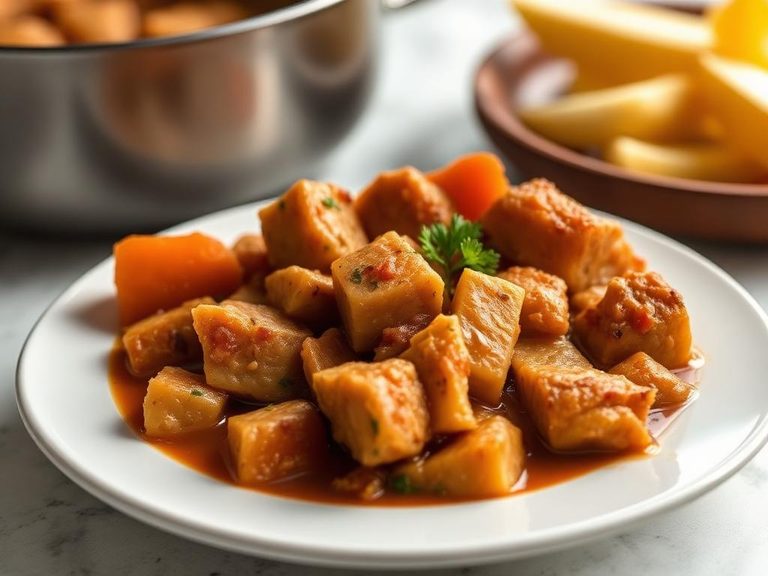
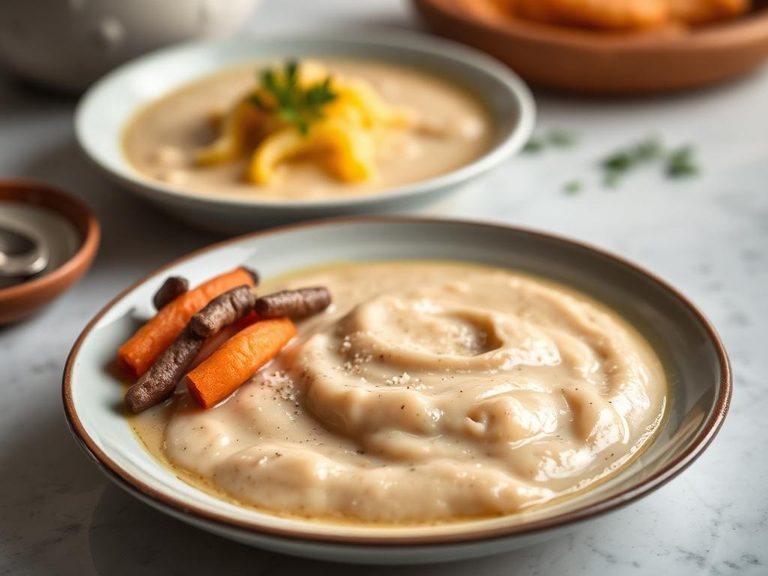
Stew Thickener, often called 'roux' or 'slurry' in cooking, is a foundational technique rather than a standalone dish. It typically involves a mixture of fat (like butter or oil) and flour cooked together (roux) or a starch (like cornstarch or flour) mixed with a cold liquid (slurry) to give stews, gravies, and sauces a rich, velvety texture. This method is a cornerstone of culinary traditions worldwide, from French and Cajun cuisine to Chinese and Indian cooking.
🍽️ Nutrition at a glance
As a component, its nutritional profile depends on the base ingredients, but a traditional flour-and-butter roux is primarily a source of carbohydrates and fat, with minimal protein. A typical serving used to thicken a large pot of stew contributes roughly 50-100 calories.
Nutrition breakdown
| Calories | 70 kcal |
| Protein | 0.5 g |
| Carbs | 3 g |
| Fat | 6 g |
| Fiber | 0.2 g |
| Sugar | 0 g |
| Sodium | 45 mg |
| Iron | 0.3 mg |
| Calcium | 10 mg |
| Vitamin A | 50 IU |
| Thiamin (B1) | 0.02 mg |
| Niacin (B3) | 0.2 mg |
| Magnesium | 2 mg |
| Phosphorus | 8 mg |
| Selenium | 1.5 mcg |
Per 1 tablespoon (15 g) of a standard all-purpose flour and butter roux · estimated, varies by recipe
💡 What's interesting
The cultural significance lies in its transformative power; a simple roux can define the entire character of a dish, like the dark, nutty roux essential for a classic gumbo. Nutritionally, it's a prime example of how a small, calorie-dense addition can dramatically alter the texture and mouthfeel of a meal without adding significant volume.
🍽️ Related dishes
AI estimate may be inaccurate · Terms