

Used as a thickener in some soups or stews
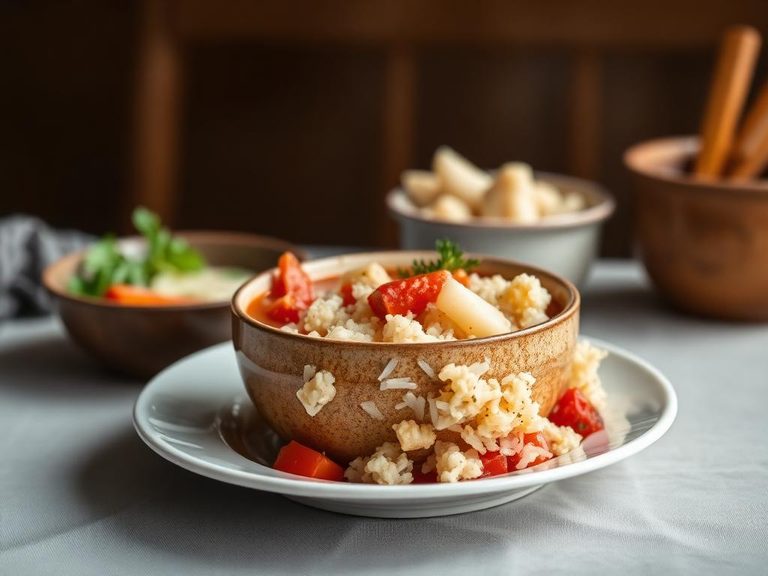
A roux is a cooked mixture of fat (like butter or oil) and flour, used as a foundational thickener for soups, stews, and sauces. It originates from French cuisine and is a cornerstone of classic dishes like gumbo, béchamel, and velouté. The color can range from white to dark brown, depending on how long it's cooked.
🍽️ Nutrition at a glance
Roux is primarily a source of carbohydrates from the flour and fat from the cooking oil or butter, with minimal protein. A typical serving (about 1 tablespoon) provides roughly 50-80 calories, along with small amounts of iron and B vitamins from the flour.
Nutrition breakdown
| Calories | 30 kcal |
| Protein | 0.1 g |
| Carbs | 7 g |
| Fat | 0 g |
| Fiber | 1 g |
| Sugar | 0 g |
| Sodium | 0 mg |
| Iron | 0.3 mg |
| Calcium | 2 mg |
| Magnesium | 1 mg |
| Phosphorus | 5 mg |
| Potassium | 10 mg |
| Manganese | 0.1 mg |
| Selenium | 0.3 mcg |
| Copper | 0.01 mg |
Per 1 tablespoon (9 g) · estimated, varies by recipe
💡 What's interesting
The cooking time for a roux dramatically changes its flavor and thickening power; a dark roux has a nutty, toasty flavor but less thickening ability than a white roux. It's a key technique in Cajun and Creole cooking, where a dark roux is essential for the depth of flavor in dishes like gumbo.
🍽️ Related dishes



AI estimate may be inaccurate · Terms