Used as a thickener in homemade baby soups
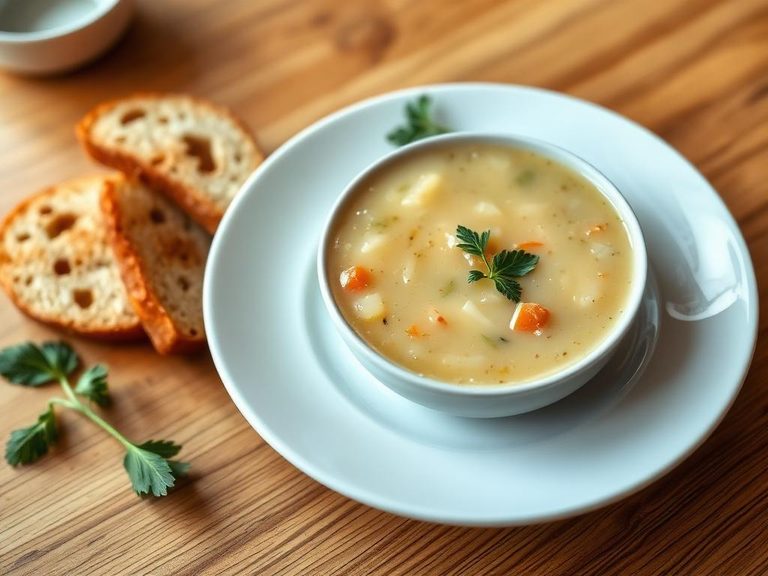
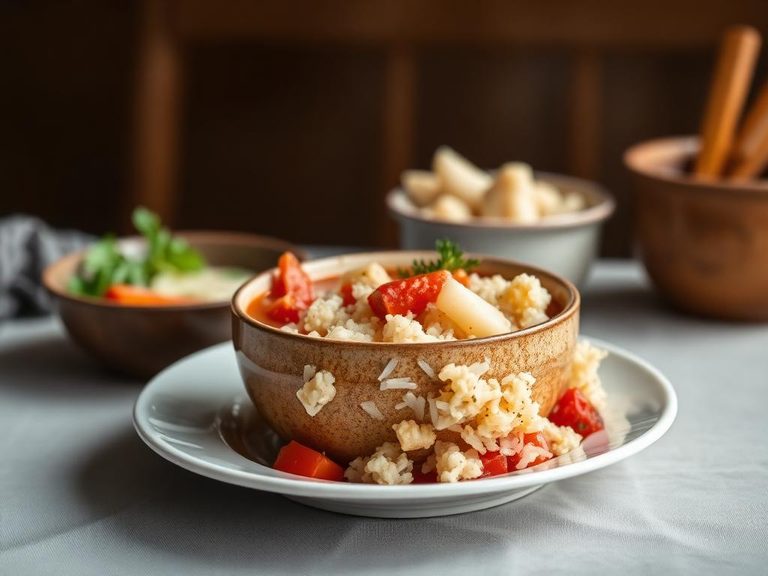
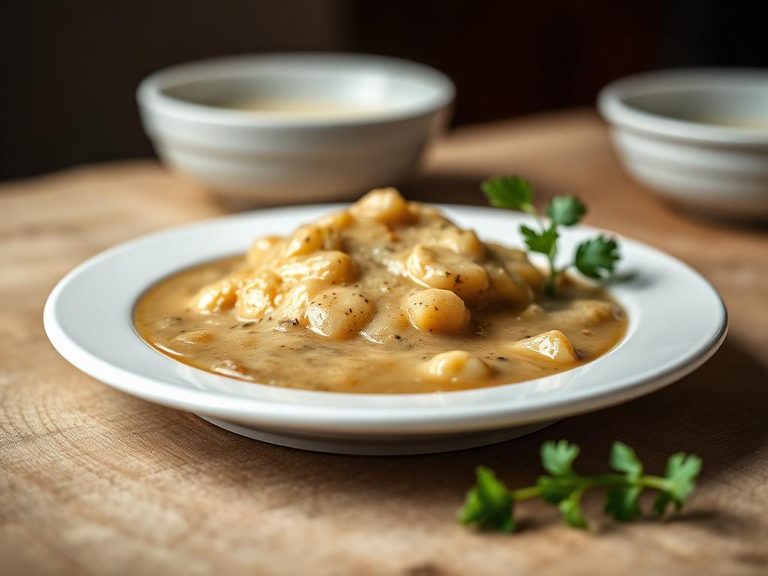
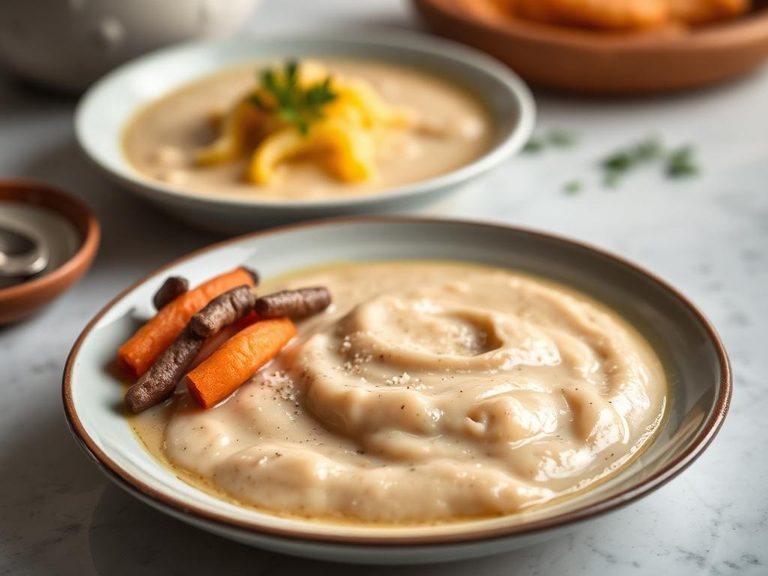
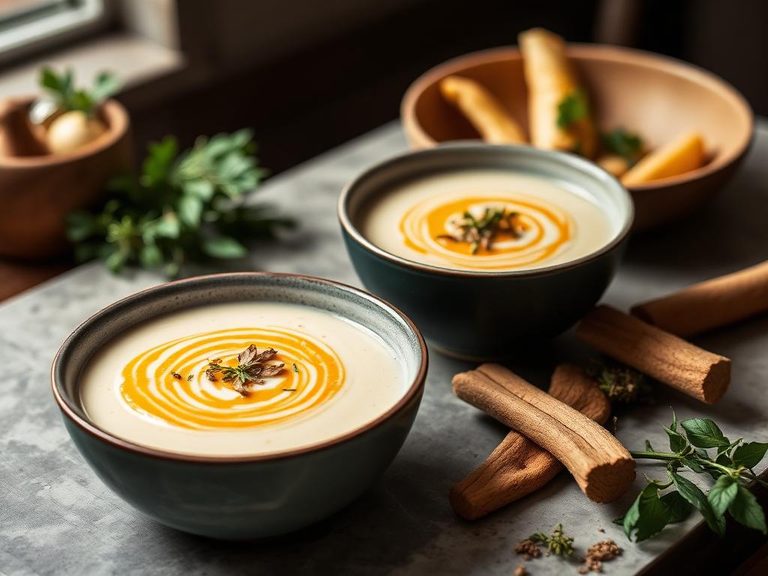
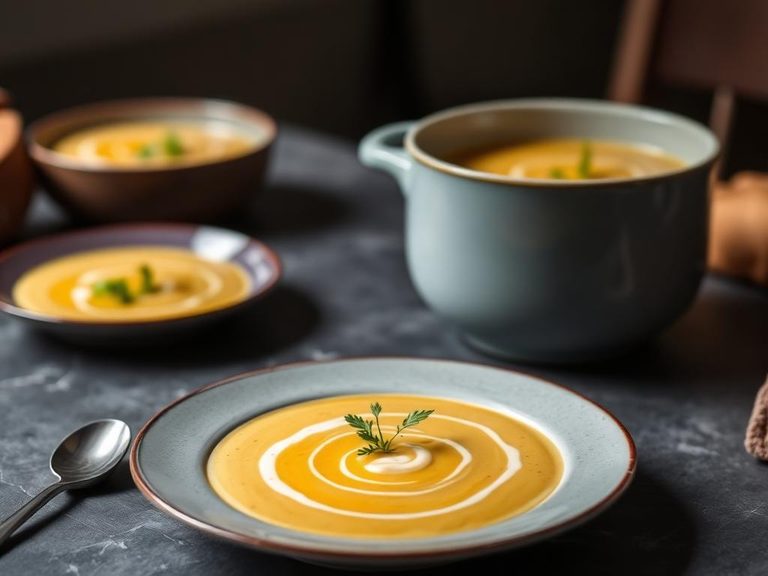
This is not a standalone dish, but a common homemade baby food preparation technique. It involves blending starchy vegetables like potatoes, sweet potatoes, or carrots into a smooth puree to naturally thicken soups and broths for infants. This method is a global practice, used in home kitchens from Asia to Europe and the Americas to create nutritious, easy-to-swallow meals.
🍽️ Nutrition at a glance
The puree is primarily a source of complex carbohydrates and dietary fiber, with minimal fat and protein. It provides key nutrients like potassium, vitamin A (from orange vegetables), and vitamin C, with a calorie count that varies significantly based on the chosen vegetable.
Nutrition breakdown
| Calories | 103 kcal |
| Protein | 2 g |
| Carbs | 24 g |
| Fat | 0.1 g |
| Fiber | 3.8 g |
| Sugar | 7.4 g |
| Sodium | 41 mg |
| Vitamin A | 961 mcg RAE |
| Potassium | 475 mg |
| Vitamin C | 19.6 mg |
| Manganese | 0.5 mg |
| Vitamin B6 | 0.3 mg |
| Pantothenic Acid | 1.0 mg |
| Copper | 0.3 mg |
| Magnesium | 30 mg |
Per 1/2 cup (120 g) of plain sweet potato puree · estimated, varies by recipe
💡 What's interesting
This technique is a brilliant example of using food's natural properties for culinary purposes, avoiding processed additives. Nutritionally, it's a way to boost the vitamin and mineral density of a meal while improving its texture for developmental feeding.