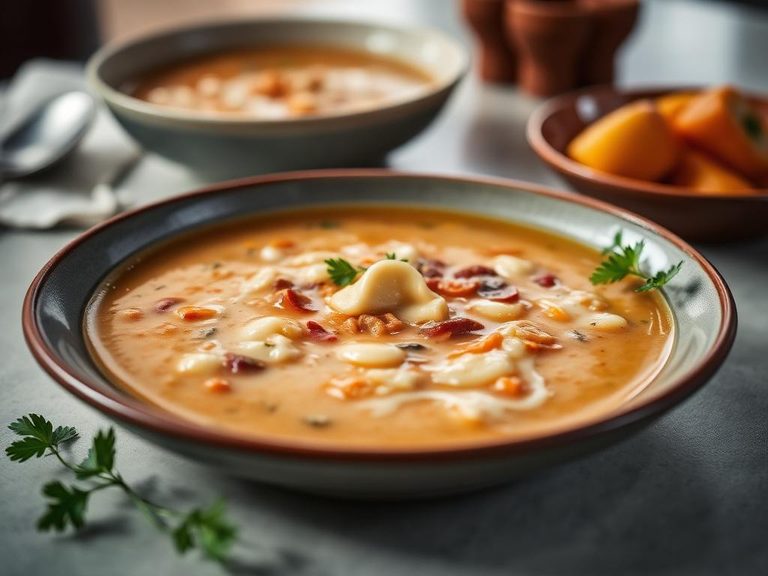
Thickener for creamy, savory soups

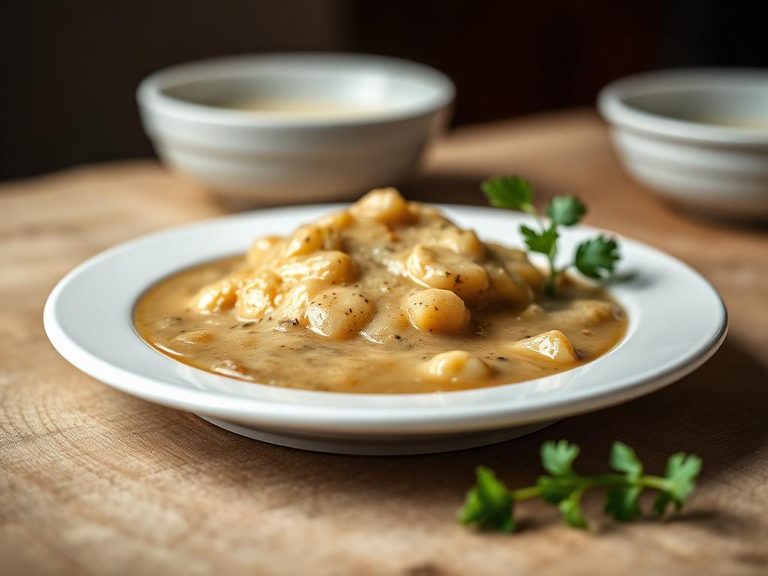
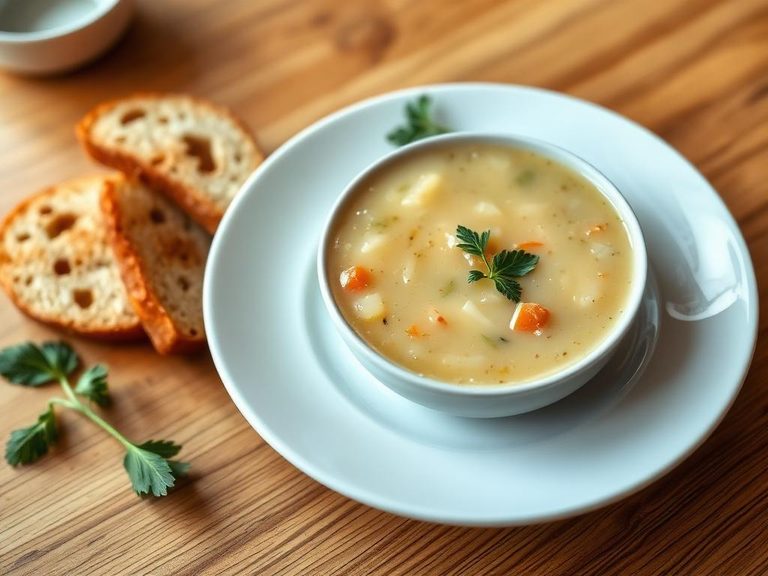
A thickener for creamy, savory soups is a foundational culinary component, not a standalone dish, used to add body and richness to soups like chowders, bisques, and cream-based stews. It is typically made from a roux (equal parts fat and flour cooked together), a slurry of starch and cold liquid, or blended ingredients like puréed vegetables or cream. Its use is ubiquitous in Western cuisines, particularly French and American comfort cooking.
🍽️ Nutrition at a glance
Depending on the method, it can be high in carbohydrates and fat (if using a roux or cream) or primarily carbohydrates (if using a starch slurry). It provides a quick source of energy from carbs and fat, with minimal protein, and can contribute significant calories to a soup. A typical thickening agent portion for a serving of soup might add 50-150 calories.
Nutrition breakdown
| Calories | 120 kcal |
| Protein | 1.5 g |
| Carbs | 11 g |
| Fat | 8 g |
| Fiber | 0.5 g |
| Sugar | 0 g |
| Sodium | 10 mg |
| Iron | 0.6 mg |
| Thiamin (B1) | 0.1 mg |
| Niacin (B3) | 0.8 mg |
| Folate | 25 µg |
| Calcium | 15 mg |
| Selenium | 5 µg |
| Manganese | 0.1 mg |
| Phosphorus | 20 mg |
Per 1/4 cup (60 g) of a basic white roux (flour and butter) · estimated, varies by recipe
💡 What's interesting
The art of making a perfect roux is a cornerstone of French cuisine, with its color (blonde, brown, dark) profoundly affecting the soup's final flavor and color. Nutritionally, thickeners are a key way to increase the satiety and caloric density of a meal, which was historically important for providing energy and warmth.