

Stir fried beef and vegetables in soy sauce
Common food
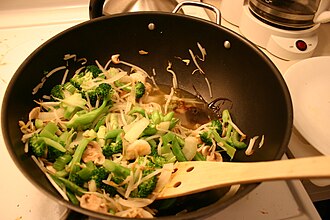
Photo: Wikipedia
This is a savory, quick-cooked dish of tender beef slices and crisp vegetables like bell peppers, broccoli, or snow peas, glazed in a rich, umami-forward soy sauce-based stir-fry. The texture is a delightful contrast between the juicy, slightly chewy beef and the fresh crunch of the vegetables. Nutritionally, it's a high-protein, low-calorie powerhouse, offering substantial satiety with minimal carbohydrates.
Calorie split: 41% protein · 17% carbs · 42% fat
↓ Full nutrition💚 Why it's loved
People adore it for the perfect harmony of savory, salty, and slightly sweet flavors from the soy sauce glaze, and the satisfying textural contrast in every bite. It's a beloved staple for its versatility and speed, representing the heart of home-style stir-fry cooking in many Asian cuisines.
⚠️ Watch-outs & how to enjoy it better
The primary concern is the high sodium content from soy sauce, which can be problematic for those monitoring blood pressure. To counteract this, use low-sodium soy sauce, rinse canned vegetables if used, and pair the dish with a plain, unsalted side like steamed rice or noodles to balance the overall sodium intake per meal. Additionally, those with gluten sensitivities should ensure the soy sauce is tamari-based.
Key benefits
- Excellent source of high-quality protein for muscle maintenance.
- Low in carbohydrates, making it suitable for low-carb dietary patterns.
- Rich in essential minerals like iron and zinc from the beef.
- Provides fiber and micronutrients from the included vegetables.
- Quick-cooking method helps retain vegetable nutrients.
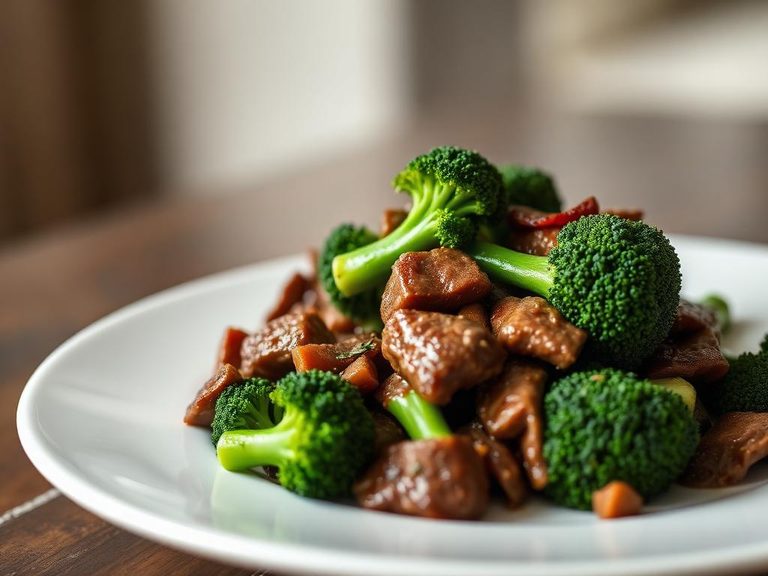
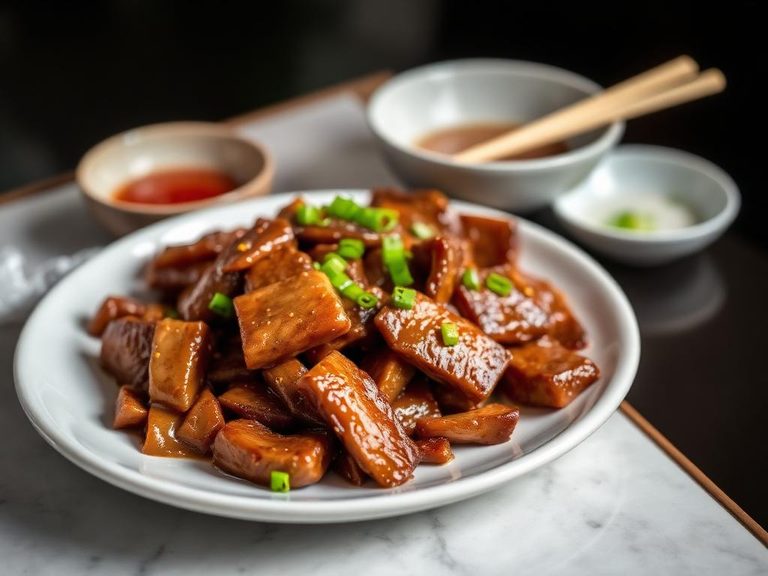
🍽️ Popular dishes


🌍 Where it's eaten
💡 Did you know?
The 'wok hei' or 'breath of the wok'—that elusive, smoky sear prized in restaurant stir-fries—is achieved by cooking at extremely high heat, a technique that briefly vaporizes the soy sauce and oil to create a unique flavor compound not found in home cooking.
Full nutrition (USDA data · scales with serving)
| Water | 78.7 g |
| Energy | 102 kcal |
| Protein | 10.7 g |
| Total lipid (fat) | 4.8 g |
| Carbohydrate, by difference | 4.4 g |
| Fiber, total dietary | 1.0 g |
| Total Sugars | 2.6 g |
| Calcium, Ca | 21.0 mg |
| Iron, Fe | 1.2 mg |
| Magnesium, Mg | 18.0 mg |
| Phosphorus, P | 121 mg |
| Potassium, K | 241 mg |
| Sodium, Na | 338 mg |
| Zinc, Zn | 1.7 mg |
| Copper, Cu | 0.13 mg |
| Selenium, Se | 14.8 ug |
| Vitamin C, total ascorbic acid | 3.2 mg |
| Thiamin | 0.05 mg |
| Riboflavin | 0.22 mg |
| Niacin | 2.8 mg |
| Vitamin B-6 | 0.25 mg |
| Folate, total | 24.0 ug |
| Folic acid | 0.00 ug |
| Folate, food | 24.0 ug |
| Folate, DFE | 24.0 ug |
| Choline, total | 59.4 mg |
| Vitamin B-12 | 0.62 ug |
| Vitamin B-12, added | 0.00 ug |
| Vitamin A, RAE | 26.0 ug |
| Retinol | 22.0 ug |
| Carotene, beta | 41.0 ug |
| Carotene, alpha | 0.00 ug |
| Cryptoxanthin, beta | 2.0 ug |
| Lycopene | 0.00 ug |
| Lutein + zeaxanthin | 137 ug |
| Vitamin E (alpha-tocopherol) | 0.34 mg |
| Vitamin E, added | 0.00 mg |
| Vitamin D (D2 + D3) | 0.30 ug |
| Vitamin K (phylloquinone) | 18.8 ug |
| Alcohol, ethyl | 0.00 g |
| Caffeine | 0.00 mg |
| Theobromine | 0.00 mg |
Fat & fatty acid profile (per 100g)
| Fatty acids, total saturated | 1.8 g |
| SFA 4:0 | 0.00 g |
| SFA 6:0 | 0.00 g |
| SFA 8:0 | 0.00 g |
| SFA 10:0 | 0.00 g |
| SFA 12:0 | 0.01 g |
| SFA 14:0 | 0.10 g |
| SFA 16:0 | 1.1 g |
| SFA 18:0 | 0.58 g |
| Fatty acids, total monounsaturated | 1.9 g |
| MUFA 16:1 | 0.15 g |
| MUFA 18:1 | 1.7 g |
| MUFA 20:1 | 0.01 g |
| MUFA 22:1 | 0.00 g |
| Fatty acids, total polyunsaturated | 0.47 g |
| PUFA 18:2 | 0.39 g |
| PUFA 18:3 | 0.02 g |
| PUFA 18:4 | 0.00 g |
| PUFA 20:4 | 0.01 g |
| PUFA 20:5 n-3 (EPA) | 0.00 g |
| PUFA 22:5 n-3 (DPA) | 0.00 g |
| PUFA 22:6 n-3 (DHA) | 0.00 g |
| Cholesterol | 72.0 mg |
Amino acid profile (per 100g)
Estimated from Lentils, sprouted, cooked, stir-fried, without salt — USDA does not publish this profile for Stir fried beef and vegetables in soy sauce.
| Threonine | 0.32 g |
| Isoleucine | 0.32 g |
| Leucine | 0.62 g |
| Lysine | 0.70 g |
| Methionine | 0.10 g |
| Cystine | 0.33 g |
| Phenylalanine | 0.43 g |
| Tyrosine | 0.25 g |
| Valine | 0.39 g |
| Arginine | 0.60 g |
| Histidine | 0.25 g |
| Alanine | 0.35 g |
| Aspartic acid | 1.4 g |
| Glutamic acid | 1.2 g |
| Glycine | 0.31 g |
| Proline | 0.35 g |
| Serine | 0.49 g |
FAQ
How do I keep the beef tender in a stir-fry?
Slice the beef against the grain into thin pieces and marinate it for 15-30 minutes in a mixture of soy sauce, a teaspoon of cornstarch, and a splash of oil. This process, called 'velveting,' helps lock in moisture and creates a tender texture.
Can I use frozen vegetables for this dish?
Yes, frozen stir-fry vegetable blends are a convenient option. To prevent a soggy dish, thaw and pat the vegetables completely dry with paper towels before adding them to the hot wok, and cook them quickly over high heat.
What is the best cut of beef for stir-frying?
Tender, quick-cooking cuts are ideal. Sirloin, flank steak, or tenderloin are popular choices. For a budget-friendly option, top round or chuck can be used if sliced very thinly against the grain and properly marinated.
Nutrient density (calculated · NRF9.3)
Nutrient Rich Foods index: beneficial nutrients (protein, fiber, vitamins, minerals) minus saturated fat, added sugar & sodium, per 100 kcal.
NRF9.3 index — Fulgoni, Keast & Drewnowski, 2009. Computed from USDA nutrients.
Weight-loss friendliness (composite index)
Energy density 1.02 kcal/g · 42% calories from protein · 1.0 g fiber · 2.6 g sugar per 100 g.
Composite of energy density (Rolls et al., 1999), protein & fiber satiety, minus sugar. A calculated heuristic — ranks satiety-per-calorie, not a clinical measure.
Dietary load (calculated from USDA values)
Potential renal acid load. Positive = acid-forming, negative = alkaline-forming.
Sodium-to-potassium ratio: 1.40 (lower is better — aim for ≤ 1)
Sodium:potassium per WHO potassium guidance. Computed from USDA nutrients.