

Spaghetti sauce with seafood
Common food
A vibrant, savory sauce where the briny sweetness of shrimp, mussels, or clams melds with a tomato or white wine base, creating a light yet deeply flavorful coating for pasta. Its texture is a delightful contrast of tender seafood against a smooth or chunky sauce, offering a taste of the coast in every bite. Nutritionally, it's a lean, protein-rich option with minimal fat, making it a satisfying yet light meal component.
Calorie split: 34% protein · 45% carbs · 21% fat
↓ Full nutrition💚 Why it's loved
People love it for the luxurious yet accessible taste of the ocean, where the sauce amplifies rather than masks the delicate seafood flavors. Its versatility makes it a staple for quick weeknight dinners or elegant gatherings, deeply rooted in Mediterranean coastal culinary traditions.
⚠️ Watch-outs & how to enjoy it better
Those with shellfish allergies must avoid it entirely, and the sodium content from seafood and added salt can be high. To mitigate, choose low-sodium canned tomatoes, rinse canned seafood, and balance the meal with fresh vegetables and whole-grain pasta to slow sugar absorption.
Key benefits
- High-quality lean protein from seafood
- Low in total fat and saturated fat
- Good source of dietary fiber if tomato-based
- Rich in micronutrients like selenium and zinc from shellfish
- Often lower in calories than cream-based pasta sauces
🍽️ Popular dishes
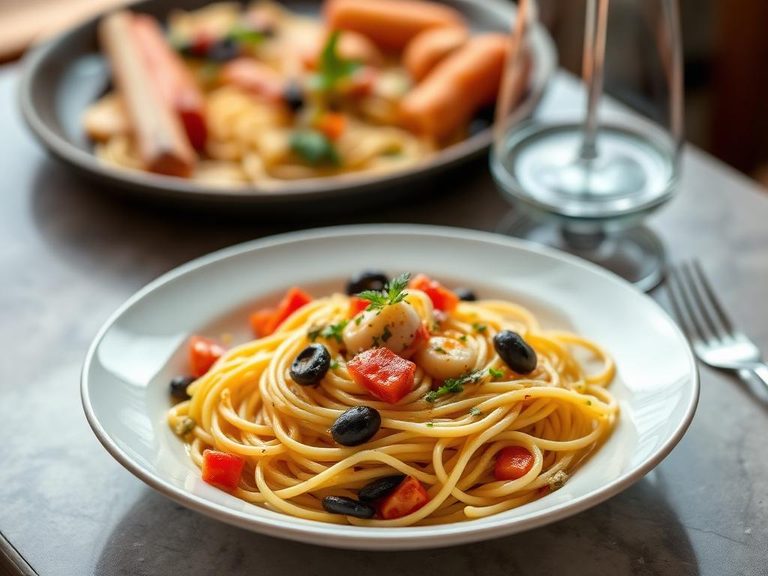
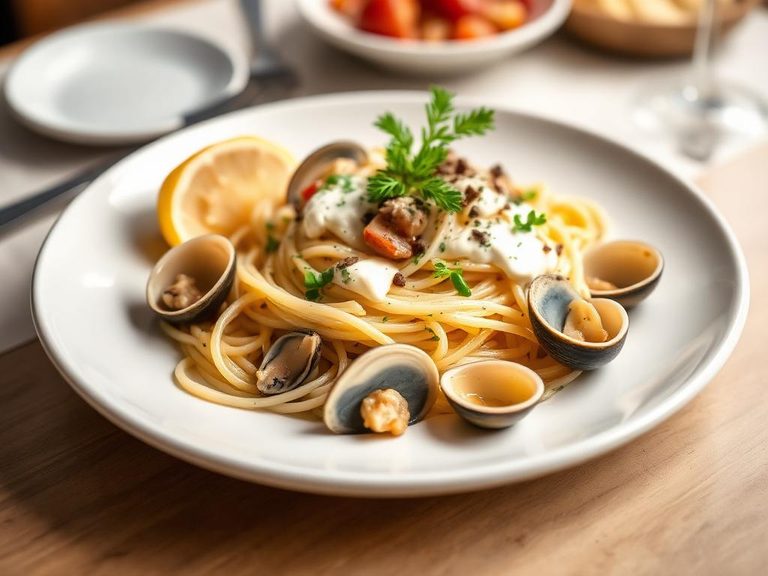
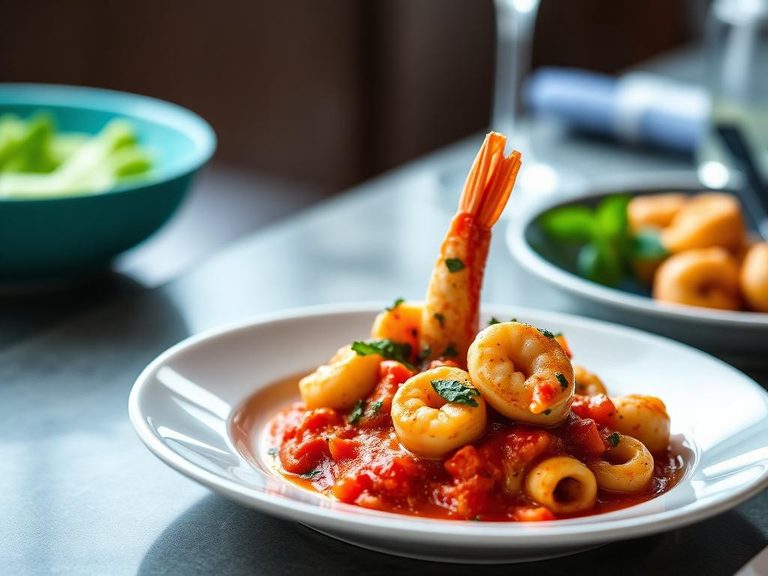
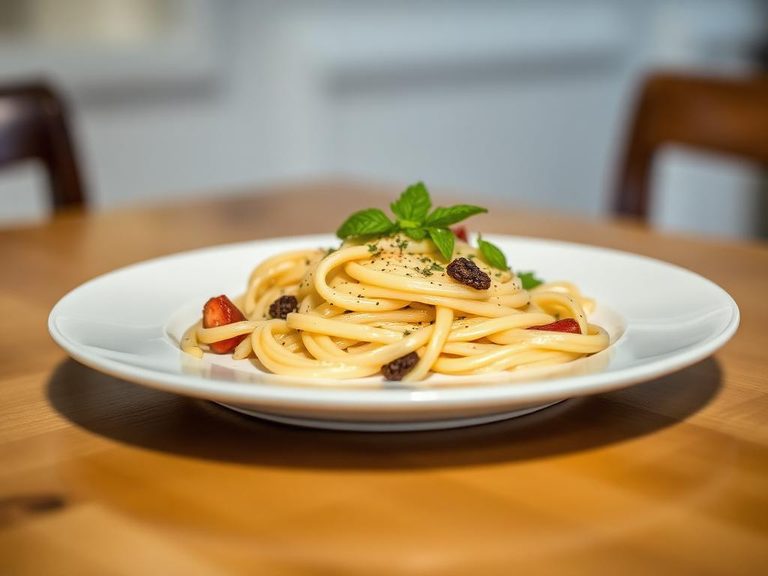
🌍 Where it's eaten
💡 Did you know?
The Italian term 'frutti di mare' literally translates to 'fruits of the sea,' highlighting the cultural view of seafood as a natural bounty.
Full nutrition (USDA data · scales with serving)
| Water | 84.2 g |
| Energy | 64.0 kcal |
| Protein | 5.3 g |
| Total lipid (fat) | 1.5 g |
| Carbohydrate, by difference | 7.1 g |
| Fiber, total dietary | 1.5 g |
| Total Sugars | 4.5 g |
| Calcium, Ca | 42.0 mg |
| Iron, Fe | 1.1 mg |
| Magnesium, Mg | 21.0 mg |
| Phosphorus, P | 77.0 mg |
| Potassium, K | 326 mg |
| Sodium, Na | 432 mg |
| Zinc, Zn | 0.42 mg |
| Copper, Cu | 0.10 mg |
| Selenium, Se | 10.3 ug |
| Vitamin C, total ascorbic acid | 2.0 mg |
| Thiamin | 0.02 mg |
| Riboflavin | 0.06 mg |
| Niacin | 3.3 mg |
| Vitamin B-6 | 0.14 mg |
| Folate, total | 12.0 ug |
| Folic acid | 0.00 ug |
| Folate, food | 12.0 ug |
| Folate, DFE | 12.0 ug |
| Choline, total | 28.8 mg |
| Vitamin B-12 | 1.8 ug |
| Vitamin B-12, added | 0.00 ug |
| Vitamin A, RAE | 40.0 ug |
| Retinol | 14.0 ug |
| Carotene, beta | 317 ug |
| Carotene, alpha | 0.00 ug |
| Cryptoxanthin, beta | 0.00 ug |
| Lycopene | 10319 ug |
| Lutein + zeaxanthin | 154 ug |
| Vitamin E (alpha-tocopherol) | 2.2 mg |
| Vitamin E, added | 0.00 mg |
| Vitamin D (D2 + D3) | 0.00 ug |
| Vitamin K (phylloquinone) | 11.3 ug |
| Alcohol, ethyl | 0.00 g |
| Caffeine | 0.00 mg |
| Theobromine | 0.00 mg |
Fat & fatty acid profile (per 100g)
| Fatty acids, total saturated | 0.18 g |
| SFA 4:0 | 0.00 g |
| SFA 6:0 | 0.00 g |
| SFA 8:0 | 0.00 g |
| SFA 10:0 | 0.00 g |
| SFA 12:0 | 0.00 g |
| SFA 14:0 | 0.00 g |
| SFA 16:0 | 0.11 g |
| SFA 18:0 | 0.05 g |
| Fatty acids, total monounsaturated | 0.33 g |
| MUFA 16:1 | 0.01 g |
| MUFA 18:1 | 0.31 g |
| MUFA 20:1 | 0.01 g |
| MUFA 22:1 | 0.00 g |
| Fatty acids, total polyunsaturated | 0.50 g |
| PUFA 18:2 | 0.36 g |
| PUFA 18:3 | 0.07 g |
| PUFA 18:4 | 0.00 g |
| PUFA 20:4 | 0.01 g |
| PUFA 20:5 n-3 (EPA) | 0.03 g |
| PUFA 22:5 n-3 (DPA) | 0.01 g |
| PUFA 22:6 n-3 (DHA) | 0.03 g |
| Cholesterol | 30.0 mg |
Amino acid profile (per 100g)
Estimated from OLIVE GARDEN, spaghetti with meat sauce — USDA does not publish this profile for Spaghetti sauce with seafood.
| Tryptophan | 0.06 g |
| Threonine | 0.20 g |
| Isoleucine | 0.21 g |
| Leucine | 0.40 g |
| Lysine | 0.23 g |
| Methionine | 0.12 g |
| Cystine | 0.10 g |
| Phenylalanine | 0.29 g |
| Tyrosine | 0.14 g |
| Valine | 0.24 g |
| Arginine | 0.29 g |
| Histidine | 0.15 g |
| Alanine | 0.26 g |
| Aspartic acid | 0.46 g |
| Glutamic acid | 1.7 g |
| Glycine | 0.24 g |
| Proline | 0.57 g |
| Serine | 0.27 g |
| Hydroxyproline | 0.00 g |
FAQ
What kind of seafood is typically used?
Common choices include shrimp, mussels, clams, squid, and scallops. The mix can vary widely by region and recipe, often featuring whatever is freshest.
Is it usually tomato-based or white wine-based?
Both are classic. A red 'marinara' style uses tomatoes, while a 'bianco' or 'in bianco' version relies on white wine, garlic, and olive oil, letting the seafood flavor shine more directly.
How can I tell if the seafood in the sauce is fresh?
For pre-made sauces, check the ingredient list for recognizable seafood names. Freshness is best ensured by making it at home with live shellfish and fresh, firm-fleshed fish or shrimp.
Nutrient density (calculated · NRF9.3)
Nutrient Rich Foods index: beneficial nutrients (protein, fiber, vitamins, minerals) minus saturated fat, added sugar & sodium, per 100 kcal.
NRF9.3 index — Fulgoni, Keast & Drewnowski, 2009. Computed from USDA nutrients.
Weight-loss friendliness (composite index)
Energy density 0.64 kcal/g · 33% calories from protein · 1.5 g fiber · 4.5 g sugar per 100 g.
Composite of energy density (Rolls et al., 1999), protein & fiber satiety, minus sugar. A calculated heuristic — ranks satiety-per-calorie, not a clinical measure.
Dietary load (calculated from USDA values)
Potential renal acid load. Positive = acid-forming, negative = alkaline-forming.
Sodium-to-potassium ratio: 1.33 (lower is better — aim for ≤ 1)
Sodium:potassium per WHO potassium guidance. Computed from USDA nutrients.