

Soy milk, chocolate
Common food

Photo: Wikipedia
A creamy, plant-based beverage that marries the earthy, nutty depth of soy with rich chocolate flavor. Its smooth, slightly viscous texture makes it a satisfying dairy alternative, offering a notable 3.35g of protein per 100g with a moderate 64 kcal. It's a balanced, indulgent drink that feels both comforting and nutritionally purposeful.
Calorie split: 21% protein · 51% carbs · 28% fat
↓ Full nutrition💚 Why it's loved
People adore it for its comforting, dessert-like taste that satisfies chocolate cravings without the heaviness of dairy. Its versatility makes it a beloved base for smoothies, coffee, or simply enjoyed chilled from the carton.
⚠️ Watch-outs & how to enjoy it better
The 7.49g of sugar per 100g can contribute to blood sugar spikes if consumed in large quantities, especially by those monitoring their glycemic load. As a common allergen, soy is unsuitable for individuals with soy allergies. To mitigate sugar impact, pair it with a source of protein or fat (like nuts or seeds) and practice portion control.
Key benefits
- Provides a complete plant protein source with all essential amino acids.
- Naturally cholesterol-free and low in saturated fat.
- A good source of isoflavones, which are linked to heart health.
- Offers a convenient, shelf-stable alternative to dairy milk.
- Can be a palatable way to increase soy intake for those avoiding animal products.
🍽️ Popular dishes


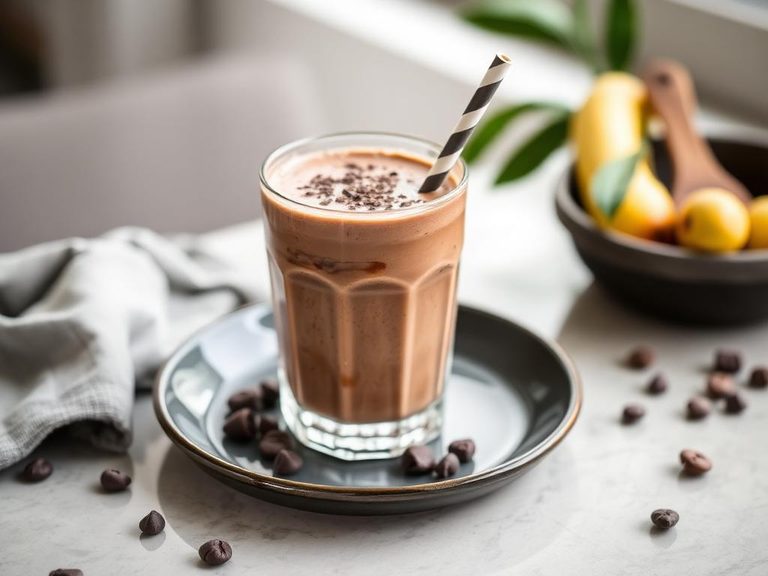
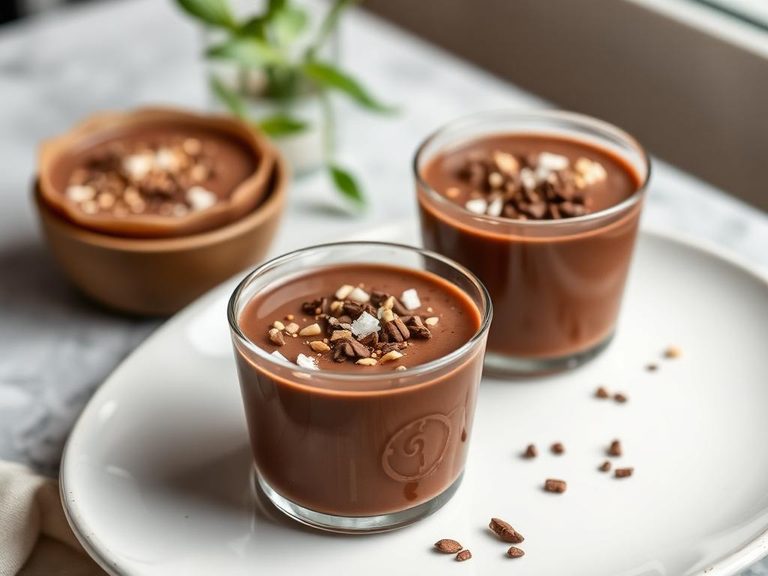
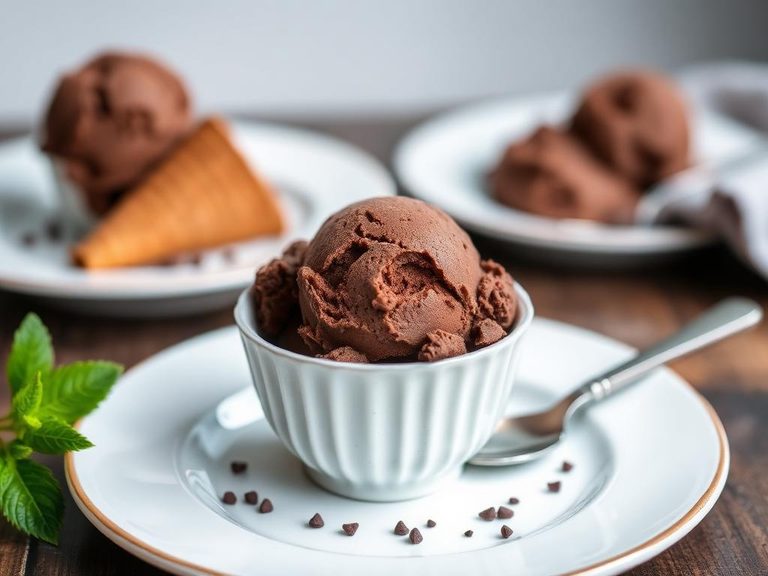
🌍 Where it's eaten
💡 Did you know?
The first commercially successful soy milk was patented in the United States in 1922 by a chemist named William R. Jackson, who called it 'Soyalac'.
Full nutrition (USDA data · scales with serving)
| Water | 85.7 g |
| Energy | 64.0 kcal |
| Protein | 3.4 g |
| Total lipid (fat) | 2.0 g |
| Carbohydrate, by difference | 8.3 g |
| Fiber, total dietary | 0.10 g |
| Total Sugars | 7.5 g |
| Calcium, Ca | 94.0 mg |
| Iron, Fe | 0.55 mg |
| Magnesium, Mg | 22.0 mg |
| Phosphorus, P | 66.0 mg |
| Potassium, K | 151 mg |
| Sodium, Na | 32.0 mg |
| Zinc, Zn | 0.31 mg |
| Copper, Cu | 0.11 mg |
| Selenium, Se | 1.8 ug |
| Vitamin C, total ascorbic acid | 0.00 mg |
| Thiamin | 0.06 mg |
| Riboflavin | 0.08 mg |
| Niacin | 0.23 mg |
| Vitamin B-6 | 0.05 mg |
| Folate, total | 19.0 ug |
| Folic acid | 0.00 ug |
| Folate, food | 19.0 ug |
| Folate, DFE | 19.0 ug |
| Choline, total | 21.9 mg |
| Vitamin B-12 | 0.36 ug |
| Vitamin B-12, added | 0.36 ug |
| Vitamin A, RAE | 54.0 ug |
| Retinol | 54.0 ug |
| Carotene, beta | 0.00 ug |
| Carotene, alpha | 0.00 ug |
| Cryptoxanthin, beta | 0.00 ug |
| Lycopene | 0.00 ug |
| Lutein + zeaxanthin | 8.0 ug |
| Vitamin E (alpha-tocopherol) | 0.15 mg |
| Vitamin E, added | 0.00 mg |
| Vitamin D (D2 + D3) | 0.60 ug |
| Vitamin K (phylloquinone) | 2.8 ug |
| Alcohol, ethyl | 0.00 g |
| Caffeine | 1.0 mg |
| Theobromine | 6.0 mg |
Fat & fatty acid profile (per 100g)
| Fatty acids, total saturated | 0.32 g |
| SFA 4:0 | 0.00 g |
| SFA 6:0 | 0.00 g |
| SFA 8:0 | 0.00 g |
| SFA 10:0 | 0.00 g |
| SFA 12:0 | 0.00 g |
| SFA 14:0 | 0.00 g |
| SFA 16:0 | 0.21 g |
| SFA 18:0 | 0.08 g |
| Fatty acids, total monounsaturated | 0.40 g |
| MUFA 16:1 | 0.00 g |
| MUFA 18:1 | 0.39 g |
| MUFA 20:1 | 0.01 g |
| MUFA 22:1 | 0.00 g |
| Fatty acids, total polyunsaturated | 1.1 g |
| PUFA 18:2 | 0.92 g |
| PUFA 18:3 | 0.15 g |
| PUFA 18:4 | 0.00 g |
| PUFA 20:4 | 0.00 g |
| PUFA 20:5 n-3 (EPA) | 0.00 g |
| PUFA 22:5 n-3 (DPA) | 0.00 g |
| PUFA 22:6 n-3 (DHA) | 0.00 g |
| Cholesterol | 0.00 mg |
Amino acid profile (per 100g)
Estimated from Soy milk, unsweetened, plain, shelf stable — USDA does not publish this profile for Soy milk.
| Tryptophan | 0.05 g |
| Threonine | 0.13 g |
| Isoleucine | 0.14 g |
| Leucine | 0.25 g |
| Lysine | 0.22 g |
| Methionine | 0.05 g |
| Phenylalanine | 0.17 g |
| Tyrosine | 0.12 g |
| Valine | 0.14 g |
| Arginine | 0.27 g |
| Histidine | 0.10 g |
| Alanine | 0.14 g |
| Aspartic acid | 0.40 g |
| Glutamic acid | 0.62 g |
| Glycine | 0.14 g |
| Proline | 0.14 g |
| Serine | 0.17 g |
| Hydroxyproline | 0.00 g |
| Cysteine | 0.06 g |
FAQ
Is chocolate soy milk a good source of protein?
Yes, it provides a complete plant-based protein with all essential amino acids, offering about 3.35g per 100g, which is comparable to many dairy milks.
How does the sugar content compare to regular chocolate milk?
The sugar content (7.49g per 100g) is often similar to or slightly lower than that of traditional chocolate cow's milk, but it can vary significantly by brand.
Can I use chocolate soy milk in baking?
Absolutely. It can be used as a 1:1 substitute for dairy milk in many recipes like cakes, muffins, and pancakes, adding a subtle chocolate flavor and moisture.
Is it suitable for people with lactose intolerance?
Yes, it is naturally lactose-free, making it a safe and nutritious alternative for those with lactose intolerance or dairy allergies.
Nutrient density (calculated · NRF9.3)
Nutrient Rich Foods index: beneficial nutrients (protein, fiber, vitamins, minerals) minus saturated fat, added sugar & sodium, per 100 kcal.
NRF9.3 index — Fulgoni, Keast & Drewnowski, 2009. Computed from USDA nutrients.
Weight-loss friendliness (composite index)
Energy density 0.64 kcal/g · 21% calories from protein · 0.1 g fiber · 7.5 g sugar per 100 g.
Composite of energy density (Rolls et al., 1999), protein & fiber satiety, minus sugar. A calculated heuristic — ranks satiety-per-calorie, not a clinical measure.
Dietary load (calculated from USDA values)
Potential renal acid load. Positive = acid-forming, negative = alkaline-forming.
Sodium-to-potassium ratio: 0.21 (lower is better — aim for ≤ 1)
Sodium:potassium per WHO potassium guidance. Computed from USDA nutrients.