

Soup, rice
Common food

Photo: Wikipedia
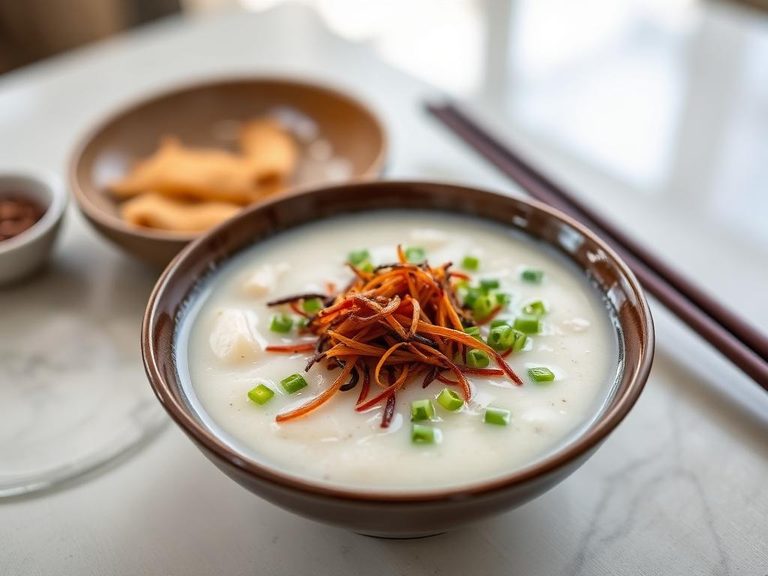
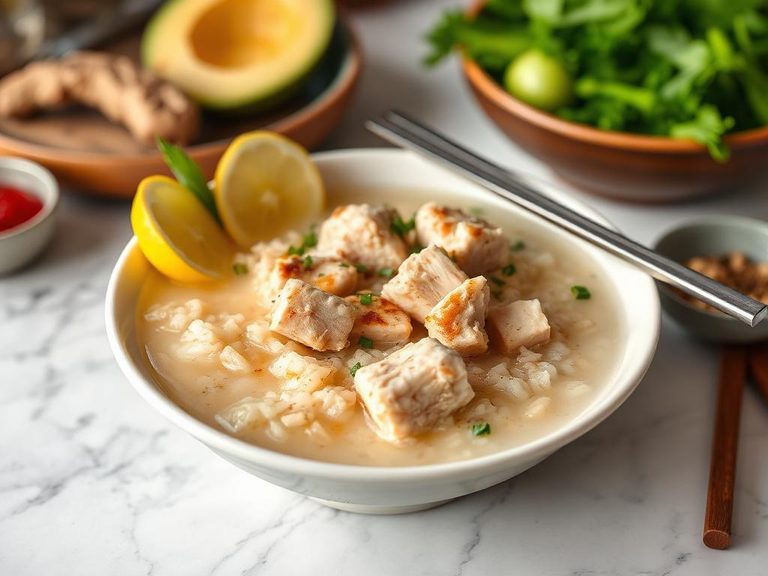
A light, comforting broth infused with the subtle, nutty flavor of rice, creating a texture that ranges from silky to slightly chewy depending on the grain's preparation. It's a minimalist dish where the starchy rice softens and releases its essence, thickening the liquid into a simple, nourishing gruel. With only 51 calories per 100g, it's an exceptionally low-energy-density food, primarily providing quick-digesting carbohydrates.
Calorie split: 27% protein · 53% carbs · 20% fat
↓ Full nutrition💚 Why it's loved
People cherish it for its profound simplicity and soothing warmth, acting as a blank canvas that absorbs the flavors of accompanying dishes or seasonings. It holds deep cultural significance as a symbol of comfort and care in many cuisines, often served to the sick or as a humble, satisfying staple.
⚠️ Watch-outs & how to enjoy it better
On its own, it can be nutritionally sparse, lacking significant protein, fiber, and micronutrients, which may lead to a quick return of hunger. The high glycemic load from the refined rice can cause a rapid blood-sugar spike. To counteract this, pair it with a source of protein (like an egg or tofu) and healthy fat (a drizzle of sesame oil), or add fibrous vegetables to slow digestion.
Key benefits
- Excellent source of hydration and electrolytes in a liquid form.
- Gentle on the digestive system, often used in convalescent diets.
- Provides quick-release carbohydrates for immediate energy.
- Low in fat and protein, making it a light base for other ingredients.
- Can be easily fortified with vegetables, proteins, or spices.
🍽️ Popular dishes
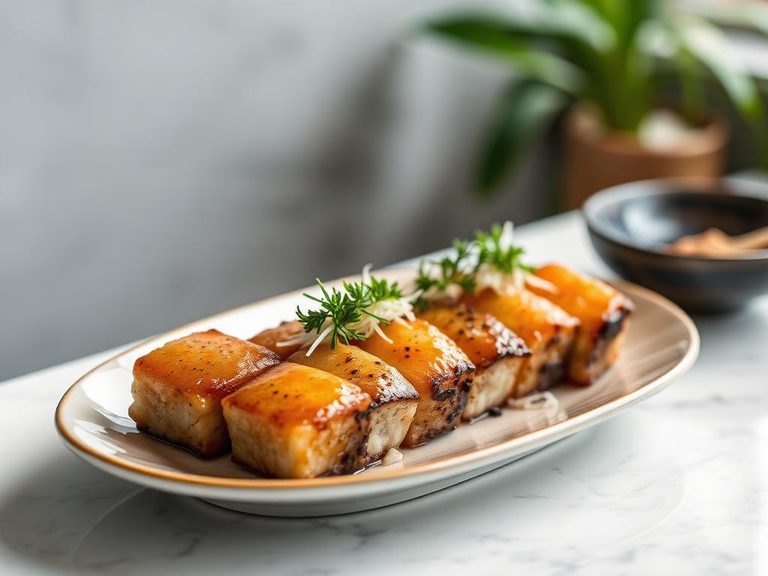
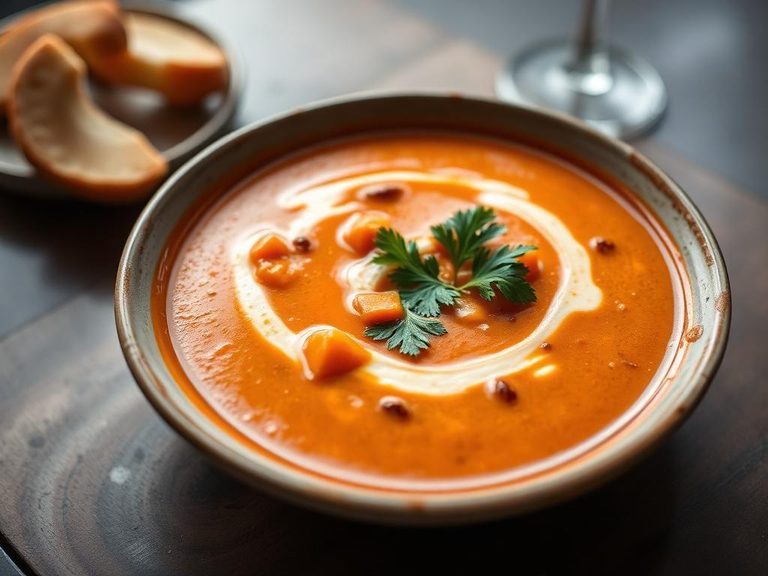
🌍 Where it's eaten
💡 Did you know?
In some cultures, the water used to rinse rice before cooking is saved and boiled to make a quick, starchy soup base, known as 'rice water' or 'geng', valued for its thickening properties and mild flavor.
Full nutrition (USDA data · scales with serving)
| Water | 87.7 g |
| Energy | 51.0 kcal |
| Protein | 3.5 g |
| Total lipid (fat) | 1.1 g |
| Carbohydrate, by difference | 6.8 g |
| Fiber, total dietary | 0.50 g |
| Total Sugars | 0.76 g |
| Calcium, Ca | 9.0 mg |
| Iron, Fe | 0.35 mg |
| Magnesium, Mg | 10.0 mg |
| Phosphorus, P | 39.0 mg |
| Potassium, K | 106 mg |
| Sodium, Na | 247 mg |
| Zinc, Zn | 0.29 mg |
| Copper, Cu | 0.04 mg |
| Selenium, Se | 3.3 ug |
| Vitamin C, total ascorbic acid | 3.7 mg |
| Thiamin | 0.03 mg |
| Riboflavin | 0.04 mg |
| Niacin | 1.0 mg |
| Vitamin B-6 | 0.10 mg |
| Folate, total | 17.0 ug |
| Folic acid | 10.0 ug |
| Folate, food | 7.0 ug |
| Folate, DFE | 24.0 ug |
| Choline, total | 12.2 mg |
| Vitamin B-12 | 0.03 ug |
| Vitamin B-12, added | 0.00 ug |
| Vitamin A, RAE | 28.0 ug |
| Retinol | 1.0 ug |
| Carotene, beta | 274 ug |
| Carotene, alpha | 91.0 ug |
| Cryptoxanthin, beta | 2.0 ug |
| Lycopene | 114 ug |
| Lutein + zeaxanthin | 137 ug |
| Vitamin E (alpha-tocopherol) | 0.16 mg |
| Vitamin E, added | 0.00 mg |
| Vitamin D (D2 + D3) | 0.00 ug |
| Vitamin K (phylloquinone) | 7.7 ug |
| Alcohol, ethyl | 0.00 g |
| Caffeine | 0.00 mg |
| Theobromine | 0.00 mg |
Fat & fatty acid profile (per 100g)
| Fatty acids, total saturated | 0.27 g |
| SFA 4:0 | 0.00 g |
| SFA 6:0 | 0.00 g |
| SFA 8:0 | 0.00 g |
| SFA 10:0 | 0.00 g |
| SFA 12:0 | 0.00 g |
| SFA 14:0 | 0.01 g |
| SFA 16:0 | 0.21 g |
| SFA 18:0 | 0.05 g |
| Fatty acids, total monounsaturated | 0.45 g |
| MUFA 16:1 | 0.04 g |
| MUFA 18:1 | 0.39 g |
| MUFA 20:1 | 0.01 g |
| MUFA 22:1 | 0.00 g |
| Fatty acids, total polyunsaturated | 0.30 g |
| PUFA 18:2 | 0.26 g |
| PUFA 18:3 | 0.02 g |
| PUFA 18:4 | 0.00 g |
| PUFA 20:4 | 0.01 g |
| PUFA 20:5 n-3 (EPA) | 0.00 g |
| PUFA 22:5 n-3 (DPA) | 0.00 g |
| PUFA 22:6 n-3 (DHA) | 0.00 g |
| Cholesterol | 12.0 mg |
Amino acid profile (per 100g)
Estimated from Restaurant, Latino, black bean soup — USDA does not publish this profile for Soup.
| Tryptophan | 0.04 g |
| Threonine | 0.17 g |
| Isoleucine | 0.16 g |
| Leucine | 0.32 g |
| Lysine | 0.27 g |
| Methionine | 0.10 g |
| Cystine | 0.04 g |
| Phenylalanine | 0.16 g |
| Tyrosine | 0.13 g |
| Valine | 0.20 g |
| Arginine | 0.35 g |
| Histidine | 0.09 g |
| Alanine | 0.35 g |
| Aspartic acid | 0.38 g |
| Glutamic acid | 0.72 g |
| Glycine | 0.58 g |
| Proline | 0.36 g |
| Serine | 0.20 g |
FAQ
What is the difference between rice soup and congee?
Congee is a specific type of rice soup where the rice is cooked for a very long time (often 1-2 hours) until it breaks down completely into a thick, porridge-like consistency. General 'rice soup' can have a thinner broth with distinct, intact grains.
Can I make rice soup with any type of rice?
Yes, though the texture will vary. Short-grain or medium-grain rice will produce a starchier, thicker soup. Long-grain rice like Basmati or Jasmine will yield a clearer broth with more separate grains.
Is rice soup gluten-free?
The base of rice and water is naturally gluten-free. However, always check added ingredients like broth, seasonings, or toppings, which could contain hidden gluten.
Nutrient density (calculated · NRF9.3)
Nutrient Rich Foods index: beneficial nutrients (protein, fiber, vitamins, minerals) minus saturated fat, added sugar & sodium, per 100 kcal.
NRF9.3 index — Fulgoni, Keast & Drewnowski, 2009. Computed from USDA nutrients.
Weight-loss friendliness (composite index)
Energy density 0.51 kcal/g · 28% calories from protein · 0.5 g fiber · 0.8 g sugar per 100 g.
Composite of energy density (Rolls et al., 1999), protein & fiber satiety, minus sugar. A calculated heuristic — ranks satiety-per-calorie, not a clinical measure.
Dietary load (calculated from USDA values)
Potential renal acid load. Positive = acid-forming, negative = alkaline-forming.
Sodium-to-potassium ratio: 2.33 (lower is better — aim for ≤ 1)
Sodium:potassium per WHO potassium guidance. Computed from USDA nutrients.