

Soup, potato with meat
Common food
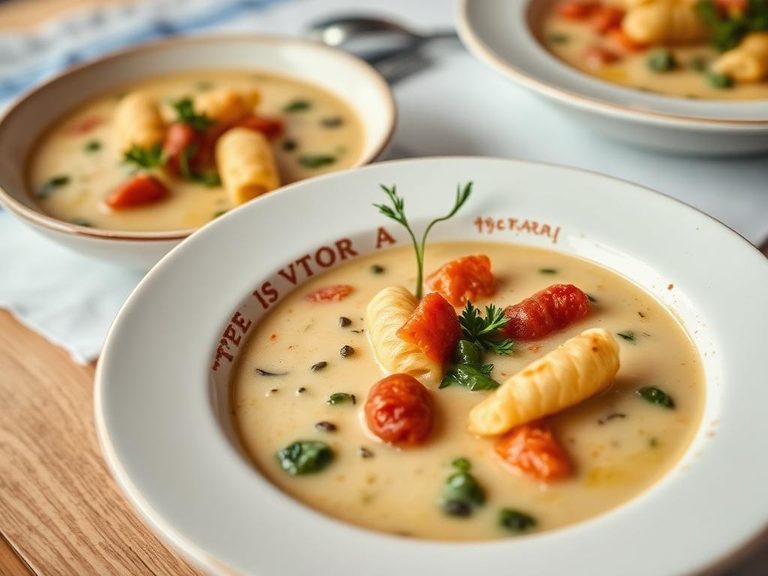
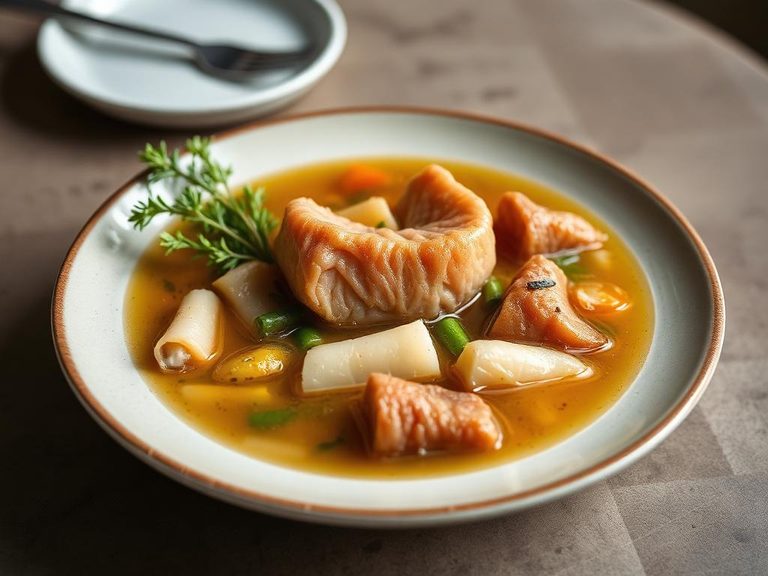
A hearty, rustic soup where tender potato chunks and savory meat simmer together in a rich, often creamy broth. The texture is a comforting mix of soft, starchy potatoes and chewy meat, with a flavor profile that's deeply savory and satisfying. At just 109 kcal per 100g, it's a surprisingly light yet filling option that provides a good balance of protein, carbs, and fats.
Calorie split: 14% protein · 33% carbs · 53% fat
↓ Full nutrition💚 Why it's loved
People adore it for its profound comfort-food appeal, evoking warmth and home cooking across many cultures. Its versatility allows for endless variations, from creamy chowders to clear broths, making it a adaptable canvas for seasonal ingredients and personal taste.
⚠️ Watch-outs & how to enjoy it better
Commercial or canned versions can be high in sodium, which may concern those monitoring blood pressure. The starchy potatoes can cause a quicker blood sugar rise compared to non-starchy vegetables. To counteract, pair it with a side of leafy greens or a vinegar-based salad to slow digestion, and opt for low-sodium broth or make it from scratch to control salt levels.
Key benefits
- Provides a balanced mix of protein, carbs, and fats for sustained energy.
- Potatoes offer potassium and vitamin B6.
- The broth can aid in hydration.
- A good source of satiating fiber.
- Can be a cost-effective, nutrient-dense meal.
🍽️ Popular dishes
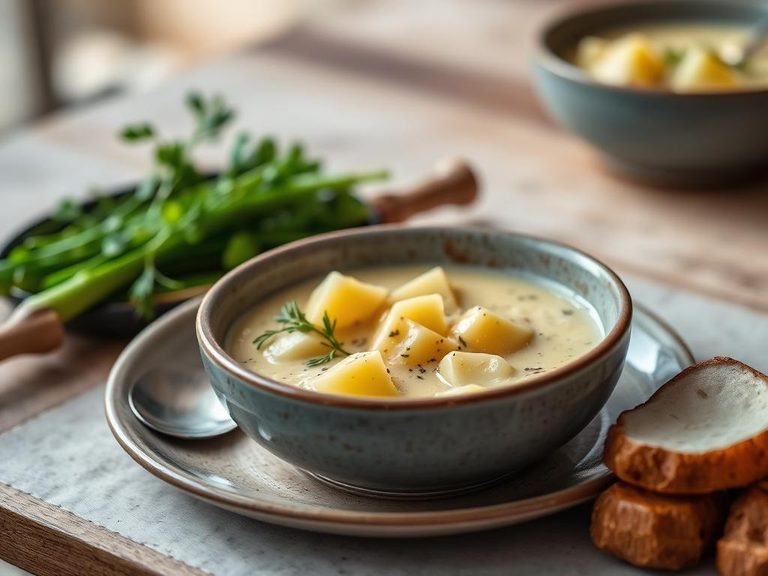
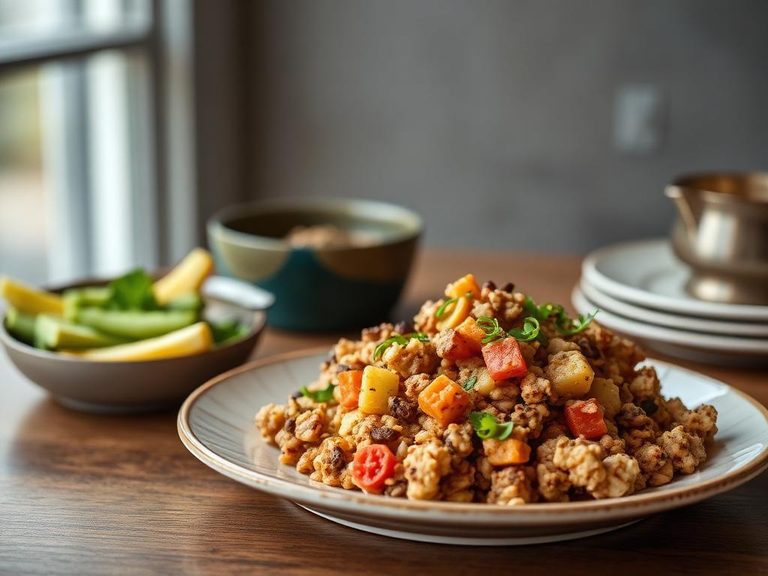
🌍 Where it's eaten
💡 Did you know?
The combination of potato and meat in soup is a foundational culinary technique used globally to stretch expensive meat further by bulking the dish with affordable, filling starch.
Full nutrition (USDA data · scales with serving)
| Water | 79.7 g |
| Energy | 109 kcal |
| Protein | 3.8 g |
| Total lipid (fat) | 6.4 g |
| Carbohydrate, by difference | 8.8 g |
| Fiber, total dietary | 1.0 g |
| Total Sugars | 0.95 g |
| Calcium, Ca | 17.0 mg |
| Iron, Fe | 0.48 mg |
| Magnesium, Mg | 13.0 mg |
| Phosphorus, P | 51.0 mg |
| Potassium, K | 210 mg |
| Sodium, Na | 246 mg |
| Zinc, Zn | 0.67 mg |
| Copper, Cu | 0.06 mg |
| Selenium, Se | 5.1 ug |
| Vitamin C, total ascorbic acid | 5.5 mg |
| Thiamin | 0.10 mg |
| Riboflavin | 0.09 mg |
| Niacin | 1.1 mg |
| Vitamin B-6 | 0.10 mg |
| Folate, total | 11.0 ug |
| Folic acid | 4.0 ug |
| Folate, food | 8.0 ug |
| Folate, DFE | 14.0 ug |
| Choline, total | 16.9 mg |
| Vitamin B-12 | 0.09 ug |
| Vitamin B-12, added | 0.00 ug |
| Vitamin A, RAE | 60.0 ug |
| Retinol | 39.0 ug |
| Carotene, beta | 210 ug |
| Carotene, alpha | 85.0 ug |
| Cryptoxanthin, beta | 0.00 ug |
| Lycopene | 0.00 ug |
| Lutein + zeaxanthin | 17.0 ug |
| Vitamin E (alpha-tocopherol) | 0.21 mg |
| Vitamin E, added | 0.00 mg |
| Vitamin D (D2 + D3) | 0.30 ug |
| Vitamin K (phylloquinone) | 2.2 ug |
| Alcohol, ethyl | 0.00 g |
| Caffeine | 0.00 mg |
| Theobromine | 0.00 mg |
Fat & fatty acid profile (per 100g)
| Fatty acids, total saturated | 3.1 g |
| SFA 4:0 | 0.09 g |
| SFA 6:0 | 0.07 g |
| SFA 8:0 | 0.05 g |
| SFA 10:0 | 0.11 g |
| SFA 12:0 | 0.13 g |
| SFA 14:0 | 0.43 g |
| SFA 16:0 | 1.5 g |
| SFA 18:0 | 0.61 g |
| Fatty acids, total monounsaturated | 1.8 g |
| MUFA 16:1 | 0.12 g |
| MUFA 18:1 | 1.8 g |
| MUFA 20:1 | 0.02 g |
| MUFA 22:1 | 0.00 g |
| Fatty acids, total polyunsaturated | 0.54 g |
| PUFA 18:2 | 0.40 g |
| PUFA 18:3 | 0.04 g |
| PUFA 18:4 | 0.00 g |
| PUFA 20:4 | 0.02 g |
| PUFA 20:5 n-3 (EPA) | 0.00 g |
| PUFA 22:5 n-3 (DPA) | 0.00 g |
| PUFA 22:6 n-3 (DHA) | 0.00 g |
| Cholesterol | 22.0 mg |
Amino acid profile (per 100g)
Estimated from Restaurant, Latino, black bean soup — USDA does not publish this profile for Soup.
| Tryptophan | 0.04 g |
| Threonine | 0.17 g |
| Isoleucine | 0.16 g |
| Leucine | 0.32 g |
| Lysine | 0.27 g |
| Methionine | 0.10 g |
| Cystine | 0.04 g |
| Phenylalanine | 0.16 g |
| Tyrosine | 0.13 g |
| Valine | 0.20 g |
| Arginine | 0.35 g |
| Histidine | 0.09 g |
| Alanine | 0.35 g |
| Aspartic acid | 0.38 g |
| Glutamic acid | 0.72 g |
| Glycine | 0.58 g |
| Proline | 0.36 g |
| Serine | 0.20 g |
FAQ
Is potato and meat soup a complete meal?
It can be, as it provides protein, carbohydrates, and fats. To make it more nutritionally complete, consider adding a wider variety of vegetables like carrots, celery, or peas for added vitamins and fiber.
How can I make it healthier?
Use lean cuts of meat, load it with extra vegetables, choose a low-sodium broth, and consider using a mix of potatoes and other root vegetables like turnips or parsnips to diversify the nutrient profile.
Why does my homemade version turn out watery?
This often happens if the potatoes are overcooked and break down completely. Use waxy potatoes for better texture, or add a small amount of potato starch slurry at the end to thicken the broth without overcooking the chunks.
Nutrient density (calculated · NRF9.3)
Nutrient Rich Foods index: beneficial nutrients (protein, fiber, vitamins, minerals) minus saturated fat, added sugar & sodium, per 100 kcal.
NRF9.3 index — Fulgoni, Keast & Drewnowski, 2009. Computed from USDA nutrients.
Weight-loss friendliness (composite index)
Energy density 1.09 kcal/g · 14% calories from protein · 1.0 g fiber · 0.9 g sugar per 100 g.
Composite of energy density (Rolls et al., 1999), protein & fiber satiety, minus sugar. A calculated heuristic — ranks satiety-per-calorie, not a clinical measure.
Dietary load (calculated from USDA values)
Potential renal acid load. Positive = acid-forming, negative = alkaline-forming.
Sodium-to-potassium ratio: 1.17 (lower is better — aim for ≤ 1)
Sodium:potassium per WHO potassium guidance. Computed from USDA nutrients.