

Soup, potato
Common food
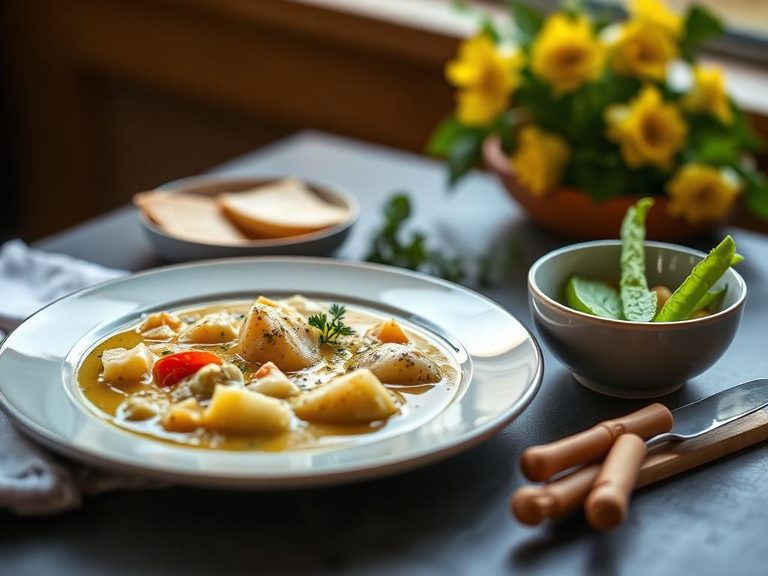
A warm, comforting bowl of potato soup is a velvety blend of starchy potatoes, often enriched with cream or butter, creating a smooth, thick texture that coats the spoon. Its flavor is mild, earthy, and subtly sweet, serving as a perfect canvas for toppings like cheese, bacon, or chives. Nutritionally, it's a moderate source of energy, primarily from carbohydrates, with a small amount of fat and minimal protein.
Calorie split: 7% protein · 47% carbs · 47% fat
↓ Full nutrition💚 Why it's loved
People adore potato soup for its profound comfort-food appeal, evoking feelings of warmth and home. Its mild, creamy base makes it incredibly versatile, easily adapted with countless regional flavors and toppings to suit any palate.
⚠️ Watch-outs & how to enjoy it better
The main concern is its high glycemic load, which can cause blood sugar spikes, especially in refined versions. It can also be high in sodium and saturated fat if made with heavy cream and salted broths. To counteract this, pair it with a source of protein (like beans or chicken) and healthy fat (avocado), choose broth-based recipes, and control portion sizes.
Key benefits
- Provides quick energy from complex carbohydrates.
- Contains potassium, which supports muscle and nerve function.
- Offers dietary fiber, especially if made with skins.
- Can be a comforting, hydrating meal base.
- Versatile for incorporating other vegetables or lean proteins.
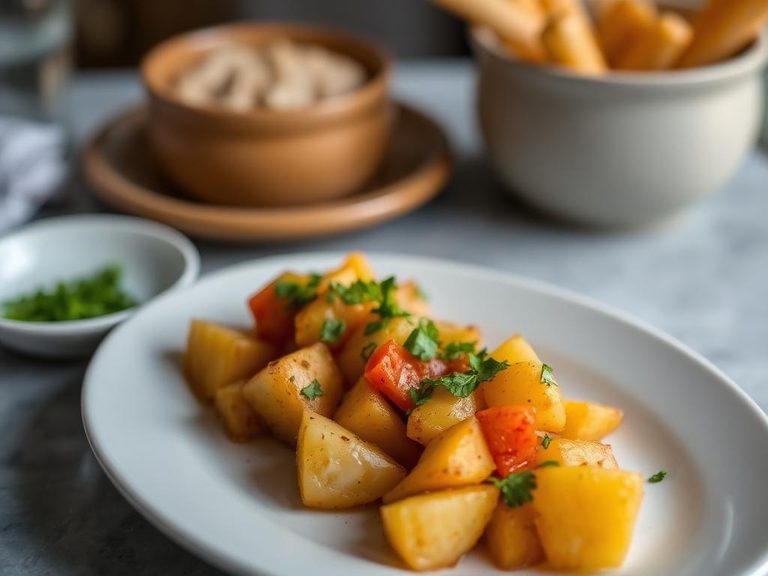
🍽️ Popular dishes
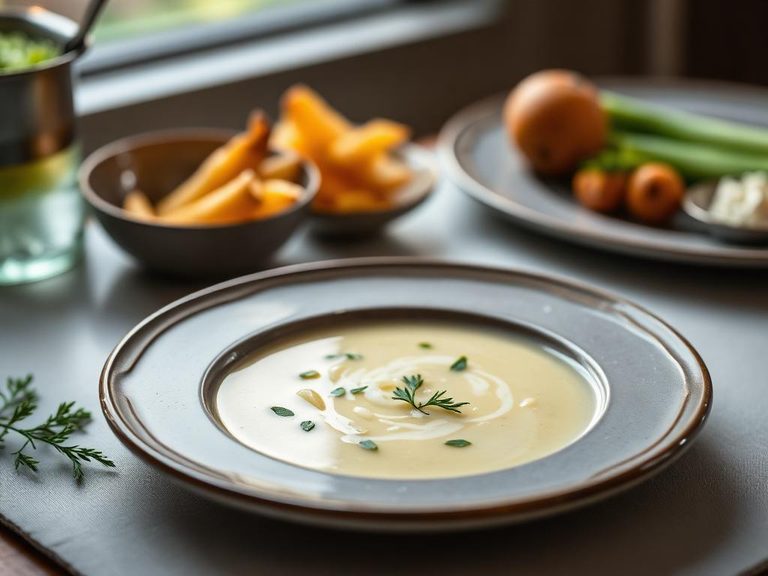
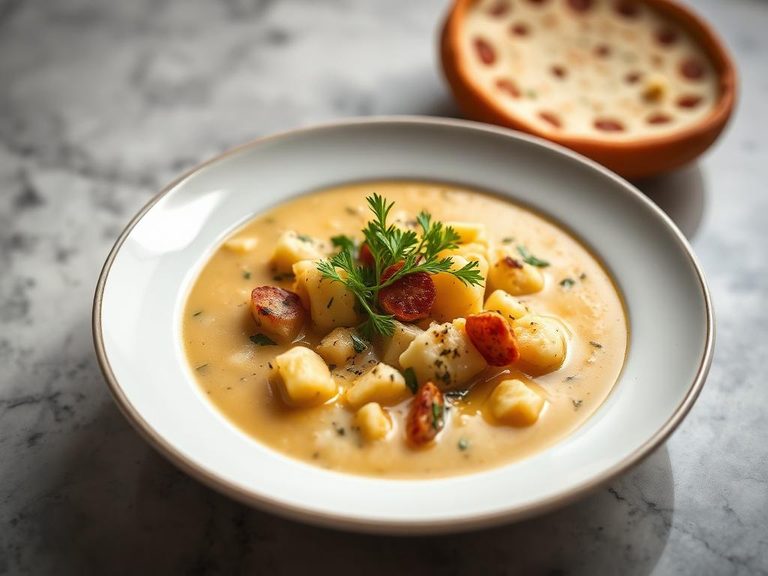
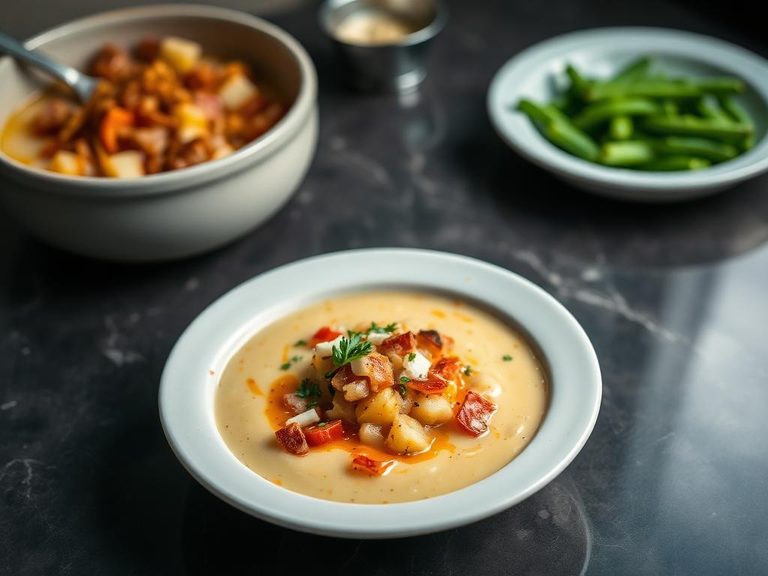
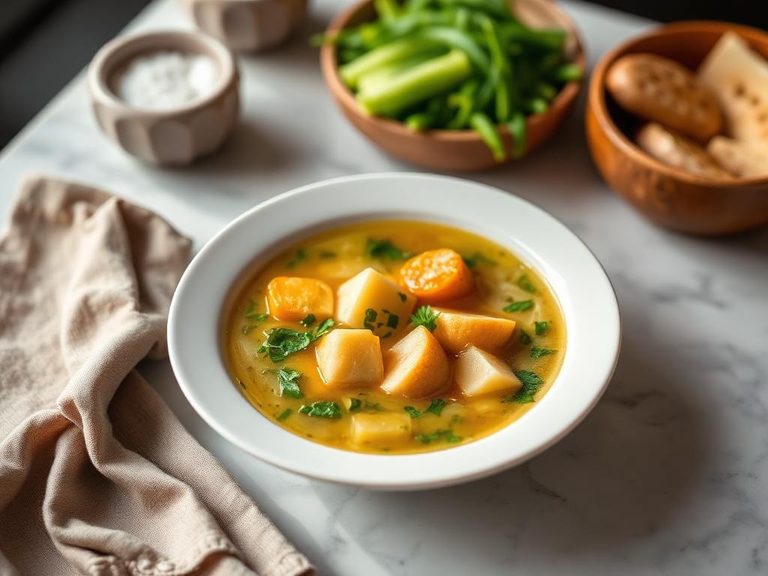
🌍 Where it's eaten
💡 Did you know?
The famous thickening power of potato soup comes from amylose, a starch molecule that releases when the potato cells break down during cooking, creating that classic creamy texture without necessarily needing dairy.
Full nutrition (USDA data · scales with serving)
| Water | 82.1 g |
| Energy | 90.0 kcal |
| Protein | 1.5 g |
| Total lipid (fat) | 4.7 g |
| Carbohydrate, by difference | 10.5 g |
| Fiber, total dietary | 1.2 g |
| Total Sugars | 1.0 g |
| Calcium, Ca | 15.0 mg |
| Iron, Fe | 0.34 mg |
| Magnesium, Mg | 13.0 mg |
| Phosphorus, P | 36.0 mg |
| Potassium, K | 227 mg |
| Sodium, Na | 240 mg |
| Zinc, Zn | 0.23 mg |
| Copper, Cu | 0.06 mg |
| Selenium, Se | 0.90 ug |
| Vitamin C, total ascorbic acid | 7.1 mg |
| Thiamin | 0.06 mg |
| Riboflavin | 0.05 mg |
| Niacin | 0.85 mg |
| Vitamin B-6 | 0.07 mg |
| Folate, total | 13.0 ug |
| Folic acid | 4.0 ug |
| Folate, food | 9.0 ug |
| Folate, DFE | 15.0 ug |
| Choline, total | 8.0 mg |
| Vitamin B-12 | 0.00 ug |
| Vitamin B-12, added | 0.00 ug |
| Vitamin A, RAE | 60.0 ug |
| Retinol | 39.0 ug |
| Carotene, beta | 210 ug |
| Carotene, alpha | 85.0 ug |
| Cryptoxanthin, beta | 0.00 ug |
| Lycopene | 0.00 ug |
| Lutein + zeaxanthin | 18.0 ug |
| Vitamin E (alpha-tocopherol) | 0.20 mg |
| Vitamin E, added | 0.00 mg |
| Vitamin D (D2 + D3) | 0.20 ug |
| Vitamin K (phylloquinone) | 2.3 ug |
| Alcohol, ethyl | 0.00 g |
| Caffeine | 0.00 mg |
| Theobromine | 0.00 mg |
Fat & fatty acid profile (per 100g)
| Fatty acids, total saturated | 2.5 g |
| SFA 4:0 | 0.09 g |
| SFA 6:0 | 0.07 g |
| SFA 8:0 | 0.05 g |
| SFA 10:0 | 0.11 g |
| SFA 12:0 | 0.13 g |
| SFA 14:0 | 0.41 g |
| SFA 16:0 | 1.2 g |
| SFA 18:0 | 0.39 g |
| Fatty acids, total monounsaturated | 1.0 g |
| MUFA 16:1 | 0.08 g |
| MUFA 18:1 | 1.1 g |
| MUFA 20:1 | 0.01 g |
| MUFA 22:1 | 0.00 g |
| Fatty acids, total polyunsaturated | 0.34 g |
| PUFA 18:2 | 0.22 g |
| PUFA 18:3 | 0.03 g |
| PUFA 18:4 | 0.00 g |
| PUFA 20:4 | 0.01 g |
| PUFA 20:5 n-3 (EPA) | 0.00 g |
| PUFA 22:5 n-3 (DPA) | 0.00 g |
| PUFA 22:6 n-3 (DHA) | 0.00 g |
| Cholesterol | 12.0 mg |
Amino acid profile (per 100g)
Estimated from Restaurant, Latino, black bean soup — USDA does not publish this profile for Soup.
| Tryptophan | 0.04 g |
| Threonine | 0.17 g |
| Isoleucine | 0.16 g |
| Leucine | 0.32 g |
| Lysine | 0.27 g |
| Methionine | 0.10 g |
| Cystine | 0.04 g |
| Phenylalanine | 0.16 g |
| Tyrosine | 0.13 g |
| Valine | 0.20 g |
| Arginine | 0.35 g |
| Histidine | 0.09 g |
| Alanine | 0.35 g |
| Aspartic acid | 0.38 g |
| Glutamic acid | 0.72 g |
| Glycine | 0.58 g |
| Proline | 0.36 g |
| Serine | 0.20 g |
FAQ
Is potato soup gluten-free?
Naturally, yes, as potatoes are gluten-free. However, always check commercial mixes or restaurant versions, as they may contain thickeners or additives with gluten.
How can I make potato soup healthier?
Use a broth base instead of cream, blend in cauliflower or white beans for creaminess, load it with vegetables, and top with Greek yogurt instead of sour cream.
Why does my potato soup turn gummy?
This is often due to over-blending or using a high-starch potato variety like Russets. For a smoother texture, blend only part of the soup or use waxy potatoes like Yukon Golds.
Nutrient density (calculated · NRF9.3)
Nutrient Rich Foods index: beneficial nutrients (protein, fiber, vitamins, minerals) minus saturated fat, added sugar & sodium, per 100 kcal.
NRF9.3 index — Fulgoni, Keast & Drewnowski, 2009. Computed from USDA nutrients.
Weight-loss friendliness (composite index)
Energy density 0.90 kcal/g · 7% calories from protein · 1.2 g fiber · 1.0 g sugar per 100 g.
Composite of energy density (Rolls et al., 1999), protein & fiber satiety, minus sugar. A calculated heuristic — ranks satiety-per-calorie, not a clinical measure.
Dietary load (calculated from USDA values)
Potential renal acid load. Positive = acid-forming, negative = alkaline-forming.
Sodium-to-potassium ratio: 1.06 (lower is better — aim for ≤ 1)
Sodium:potassium per WHO potassium guidance. Computed from USDA nutrients.