

Soup, beef broth, cubed, dry
Whole food · Soups, Sauces, and Gravies
This is a concentrated, dehydrated beef broth in cube form, designed to dissolve quickly into hot water. It delivers a deep, savory umami flavor with a rich, meaty aroma and a smooth, clear liquid texture once reconstituted. Nutritionally, it's a high-protein, low-fat flavor base, with a notable amount of added sugar per serving.
Calorie split: 41% protein · 38% carbs · 21% fat
↓ Full nutrition💚 Why it's loved
People love it for its incredible convenience and the instant depth of flavor it adds to homemade meals, saving hours of simmering bones. It's a kitchen staple that transforms simple water into a rich, comforting base for everything from noodle soups to risottos.
⚠️ Watch-outs & how to enjoy it better
The significant added sugar (over 14g per 100g) can cause blood-sugar spikes, and the sodium content is typically very high, which may concern those managing blood pressure. To counteract, use it as a flavor accent rather than the main liquid, dilute it well, and pair the final dish with fiber-rich vegetables and lean protein to blunt the glycemic impact.
Key benefits
- Excellent source of quick, savory flavor for soups and sauces.
- High in protein relative to its calorie content.
- Extremely low in fat.
- Convenient and shelf-stable for long-term storage.
- Provides a base for countless dishes and gravies.
🍽️ Popular dishes
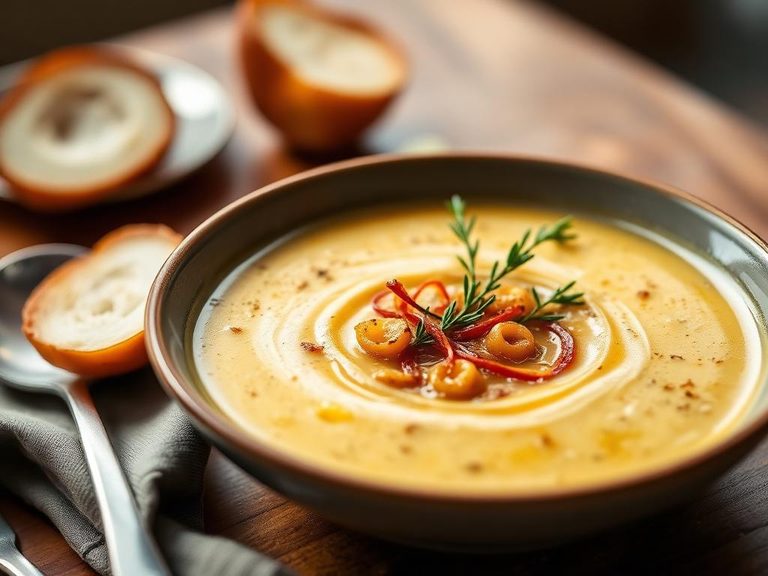
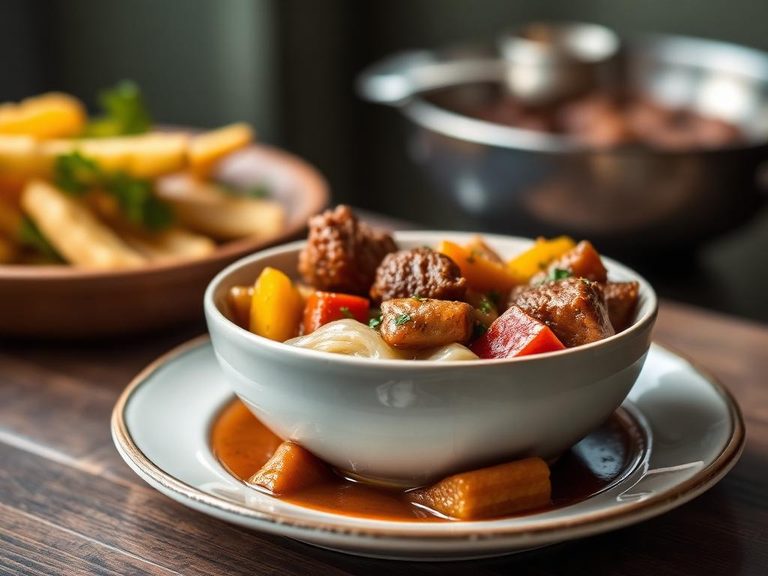
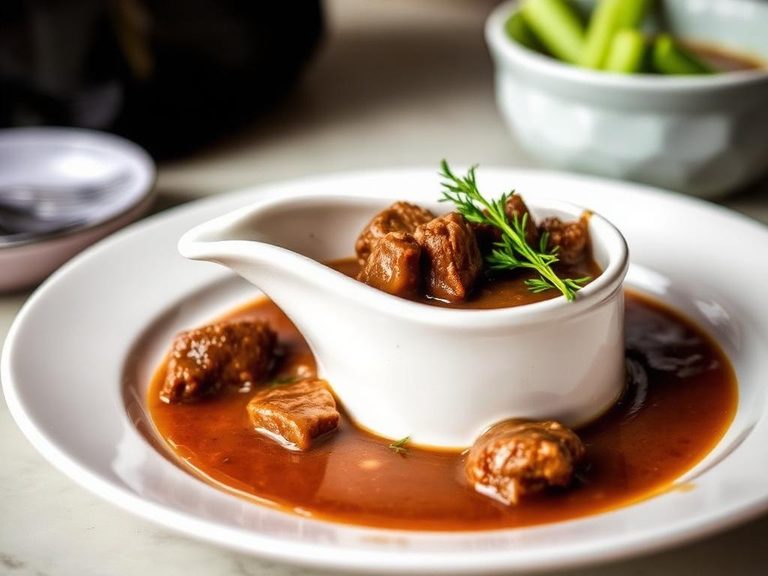
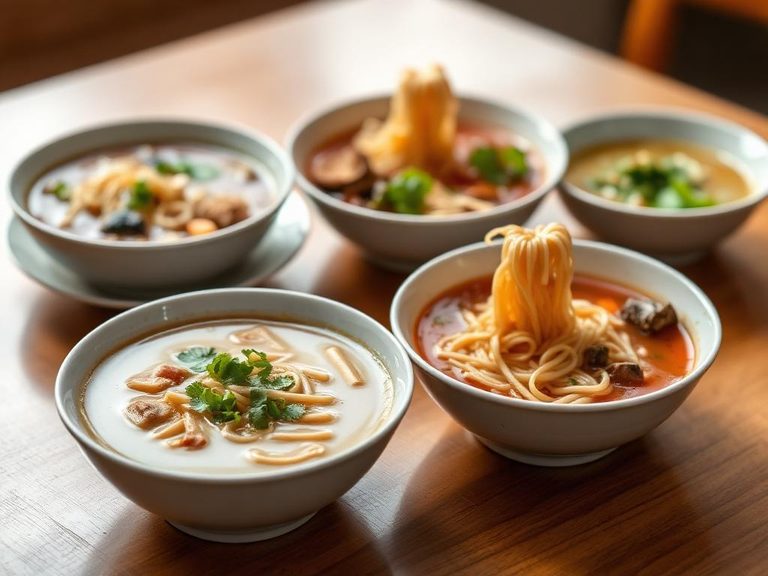
🌍 Where it's eaten
💡 Did you know?
The first commercially available beef bouillon cubes were patented in 1903 by Swiss company Maggi, revolutionizing home cooking by making rich stock instantly accessible.
Full nutrition (USDA data · scales with serving)
| Water | 3.3 g |
| Energy | 170 kcal |
| Energy | 711 kj |
| Protein | 17.3 g |
| Total lipid (fat) | 4.0 g |
| Ash | 59.3 g |
| Carbohydrate, by difference | 16.1 g |
| Fiber, total dietary | 0.00 g |
| Total Sugars | 14.5 g |
| Calcium, Ca | 60.0 mg |
| Iron, Fe | 2.2 mg |
| Magnesium, Mg | 50.0 mg |
| Phosphorus, P | 225 mg |
| Potassium, K | 403 mg |
| Sodium, Na | 24000 mg |
| Zinc, Zn | 0.21 mg |
| Copper, Cu | 0.00 mg |
| Manganese, Mn | 0.39 mg |
| Selenium, Se | 27.6 ug |
| Vitamin C, total ascorbic acid | 0.00 mg |
| Thiamin | 0.20 mg |
| Riboflavin | 0.24 mg |
| Niacin | 3.3 mg |
| Pantothenic acid | 0.30 mg |
| Vitamin B-6 | 0.20 mg |
| Folate, total | 32.0 ug |
| Folic acid | 0.00 ug |
| Folate, food | 32.0 ug |
| Folate, DFE | 32.0 ug |
| Choline, total | 113 mg |
| Vitamin B-12 | 1.0 ug |
| Vitamin B-12, added | 0.00 ug |
| Vitamin A, RAE | 0.00 ug |
| Retinol | 0.00 ug |
| Carotene, beta | 0.00 ug |
| Carotene, alpha | 0.00 ug |
| Cryptoxanthin, beta | 0.00 ug |
| Vitamin A, IU | 1.0 iu |
| Lycopene | 0.00 ug |
| Lutein + zeaxanthin | 0.00 ug |
| Vitamin E (alpha-tocopherol) | 0.00 mg |
| Vitamin E, added | 0.00 mg |
| Vitamin D (D2 + D3), International Units | 0.00 iu |
| Vitamin D (D2 + D3) | 0.00 ug |
| Vitamin K (phylloquinone) | 0.00 ug |
| Alcohol, ethyl | 0.00 g |
| Caffeine | 0.00 mg |
| Theobromine | 0.00 mg |
Fat & fatty acid profile (per 100g)
| Fatty acids, total saturated | 2.0 g |
| SFA 4:0 | 0.00 g |
| SFA 6:0 | 0.00 g |
| SFA 8:0 | 0.00 g |
| SFA 10:0 | 0.00 g |
| SFA 12:0 | 0.04 g |
| SFA 14:0 | 0.15 g |
| SFA 16:0 | 1.0 g |
| SFA 18:0 | 0.76 g |
| Fatty acids, total monounsaturated | 1.7 g |
| MUFA 16:1 | 0.17 g |
| MUFA 18:1 | 1.4 g |
| MUFA 20:1 | 0.01 g |
| MUFA 22:1 | 0.00 g |
| Fatty acids, total polyunsaturated | 0.16 g |
| PUFA 18:2 | 0.12 g |
| PUFA 18:3 | 0.02 g |
| PUFA 18:4 | 0.00 g |
| PUFA 20:4 | 0.00 g |
| PUFA 20:5 n-3 (EPA) | 0.00 g |
| PUFA 22:5 n-3 (DPA) | 0.00 g |
| PUFA 22:6 n-3 (DHA) | 0.00 g |
| Cholesterol | 4.0 mg |
Amino acid profile (per 100g)
Estimated from Soup, bean with pork, canned, condensed — USDA does not publish this profile for Soup.
| Tryptophan | 0.06 g |
| Threonine | 0.24 g |
| Isoleucine | 0.29 g |
| Leucine | 0.48 g |
| Lysine | 0.40 g |
| Methionine | 0.07 g |
| Cystine | 0.07 g |
| Phenylalanine | 0.33 g |
| Tyrosine | 0.18 g |
| Valine | 0.32 g |
| Arginine | 0.31 g |
| Histidine | 0.15 g |
| Alanine | 0.29 g |
| Aspartic acid | 0.66 g |
| Glutamic acid | 1.1 g |
| Glycine | 0.28 g |
| Proline | 0.27 g |
| Serine | 0.29 g |
FAQ
What is the difference between a broth cube and a stock cube?
Dissolve one cube in about 1 cup (240ml) of hot water, adjusting to taste. It can be used as a cooking liquid for grains, a base for soups, or to deglaze a pan for pan sauces.
Is beef broth cube the same as beef stock cube?
They are often used interchangeably, but technically, 'broth' is made from meat and may be lighter, while 'stock' is made from bones and has more gelatin. In cube form, the distinction is minimal, but check ingredients for bone extract if you want a stock-like result.
Can I use it in dry dishes?
Yes. Crumble a cube directly into ground meat for burgers or meatloaf, or toss it with roasted vegetables before baking to add a savory, umami coating.
Nutrient density (calculated · NRF9.3)
Nutrient Rich Foods index: beneficial nutrients (protein, fiber, vitamins, minerals) minus saturated fat, added sugar & sodium, per 100 kcal.
NRF9.3 index — Fulgoni, Keast & Drewnowski, 2009. Computed from USDA nutrients.
Weight-loss friendliness (composite index)
Energy density 1.70 kcal/g · 41% calories from protein · 0.0 g fiber · 14.5 g sugar per 100 g.
Composite of energy density (Rolls et al., 1999), protein & fiber satiety, minus sugar. A calculated heuristic — ranks satiety-per-calorie, not a clinical measure.
Dietary load (calculated from USDA values)
Potential renal acid load. Positive = acid-forming, negative = alkaline-forming.
Sodium-to-potassium ratio: 59.55 (lower is better — aim for ≤ 1)
Sodium:potassium per WHO potassium guidance. Computed from USDA nutrients.