

Snacks, potato chips, plain, unsalted
Whole food · Snacks
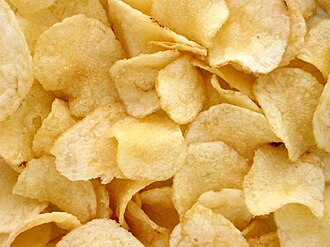
Photo: Wikipedia
These are the pure, unadulterated essence of a potato chip: a thin, golden slice of potato, fried to a shattering crispness with nothing but oil and salt (though here, even the salt is omitted). The texture is a satisfying, audible crunch that gives way to a light, starchy interior. Nutritionally, they are a dense energy source, packing over 500 kcal per 100g, primarily from carbohydrates and fats.
Calorie split: 5% protein · 38% carbs · 57% fat
↓ Full nutrition💚 Why it's loved
People adore them for their primal, satisfying crunch and the pure, clean potato flavor that serves as a blank canvas. They are the ultimate versatile snack, equally at home on a party platter, paired with a sandwich, or enjoyed straight from the bag during a movie.
⚠️ Watch-outs & how to enjoy it better
Their high calorie density and low satiety can lead to overconsumption, and the refined carbohydrates may cause blood-sugar spikes. To counteract, practice strict portion control (e.g., measure a single serving) and pair them with a protein or fat source like hummus, guacamole, or a hard-boiled egg to increase fullness and blunt the glycemic response.
Key benefits
- Quick source of energy from carbohydrates and fats
- Gluten-free and typically free of common allergens like nuts or dairy
- A simple, familiar comfort food with a satisfying crunch
- Can be a bland base for creative seasoning or dipping
- Minimal processing beyond frying, preserving potato's mineral content
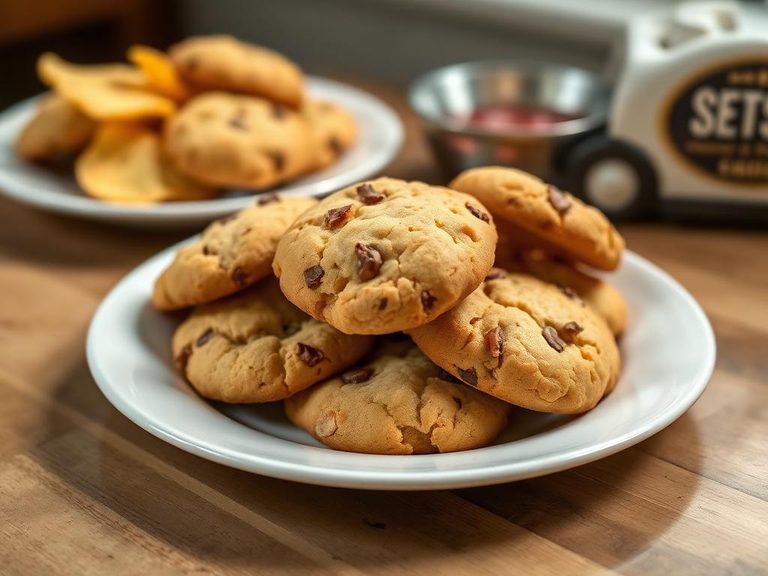
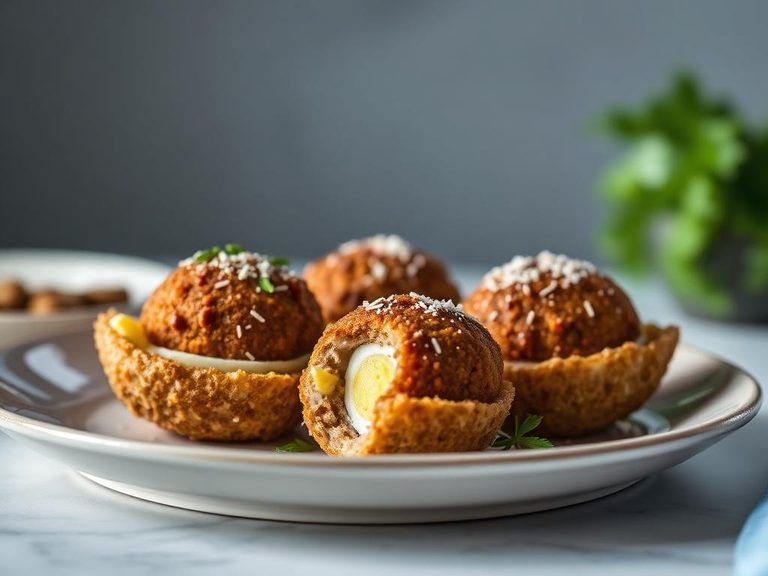
🍽️ Popular dishes
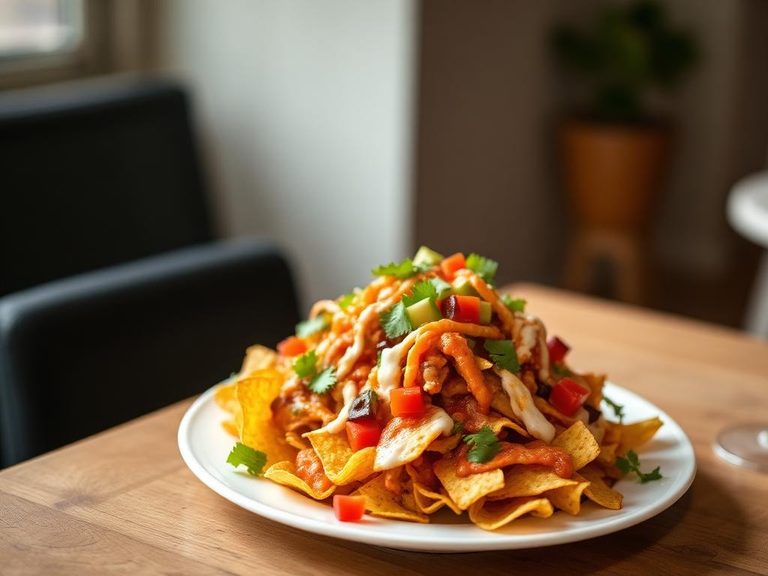
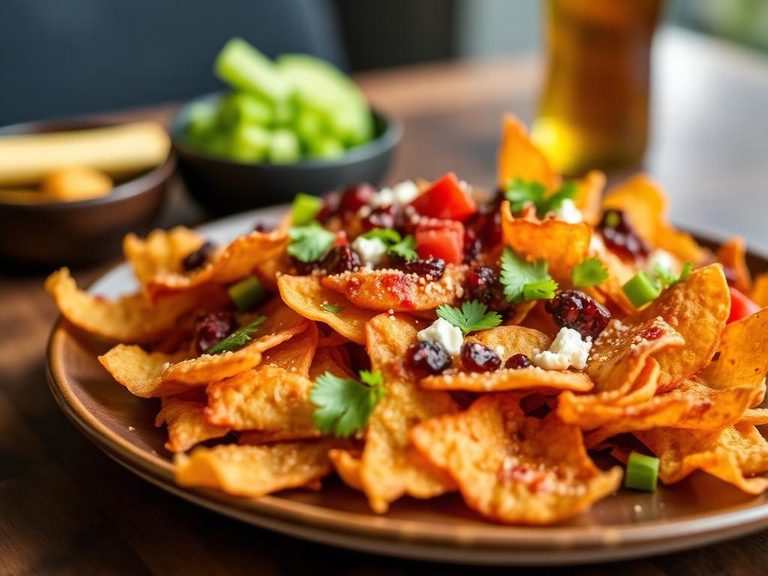
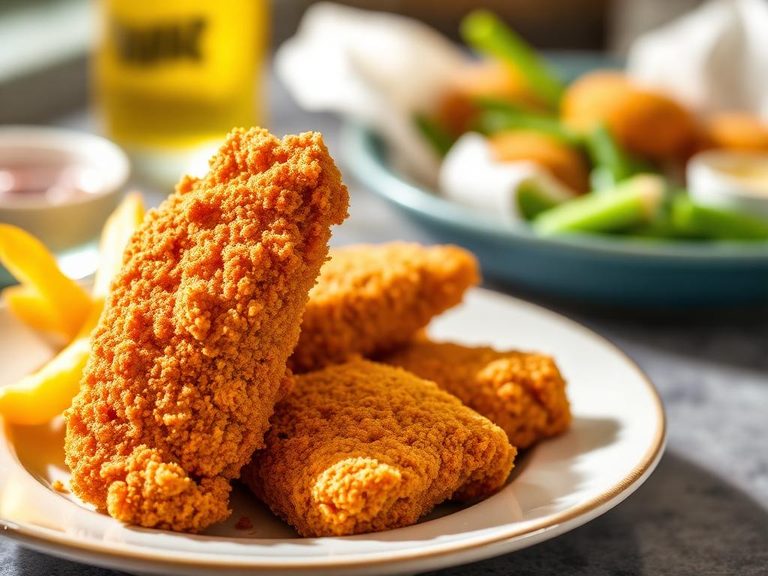
🌍 Where it's eaten
💡 Did you know?
The potato chip was invented in 1853 by chef George Crum at Moon's Lake House in Saratoga Springs, New York, reportedly in response to a customer who kept sending back fried potatoes for being too thick.
Full nutrition (USDA data · scales with serving)
| Water | 1.9 g |
| Energy | 536 kcal |
| Energy | 2243 kj |
| Protein | 7.0 g |
| Total lipid (fat) | 34.6 g |
| Ash | 3.6 g |
| Carbohydrate, by difference | 52.9 g |
| Fiber, total dietary | 4.8 g |
| Total Sugars | 0.22 g |
| Calcium, Ca | 24.0 mg |
| Iron, Fe | 1.6 mg |
| Magnesium, Mg | 67.0 mg |
| Phosphorus, P | 165 mg |
| Potassium, K | 1275 mg |
| Sodium, Na | 8.0 mg |
| Zinc, Zn | 1.1 mg |
| Copper, Cu | 0.31 mg |
| Manganese, Mn | 0.44 mg |
| Selenium, Se | 8.1 ug |
| Vitamin C, total ascorbic acid | 31.1 mg |
| Thiamin | 0.17 mg |
| Riboflavin | 0.20 mg |
| Niacin | 3.8 mg |
| Pantothenic acid | 0.40 mg |
| Vitamin B-6 | 0.66 mg |
| Folate, total | 45.0 ug |
| Folic acid | 0.00 ug |
| Folate, food | 45.0 ug |
| Folate, DFE | 45.0 ug |
| Choline, total | 37.5 mg |
| Vitamin B-12 | 0.00 ug |
| Vitamin B-12, added | 0.00 ug |
| Vitamin A, RAE | 0.00 ug |
| Retinol | 0.00 ug |
| Carotene, beta | 0.00 ug |
| Carotene, alpha | 0.00 ug |
| Cryptoxanthin, beta | 0.00 ug |
| Vitamin A, IU | 0.00 iu |
| Lycopene | 0.00 ug |
| Lutein + zeaxanthin | 0.00 ug |
| Vitamin E (alpha-tocopherol) | 9.1 mg |
| Vitamin E, added | 0.00 mg |
| Vitamin D (D2 + D3), International Units | 0.00 iu |
| Vitamin D (D2 + D3) | 0.00 ug |
| Vitamin K (phylloquinone) | 22.1 ug |
| Alcohol, ethyl | 0.00 g |
| Caffeine | 0.00 mg |
| Theobromine | 0.00 mg |
Fat & fatty acid profile (per 100g)
| Fatty acids, total saturated | 11.0 g |
| SFA 4:0 | 0.00 g |
| SFA 6:0 | 0.00 g |
| SFA 8:0 | 0.00 g |
| SFA 10:0 | 0.00 g |
| SFA 12:0 | 0.08 g |
| SFA 14:0 | 0.30 g |
| SFA 16:0 | 9.3 g |
| SFA 18:0 | 1.1 g |
| Fatty acids, total monounsaturated | 9.8 g |
| MUFA 16:1 | 0.18 g |
| MUFA 18:1 | 9.5 g |
| MUFA 20:1 | 0.15 g |
| MUFA 22:1 | 0.00 g |
| Fatty acids, total polyunsaturated | 12.2 g |
| PUFA 18:2 | 12.0 g |
| PUFA 18:3 | 0.19 g |
| PUFA 18:4 | 0.00 g |
| PUFA 20:4 | 0.00 g |
| PUFA 20:5 n-3 (EPA) | 0.00 g |
| PUFA 22:5 n-3 (DPA) | 0.00 g |
| PUFA 22:6 n-3 (DHA) | 0.00 g |
| Cholesterol | 0.00 mg |
Amino acid profile (per 100g)
| Tryptophan | 0.11 g |
| Threonine | 0.25 g |
| Isoleucine | 0.28 g |
| Leucine | 0.42 g |
| Lysine | 0.42 g |
| Methionine | 0.11 g |
| Cystine | 0.09 g |
| Phenylalanine | 0.31 g |
| Tyrosine | 0.26 g |
| Valine | 0.39 g |
| Arginine | 0.32 g |
| Histidine | 0.15 g |
| Alanine | 0.21 g |
| Aspartic acid | 1.7 g |
| Glutamic acid | 1.2 g |
| Glycine | 0.21 g |
| Proline | 0.25 g |
| Serine | 0.30 g |
FAQ
Why are plain unsalted chips still so high in calories?
The calorie density comes from the cooking process. Potatoes absorb a significant amount of oil during frying, which adds fat calories (9 kcal per gram) to the carbohydrate base of the potato (4 kcal per gram).
Are unsalted chips a healthier choice than regular chips?
They eliminate added sodium, which is beneficial for blood pressure management. However, their calorie, fat, and carbohydrate content remains very similar to salted versions, so moderation is still key.
What's the best way to store them to maintain crispness?
Store them in an airtight container or resealable bag at room temperature, away from moisture and heat. If they go stale, you can briefly re-crisp them in a low-temperature oven (around 120°C / 250°F) for a few minutes.
Nutrient density (calculated · NRF9.3)
Nutrient Rich Foods index: beneficial nutrients (protein, fiber, vitamins, minerals) minus saturated fat, added sugar & sodium, per 100 kcal.
NRF9.3 index — Fulgoni, Keast & Drewnowski, 2009. Computed from USDA nutrients.
Weight-loss friendliness (composite index)
Energy density 5.36 kcal/g · 5% calories from protein · 4.8 g fiber · 0.2 g sugar per 100 g.
Composite of energy density (Rolls et al., 1999), protein & fiber satiety, minus sugar. A calculated heuristic — ranks satiety-per-calorie, not a clinical measure.
Dietary load (calculated from USDA values)
Potential renal acid load. Positive = acid-forming, negative = alkaline-forming.
Sodium-to-potassium ratio: 0.01 (lower is better — aim for ≤ 1)
Sodium:potassium per WHO potassium guidance. Computed from USDA nutrients.