

Sauce, oyster, ready-to-serve
Whole food · Soups, Sauces, and Gravies

Photo: Wikipedia
Oyster sauce is a thick, glossy, dark brown condiment with a savory, slightly sweet, and deeply umami flavor derived from oyster extracts. Its viscous, syrup-like texture clings beautifully to foods, providing a rich, caramelized sheen. Nutritionally, it's a low-calorie, low-fat flavor enhancer, but its primary contribution is sodium and carbohydrates from added sugars and thickeners.
Calorie split: 11% protein · 85% carbs · 4% fat
↓ Full nutrition💚 Why it's loved
People love oyster sauce for its unparalleled ability to deliver a deep, savory, and slightly sweet umami backbone to dishes, especially in Cantonese cooking. Its versatility as a stir-fry sauce, marinade, and glaze makes it a kitchen staple for building complex flavors quickly.
⚠️ Watch-outs & how to enjoy it better
The primary concern is its very high sodium content, which can contribute to blood pressure issues if used liberally. It also contains added sugars, which can cause blood sugar spikes. To counteract this, use it sparingly as a finishing sauce rather than a cooking base, and pair it with low-sodium ingredients like fresh vegetables and unseasoned proteins.
Key benefits
- Adds complex umami depth to dishes
- Low in fat and calories per serving
- Enhances flavor without needing excessive salt or fat
- Provides a glossy, appealing finish to stir-fries
- A little goes a long way for flavor impact
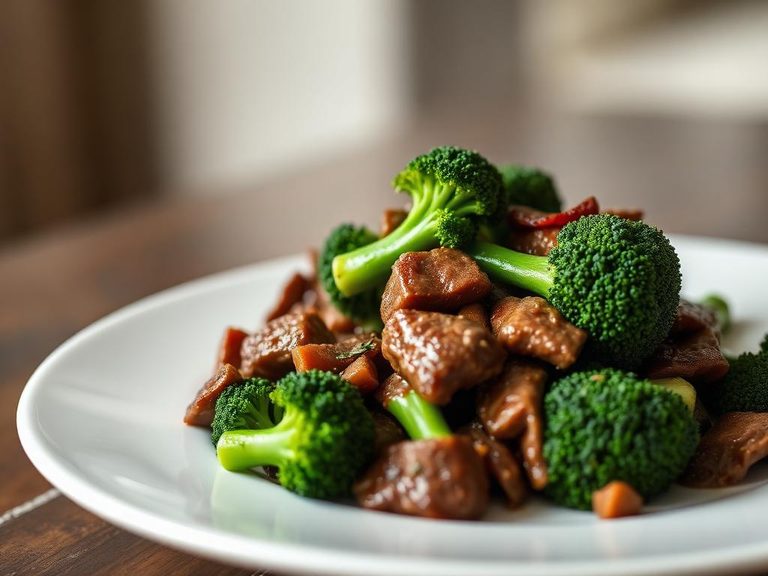
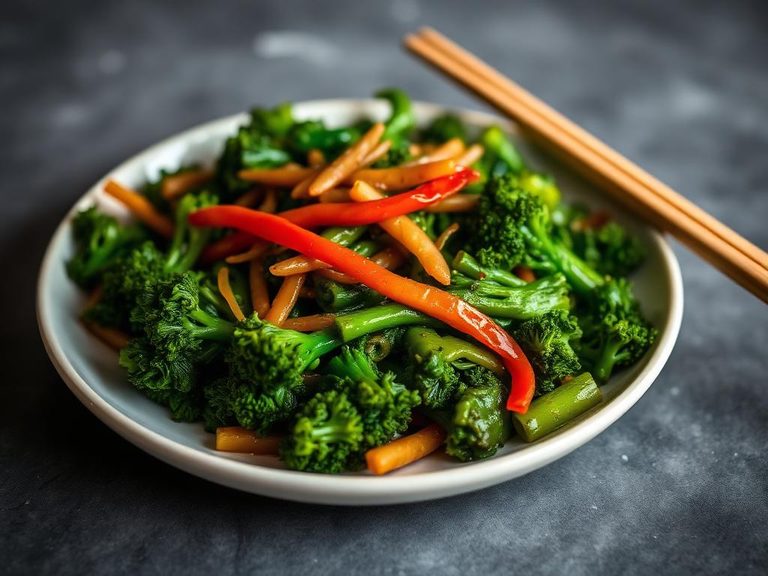
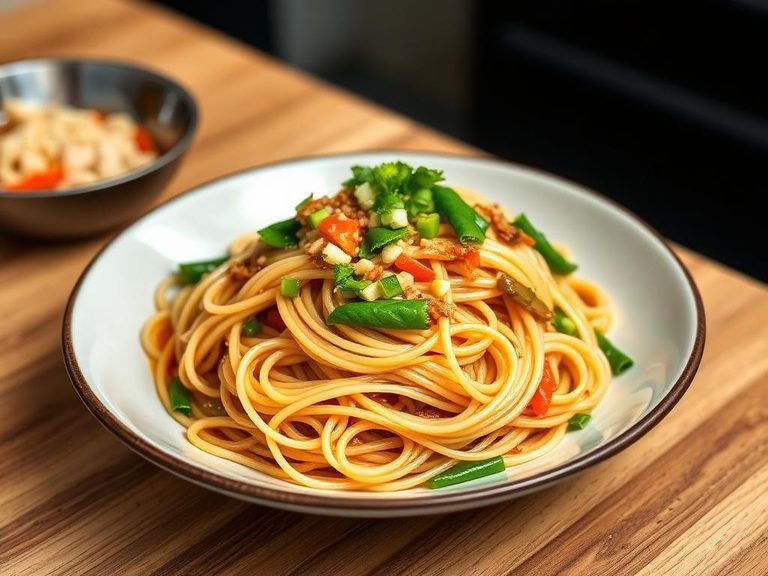
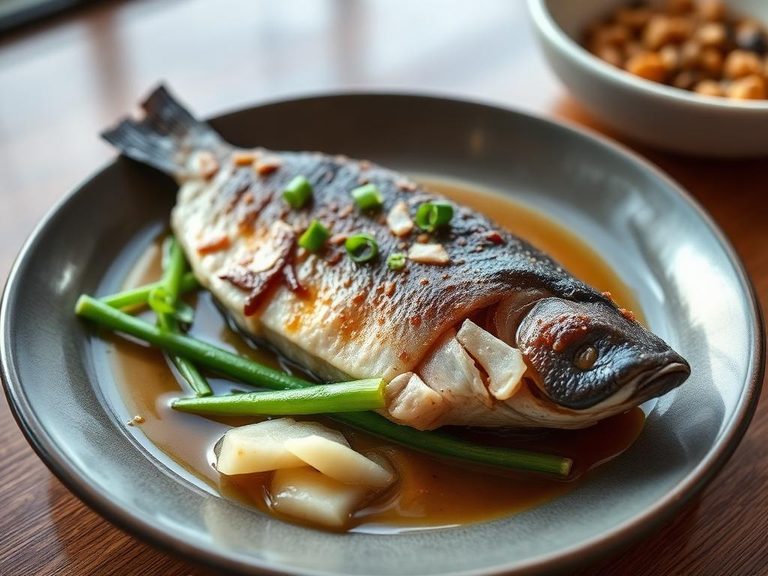
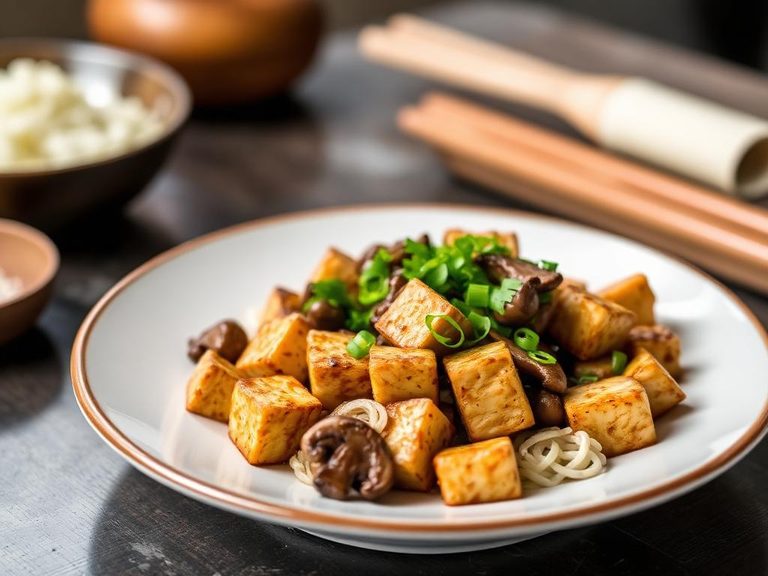
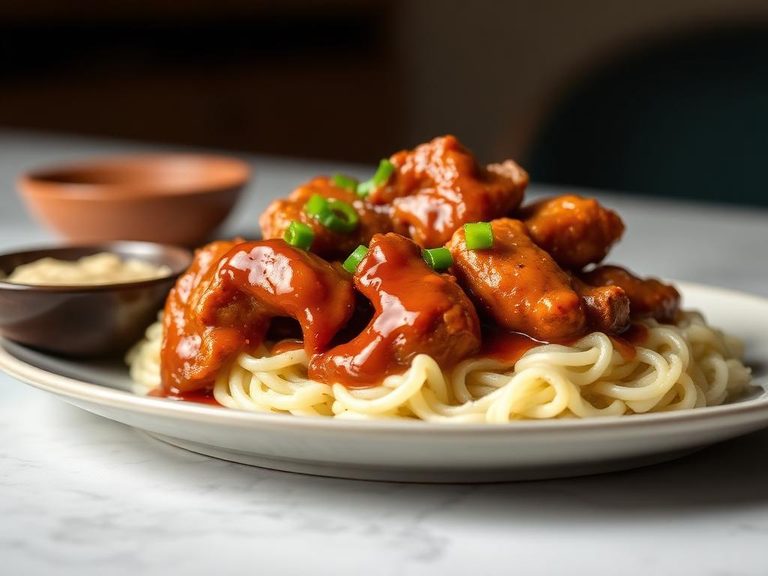
🍽️ Popular dishes
🌍 Where it's eaten
💡 Did you know?
Despite its name, most modern, ready-to-serve oyster sauces contain very little actual oyster extract; the primary flavor and color often come from caramel color, sugar, salt, and monosodium glutamate (MSG).
Full nutrition (USDA data · scales with serving)
| Water | 80.0 g |
| Energy | 51.0 kcal |
| Energy | 213 kj |
| Protein | 1.4 g |
| Total lipid (fat) | 0.25 g |
| Ash | 7.5 g |
| Carbohydrate, by difference | 10.9 g |
| Fiber, total dietary | 0.30 g |
| Total Sugars | 0.00 g |
| Calcium, Ca | 32.0 mg |
| Iron, Fe | 0.18 mg |
| Magnesium, Mg | 4.0 mg |
| Phosphorus, P | 22.0 mg |
| Potassium, K | 54.0 mg |
| Sodium, Na | 2733 mg |
| Zinc, Zn | 0.09 mg |
| Copper, Cu | 0.15 mg |
| Manganese, Mn | 0.05 mg |
| Selenium, Se | 4.4 ug |
| Vitamin C, total ascorbic acid | 0.10 mg |
| Thiamin | 0.01 mg |
| Riboflavin | 0.12 mg |
| Niacin | 1.5 mg |
| Pantothenic acid | 0.02 mg |
| Vitamin B-6 | 0.02 mg |
| Folate, total | 15.0 ug |
| Folic acid | 0.00 ug |
| Folate, food | 15.0 ug |
| Folate, DFE | 15.0 ug |
| Choline, total | 3.5 mg |
| Vitamin B-12 | 0.41 ug |
| Vitamin B-12, added | 0.00 ug |
| Vitamin A, RAE | 0.00 ug |
| Retinol | 0.00 ug |
| Carotene, beta | 0.00 ug |
| Carotene, alpha | 0.00 ug |
| Cryptoxanthin, beta | 0.00 ug |
| Vitamin A, IU | 0.00 iu |
| Lycopene | 0.00 ug |
| Lutein + zeaxanthin | 0.00 ug |
| Vitamin E (alpha-tocopherol) | 0.00 mg |
| Vitamin E, added | 0.00 mg |
| Vitamin D (D2 + D3), International Units | 0.00 iu |
| Vitamin D (D2 + D3) | 0.00 ug |
| Vitamin K (phylloquinone) | 0.00 ug |
| Alcohol, ethyl | 0.00 g |
| Caffeine | 0.00 mg |
| Theobromine | 0.00 mg |
Fat & fatty acid profile (per 100g)
| Fatty acids, total saturated | 0.04 g |
| SFA 4:0 | 0.00 g |
| SFA 6:0 | 0.00 g |
| SFA 8:0 | 0.00 g |
| SFA 10:0 | 0.00 g |
| SFA 12:0 | 0.00 g |
| SFA 14:0 | 0.00 g |
| SFA 16:0 | 0.03 g |
| SFA 18:0 | 0.01 g |
| Fatty acids, total monounsaturated | 0.07 g |
| MUFA 16:1 | 0.01 g |
| MUFA 18:1 | 0.07 g |
| MUFA 20:1 | 0.00 g |
| MUFA 22:1 | 0.00 g |
| Fatty acids, total polyunsaturated | 0.07 g |
| PUFA 18:2 | 0.06 g |
| PUFA 18:3 | 0.00 g |
| PUFA 18:4 | 0.00 g |
| PUFA 20:4 | 0.00 g |
| PUFA 20:5 n-3 (EPA) | 0.00 g |
| PUFA 22:5 n-3 (DPA) | 0.00 g |
| PUFA 22:6 n-3 (DHA) | 0.00 g |
| Cholesterol | 0.00 mg |
Amino acid profile (per 100g)
Estimated from Sauce, homemade, white, medium — USDA does not publish this profile for Sauce.
| Tryptophan | 0.04 g |
| Threonine | 0.14 g |
| Isoleucine | 0.19 g |
| Leucine | 0.30 g |
| Lysine | 0.24 g |
| Methionine | 0.08 g |
| Cystine | 0.03 g |
| Phenylalanine | 0.15 g |
| Tyrosine | 0.15 g |
| Valine | 0.20 g |
| Arginine | 0.11 g |
| Histidine | 0.08 g |
| Alanine | 0.10 g |
| Aspartic acid | 0.23 g |
| Glutamic acid | 0.64 g |
| Glycine | 0.07 g |
| Proline | 0.30 g |
| Serine | 0.17 g |
FAQ
What's the difference between 'oyster sauce' and 'oyster-flavored sauce'?
'Oyster sauce' traditionally contains oyster extracts as a primary ingredient. 'Oyster-flavored sauce' is often a cheaper, more common product where the flavor is primarily created with salt, sugar, caramel color, and MSG, with little to no actual oyster content. Always check the ingredient list.
Can I use it as a dipping sauce?
Yes, but it's often too thick and intense straight from the bottle. It's commonly thinned with a splash of water, sesame oil, or rice vinegar for a dipping sauce, or served alongside chili oil and garlic for dumplings or steamed dishes.
Is it gluten-free?
Not typically. Most brands use wheat flour or wheat starch as a thickener. For a gluten-free version, you must seek out a specific product labeled 'gluten-free' which uses cornstarch or another alternative thickener.
Nutrient density (calculated · NRF9.3)
Nutrient Rich Foods index: beneficial nutrients (protein, fiber, vitamins, minerals) minus saturated fat, added sugar & sodium, per 100 kcal.
NRF9.3 index — Fulgoni, Keast & Drewnowski, 2009. Computed from USDA nutrients.
Weight-loss friendliness (composite index)
Energy density 0.51 kcal/g · 11% calories from protein · 0.3 g fiber · 0.0 g sugar per 100 g.
Composite of energy density (Rolls et al., 1999), protein & fiber satiety, minus sugar. A calculated heuristic — ranks satiety-per-calorie, not a clinical measure.
Dietary load (calculated from USDA values)
Potential renal acid load. Positive = acid-forming, negative = alkaline-forming.
Sodium-to-potassium ratio: 50.61 (lower is better — aim for ≤ 1)
Sodium:potassium per WHO potassium guidance. Computed from USDA nutrients.