

Rice, white, with peas and carrots, no added fat
Common food

Photo: Wikipedia
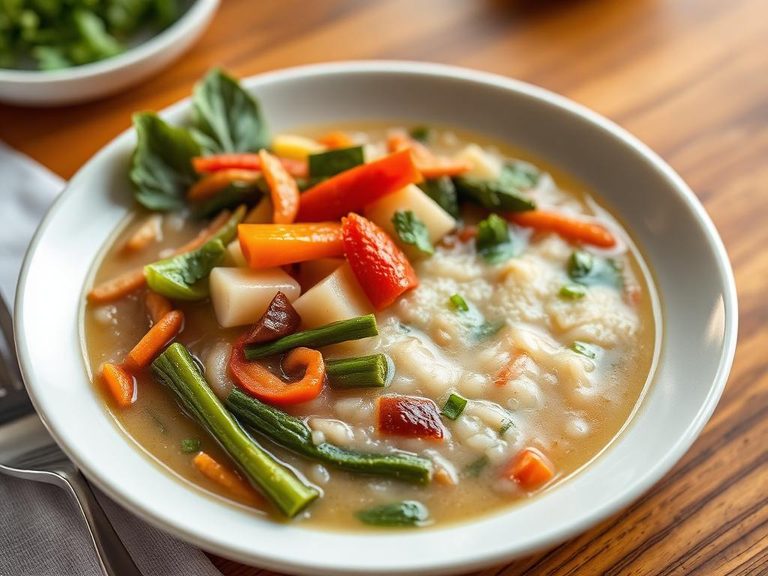
This is a simple, comforting side dish of fluffy white rice studded with sweet peas and tender carrot cubes. It has a mild, slightly sweet flavor and a soft, uniform texture. Nutritionally, it's a low-fat, carbohydrate-focused energy source with a modest fiber boost from the vegetables.
Calorie split: 10% protein · 87% carbs · 2% fat
↓ Full nutrition💚 Why it's loved
It's loved for its mild, crowd-pleasing flavor and the cheerful pop of color and texture from the vegetables. It's an incredibly versatile and quick base for countless meals across many cultures.
⚠️ Watch-outs & how to enjoy it better
As a refined carbohydrate dish, it can cause rapid blood sugar spikes, especially for those with insulin sensitivity. To counteract this, pair it with a source of protein (like chicken, fish, or legumes) and healthy fat (like avocado or olive oil) to slow digestion and improve satiety.
Key benefits
- Quick energy source from complex carbohydrates
- Low in fat and cholesterol
- Contains some dietary fiber from peas and carrots
- Simple, easily digestible ingredients
- Provides small amounts of plant-based protein
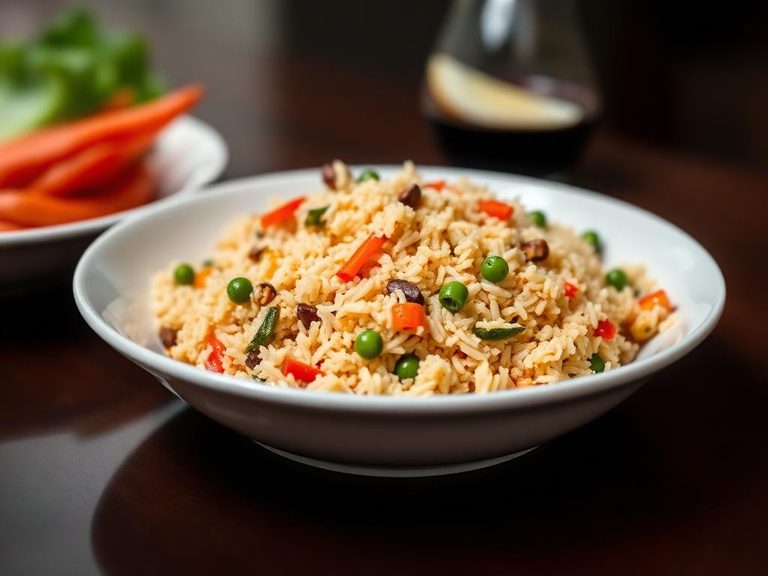
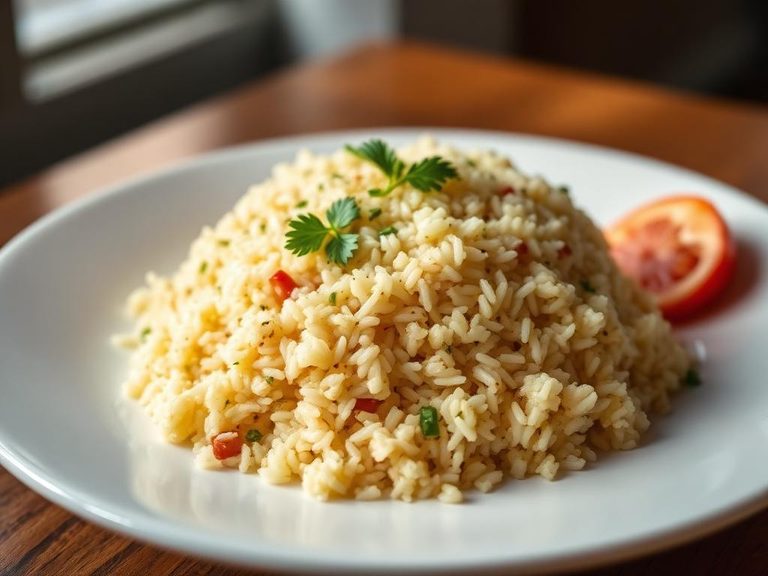
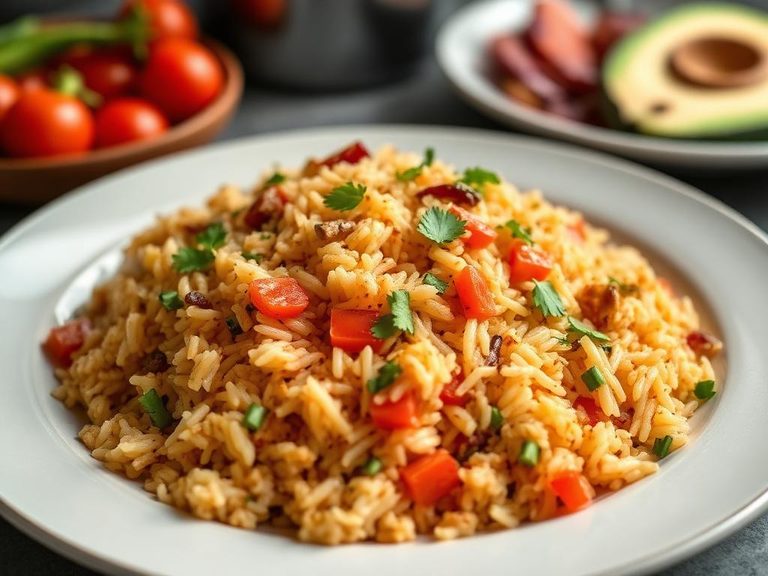
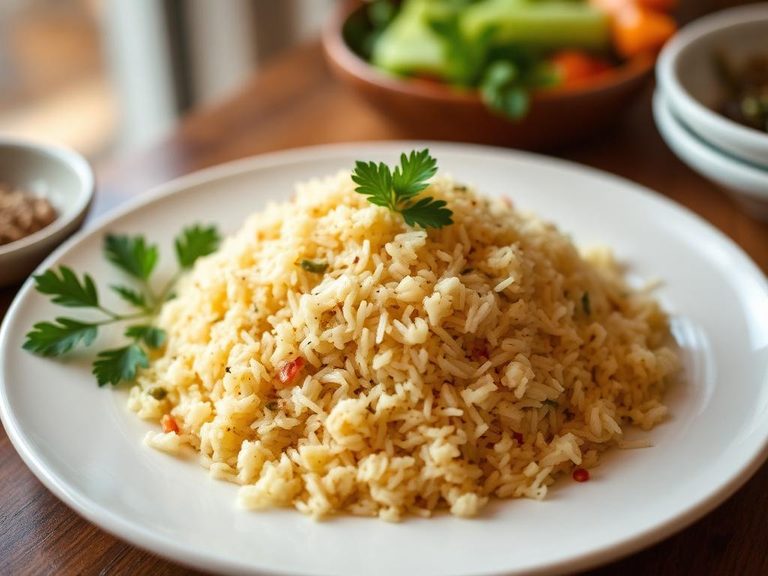
🍽️ Popular dishes
🌍 Where it's eaten
💡 Did you know?
The classic 'peas and carrots' combination is a staple in British school dinners and was popularized in the US by the cartoon character Forrest Gump, who famously compared his friendship to the inseparable duo.
Full nutrition (USDA data · scales with serving)
| Water | 72.2 g |
| Energy | 111 kcal |
| Protein | 2.8 g |
| Total lipid (fat) | 0.30 g |
| Carbohydrate, by difference | 23.8 g |
| Fiber, total dietary | 1.3 g |
| Total Sugars | 1.1 g |
| Calcium, Ca | 15.0 mg |
| Iron, Fe | 1.1 mg |
| Magnesium, Mg | 13.0 mg |
| Phosphorus, P | 46.0 mg |
| Potassium, K | 66.0 mg |
| Sodium, Na | 230 mg |
| Zinc, Zn | 0.48 mg |
| Copper, Cu | 0.07 mg |
| Selenium, Se | 5.8 ug |
| Vitamin C, total ascorbic acid | 1.5 mg |
| Thiamin | 0.16 mg |
| Riboflavin | 0.03 mg |
| Niacin | 1.3 mg |
| Vitamin B-6 | 0.09 mg |
| Folate, total | 51.0 ug |
| Folic acid | 41.0 ug |
| Folate, food | 10.0 ug |
| Folate, DFE | 81.0 ug |
| Choline, total | 6.1 mg |
| Vitamin B-12 | 0.00 ug |
| Vitamin B-12, added | 0.00 ug |
| Vitamin A, RAE | 119 ug |
| Retinol | 0.00 ug |
| Carotene, beta | 1178 ug |
| Carotene, alpha | 466 ug |
| Cryptoxanthin, beta | 0.00 ug |
| Lycopene | 0.00 ug |
| Lutein + zeaxanthin | 383 ug |
| Vitamin E (alpha-tocopherol) | 0.12 mg |
| Vitamin E, added | 0.00 mg |
| Vitamin D (D2 + D3) | 0.00 ug |
| Vitamin K (phylloquinone) | 4.9 ug |
| Alcohol, ethyl | 0.00 g |
| Caffeine | 0.00 mg |
| Theobromine | 0.00 mg |
Fat & fatty acid profile (per 100g)
| Fatty acids, total saturated | 0.06 g |
| SFA 4:0 | 0.00 g |
| SFA 6:0 | 0.00 g |
| SFA 8:0 | 0.00 g |
| SFA 10:0 | 0.00 g |
| SFA 12:0 | 0.00 g |
| SFA 14:0 | 0.00 g |
| SFA 16:0 | 0.06 g |
| SFA 18:0 | 0.00 g |
| Fatty acids, total monounsaturated | 0.07 g |
| MUFA 16:1 | 0.00 g |
| MUFA 18:1 | 0.07 g |
| MUFA 20:1 | 0.00 g |
| MUFA 22:1 | 0.00 g |
| Fatty acids, total polyunsaturated | 0.09 g |
| PUFA 18:2 | 0.08 g |
| PUFA 18:3 | 0.01 g |
| PUFA 18:4 | 0.00 g |
| PUFA 20:4 | 0.00 g |
| PUFA 20:5 n-3 (EPA) | 0.00 g |
| PUFA 22:5 n-3 (DPA) | 0.00 g |
| PUFA 22:6 n-3 (DHA) | 0.00 g |
| Cholesterol | 0.00 mg |
Amino acid profile (per 100g)
Estimated from Snacks, rice cakes, brown rice, sesame seed — USDA does not publish this profile for Rice.
| Tryptophan | 0.10 g |
| Threonine | 0.28 g |
| Isoleucine | 0.32 g |
| Leucine | 0.63 g |
| Lysine | 0.29 g |
| Methionine | 0.17 g |
| Cystine | 0.09 g |
| Phenylalanine | 0.39 g |
| Tyrosine | 0.29 g |
| Valine | 0.44 g |
| Arginine | 0.59 g |
| Histidine | 0.19 g |
| Alanine | 0.44 g |
| Aspartic acid | 0.71 g |
| Glutamic acid | 1.6 g |
| Glycine | 0.38 g |
| Proline | 0.35 g |
| Serine | 0.39 g |
FAQ
Is this dish gluten-free?
Yes, plain white rice with peas and carrots is naturally gluten-free, making it a safe side for those with celiac disease or gluten sensitivity.
Can I make it more nutritious?
Absolutely. Use brown rice instead of white for more fiber and nutrients, add extra vegetables like corn or bell peppers, or stir in some beans or lentils for added protein.
How does it compare nutritionally to plain white rice?
Adding peas and carrots slightly increases the fiber, vitamin, and mineral content compared to plain white rice, while adding very few calories or fat.
Nutrient density (calculated · NRF9.3)
Nutrient Rich Foods index: beneficial nutrients (protein, fiber, vitamins, minerals) minus saturated fat, added sugar & sodium, per 100 kcal.
NRF9.3 index — Fulgoni, Keast & Drewnowski, 2009. Computed from USDA nutrients.
Weight-loss friendliness (composite index)
Energy density 1.11 kcal/g · 10% calories from protein · 1.3 g fiber · 1.1 g sugar per 100 g.
Composite of energy density (Rolls et al., 1999), protein & fiber satiety, minus sugar. A calculated heuristic — ranks satiety-per-calorie, not a clinical measure.
Dietary load (calculated from USDA values)
Potential renal acid load. Positive = acid-forming, negative = alkaline-forming.
Sodium-to-potassium ratio: 3.48 (lower is better — aim for ≤ 1)
Sodium:potassium per WHO potassium guidance. Computed from USDA nutrients.