

Rice, white, with peas and carrots, NS as to fat
Common food

Photo: Wikipedia
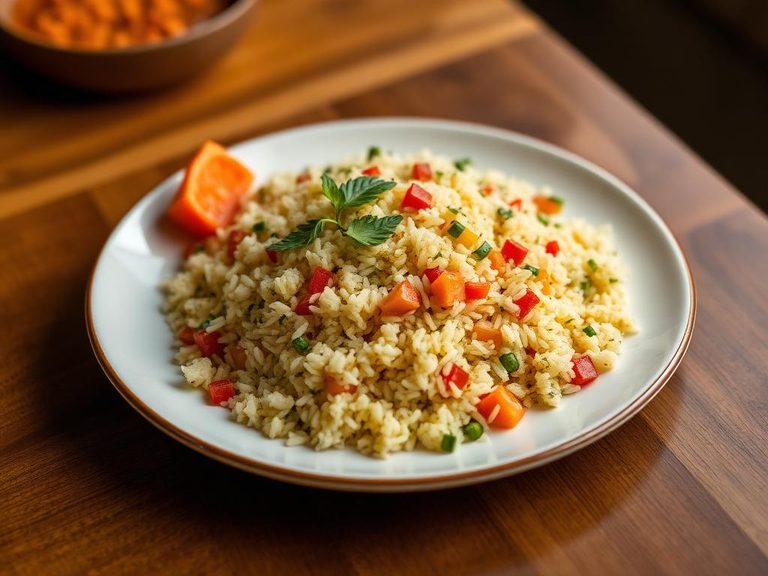
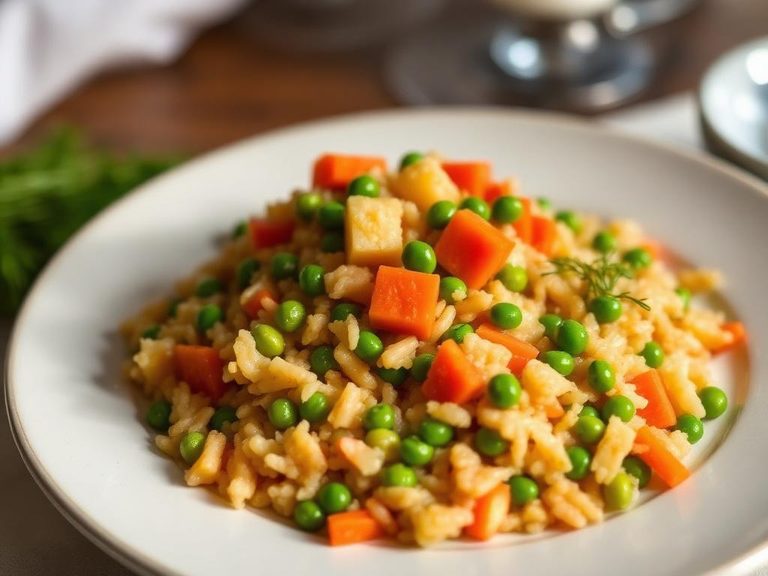
This is a classic comfort dish of fluffy white rice studded with sweet green peas and tender orange carrot cubes. The texture is soft and slightly chewy, with a mild, savory flavor that acts as a perfect canvas for other ingredients. Nutritionally, it's a light, energy-dense base, primarily providing quick-release carbohydrates for fuel.
Calorie split: 9% protein · 74% carbs · 18% fat
↓ Full nutrition💚 Why it's loved
People love it for its comforting, familiar taste and the appealing color contrast of the vegetables. It's a beloved, effortless side dish that rounds out meals across countless cultures and is often a nostalgic taste of home cooking.
⚠️ Watch-outs & how to enjoy it better
As a high-carb, low-fiber dish, it can cause blood sugar spikes if eaten alone, especially for those managing diabetes. To counteract this, pair it with a source of protein (like chicken, fish, or beans) and healthy fat (like olive oil or avocado) to slow digestion and create a more balanced meal.
Key benefits
- Provides quick energy from easily digestible carbohydrates
- Contains beta-carotene from carrots, which the body converts to vitamin A
- Offers a small amount of plant-based protein and fiber
- Naturally low in fat and cholesterol-free
- A versatile, neutral base that complements many proteins and sauces
🍽️ Popular dishes
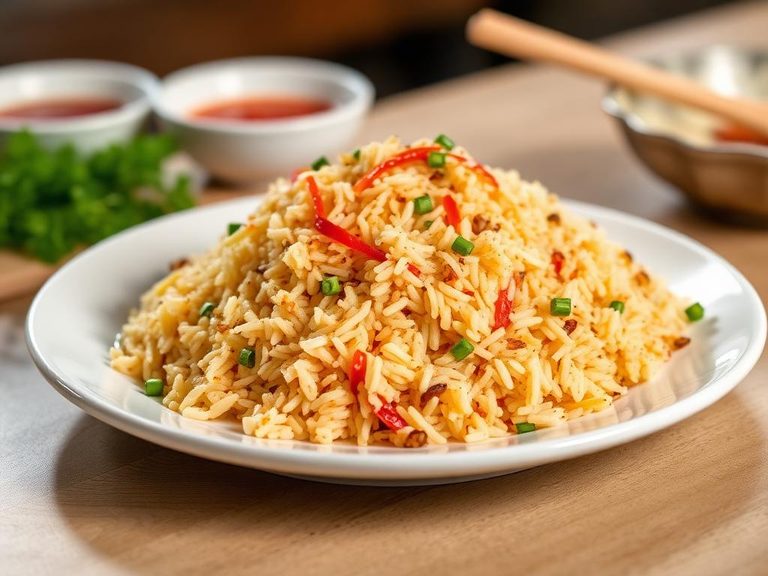
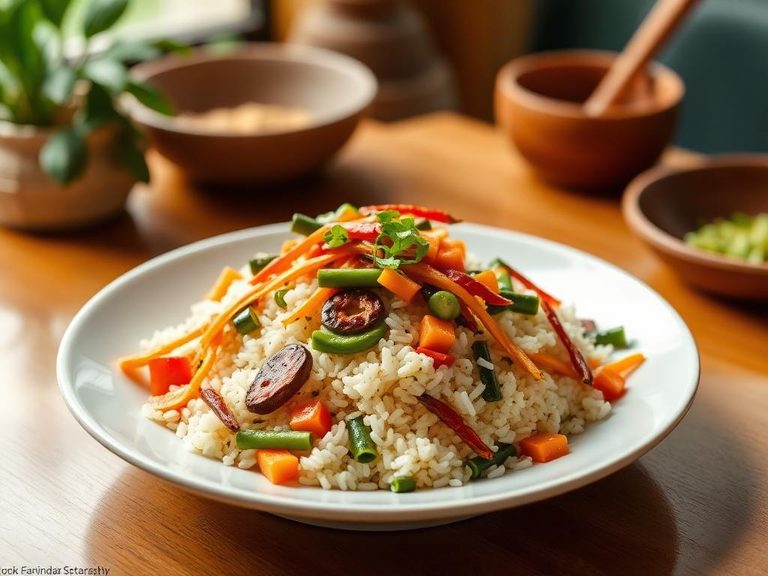
🌍 Where it's eaten
💡 Did you know?
The specific combination of peas and carrots is so iconic in American cuisine that it became a standard frozen vegetable mix, often jokingly referred to as 'the mixed vegetables' that accompanied countless TV dinners and cafeteria meals.
Full nutrition (USDA data · scales with serving)
| Water | 70.6 g |
| Energy | 128 kcal |
| Protein | 2.7 g |
| Total lipid (fat) | 2.5 g |
| Carbohydrate, by difference | 23.3 g |
| Fiber, total dietary | 1.2 g |
| Total Sugars | 1.1 g |
| Calcium, Ca | 15.0 mg |
| Iron, Fe | 1.1 mg |
| Magnesium, Mg | 13.0 mg |
| Phosphorus, P | 45.0 mg |
| Potassium, K | 65.0 mg |
| Sodium, Na | 225 mg |
| Zinc, Zn | 0.47 mg |
| Copper, Cu | 0.07 mg |
| Selenium, Se | 5.7 ug |
| Vitamin C, total ascorbic acid | 1.5 mg |
| Thiamin | 0.16 mg |
| Riboflavin | 0.03 mg |
| Niacin | 1.3 mg |
| Vitamin B-6 | 0.09 mg |
| Folate, total | 50.0 ug |
| Folic acid | 40.0 ug |
| Folate, food | 10.0 ug |
| Folate, DFE | 79.0 ug |
| Choline, total | 5.9 mg |
| Vitamin B-12 | 0.00 ug |
| Vitamin B-12, added | 0.00 ug |
| Vitamin A, RAE | 116 ug |
| Retinol | 0.00 ug |
| Carotene, beta | 1152 ug |
| Carotene, alpha | 456 ug |
| Cryptoxanthin, beta | 0.00 ug |
| Lycopene | 0.00 ug |
| Lutein + zeaxanthin | 375 ug |
| Vitamin E (alpha-tocopherol) | 0.53 mg |
| Vitamin E, added | 0.00 mg |
| Vitamin D (D2 + D3) | 0.00 ug |
| Vitamin K (phylloquinone) | 6.9 ug |
| Alcohol, ethyl | 0.00 g |
| Caffeine | 0.00 mg |
| Theobromine | 0.00 mg |
Fat & fatty acid profile (per 100g)
| Fatty acids, total saturated | 0.35 g |
| SFA 4:0 | 0.00 g |
| SFA 6:0 | 0.00 g |
| SFA 8:0 | 0.00 g |
| SFA 10:0 | 0.00 g |
| SFA 12:0 | 0.00 g |
| SFA 14:0 | 0.00 g |
| SFA 16:0 | 0.26 g |
| SFA 18:0 | 0.07 g |
| Fatty acids, total monounsaturated | 0.98 g |
| MUFA 16:1 | 0.01 g |
| MUFA 18:1 | 0.96 g |
| MUFA 20:1 | 0.01 g |
| MUFA 22:1 | 0.00 g |
| Fatty acids, total polyunsaturated | 0.92 g |
| PUFA 18:2 | 0.81 g |
| PUFA 18:3 | 0.11 g |
| PUFA 18:4 | 0.00 g |
| PUFA 20:4 | 0.00 g |
| PUFA 20:5 n-3 (EPA) | 0.00 g |
| PUFA 22:5 n-3 (DPA) | 0.00 g |
| PUFA 22:6 n-3 (DHA) | 0.00 g |
| Cholesterol | 0.00 mg |
Amino acid profile (per 100g)
Estimated from Snacks, rice cakes, brown rice, sesame seed — USDA does not publish this profile for Rice.
| Tryptophan | 0.10 g |
| Threonine | 0.28 g |
| Isoleucine | 0.32 g |
| Leucine | 0.63 g |
| Lysine | 0.29 g |
| Methionine | 0.17 g |
| Cystine | 0.09 g |
| Phenylalanine | 0.39 g |
| Tyrosine | 0.29 g |
| Valine | 0.44 g |
| Arginine | 0.59 g |
| Histidine | 0.19 g |
| Alanine | 0.44 g |
| Aspartic acid | 0.71 g |
| Glutamic acid | 1.6 g |
| Glycine | 0.38 g |
| Proline | 0.35 g |
| Serine | 0.39 g |
FAQ
Is this dish gluten-free?
Yes, rice, peas, and carrots are all naturally gluten-free. However, always check pre-made seasoning packets or sauces used in the recipe, as they may contain gluten.
How can I add more protein to this dish?
You can stir in cooked lentils, chickpeas, diced chicken, shrimp, or scrambled eggs. Mixing in crumbled tofu or paneer are also excellent plant-based options.
Why are my peas and carrots mushy?
This often happens if using frozen vegetables that are overcooked. For better texture, add frozen peas and carrots during the last 3-5 minutes of the rice's cooking time, or sauté them separately and fold them in after the rice is done.
Nutrient density (calculated · NRF9.3)
Nutrient Rich Foods index: beneficial nutrients (protein, fiber, vitamins, minerals) minus saturated fat, added sugar & sodium, per 100 kcal.
NRF9.3 index — Fulgoni, Keast & Drewnowski, 2009. Computed from USDA nutrients.
Weight-loss friendliness (composite index)
Energy density 1.28 kcal/g · 8% calories from protein · 1.2 g fiber · 1.1 g sugar per 100 g.
Composite of energy density (Rolls et al., 1999), protein & fiber satiety, minus sugar. A calculated heuristic — ranks satiety-per-calorie, not a clinical measure.
Dietary load (calculated from USDA values)
Potential renal acid load. Positive = acid-forming, negative = alkaline-forming.
Sodium-to-potassium ratio: 3.46 (lower is better — aim for ≤ 1)
Sodium:potassium per WHO potassium guidance. Computed from USDA nutrients.