

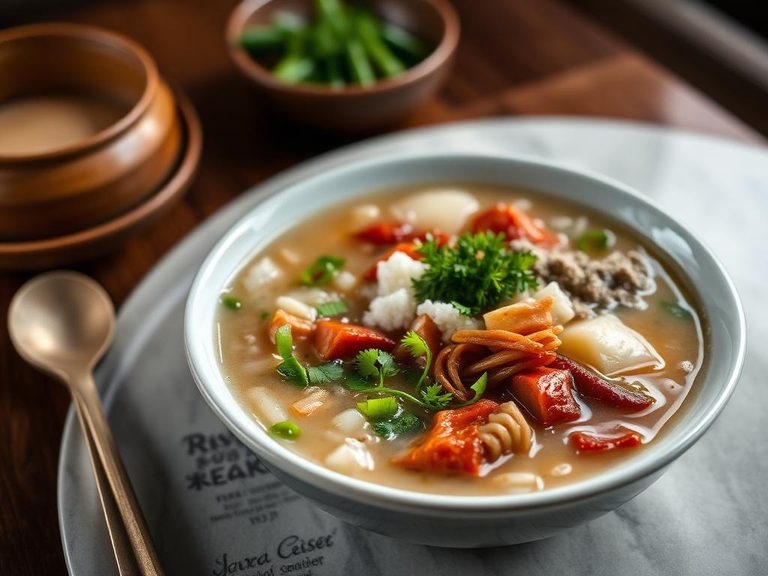
Congee with Vegetables
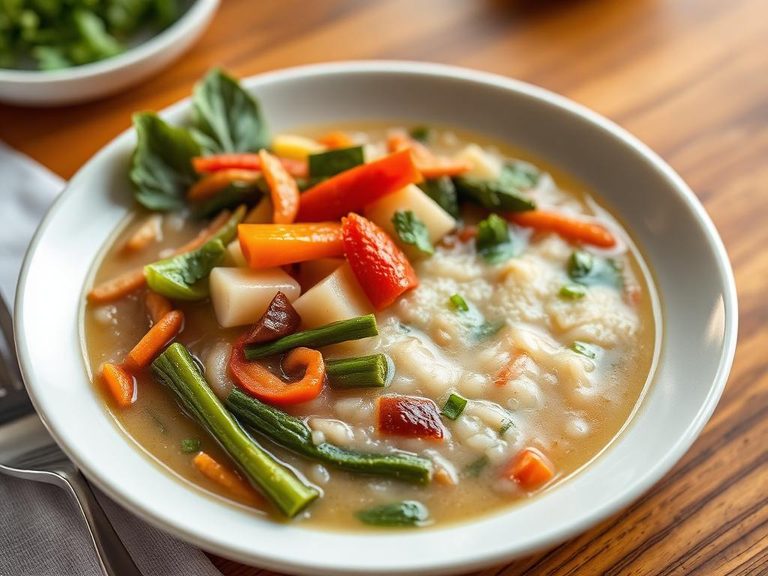
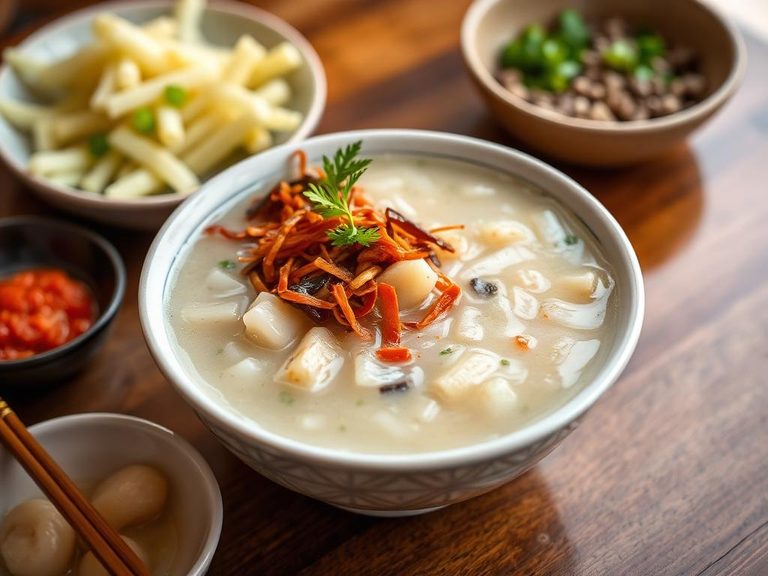
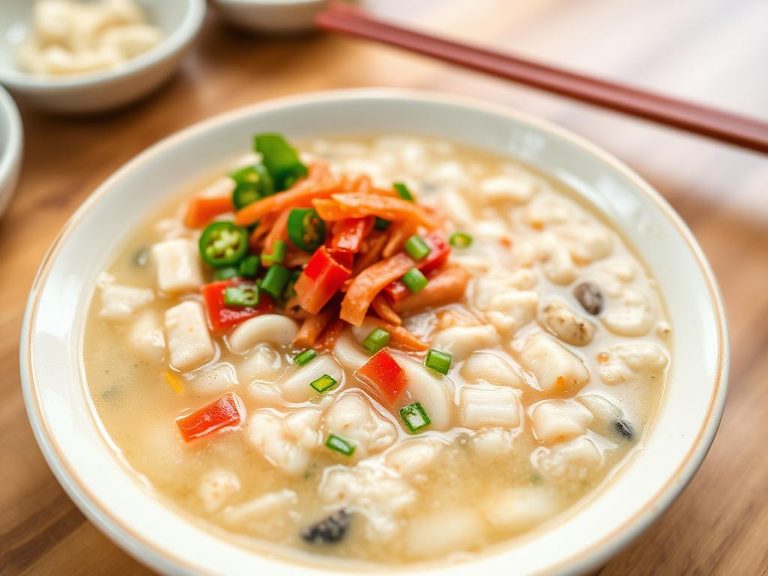
Congee with Vegetables is a comforting rice porridge dish originating from Chinese cuisine, where rice is slowly simmered until it breaks down into a creamy, smooth base. It is typically mixed with a variety of finely chopped or diced vegetables such as carrots, corn, peas, and leafy greens, creating a simple yet nourishing meal. This dish is widely enjoyed across East and Southeast Asia as a staple for breakfast, light dinners, or as a soothing option during recovery.
🍽️ Nutrition at a glance
This dish is primarily high in carbohydrates from the rice, with a moderate amount of fiber and vitamins from the added vegetables, while being generally low in fat and protein unless additional ingredients like eggs or lean meats are included. A typical serving provides a good source of energy, along with essential nutrients like vitamin A, potassium, and B vitamins, and roughly ranges from 150 to 250 calories per serving depending on portion size and specific vegetables used.
Nutrition breakdown
| Calories | 120 kcal |
| Protein | 3 g |
| Carbs | 22 g |
| Fat | 2 g |
| Fiber | 2 g |
| Sugar | 1 g |
| Sodium | 300 mg |
| Potassium | 150 mg |
| Iron | 1.5 mg |
| Calcium | 20 mg |
| Magnesium | 15 mg |
| Phosphorus | 40 mg |
| Vitamin B1 (Thiamin) | 0.1 mg |
| Vitamin B3 (Niacin) | 1.5 mg |
| Folate | 30 mcg |
Per 1 cup (240 g) · estimated, varies by recipe
💡 What's interesting
Culturally, congee is often regarded as a 'healing food' in many Asian traditions, frequently served to the sick, elderly, or young for its gentle digestibility and hydrating properties. Nutritionally, the slow cooking process breaks down the rice starches, making it easier to absorb and helping to soothe the digestive system, which is why it's a common choice for comfort and recovery.
🍽️ Related dishes
AI estimate may be inaccurate · Terms