

Refried beans, from canned, reduced sodium
Common food

Photo: Wikipedia
Refried beans from a can are a smooth, savory paste of cooked and mashed pinto beans, traditionally fried in lard or oil. They have a creamy, thick texture and a rich, earthy flavor that's a staple in Mexican and Tex-Mex cuisine. Nutritionally, they are a solid source of plant-based protein and dietary fiber for relatively few calories.
Calorie split: 22% protein · 59% carbs · 20% fat
↓ Full nutrition💚 Why it's loved
People love them for their comforting, savory depth and incredible versatility—they serve as a hearty base, a dip, or a filling. They are a cornerstone of countless traditional dishes, bringing a familiar, satisfying flavor to everyday meals.
⚠️ Watch-outs & how to enjoy it better
The primary caution is for those monitoring sodium intake, even in reduced-sodium versions. They also contain lectins and oligosaccharides, which can cause digestive discomfort (gas, bloating) in some individuals. To counteract, rinse canned beans thoroughly to remove excess sodium and liquid, and introduce them gradually into your diet to allow your system to adapt.
Key benefits
- Excellent source of plant-based protein and fiber.
- Provides iron, magnesium, and folate.
- Reduced sodium version helps manage salt intake.
- Quick, shelf-stable protein source for meals.
- High fiber content supports digestive health.
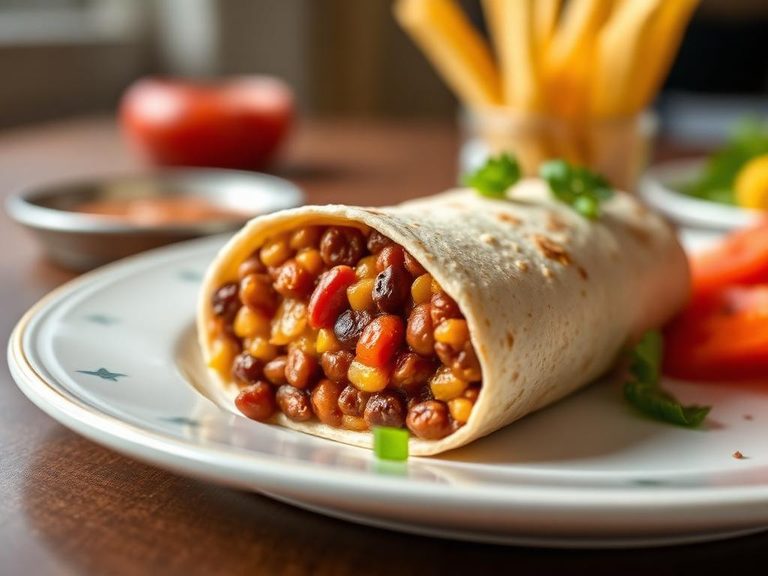
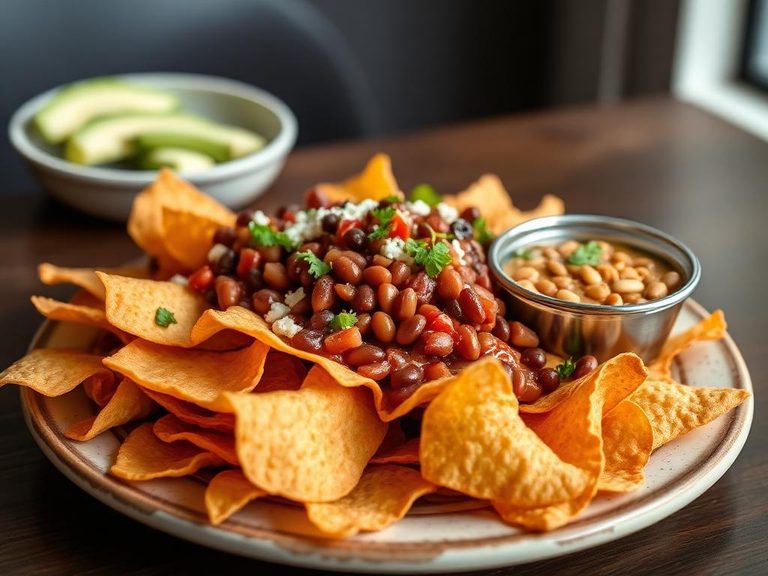
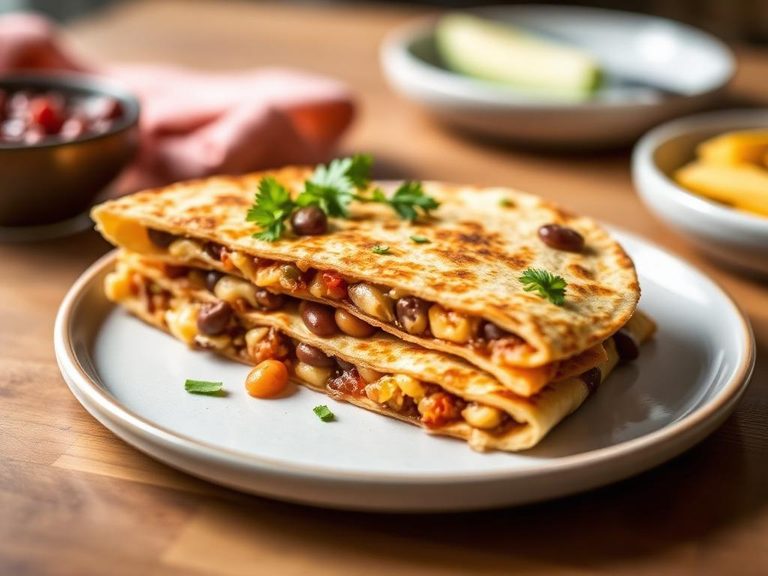
🍽️ Popular dishes

🌍 Where it's eaten
💡 Did you know?
The name 'refried' is a mistranslation from Spanish 'frijoles refritos,' which actually means 'well-fried beans'—they are typically fried only once.
Full nutrition (USDA data · scales with serving)
| Water | 77.8 g |
| Energy | 89.0 kcal |
| Protein | 5.0 g |
| Total lipid (fat) | 2.0 g |
| Carbohydrate, by difference | 13.6 g |
| Fiber, total dietary | 3.7 g |
| Total Sugars | 0.54 g |
| Calcium, Ca | 29.0 mg |
| Iron, Fe | 1.4 mg |
| Magnesium, Mg | 35.0 mg |
| Phosphorus, P | 92.0 mg |
| Potassium, K | 319 mg |
| Sodium, Na | 138 mg |
| Zinc, Zn | 0.58 mg |
| Copper, Cu | 0.13 mg |
| Selenium, Se | 5.8 ug |
| Vitamin C, total ascorbic acid | 0.80 mg |
| Thiamin | 0.07 mg |
| Riboflavin | 0.07 mg |
| Niacin | 0.35 mg |
| Vitamin B-6 | 0.10 mg |
| Folate, total | 25.0 ug |
| Folic acid | 0.00 ug |
| Folate, food | 25.0 ug |
| Folate, DFE | 25.0 ug |
| Choline, total | 22.7 mg |
| Vitamin B-12 | 0.00 ug |
| Vitamin B-12, added | 0.00 ug |
| Vitamin A, RAE | 0.00 ug |
| Retinol | 0.00 ug |
| Carotene, beta | 0.00 ug |
| Carotene, alpha | 0.00 ug |
| Cryptoxanthin, beta | 0.00 ug |
| Lycopene | 0.00 ug |
| Lutein + zeaxanthin | 0.00 ug |
| Vitamin E (alpha-tocopherol) | 0.09 mg |
| Vitamin E, added | 0.00 mg |
| Vitamin D (D2 + D3) | 0.00 ug |
| Vitamin K (phylloquinone) | 2.3 ug |
| Alcohol, ethyl | 0.00 g |
| Caffeine | 0.00 mg |
| Theobromine | 0.00 mg |
Fat & fatty acid profile (per 100g)
| Fatty acids, total saturated | 0.63 g |
| SFA 4:0 | 0.00 g |
| SFA 6:0 | 0.00 g |
| SFA 8:0 | 0.00 g |
| SFA 10:0 | 0.00 g |
| SFA 12:0 | 0.00 g |
| SFA 14:0 | 0.02 g |
| SFA 16:0 | 0.39 g |
| SFA 18:0 | 0.19 g |
| Fatty acids, total monounsaturated | 0.60 g |
| MUFA 16:1 | 0.02 g |
| MUFA 18:1 | 0.56 g |
| MUFA 20:1 | 0.01 g |
| MUFA 22:1 | 0.00 g |
| Fatty acids, total polyunsaturated | 0.54 g |
| PUFA 18:2 | 0.36 g |
| PUFA 18:3 | 0.17 g |
| PUFA 18:4 | 0.00 g |
| PUFA 20:4 | 0.00 g |
| PUFA 20:5 n-3 (EPA) | 0.00 g |
| PUFA 22:5 n-3 (DPA) | 0.00 g |
| PUFA 22:6 n-3 (DHA) | 0.00 g |
| Cholesterol | 0.00 mg |
Amino acid profile (per 100g)
Estimated from Restaurant, Mexican, refried beans — USDA does not publish this profile for Refried beans.
| Tryptophan | 0.07 g |
| Threonine | 0.27 g |
| Isoleucine | 0.27 g |
| Leucine | 0.54 g |
| Lysine | 0.53 g |
| Methionine | 0.08 g |
| Cystine | 0.06 g |
| Phenylalanine | 0.39 g |
| Tyrosine | 0.17 g |
| Valine | 0.29 g |
| Arginine | 0.41 g |
| Histidine | 0.20 g |
| Alanine | 0.27 g |
| Aspartic acid | 0.73 g |
| Glutamic acid | 0.97 g |
| Glycine | 0.28 g |
| Proline | 0.26 g |
| Serine | 0.39 g |
| Hydroxyproline | 0.00 g |
FAQ
What's the difference between refried beans and just mashed beans?
Refried beans are traditionally cooked, mashed, and then fried in fat (like lard or oil) to create a smoother, richer texture and deeper flavor. Simple mashed beans are just beans mashed without the frying step.
Are refried beans vegetarian?
It depends on the preparation. Traditional recipes often use lard (animal fat), but many canned and modern versions are made with vegetable oil, making them vegetarian. Always check the ingredient list for 'lard' or 'animal fat.'
How can I reduce the sodium in canned refried beans?
The most effective method is to rinse the beans in a colander under running water before heating. This can remove a significant amount of surface sodium. You can also look for 'no salt added' versions.
Nutrient density (calculated · NRF9.3)
Nutrient Rich Foods index: beneficial nutrients (protein, fiber, vitamins, minerals) minus saturated fat, added sugar & sodium, per 100 kcal.
NRF9.3 index — Fulgoni, Keast & Drewnowski, 2009. Computed from USDA nutrients.
Weight-loss friendliness (composite index)
Energy density 0.89 kcal/g · 22% calories from protein · 3.7 g fiber · 0.5 g sugar per 100 g.
Composite of energy density (Rolls et al., 1999), protein & fiber satiety, minus sugar. A calculated heuristic — ranks satiety-per-calorie, not a clinical measure.
Dietary load (calculated from USDA values)
Potential renal acid load. Positive = acid-forming, negative = alkaline-forming.
Sodium-to-potassium ratio: 0.43 (lower is better — aim for ≤ 1)
Sodium:potassium per WHO potassium guidance. Computed from USDA nutrients.