

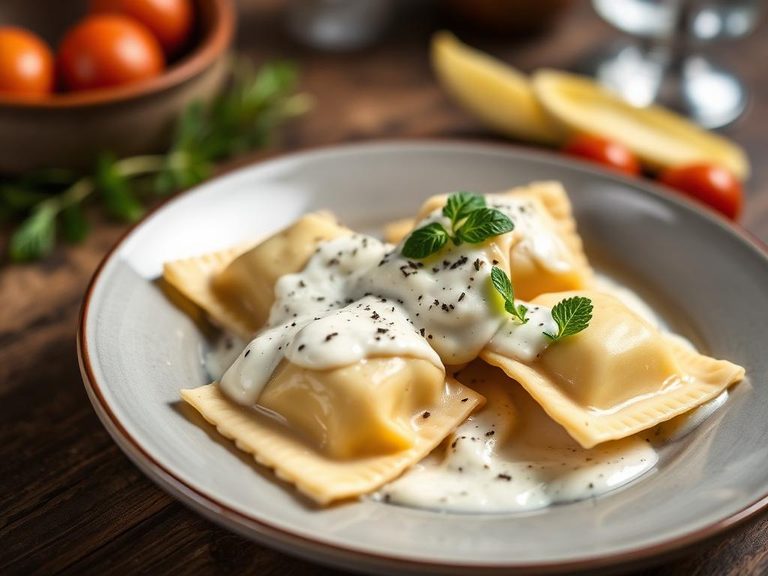
Ravioli, NS as to filling, with tomato sauce
Common food

Photo: Wikipedia
Ravioli, NS as to filling, with tomato sauce is a classic Italian comfort food featuring small, pillowy pasta parcels filled with a mystery mix—often cheese, meat, or vegetables—bathed in a tangy tomato sauce. Each bite offers a satisfying contrast between the tender, slightly chewy pasta and the smooth, savory sauce, with a mild, comforting flavor profile. Nutritionally, it provides a moderate calorie count with a decent protein punch, making it a balanced meal option when enjoyed in reasonable portions.
Calorie split: 20% protein · 42% carbs · 38% fat
↓ Full nutrition💚 Why it's loved
People love ravioli for its comforting, familiar taste and the way it brings a touch of Italian warmth to any meal. Its versatility allows it to be dressed up with simple tomato sauce or elaborate pesto, making it a beloved staple in homes and restaurants alike.
⚠️ Watch-outs & how to enjoy it better
Ravioli can be high in sodium and may cause blood sugar spikes due to its carbohydrate content, especially for those with diabetes or hypertension. To counteract this, pair it with a side of vegetables or lean protein, and opt for whole-grain pasta or smaller portions to manage intake.
Key benefits
- Provides a balanced mix of protein, carbs, and fats for sustained energy
- Contains fiber and sugar, offering a gentle digestive boost
- Versatile base that pairs well with various sauces and sides
- Quick and convenient meal option for busy lifestyles
- Rich in carbohydrates, making it a good energy source
🍽️ Popular dishes
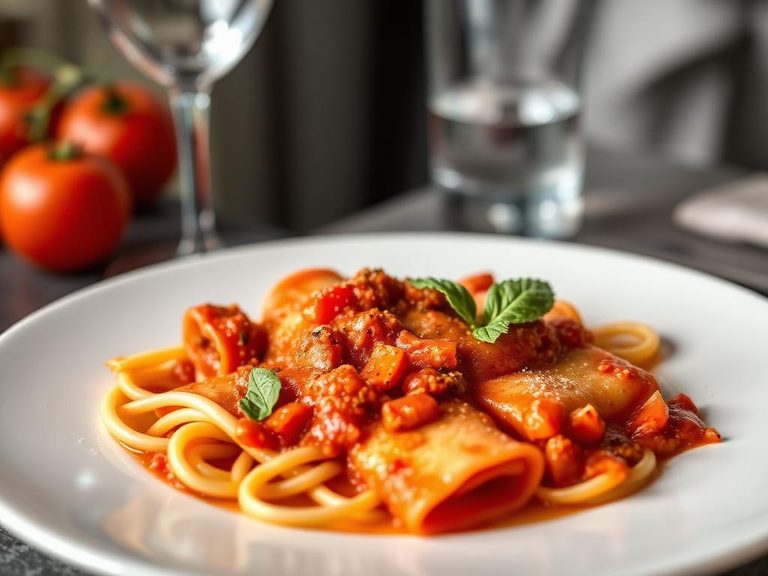
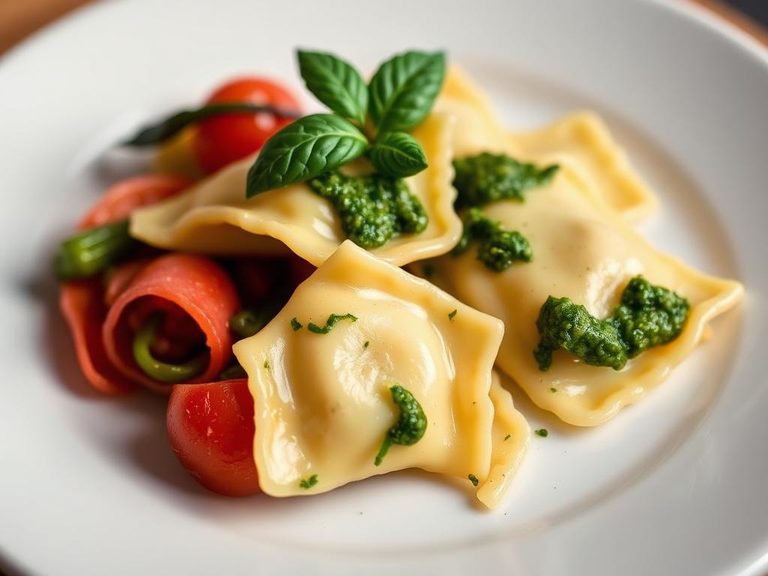
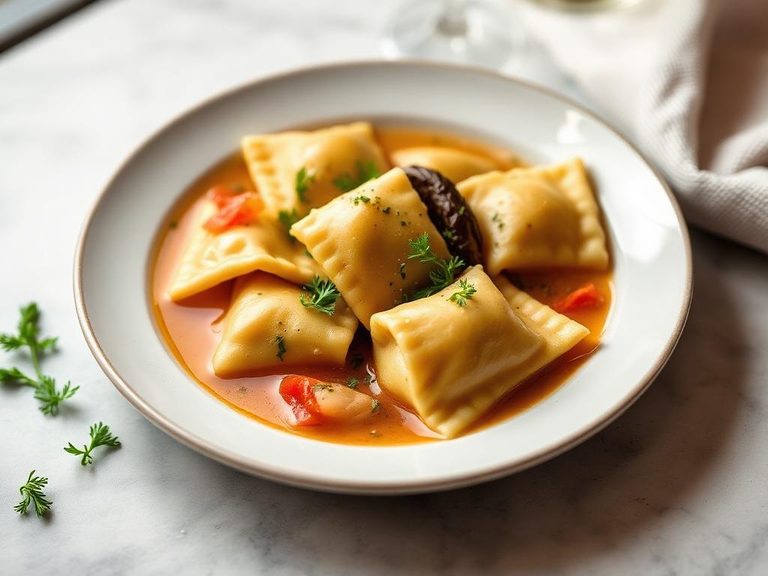
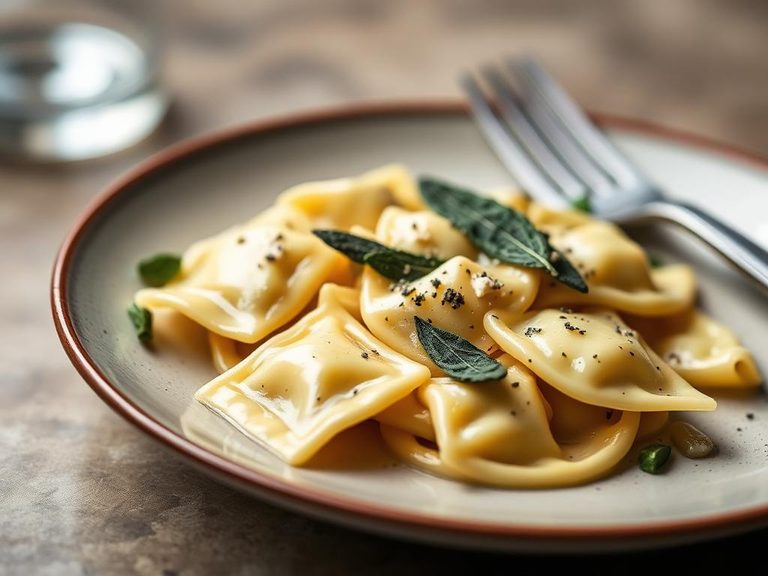
🌍 Where it's eaten
💡 Did you know?
Ravioli dates back to the 14th century in Italy, where it was originally a way to use up leftover ingredients by wrapping them in dough.
Full nutrition (USDA data · scales with serving)
| Water | 71.0 g |
| Energy | 138 kcal |
| Protein | 6.9 g |
| Total lipid (fat) | 5.9 g |
| Carbohydrate, by difference | 14.6 g |
| Fiber, total dietary | 0.90 g |
| Total Sugars | 1.5 g |
| Calcium, Ca | 46.0 mg |
| Iron, Fe | 1.6 mg |
| Magnesium, Mg | 14.0 mg |
| Phosphorus, P | 86.0 mg |
| Potassium, K | 176 mg |
| Sodium, Na | 393 mg |
| Zinc, Zn | 1.0 mg |
| Copper, Cu | 0.07 mg |
| Selenium, Se | 9.0 ug |
| Vitamin C, total ascorbic acid | 2.1 mg |
| Thiamin | 0.14 mg |
| Riboflavin | 0.17 mg |
| Niacin | 1.7 mg |
| Vitamin B-6 | 0.09 mg |
| Folate, total | 27.0 ug |
| Folic acid | 15.0 ug |
| Folate, food | 13.0 ug |
| Folate, DFE | 37.0 ug |
| Choline, total | 44.2 mg |
| Vitamin B-12 | 0.41 ug |
| Vitamin B-12, added | 0.00 ug |
| Vitamin A, RAE | 55.0 ug |
| Retinol | 48.0 ug |
| Carotene, beta | 82.0 ug |
| Carotene, alpha | 0.00 ug |
| Cryptoxanthin, beta | 2.0 ug |
| Lycopene | 3791 ug |
| Lutein + zeaxanthin | 66.0 ug |
| Vitamin E (alpha-tocopherol) | 0.76 mg |
| Vitamin E, added | 0.00 mg |
| Vitamin D (D2 + D3) | 0.30 ug |
| Vitamin K (phylloquinone) | 3.5 ug |
| Alcohol, ethyl | 0.00 g |
| Caffeine | 0.00 mg |
| Theobromine | 0.00 mg |
Fat & fatty acid profile (per 100g)
| Fatty acids, total saturated | 2.1 g |
| SFA 4:0 | 0.03 g |
| SFA 6:0 | 0.02 g |
| SFA 8:0 | 0.01 g |
| SFA 10:0 | 0.04 g |
| SFA 12:0 | 0.04 g |
| SFA 14:0 | 0.18 g |
| SFA 16:0 | 1.2 g |
| SFA 18:0 | 0.53 g |
| Fatty acids, total monounsaturated | 2.2 g |
| MUFA 16:1 | 0.12 g |
| MUFA 18:1 | 2.0 g |
| MUFA 20:1 | 0.01 g |
| MUFA 22:1 | 0.00 g |
| Fatty acids, total polyunsaturated | 0.82 g |
| PUFA 18:2 | 0.72 g |
| PUFA 18:3 | 0.05 g |
| PUFA 18:4 | 0.00 g |
| PUFA 20:4 | 0.01 g |
| PUFA 20:5 n-3 (EPA) | 0.00 g |
| PUFA 22:5 n-3 (DPA) | 0.00 g |
| PUFA 22:6 n-3 (DHA) | 0.00 g |
| Cholesterol | 62.0 mg |
Amino acid profile (per 100g)
Estimated from OLIVE GARDEN, cheese ravioli with marinara sauce — USDA does not publish this profile for Ravioli.
| Tryptophan | 0.17 g |
| Threonine | 0.28 g |
| Isoleucine | 0.32 g |
| Leucine | 0.67 g |
| Lysine | 0.51 g |
| Methionine | 0.18 g |
| Cystine | 0.12 g |
| Phenylalanine | 0.36 g |
| Tyrosine | 0.26 g |
| Valine | 0.38 g |
| Arginine | 0.31 g |
| Histidine | 0.17 g |
| Alanine | 0.26 g |
| Aspartic acid | 0.54 g |
| Glutamic acid | 2.0 g |
| Glycine | 0.20 g |
| Proline | 1.0 g |
| Serine | 0.40 g |
| Hydroxyproline | 0.00 g |
FAQ
What is the typical filling for ravioli?
Ravioli can be filled with a variety of ingredients, including ricotta cheese, spinach, meat, or seafood, depending on regional and personal preferences.
How is ravioli usually served?
Ravioli is often served with tomato sauce, pesto, or butter and sage, and can be accompanied by a side of salad or bread.
Is ravioli a healthy meal option?
Ravioli can be a balanced meal when paired with vegetables and lean protein, but it should be consumed in moderation due to its carbohydrate and sodium content.
Nutrient density (calculated · NRF9.3)
Nutrient Rich Foods index: beneficial nutrients (protein, fiber, vitamins, minerals) minus saturated fat, added sugar & sodium, per 100 kcal.
NRF9.3 index — Fulgoni, Keast & Drewnowski, 2009. Computed from USDA nutrients.
Weight-loss friendliness (composite index)
Energy density 1.38 kcal/g · 20% calories from protein · 0.9 g fiber · 1.5 g sugar per 100 g.
Composite of energy density (Rolls et al., 1999), protein & fiber satiety, minus sugar. A calculated heuristic — ranks satiety-per-calorie, not a clinical measure.
Dietary load (calculated from USDA values)
Potential renal acid load. Positive = acid-forming, negative = alkaline-forming.
Sodium-to-potassium ratio: 2.23 (lower is better — aim for ≤ 1)
Sodium:potassium per WHO potassium guidance. Computed from USDA nutrients.