

Ravioli, meat-filled, with tomato sauce or meat sauce
Common food

Photo: Wikipedia
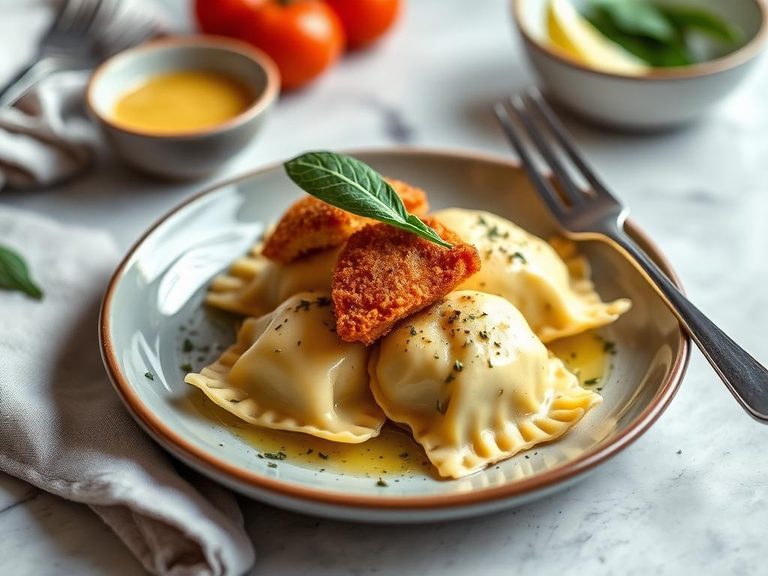
Meat-filled ravioli are tender pasta pillows, typically square or round, encasing a savory ground meat filling. They offer a delightful textural contrast between the soft, yielding pasta and the hearty, seasoned interior. With 8.74g of protein per 100g, they provide a satisfying, protein-rich base for a meal.
Calorie split: 23% protein · 39% carbs · 38% fat
↓ Full nutrition💚 Why it's loved
People adore ravioli for the perfect bite-sized explosion of flavor, where the pasta acts as a delicate vessel for the rich, savory filling. It's a beloved staple in Italian cuisine, representing comfort, tradition, and the joy of a well-crafted, handheld pasta.
⚠️ Watch-outs & how to enjoy it better
The refined pasta dough can cause a quicker blood-sugar rise, and commercial versions may be high in sodium. To counteract this, pair ravioli with a fiber-rich vegetable side (like roasted broccoli or a leafy salad) and a drizzle of olive oil or a sprinkle of Parmesan to slow digestion. Opt for whole-wheat pasta if available, and control portions by serving ravioli as part of a larger, veggie-heavy dish.
Key benefits
- Good source of protein for muscle maintenance.
- Provides energy from complex carbohydrates.
- Contains iron and B vitamins from the meat filling.
- A comforting, calorie-controlled meal option (148 kcal/100g).
🍽️ Popular dishes
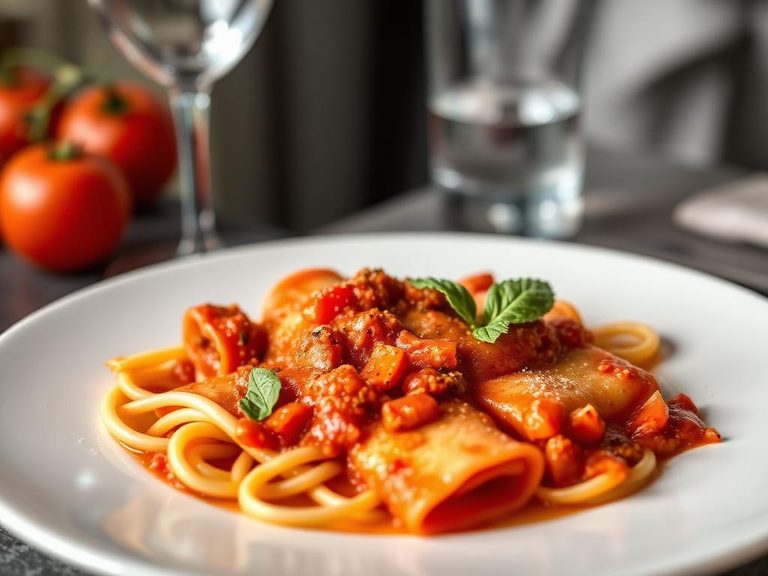
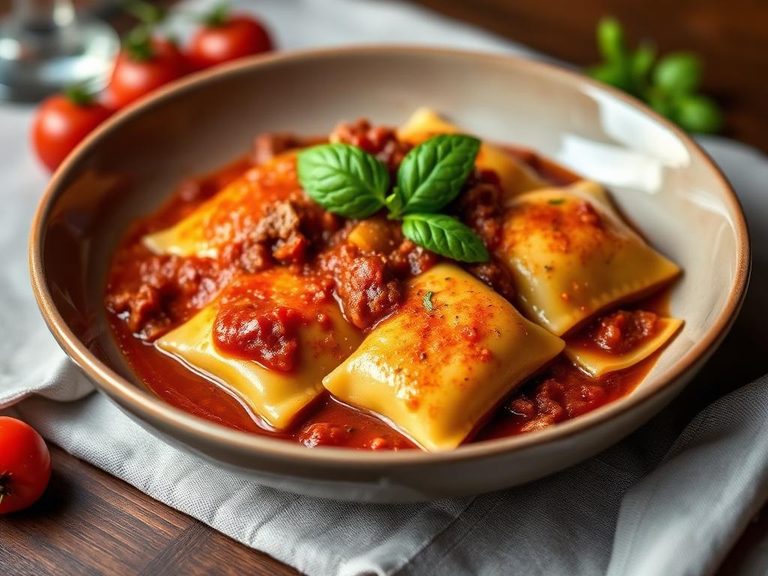
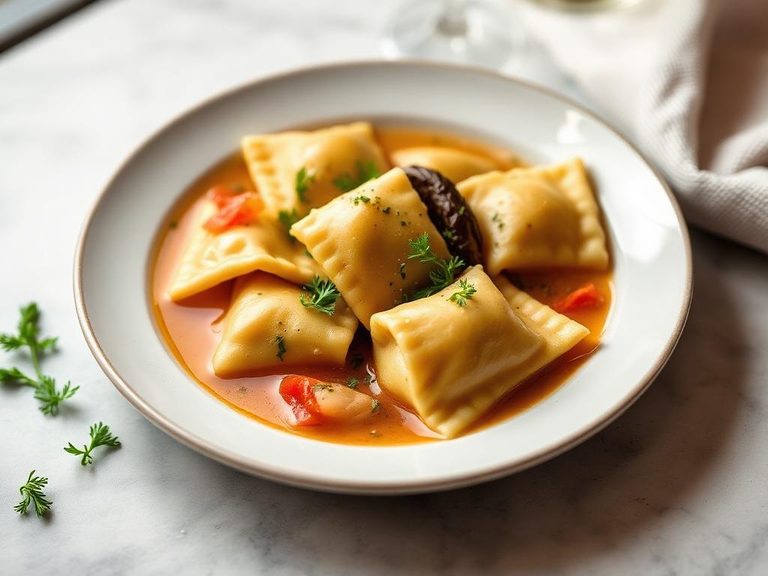
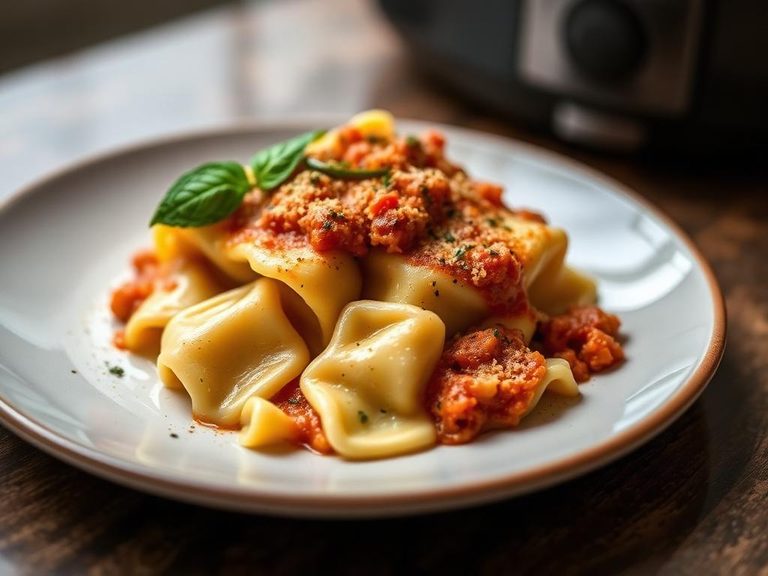
🌍 Where it's eaten
💡 Did you know?
The word 'ravioli' likely derives from the Italian 'riavvolgere,' meaning 'to wrap,' and historical records show stuffed pasta existed in 14th-century Italy, centuries before tomato sauce became a common pairing.
Full nutrition (USDA data · scales with serving)
| Water | 68.5 g |
| Energy | 148 kcal |
| Protein | 8.7 g |
| Total lipid (fat) | 6.3 g |
| Carbohydrate, by difference | 14.5 g |
| Fiber, total dietary | 1.0 g |
| Total Sugars | 1.7 g |
| Calcium, Ca | 27.0 mg |
| Iron, Fe | 2.0 mg |
| Magnesium, Mg | 16.0 mg |
| Phosphorus, P | 91.0 mg |
| Potassium, K | 217 mg |
| Sodium, Na | 593 mg |
| Zinc, Zn | 1.6 mg |
| Copper, Cu | 0.12 mg |
| Selenium, Se | 10.6 ug |
| Vitamin C, total ascorbic acid | 2.8 mg |
| Thiamin | 0.13 mg |
| Riboflavin | 0.16 mg |
| Niacin | 2.3 mg |
| Vitamin B-6 | 0.12 mg |
| Folate, total | 27.0 ug |
| Folic acid | 14.0 ug |
| Folate, food | 13.0 ug |
| Folate, DFE | 37.0 ug |
| Choline, total | 51.2 mg |
| Vitamin B-12 | 0.61 ug |
| Vitamin B-12, added | 0.00 ug |
| Vitamin A, RAE | 43.0 ug |
| Retinol | 35.0 ug |
| Carotene, beta | 86.0 ug |
| Carotene, alpha | 0.00 ug |
| Cryptoxanthin, beta | 2.0 ug |
| Lycopene | 5409 ug |
| Lutein + zeaxanthin | 61.0 ug |
| Vitamin E (alpha-tocopherol) | 0.82 mg |
| Vitamin E, added | 0.00 mg |
| Vitamin D (D2 + D3) | 0.30 ug |
| Vitamin K (phylloquinone) | 3.5 ug |
| Alcohol, ethyl | 0.00 g |
| Caffeine | 0.00 mg |
| Theobromine | 0.00 mg |
Fat & fatty acid profile (per 100g)
| Fatty acids, total saturated | 2.0 g |
| SFA 4:0 | 0.00 g |
| SFA 6:0 | 0.00 g |
| SFA 8:0 | 0.00 g |
| SFA 10:0 | 0.01 g |
| SFA 12:0 | 0.01 g |
| SFA 14:0 | 0.12 g |
| SFA 16:0 | 1.2 g |
| SFA 18:0 | 0.61 g |
| Fatty acids, total monounsaturated | 2.6 g |
| MUFA 16:1 | 0.15 g |
| MUFA 18:1 | 2.4 g |
| MUFA 20:1 | 0.01 g |
| MUFA 22:1 | 0.00 g |
| Fatty acids, total polyunsaturated | 0.80 g |
| PUFA 18:2 | 0.70 g |
| PUFA 18:3 | 0.05 g |
| PUFA 18:4 | 0.00 g |
| PUFA 20:4 | 0.01 g |
| PUFA 20:5 n-3 (EPA) | 0.00 g |
| PUFA 22:5 n-3 (DPA) | 0.00 g |
| PUFA 22:6 n-3 (DHA) | 0.00 g |
| Cholesterol | 65.0 mg |
Amino acid profile (per 100g)
Estimated from OLIVE GARDEN, cheese ravioli with marinara sauce — USDA does not publish this profile for Ravioli.
| Tryptophan | 0.17 g |
| Threonine | 0.28 g |
| Isoleucine | 0.32 g |
| Leucine | 0.67 g |
| Lysine | 0.51 g |
| Methionine | 0.18 g |
| Cystine | 0.12 g |
| Phenylalanine | 0.36 g |
| Tyrosine | 0.26 g |
| Valine | 0.38 g |
| Arginine | 0.31 g |
| Histidine | 0.17 g |
| Alanine | 0.26 g |
| Aspartic acid | 0.54 g |
| Glutamic acid | 2.0 g |
| Glycine | 0.20 g |
| Proline | 1.0 g |
| Serine | 0.40 g |
| Hydroxyproline | 0.00 g |
FAQ
What's the difference between meat ravioli and cheese ravioli nutritionally?
Meat ravioli typically has more protein and iron, while cheese ravioli may have slightly more saturated fat and calcium. The overall calorie count is often similar.
Can I make meat ravioli healthier at home?
Absolutely. Use lean ground meat (like turkey or extra-lean beef), incorporate finely chopped mushrooms or spinach into the filling, and opt for whole-wheat or spinach pasta dough.
What sauce pairs best with meat-filled ravioli?
While classic tomato sauce is traditional, meat ravioli also shines with brown butter and sage, a simple cream sauce, or just a light toss in olive oil and Parmesan to let the filling flavor lead.
Nutrient density (calculated · NRF9.3)
Nutrient Rich Foods index: beneficial nutrients (protein, fiber, vitamins, minerals) minus saturated fat, added sugar & sodium, per 100 kcal.
NRF9.3 index — Fulgoni, Keast & Drewnowski, 2009. Computed from USDA nutrients.
Weight-loss friendliness (composite index)
Energy density 1.48 kcal/g · 24% calories from protein · 1.0 g fiber · 1.7 g sugar per 100 g.
Composite of energy density (Rolls et al., 1999), protein & fiber satiety, minus sugar. A calculated heuristic — ranks satiety-per-calorie, not a clinical measure.
Dietary load (calculated from USDA values)
Potential renal acid load. Positive = acid-forming, negative = alkaline-forming.
Sodium-to-potassium ratio: 2.73 (lower is better — aim for ≤ 1)
Sodium:potassium per WHO potassium guidance. Computed from USDA nutrients.