

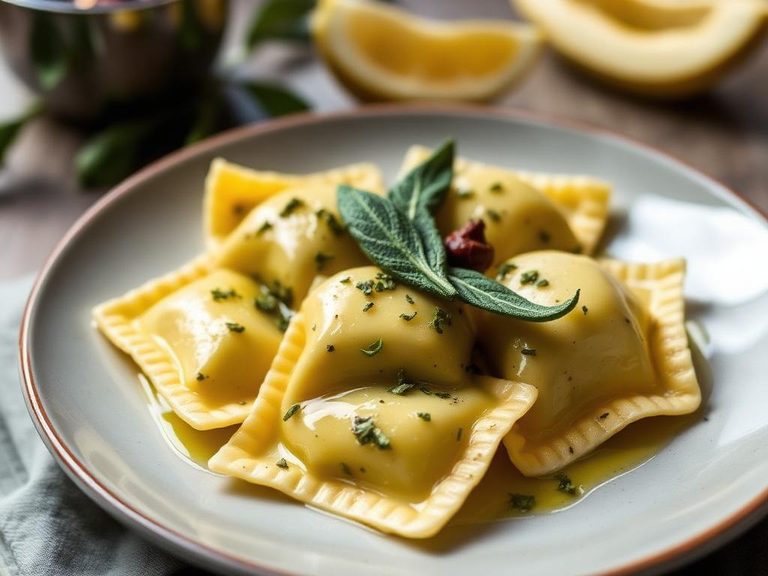
Ravioli, cheese-filled, with tomato sauce
Common food

Photo: Wikipedia
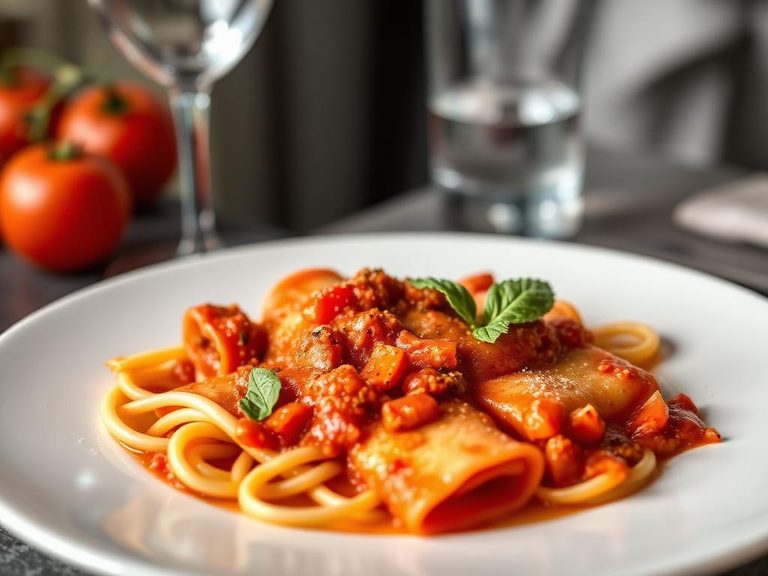
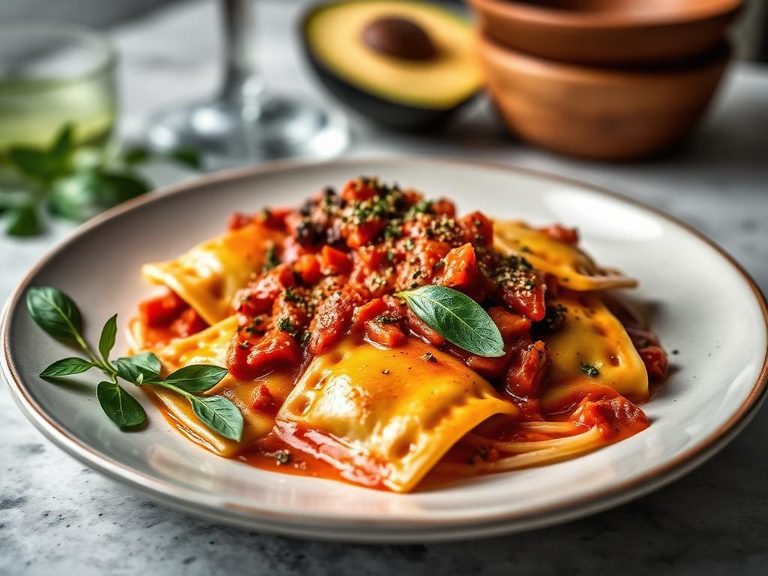
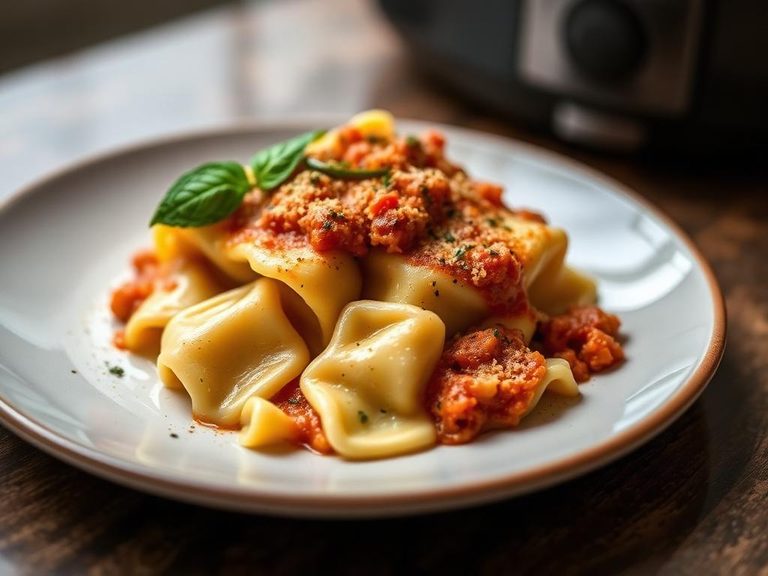
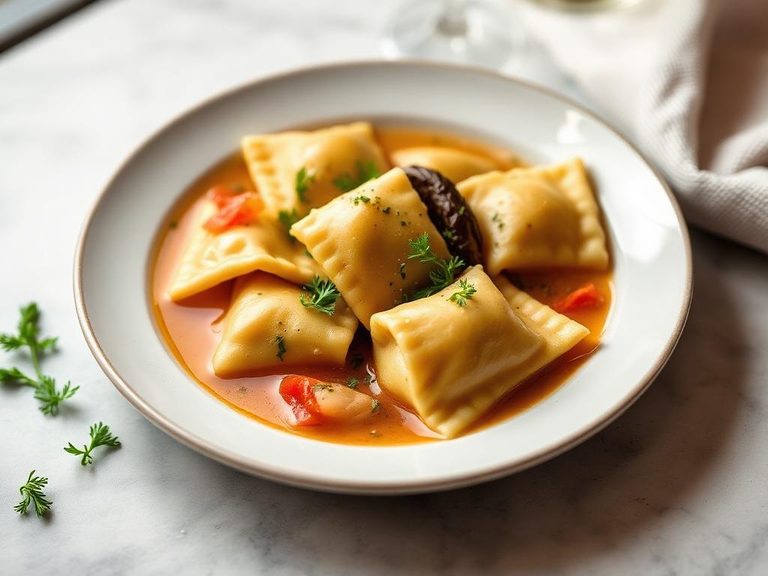
Cheese-filled ravioli are delicate pasta pillows, typically made from egg dough, encasing a savory cheese filling like ricotta. They offer a tender, slightly chewy texture with a creamy, mild interior, complemented by the bright acidity of a classic tomato sauce. Nutritionally, this dish is a light yet satisfying source of carbohydrates and protein, with a modest fat content.
Calorie split: 16% protein · 62% carbs · 21% fat
↓ Full nutrition💚 Why it's loved
People adore it for its comforting, familiar flavors and the satisfying contrast between the soft pasta, creamy cheese, and tangy sauce. It's a versatile classic that feels both homey and elegant, deeply rooted in Italian culinary tradition.
⚠️ Watch-outs & how to enjoy it better
The refined pasta and cheese filling can cause a rapid rise in blood sugar for some, and the dish may be high in sodium from the sauce and cheese. Those with gluten or dairy allergies must avoid it. To mitigate blood sugar impact, pair it with a side of fibrous vegetables like roasted broccoli or a simple green salad to slow digestion.
Key benefits
- Good source of quick energy from carbohydrates
- Provides protein for muscle maintenance
- Contains calcium from the cheese filling
- Low in fat compared to cream-based pasta dishes
- Can be a portion-controlled meal option
🍽️ Popular dishes
🌍 Where it's eaten
💡 Did you know?
The word 'ravioli' likely derives from the Italian verb 'riavvolgere,' meaning 'to wrap again,' a nod to the process of folding the pasta dough over the filling.
Full nutrition (USDA data · scales with serving)
| Water | 77.4 g |
| Energy | 98.0 kcal |
| Protein | 4.0 g |
| Total lipid (fat) | 2.3 g |
| Carbohydrate, by difference | 15.2 g |
| Fiber, total dietary | 1.2 g |
| Total Sugars | 3.6 g |
| Calcium, Ca | 69.0 mg |
| Iron, Fe | 0.82 mg |
| Magnesium, Mg | 18.0 mg |
| Phosphorus, P | 69.0 mg |
| Potassium, K | 205 mg |
| Sodium, Na | 246 mg |
| Zinc, Zn | 0.38 mg |
| Copper, Cu | 0.07 mg |
| Selenium, Se | 10.6 ug |
| Vitamin C, total ascorbic acid | 2.5 mg |
| Thiamin | 0.10 mg |
| Riboflavin | 0.10 mg |
| Niacin | 1.1 mg |
| Vitamin B-6 | 0.10 mg |
| Folate, total | 41.0 ug |
| Folic acid | 30.0 ug |
| Folate, food | 11.0 ug |
| Folate, DFE | 62.0 ug |
| Choline, total | 17.2 mg |
| Vitamin B-12 | 0.12 ug |
| Vitamin B-12, added | 0.00 ug |
| Vitamin A, RAE | 31.0 ug |
| Retinol | 12.0 ug |
| Carotene, beta | 230 ug |
| Carotene, alpha | 0.00 ug |
| Cryptoxanthin, beta | 0.00 ug |
| Lycopene | 2609 ug |
| Lutein + zeaxanthin | 258 ug |
| Vitamin E (alpha-tocopherol) | 0.86 mg |
| Vitamin E, added | 0.00 mg |
| Vitamin D (D2 + D3) | 0.10 ug |
| Vitamin K (phylloquinone) | 14.2 ug |
| Alcohol, ethyl | 0.00 g |
| Caffeine | 0.00 mg |
| Theobromine | 0.00 mg |
Fat & fatty acid profile (per 100g)
| Fatty acids, total saturated | 1.0 g |
| SFA 4:0 | 0.02 g |
| SFA 6:0 | 0.02 g |
| SFA 8:0 | 0.02 g |
| SFA 10:0 | 0.04 g |
| SFA 12:0 | 0.04 g |
| SFA 14:0 | 0.15 g |
| SFA 16:0 | 0.54 g |
| SFA 18:0 | 0.18 g |
| Fatty acids, total monounsaturated | 0.61 g |
| MUFA 16:1 | 0.03 g |
| MUFA 18:1 | 0.55 g |
| MUFA 20:1 | 0.01 g |
| MUFA 22:1 | 0.00 g |
| Fatty acids, total polyunsaturated | 0.37 g |
| PUFA 18:2 | 0.32 g |
| PUFA 18:3 | 0.03 g |
| PUFA 18:4 | 0.00 g |
| PUFA 20:4 | 0.00 g |
| PUFA 20:5 n-3 (EPA) | 0.00 g |
| PUFA 22:5 n-3 (DPA) | 0.00 g |
| PUFA 22:6 n-3 (DHA) | 0.00 g |
| Cholesterol | 10.0 mg |
Amino acid profile (per 100g)
Estimated from OLIVE GARDEN, cheese ravioli with marinara sauce — USDA does not publish this profile for Ravioli.
| Tryptophan | 0.17 g |
| Threonine | 0.28 g |
| Isoleucine | 0.32 g |
| Leucine | 0.67 g |
| Lysine | 0.51 g |
| Methionine | 0.18 g |
| Cystine | 0.12 g |
| Phenylalanine | 0.36 g |
| Tyrosine | 0.26 g |
| Valine | 0.38 g |
| Arginine | 0.31 g |
| Histidine | 0.17 g |
| Alanine | 0.26 g |
| Aspartic acid | 0.54 g |
| Glutamic acid | 2.0 g |
| Glycine | 0.20 g |
| Proline | 1.0 g |
| Serine | 0.40 g |
| Hydroxyproline | 0.00 g |
FAQ
How does cheese ravioli with tomato sauce differ nutritionally from meat-filled ravioli?
Cheese ravioli is typically lower in fat and calories than meat-filled varieties (like beef or pork), while providing similar protein. The tomato sauce adds vitamins like lycopene, whereas a meat sauce would increase fat and iron content.
Is this a good post-workout meal?
It can be, as it provides a good balance of carbohydrates to replenish glycogen and protein for muscle repair. However, for optimal recovery, you might want to ensure a slightly higher protein portion by adding a side of grilled chicken or beans.
Can I make it healthier at home?
Absolutely. Use whole-wheat pasta for more fiber, fill with a mix of ricotta and spinach, and make a sauce from fresh tomatoes with minimal added salt. Baking instead of pan-frying in oil also reduces fat content.
Nutrient density (calculated · NRF9.3)
Nutrient Rich Foods index: beneficial nutrients (protein, fiber, vitamins, minerals) minus saturated fat, added sugar & sodium, per 100 kcal.
NRF9.3 index — Fulgoni, Keast & Drewnowski, 2009. Computed from USDA nutrients.
Weight-loss friendliness (composite index)
Energy density 0.98 kcal/g · 16% calories from protein · 1.2 g fiber · 3.6 g sugar per 100 g.
Composite of energy density (Rolls et al., 1999), protein & fiber satiety, minus sugar. A calculated heuristic — ranks satiety-per-calorie, not a clinical measure.
Dietary load (calculated from USDA values)
Potential renal acid load. Positive = acid-forming, negative = alkaline-forming.
Sodium-to-potassium ratio: 1.20 (lower is better — aim for ≤ 1)
Sodium:potassium per WHO potassium guidance. Computed from USDA nutrients.