

Ravioli, cheese and spinach filled, with tomato sauce
Common food

Photo: Wikipedia
Cheese and spinach ravioli are delicate, pillow-like pasta parcels filled with a creamy blend of ricotta and spinach, typically served in a vibrant tomato sauce. The texture offers a satisfying contrast between the tender pasta and the soft, savory filling. For a pasta dish, it provides a moderate calorie count with a notable protein contribution from the cheese.
Calorie split: 18% protein · 57% carbs · 26% fat
↓ Full nutrition💚 Why it's loved
People love it for the comforting, classic combination of creamy, cheesy filling and bright tomato sauce, making it a universally appealing comfort food. It's also a versatile dish that can be dressed up with herbs or kept simple for a quick, satisfying meal.
⚠️ Watch-outs & how to enjoy it better
The dish can be high in sodium, especially from the pasta dough, cheese, and sauce, which may concern those monitoring salt intake. The refined carbohydrate pasta can cause rapid blood sugar spikes; pairing it with a side of fibrous vegetables or a lean protein can help moderate this response.
Key benefits
- Good source of protein for muscle maintenance
- Provides calcium from the cheese filling
- Contains iron and vitamins from spinach
- Offers quick energy from carbohydrates
- Convenient and quick to prepare
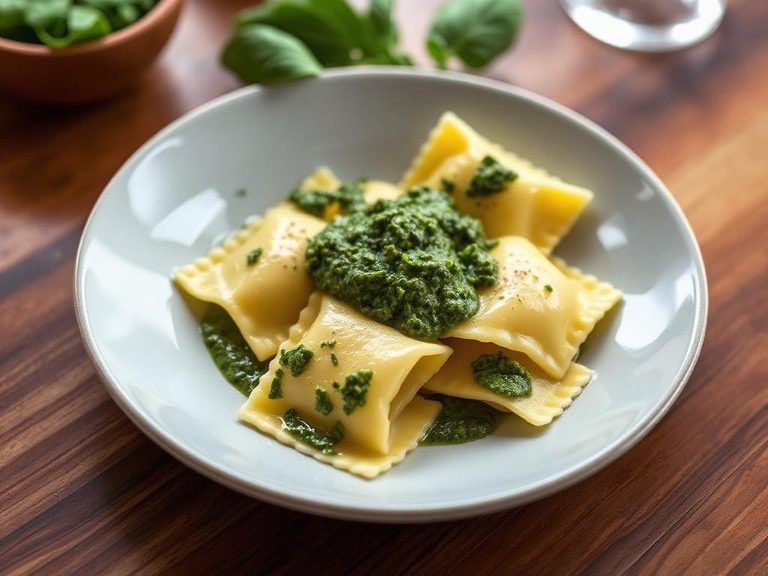
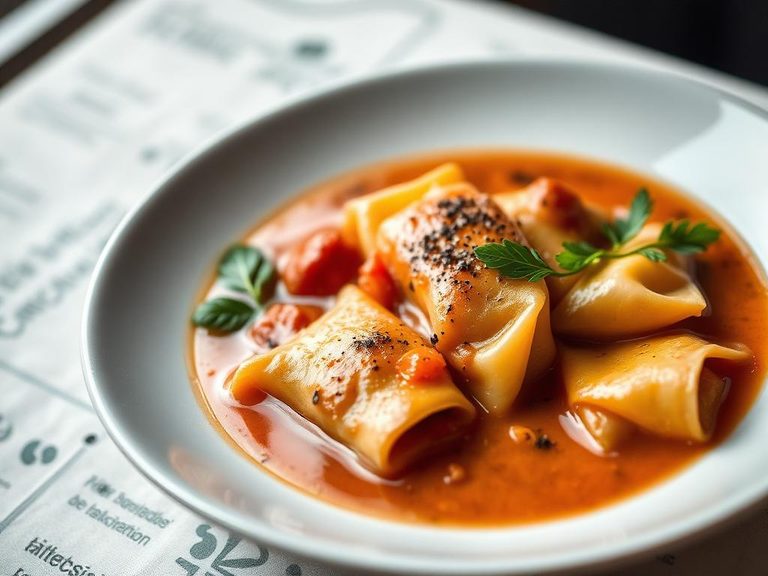
🍽️ Popular dishes
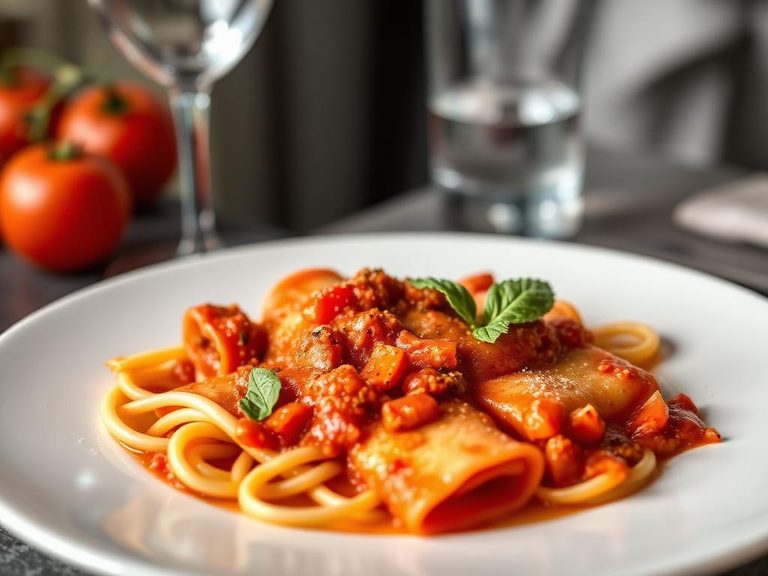
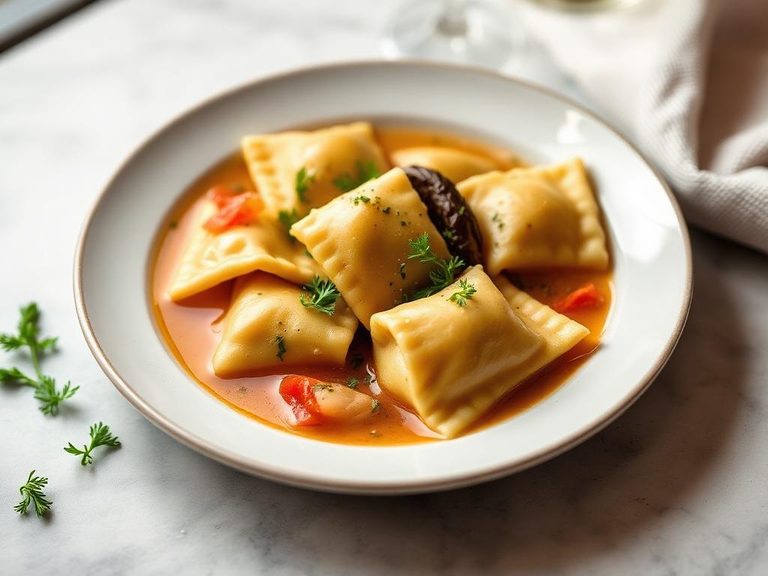
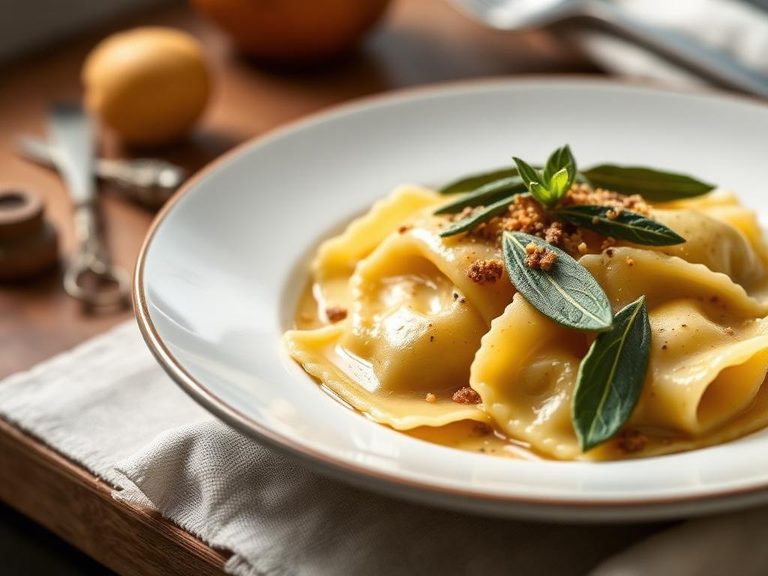
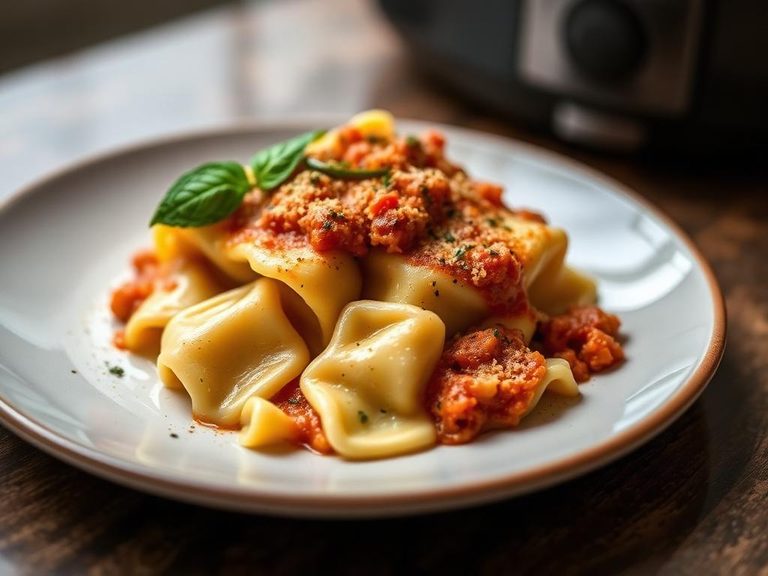
🌍 Where it's eaten
💡 Did you know?
The word 'ravioli' likely derives from the Italian 'riavvolgere,' meaning 'to wrap,' and the dish's concept has been documented in Italian texts since the 14th century.
Full nutrition (USDA data · scales with serving)
| Water | 72.5 g |
| Energy | 117 kcal |
| Protein | 5.2 g |
| Total lipid (fat) | 3.4 g |
| Carbohydrate, by difference | 16.8 g |
| Fiber, total dietary | 1.2 g |
| Total Sugars | 1.3 g |
| Calcium, Ca | 59.0 mg |
| Iron, Fe | 1.7 mg |
| Magnesium, Mg | 27.0 mg |
| Phosphorus, P | 81.0 mg |
| Potassium, K | 229 mg |
| Sodium, Na | 535 mg |
| Zinc, Zn | 0.51 mg |
| Copper, Cu | 0.08 mg |
| Selenium, Se | 7.5 ug |
| Vitamin C, total ascorbic acid | 5.3 mg |
| Thiamin | 0.16 mg |
| Riboflavin | 0.20 mg |
| Niacin | 1.5 mg |
| Vitamin B-6 | 0.09 mg |
| Folate, total | 41.0 ug |
| Folic acid | 17.0 ug |
| Folate, food | 24.0 ug |
| Folate, DFE | 53.0 ug |
| Choline, total | 44.0 mg |
| Vitamin B-12 | 0.16 ug |
| Vitamin B-12, added | 0.00 ug |
| Vitamin A, RAE | 89.0 ug |
| Retinol | 38.0 ug |
| Carotene, beta | 604 ug |
| Carotene, alpha | 1.0 ug |
| Cryptoxanthin, beta | 4.0 ug |
| Lycopene | 4239 ug |
| Lutein + zeaxanthin | 1200 ug |
| Vitamin E (alpha-tocopherol) | 1.0 mg |
| Vitamin E, added | 0.00 mg |
| Vitamin D (D2 + D3) | 0.30 ug |
| Vitamin K (phylloquinone) | 73.5 ug |
| Alcohol, ethyl | 0.00 g |
| Caffeine | 0.00 mg |
| Theobromine | 0.00 mg |
Fat & fatty acid profile (per 100g)
| Fatty acids, total saturated | 1.5 g |
| SFA 4:0 | 0.03 g |
| SFA 6:0 | 0.03 g |
| SFA 8:0 | 0.02 g |
| SFA 10:0 | 0.04 g |
| SFA 12:0 | 0.05 g |
| SFA 14:0 | 0.16 g |
| SFA 16:0 | 0.83 g |
| SFA 18:0 | 0.26 g |
| Fatty acids, total monounsaturated | 0.93 g |
| MUFA 16:1 | 0.07 g |
| MUFA 18:1 | 0.87 g |
| MUFA 20:1 | 0.01 g |
| MUFA 22:1 | 0.00 g |
| Fatty acids, total polyunsaturated | 0.42 g |
| PUFA 18:2 | 0.35 g |
| PUFA 18:3 | 0.04 g |
| PUFA 18:4 | 0.00 g |
| PUFA 20:4 | 0.01 g |
| PUFA 20:5 n-3 (EPA) | 0.00 g |
| PUFA 22:5 n-3 (DPA) | 0.00 g |
| PUFA 22:6 n-3 (DHA) | 0.00 g |
| Cholesterol | 62.0 mg |
Amino acid profile (per 100g)
Estimated from OLIVE GARDEN, cheese ravioli with marinara sauce — USDA does not publish this profile for Ravioli.
| Tryptophan | 0.17 g |
| Threonine | 0.28 g |
| Isoleucine | 0.32 g |
| Leucine | 0.67 g |
| Lysine | 0.51 g |
| Methionine | 0.18 g |
| Cystine | 0.12 g |
| Phenylalanine | 0.36 g |
| Tyrosine | 0.26 g |
| Valine | 0.38 g |
| Arginine | 0.31 g |
| Histidine | 0.17 g |
| Alanine | 0.26 g |
| Aspartic acid | 0.54 g |
| Glutamic acid | 2.0 g |
| Glycine | 0.20 g |
| Proline | 1.0 g |
| Serine | 0.40 g |
| Hydroxyproline | 0.00 g |
FAQ
Is cheese and spinach ravioli a good source of protein?
Yes, at about 5.2 grams per 100g, it provides a decent amount of protein primarily from the cheese filling, making it more protein-rich than plain pasta.
Can I make it healthier?
You can boost its nutritional profile by serving it with a side of steamed broccoli or a large green salad to add fiber and vitamins, which helps balance the meal and manage blood sugar response.
What is the best way to cook frozen ravioli?
For the best texture, boil frozen ravioli in salted water until they float to the surface (usually 3-4 minutes), then immediately toss with your heated sauce to prevent sticking.
Nutrient density (calculated · NRF9.3)
Nutrient Rich Foods index: beneficial nutrients (protein, fiber, vitamins, minerals) minus saturated fat, added sugar & sodium, per 100 kcal.
NRF9.3 index — Fulgoni, Keast & Drewnowski, 2009. Computed from USDA nutrients.
Weight-loss friendliness (composite index)
Energy density 1.17 kcal/g · 18% calories from protein · 1.2 g fiber · 1.3 g sugar per 100 g.
Composite of energy density (Rolls et al., 1999), protein & fiber satiety, minus sugar. A calculated heuristic — ranks satiety-per-calorie, not a clinical measure.
Dietary load (calculated from USDA values)
Potential renal acid load. Positive = acid-forming, negative = alkaline-forming.
Sodium-to-potassium ratio: 2.34 (lower is better — aim for ≤ 1)
Sodium:potassium per WHO potassium guidance. Computed from USDA nutrients.