

Pumpkin leaves, cooked, boiled, drained, without salt
Whole food · Vegetables and Vegetable Products
Pumpkin leaves, when boiled and drained, transform from a tough garden vine into a tender, vibrant green with a mild, subtly sweet flavor reminiscent of spinach but with a slightly more robust, earthy backbone. Their texture becomes silky yet retains a pleasant, delicate bite. Nutritionally, they are a low-calorie powerhouse, delivering a surprising amount of protein and fiber for their light caloric footprint.
Calorie split: 41% protein · 51% carbs · 7% fat
↓ Full nutrition💚 Why it's loved
People cherish pumpkin leaves for their ability to absorb surrounding flavors while contributing a unique, garden-fresh taste and satisfying texture to dishes. They are a beloved staple in many cuisines, valued for turning a humble garden byproduct into a nutritious and versatile meal centerpiece.
⚠️ Watch-outs & how to enjoy it better
The leaves contain oxalates, which can contribute to kidney stones in susceptible individuals; pairing them with calcium-rich foods like cheese or yogurt can help mitigate this. Their natural bitterness may be off-putting to some, but this is easily reduced by blanching or boiling them in ample water before final cooking.
Key benefits
- Excellent source of dietary fiber for digestive health.
- High in plant-based protein relative to its calorie content.
- Very low in fat and calories, supporting weight management.
- Provides essential vitamins like A, C, and K.
- Contains minerals such as calcium, iron, and magnesium.
🍽️ Popular dishes
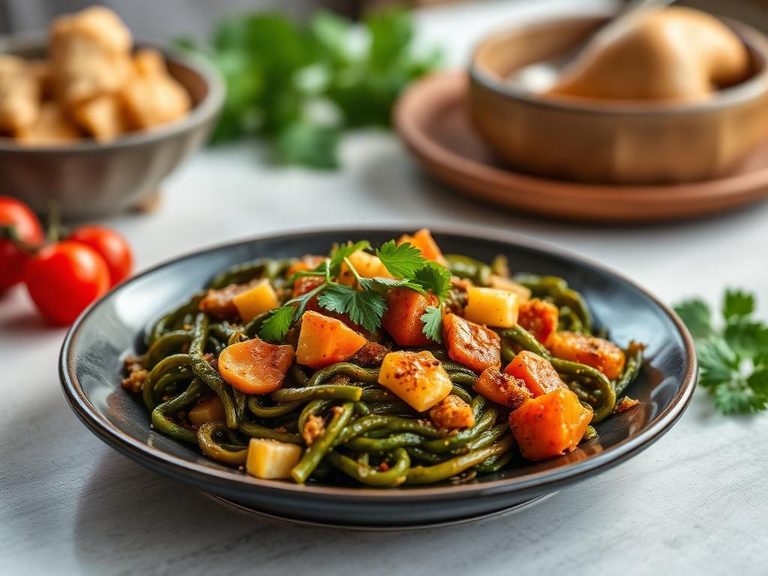
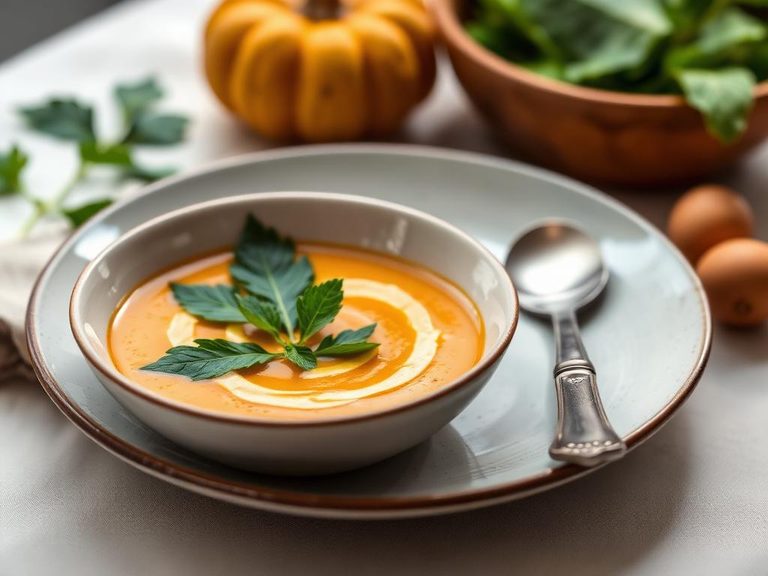
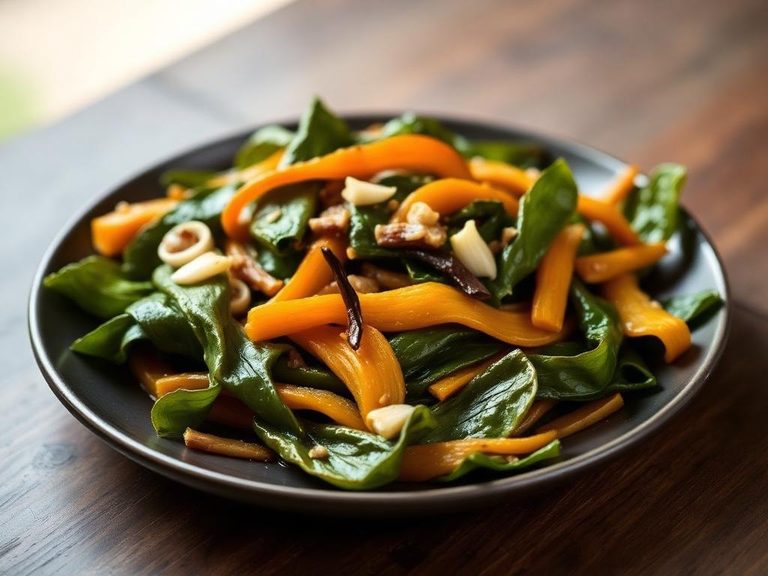
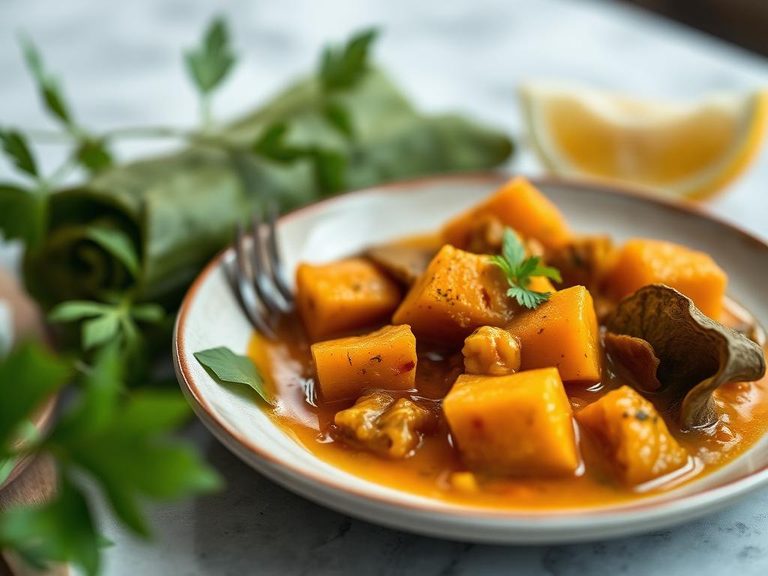
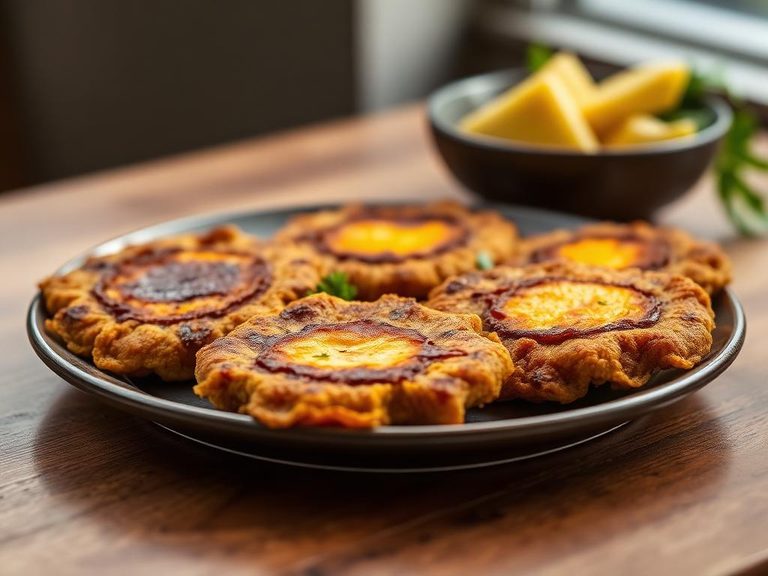
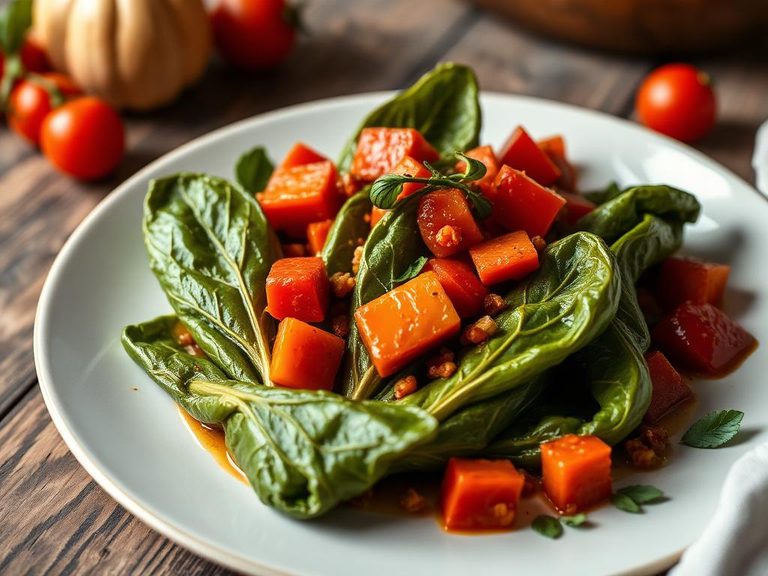
🌍 Where it's eaten
💡 Did you know?
In many cultures, the tender growing tips and tendrils of the pumpkin vine are considered the most prized and flavorful parts to cook, even more so than the mature leaves.
Full nutrition (USDA data · scales with serving)
| Water | 92.5 g |
| Energy | 21.0 kcal |
| Energy | 88.0 kj |
| Protein | 2.7 g |
| Total lipid (fat) | 0.22 g |
| Ash | 1.2 g |
| Carbohydrate, by difference | 3.4 g |
| Fiber, total dietary | 2.7 g |
| Total Sugars | 0.69 g |
| Calcium, Ca | 43.0 mg |
| Iron, Fe | 3.2 mg |
| Magnesium, Mg | 38.0 mg |
| Phosphorus, P | 79.0 mg |
| Potassium, K | 438 mg |
| Sodium, Na | 8.0 mg |
| Zinc, Zn | 0.20 mg |
| Copper, Cu | 0.13 mg |
| Manganese, Mn | 0.35 mg |
| Selenium, Se | 0.90 ug |
| Vitamin C, total ascorbic acid | 1.0 mg |
| Thiamin | 0.07 mg |
| Riboflavin | 0.14 mg |
| Niacin | 0.85 mg |
| Pantothenic acid | 0.04 mg |
| Vitamin B-6 | 0.20 mg |
| Folate, total | 25.0 ug |
| Folic acid | 0.00 ug |
| Folate, food | 25.0 ug |
| Folate, DFE | 25.0 ug |
| Choline, total | 21.0 mg |
| Vitamin B-12 | 0.00 ug |
| Vitamin B-12, added | 0.00 ug |
| Vitamin A, RAE | 80.0 ug |
| Retinol | 0.00 ug |
| Carotene, beta | 960 ug |
| Carotene, alpha | 0.00 ug |
| Cryptoxanthin, beta | 0.00 ug |
| Vitamin A, IU | 1600 iu |
| Lycopene | 0.00 ug |
| Lutein + zeaxanthin | 1747 ug |
| Vitamin E (alpha-tocopherol) | 0.96 mg |
| Vitamin E, added | 0.00 mg |
| Vitamin D (D2 + D3), International Units | 0.00 iu |
| Vitamin D (D2 + D3) | 0.00 ug |
| Vitamin K (phylloquinone) | 108 ug |
| Alcohol, ethyl | 0.00 g |
| Caffeine | 0.00 mg |
| Theobromine | 0.00 mg |
Fat & fatty acid profile (per 100g)
| Fatty acids, total saturated | 0.11 g |
| SFA 4:0 | 0.00 g |
| SFA 6:0 | 0.00 g |
| SFA 8:0 | 0.00 g |
| SFA 10:0 | 0.00 g |
| SFA 12:0 | 0.00 g |
| SFA 14:0 | 0.01 g |
| SFA 16:0 | 0.08 g |
| SFA 18:0 | 0.01 g |
| Fatty acids, total monounsaturated | 0.03 g |
| MUFA 16:1 | 0.01 g |
| MUFA 18:1 | 0.01 g |
| MUFA 20:1 | 0.00 g |
| MUFA 22:1 | 0.00 g |
| Fatty acids, total polyunsaturated | 0.01 g |
| PUFA 18:2 | 0.01 g |
| PUFA 18:3 | 0.01 g |
| PUFA 18:4 | 0.00 g |
| PUFA 20:4 | 0.00 g |
| PUFA 20:5 n-3 (EPA) | 0.00 g |
| PUFA 22:5 n-3 (DPA) | 0.00 g |
| PUFA 22:6 n-3 (DHA) | 0.00 g |
| Fatty acids, total trans | 0.00 g |
| Cholesterol | 0.00 mg |
Amino acid profile (per 100g)
| Tryptophan | 0.04 g |
| Threonine | 0.14 g |
| Isoleucine | 0.14 g |
| Leucine | 0.27 g |
| Lysine | 0.17 g |
| Methionine | 0.05 g |
| Cystine | 0.03 g |
| Phenylalanine | 0.15 g |
| Tyrosine | 0.14 g |
| Valine | 0.16 g |
| Arginine | 0.19 g |
| Histidine | 0.04 g |
FAQ
How do I prepare pumpkin leaves before cooking?
Remove the tough central stem and any prickly fibers from the back of the leaves. Wash them thoroughly. For best results, blanch them in boiling water for 1-2 minutes, then shock in ice water, which helps remove bitterness and sets their bright green color.
What do pumpkin leaves taste like?
They have a mild, earthy flavor similar to spinach or collard greens, with a subtle, sweet note. The texture is tender when cooked, with a slight chewiness.
Are pumpkin leaves edible raw?
While technically edible, they are almost always cooked. Their fibrous texture and potential bitterness make them much more palatable and digestible after boiling, steaming, or sautéing.
Nutrient density (calculated · NRF9.3)
Nutrient Rich Foods index: beneficial nutrients (protein, fiber, vitamins, minerals) minus saturated fat, added sugar & sodium, per 100 kcal.
NRF9.3 index — Fulgoni, Keast & Drewnowski, 2009. Computed from USDA nutrients.
Weight-loss friendliness (composite index)
Energy density 0.21 kcal/g · 52% calories from protein · 2.7 g fiber · 0.7 g sugar per 100 g.
Composite of energy density (Rolls et al., 1999), protein & fiber satiety, minus sugar. A calculated heuristic — ranks satiety-per-calorie, not a clinical measure.
Dietary load (calculated from USDA values)
Potential renal acid load. Positive = acid-forming, negative = alkaline-forming.
Sodium-to-potassium ratio: 0.02 (lower is better — aim for ≤ 1)
Sodium:potassium per WHO potassium guidance. Computed from USDA nutrients.