

Pizza, cheese, from restaurant or fast food, NS as to type of crust
Common food
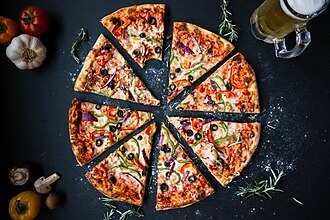
Photo: Wikipedia
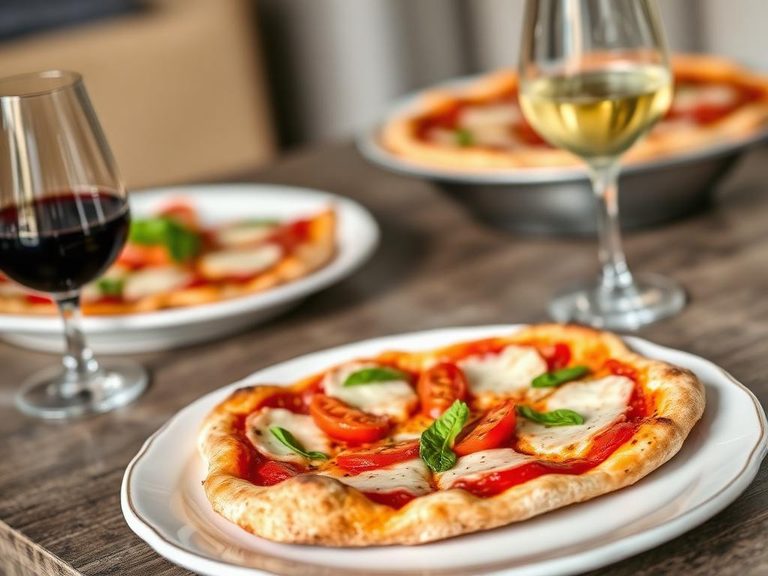
A classic slice of cheese pizza from a restaurant or fast-food chain, featuring a chewy, golden crust topped with a tangy tomato sauce and a generous layer of melted, slightly browned mozzarella. Its flavor profile is a savory balance of salty cheese, sweet-savory sauce, and bready dough, with a satisfying pull from the cheese. Nutritionally, it provides a solid dose of protein and carbohydrates, making it a quick, energy-dense meal.
Calorie split: 17% protein · 50% carbs · 33% fat
↓ Full nutrition💚 Why it's loved
People love it for the universally appealing combination of melted cheese, savory sauce, and a crispy-yet-chewy base, making it a go-to comfort food. Its versatility allows for endless customization, and it's deeply embedded in social culture as a food for sharing at parties, family nights, and casual gatherings.
⚠️ Watch-outs & how to enjoy it better
It can be high in sodium and saturated fat, and the refined carbohydrate crust may cause blood-sugar spikes for some. To mitigate this, pair a slice with a side salad or vegetables to add fiber and slow digestion, practice portion control, and opt for thin-crust versions when available to reduce the overall carb load.
Key benefits
- Provides a good source of protein for muscle maintenance.
- Offers a quick source of energy from carbohydrates.
- Contains calcium from the cheese for bone health.
- The tomato sauce is a source of the antioxidant lycopene.
🍽️ Popular dishes
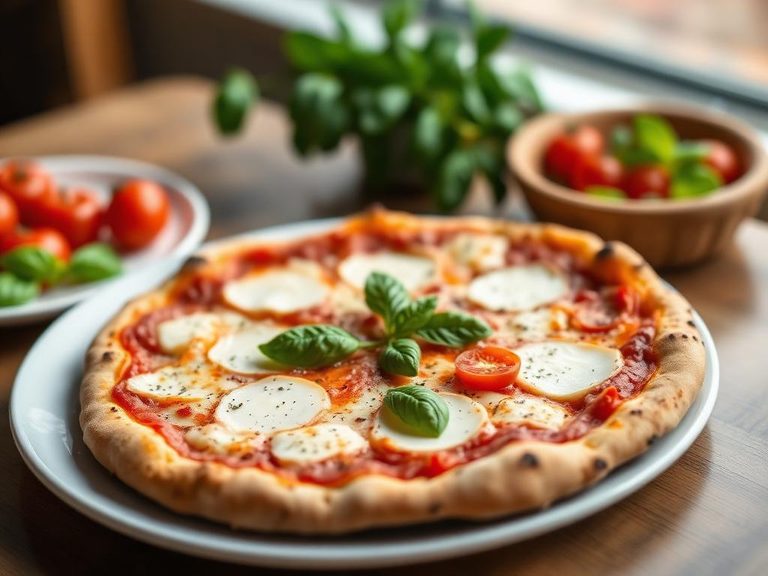
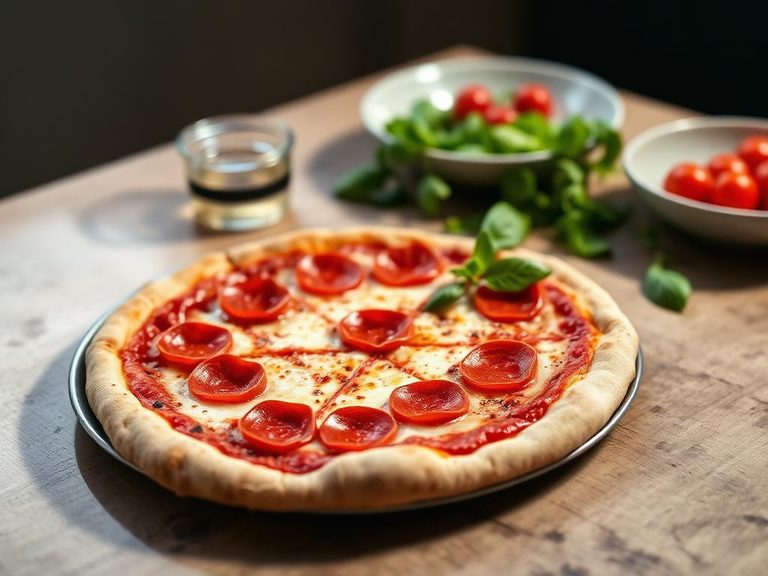

🌍 Where it's eaten
💡 Did you know?
The world's largest pizza ever made was created in Rome in 2012, measuring over 13,000 square feet and using nearly 2 tons of mozzarella cheese.
Full nutrition (USDA data · scales with serving)
| Water | 43.2 g |
| Energy | 266 kcal |
| Protein | 11.4 g |
| Total lipid (fat) | 9.7 g |
| Carbohydrate, by difference | 33.3 g |
| Fiber, total dietary | 2.3 g |
| Total Sugars | 3.6 g |
| Calcium, Ca | 188 mg |
| Iron, Fe | 2.5 mg |
| Magnesium, Mg | 24.0 mg |
| Phosphorus, P | 216 mg |
| Potassium, K | 172 mg |
| Sodium, Na | 540 mg |
| Zinc, Zn | 1.3 mg |
| Copper, Cu | 0.10 mg |
| Selenium, Se | 19.9 ug |
| Vitamin C, total ascorbic acid | 1.4 mg |
| Thiamin | 0.39 mg |
| Riboflavin | 0.20 mg |
| Niacin | 3.8 mg |
| Vitamin B-6 | 0.08 mg |
| Folate, total | 93.0 ug |
| Folic acid | 52.0 ug |
| Folate, food | 40.0 ug |
| Folate, DFE | 129 ug |
| Choline, total | 16.4 mg |
| Vitamin B-12 | 0.42 ug |
| Vitamin B-12, added | 0.00 ug |
| Vitamin A, RAE | 69.0 ug |
| Retinol | 61.0 ug |
| Carotene, beta | 92.0 ug |
| Carotene, alpha | 0.00 ug |
| Cryptoxanthin, beta | 0.00 ug |
| Lycopene | 1915 ug |
| Lutein + zeaxanthin | 58.0 ug |
| Vitamin E (alpha-tocopherol) | 0.83 mg |
| Vitamin E, added | 0.00 mg |
| Vitamin D (D2 + D3) | 0.00 ug |
| Vitamin K (phylloquinone) | 6.7 ug |
| Alcohol, ethyl | 0.00 g |
| Caffeine | 0.00 mg |
| Theobromine | 0.00 mg |
Fat & fatty acid profile (per 100g)
| Fatty acids, total saturated | 4.5 g |
| SFA 4:0 | 0.10 g |
| SFA 6:0 | 0.08 g |
| SFA 8:0 | 0.06 g |
| SFA 10:0 | 0.14 g |
| SFA 12:0 | 0.17 g |
| SFA 14:0 | 0.60 g |
| SFA 16:0 | 2.3 g |
| SFA 18:0 | 0.86 g |
| Fatty acids, total monounsaturated | 2.6 g |
| MUFA 16:1 | 0.12 g |
| MUFA 18:1 | 2.4 g |
| MUFA 20:1 | 0.04 g |
| MUFA 22:1 | 0.00 g |
| Fatty acids, total polyunsaturated | 1.7 g |
| PUFA 18:2 | 1.5 g |
| PUFA 18:3 | 0.18 g |
| PUFA 18:4 | 0.00 g |
| PUFA 20:4 | 0.01 g |
| PUFA 20:5 n-3 (EPA) | 0.00 g |
| PUFA 22:5 n-3 (DPA) | 0.00 g |
| PUFA 22:6 n-3 (DHA) | 0.00 g |
| Cholesterol | 17.0 mg |
Amino acid profile (per 100g)
Estimated from Fast Food, Pizza Chain, 14" pizza, cheese topping, stuffed crust — USDA does not publish this profile for Pizza.
| Tryptophan | 0.12 g |
| Threonine | 0.39 g |
| Isoleucine | 0.57 g |
| Leucine | 1.1 g |
| Lysine | 0.59 g |
| Methionine | 0.27 g |
| Phenylalanine | 0.64 g |
| Tyrosine | 0.40 g |
| Valine | 0.71 g |
| Arginine | 0.44 g |
| Histidine | 0.32 g |
| Alanine | 0.38 g |
| Aspartic acid | 0.81 g |
| Glutamic acid | 3.4 g |
| Glycine | 0.31 g |
| Proline | 1.7 g |
| Serine | 0.58 g |
| Hydroxyproline | 0.00 g |
FAQ
Is cheese pizza a good source of protein?
Yes, a 100g serving provides about 11.4g of protein, primarily from the cheese and dough, which can contribute meaningfully to daily protein needs.
How does the nutrition vary by crust type?
While this data is for an unspecified crust, a thin crust will generally have fewer carbs and calories per slice compared to a thick, deep-dish, or stuffed crust, which adds more dough and fat.
Can I make a healthier version at home?
Absolutely. Use whole-wheat or cauliflower crust, low-sodium sauce, part-skim mozzarella, and load it with vegetables to boost fiber, vitamins, and reduce calories and sodium.
Nutrient density (calculated · NRF9.3)
Nutrient Rich Foods index: beneficial nutrients (protein, fiber, vitamins, minerals) minus saturated fat, added sugar & sodium, per 100 kcal.
NRF9.3 index — Fulgoni, Keast & Drewnowski, 2009. Computed from USDA nutrients.
Weight-loss friendliness (composite index)
Energy density 2.66 kcal/g · 17% calories from protein · 2.3 g fiber · 3.6 g sugar per 100 g.
Composite of energy density (Rolls et al., 1999), protein & fiber satiety, minus sugar. A calculated heuristic — ranks satiety-per-calorie, not a clinical measure.
Dietary load (calculated from USDA values)
Potential renal acid load. Positive = acid-forming, negative = alkaline-forming.
Sodium-to-potassium ratio: 3.14 (lower is better — aim for ≤ 1)
Sodium:potassium per WHO potassium guidance. Computed from USDA nutrients.