

Pinto beans, from fast food / restaurant
Common food

Photo: Wikipedia
Fast-food pinto beans are typically slow-cooked until creamy and tender, often seasoned with lard, salt, and sometimes bacon or spices for a savory, earthy flavor. They offer a solid source of plant-based protein and fiber, making them a filling, nutrient-dense side dish. Their smooth, slightly starchy texture pairs well with bold flavors like salsa, cheese, or chili.
Calorie split: 15% protein · 44% carbs · 40% fat
↓ Full nutrition💚 Why it's loved
People love pinto beans for their comforting, hearty flavor and versatility—they absorb seasonings beautifully and pair well with rice, tacos, or cornbread. They're a staple in many cultures, evoking home-cooked meals and communal dining.
⚠️ Watch-outs & how to enjoy it better
Some may find them heavy or gas-inducing due to high fiber, and fast-food versions can be high in sodium. To counteract, soak and cook beans thoroughly to reduce gas, and pair with a low-sodium side or drink water to manage salt intake.
Key benefits
- High in fiber (8.1g per 100g) for digestive health and satiety
- Good source of plant-based protein (8.12g per 100g)
- Rich in complex carbohydrates for sustained energy
- Low in sugar (0.31g per 100g), making them a low-glycemic option
- Contains essential minerals like iron, magnesium, and potassium
🍽️ Popular dishes
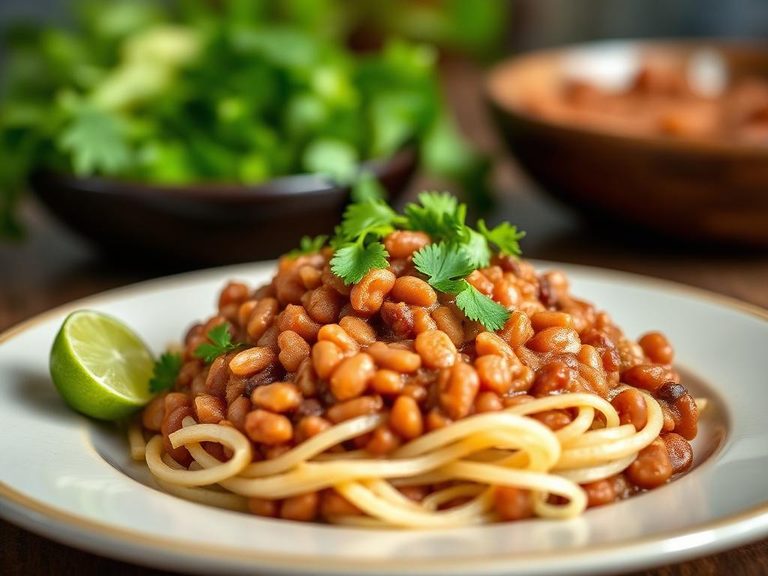

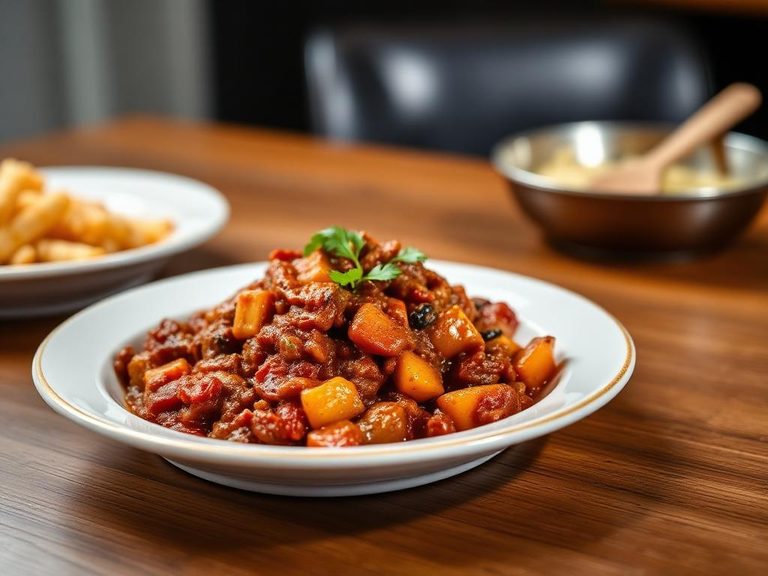
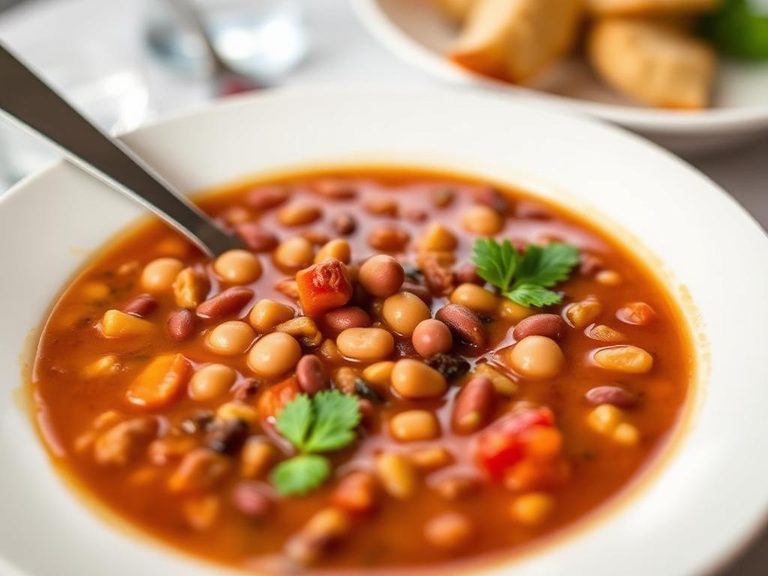
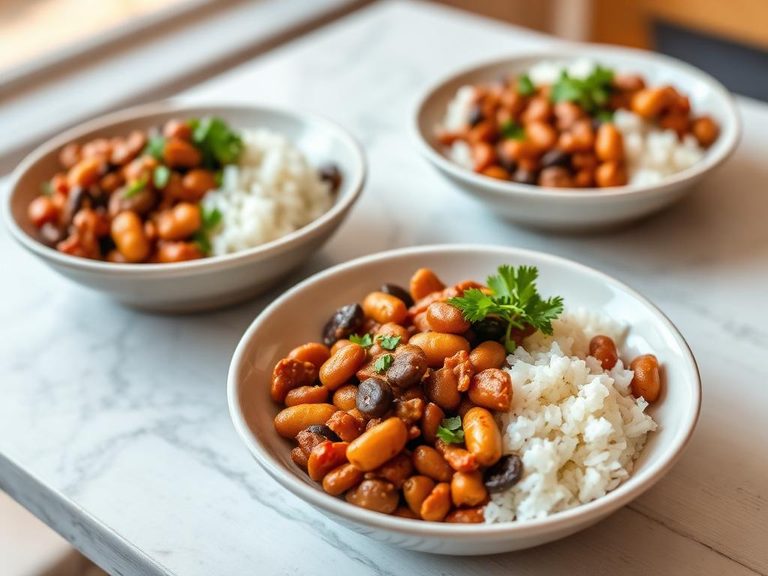
🌍 Where it's eaten
💡 Did you know?
Pinto beans are named for their speckled appearance when raw, resembling a painted ('pinto') pattern, but they turn a uniform brownish-pink when cooked.
Full nutrition (USDA data · scales with serving)
| Water | 56.7 g |
| Energy | 210 kcal |
| Protein | 8.1 g |
| Total lipid (fat) | 9.6 g |
| Carbohydrate, by difference | 23.6 g |
| Fiber, total dietary | 8.1 g |
| Total Sugars | 0.31 g |
| Calcium, Ca | 42.0 mg |
| Iron, Fe | 1.9 mg |
| Magnesium, Mg | 45.0 mg |
| Phosphorus, P | 132 mg |
| Potassium, K | 393 mg |
| Sodium, Na | 350 mg |
| Zinc, Zn | 0.88 mg |
| Copper, Cu | 0.20 mg |
| Selenium, Se | 5.6 ug |
| Vitamin C, total ascorbic acid | 0.70 mg |
| Thiamin | 0.17 mg |
| Riboflavin | 0.05 mg |
| Niacin | 0.27 mg |
| Vitamin B-6 | 0.20 mg |
| Folate, total | 147 ug |
| Folic acid | 0.00 ug |
| Folate, food | 147 ug |
| Folate, DFE | 147 ug |
| Choline, total | 31.8 mg |
| Vitamin B-12 | 0.00 ug |
| Vitamin B-12, added | 0.00 ug |
| Vitamin A, RAE | 0.00 ug |
| Retinol | 0.00 ug |
| Carotene, beta | 0.00 ug |
| Carotene, alpha | 0.00 ug |
| Cryptoxanthin, beta | 0.00 ug |
| Lycopene | 0.00 ug |
| Lutein + zeaxanthin | 0.00 ug |
| Vitamin E (alpha-tocopherol) | 2.6 mg |
| Vitamin E, added | 0.00 mg |
| Vitamin D (D2 + D3) | 0.00 ug |
| Vitamin K (phylloquinone) | 12.2 ug |
| Alcohol, ethyl | 0.00 g |
| Caffeine | 0.00 mg |
| Theobromine | 0.00 mg |
Fat & fatty acid profile (per 100g)
| Fatty acids, total saturated | 1.3 g |
| SFA 4:0 | 0.00 g |
| SFA 6:0 | 0.00 g |
| SFA 8:0 | 0.00 g |
| SFA 10:0 | 0.00 g |
| SFA 12:0 | 0.00 g |
| SFA 14:0 | 0.01 g |
| SFA 16:0 | 0.98 g |
| SFA 18:0 | 0.26 g |
| Fatty acids, total monounsaturated | 3.9 g |
| MUFA 16:1 | 0.03 g |
| MUFA 18:1 | 3.8 g |
| MUFA 20:1 | 0.06 g |
| MUFA 22:1 | 0.00 g |
| Fatty acids, total polyunsaturated | 3.7 g |
| PUFA 18:2 | 3.2 g |
| PUFA 18:3 | 0.52 g |
| PUFA 18:4 | 0.00 g |
| PUFA 20:4 | 0.00 g |
| PUFA 20:5 n-3 (EPA) | 0.00 g |
| PUFA 22:5 n-3 (DPA) | 0.00 g |
| PUFA 22:6 n-3 (DHA) | 0.00 g |
| Cholesterol | 0.00 mg |
Amino acid profile (per 100g)
Estimated from Beans, pinto, mature seeds, sprouted, cooked, boiled, drained, with salt — USDA does not publish this profile for Pinto beans.
| Tryptophan | 0.02 g |
| Threonine | 0.08 g |
| Isoleucine | 0.08 g |
| Leucine | 0.13 g |
| Lysine | 0.11 g |
| Methionine | 0.02 g |
| Cystine | 0.02 g |
| Phenylalanine | 0.09 g |
| Tyrosine | 0.06 g |
| Valine | 0.10 g |
| Arginine | 0.10 g |
| Histidine | 0.05 g |
| Alanine | 0.08 g |
| Aspartic acid | 0.24 g |
| Glutamic acid | 0.23 g |
| Glycine | 0.06 g |
| Proline | 0.07 g |
| Serine | 0.10 g |
FAQ
Are pinto beans a good source of protein?
Yes, pinto beans provide about 8.12g of protein per 100g, making them a valuable plant-based protein source, especially when paired with grains like rice.
Do fast-food pinto beans contain added fat?
Often yes, as they may be cooked with lard or oil for flavor and texture, contributing to the 9.6g fat per 100g in this preparation.
How can I reduce the sodium in fast-food pinto beans?
Rinse canned beans thoroughly if possible, or choose lower-sodium options. Pairing with fresh vegetables or unsalted sides can also help balance sodium intake.
Nutrient density (calculated · NRF9.3)
Nutrient Rich Foods index: beneficial nutrients (protein, fiber, vitamins, minerals) minus saturated fat, added sugar & sodium, per 100 kcal.
NRF9.3 index — Fulgoni, Keast & Drewnowski, 2009. Computed from USDA nutrients.
Weight-loss friendliness (composite index)
Energy density 2.10 kcal/g · 15% calories from protein · 8.1 g fiber · 0.3 g sugar per 100 g.
Composite of energy density (Rolls et al., 1999), protein & fiber satiety, minus sugar. A calculated heuristic — ranks satiety-per-calorie, not a clinical measure.
Dietary load (calculated from USDA values)
Potential renal acid load. Positive = acid-forming, negative = alkaline-forming.
Sodium-to-potassium ratio: 0.89 (lower is better — aim for ≤ 1)
Sodium:potassium per WHO potassium guidance. Computed from USDA nutrients.