

Beans and rice, from fast food / restaurant
Common food
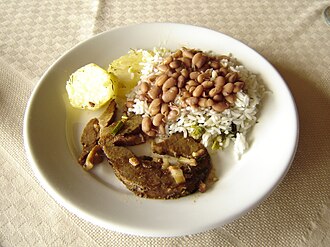
Photo: Wikipedia
A staple side dish of tender, slow-cooked beans (often pinto or black beans) served alongside fluffy white rice, creating a hearty, comforting base. The beans offer a creamy, earthy texture with savory, often smoky or cumin-spiced flavors, while the rice provides a mild, starchy contrast. Nutritionally, it's a solid source of plant-based protein and fiber, with a moderate calorie count that makes it a filling, energy-dense meal component.
Calorie split: 14% protein · 53% carbs · 34% fat
↓ Full nutrition💚 Why it's loved
People love it for its deeply comforting, savory flavor profile and satisfying texture, making it a reliable and filling staple. Its incredible versatility allows it to be a simple side or the foundation for countless dishes across global cuisines.
⚠️ Watch-outs & how to enjoy it better
The high carbohydrate content can cause blood sugar spikes, especially when made with refined white rice. The beans can also contain compounds like phytic acid and lectins, which may affect mineral absorption and digestion for some. Counteract this by pairing with a source of protein (like chicken or cheese) and healthy fat (like avocado or olive oil), and consider using brown rice for a lower glycemic impact.
Key benefits
- Excellent source of plant-based protein and dietary fiber.
- Provides sustained energy from complex carbohydrates.
- Naturally low in sugar and a good source of iron and folate.
- A cost-effective and versatile base for many meals.
🍽️ Popular dishes
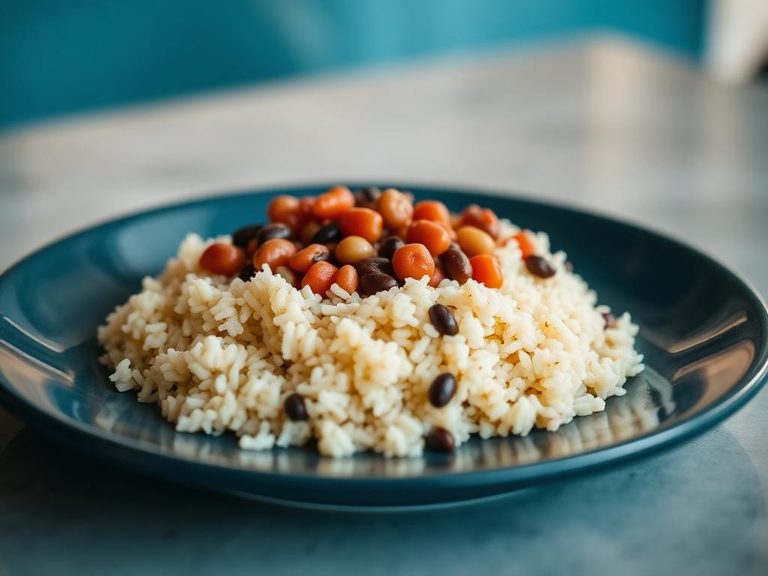

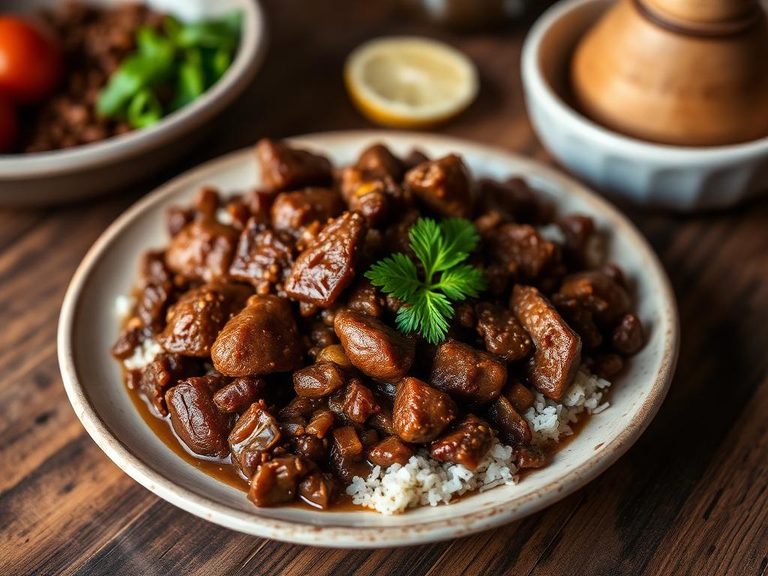

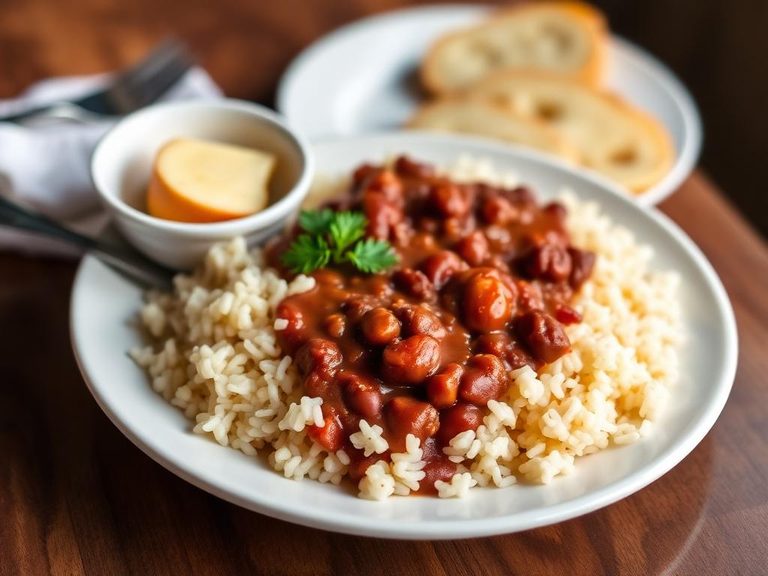
🌍 Where it's eaten
💡 Did you know?
The phrase 'beans and rice' is so fundamental to the concept of a basic, complete meal that it's used as a metaphor for a simple, no-frills existence in several cultures.
Full nutrition (USDA data · scales with serving)
| Water | 60.5 g |
| Energy | 185 kcal |
| Protein | 6.3 g |
| Total lipid (fat) | 7.0 g |
| Carbohydrate, by difference | 24.4 g |
| Fiber, total dietary | 3.6 g |
| Total Sugars | 0.20 g |
| Calcium, Ca | 53.0 mg |
| Iron, Fe | 2.5 mg |
| Magnesium, Mg | 39.0 mg |
| Phosphorus, P | 78.0 mg |
| Potassium, K | 317 mg |
| Sodium, Na | 299 mg |
| Zinc, Zn | 0.94 mg |
| Copper, Cu | 0.18 mg |
| Selenium, Se | 3.6 ug |
| Vitamin C, total ascorbic acid | 0.00 mg |
| Thiamin | 0.12 mg |
| Riboflavin | 0.03 mg |
| Niacin | 0.64 mg |
| Vitamin B-6 | 0.08 mg |
| Folate, total | 64.0 ug |
| Folic acid | 21.0 ug |
| Folate, food | 43.0 ug |
| Folate, DFE | 79.0 ug |
| Choline, total | 19.8 mg |
| Vitamin B-12 | 0.00 ug |
| Vitamin B-12, added | 0.00 ug |
| Vitamin A, RAE | 0.00 ug |
| Retinol | 0.00 ug |
| Carotene, beta | 0.00 ug |
| Carotene, alpha | 0.00 ug |
| Cryptoxanthin, beta | 0.00 ug |
| Lycopene | 0.00 ug |
| Lutein + zeaxanthin | 0.00 ug |
| Vitamin E (alpha-tocopherol) | 1.8 mg |
| Vitamin E, added | 0.00 mg |
| Vitamin D (D2 + D3) | 0.00 ug |
| Vitamin K (phylloquinone) | 8.6 ug |
| Alcohol, ethyl | 0.00 g |
| Caffeine | 0.00 mg |
| Theobromine | 0.00 mg |
Fat & fatty acid profile (per 100g)
| Fatty acids, total saturated | 0.97 g |
| SFA 4:0 | 0.00 g |
| SFA 6:0 | 0.00 g |
| SFA 8:0 | 0.00 g |
| SFA 10:0 | 0.00 g |
| SFA 12:0 | 0.00 g |
| SFA 14:0 | 0.00 g |
| SFA 16:0 | 0.71 g |
| SFA 18:0 | 0.20 g |
| Fatty acids, total monounsaturated | 2.9 g |
| MUFA 16:1 | 0.02 g |
| MUFA 18:1 | 2.8 g |
| MUFA 20:1 | 0.04 g |
| MUFA 22:1 | 0.00 g |
| Fatty acids, total polyunsaturated | 2.7 g |
| PUFA 18:2 | 2.3 g |
| PUFA 18:3 | 0.33 g |
| PUFA 18:4 | 0.00 g |
| PUFA 20:4 | 0.00 g |
| PUFA 20:5 n-3 (EPA) | 0.00 g |
| PUFA 22:5 n-3 (DPA) | 0.00 g |
| PUFA 22:6 n-3 (DHA) | 0.00 g |
| Cholesterol | 0.00 mg |
Amino acid profile (per 100g)
Estimated from Restaurant, Latino, Arroz con habichuelas colorados (Rice And Red Beans) — USDA does not publish this profile for Beans and rice.
| Tryptophan | 0.05 g |
| Threonine | 0.15 g |
| Isoleucine | 0.16 g |
| Leucine | 0.30 g |
| Lysine | 0.21 g |
| Methionine | 0.07 g |
| Cystine | 0.05 g |
| Phenylalanine | 0.20 g |
| Tyrosine | 0.10 g |
| Valine | 0.21 g |
| Arginine | 0.24 g |
| Histidine | 0.11 g |
| Alanine | 0.18 g |
| Aspartic acid | 0.43 g |
| Glutamic acid | 0.63 g |
| Glycine | 0.16 g |
| Proline | 0.18 g |
| Serine | 0.21 g |
FAQ
Is beans and rice a complete protein?
Yes, when combined. Rice is low in the amino acid lysine, while beans are high in it. Together, they provide all nine essential amino acids, forming a complete protein source.
How can I reduce the gassiness from beans?
Soak dried beans for at least 4-8 hours, discard the soaking water, and cook them thoroughly. You can also add a piece of kombu seaweed or a bay leaf while cooking, and introduce beans into your diet gradually.
What's the best way to store leftover beans and rice?
Cool the dish quickly and store it in an airtight container in the refrigerator for up to 4 days. For longer storage, freeze in individual portions for up to 3 months. Reheat thoroughly until steaming hot.
Nutrient density (calculated · NRF9.3)
Nutrient Rich Foods index: beneficial nutrients (protein, fiber, vitamins, minerals) minus saturated fat, added sugar & sodium, per 100 kcal.
NRF9.3 index — Fulgoni, Keast & Drewnowski, 2009. Computed from USDA nutrients.
Weight-loss friendliness (composite index)
Energy density 1.85 kcal/g · 14% calories from protein · 3.6 g fiber · 0.2 g sugar per 100 g.
Composite of energy density (Rolls et al., 1999), protein & fiber satiety, minus sugar. A calculated heuristic — ranks satiety-per-calorie, not a clinical measure.
Dietary load (calculated from USDA values)
Potential renal acid load. Positive = acid-forming, negative = alkaline-forming.
Sodium-to-potassium ratio: 0.94 (lower is better — aim for ≤ 1)
Sodium:potassium per WHO potassium guidance. Computed from USDA nutrients.