

Pinto beans, from canned, reduced sodium
Common food

Photo: Wikipedia
These are creamy, earthy legumes with a soft, slightly mealy texture and a mild, nutty flavor, pre-cooked and preserved in a low-sodium brine. Packed with plant-based protein and fiber, they offer a substantial nutritional punch for a convenient pantry staple.
Calorie split: 15% protein · 51% carbs · 34% fat
↓ Full nutrition💚 Why it's loved
People adore their velvety texture that absorbs flavors beautifully, making them a versatile canvas for spices, herbs, and sauces. They are a beloved, affordable protein source in countless comfort foods and traditional dishes across cultures.
⚠️ Watch-outs & how to enjoy it better
The canned version, even reduced sodium, can still be higher in salt than dried beans, and their high fiber content may cause digestive discomfort in some. To counteract, rinse thoroughly under water to further reduce sodium, and introduce them gradually into your diet. Pairing with a source of vitamin C (like tomatoes or lime juice) can enhance iron absorption.
Key benefits
- Excellent source of plant-based protein (7.38g per 100g)
- High in dietary fiber (7.4g per 100g) for digestive health
- Provides complex carbohydrates for sustained energy
- Reduced sodium version supports heart-healthy choices
- Contains essential minerals like iron and magnesium
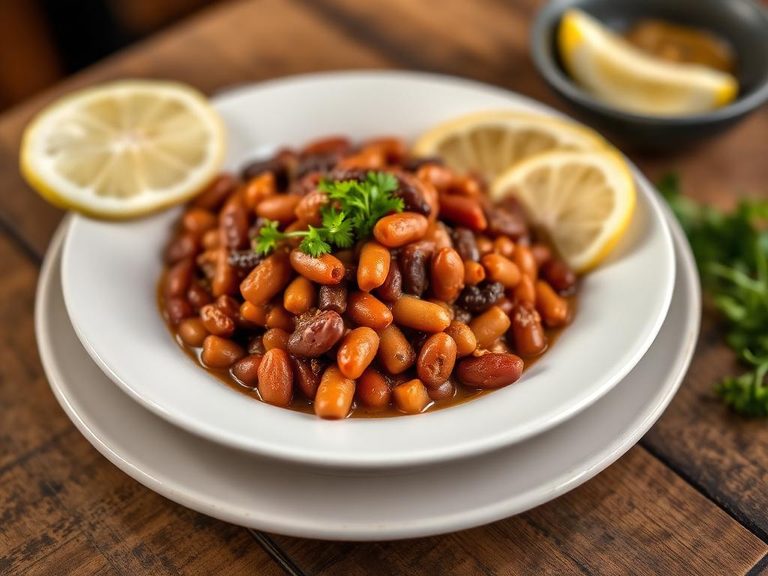
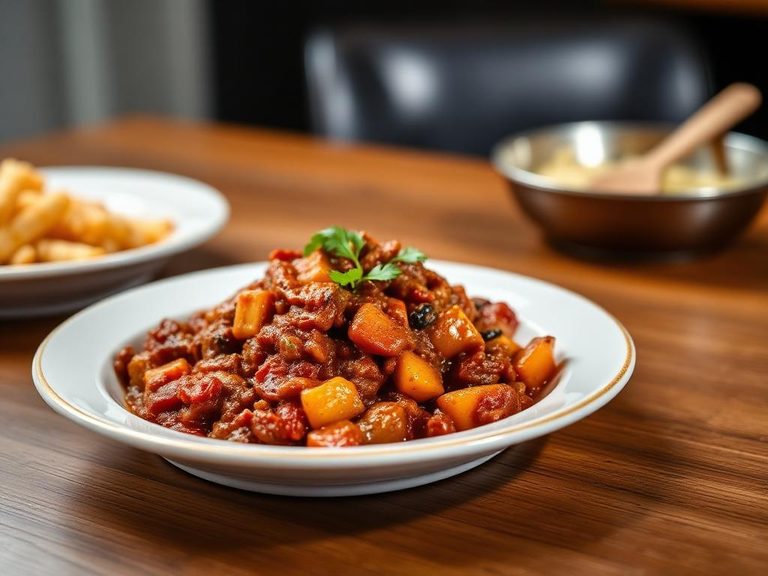
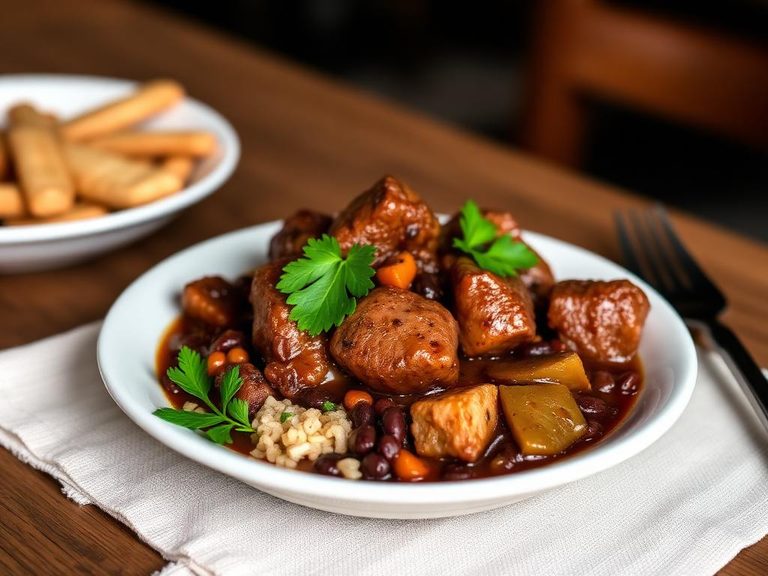
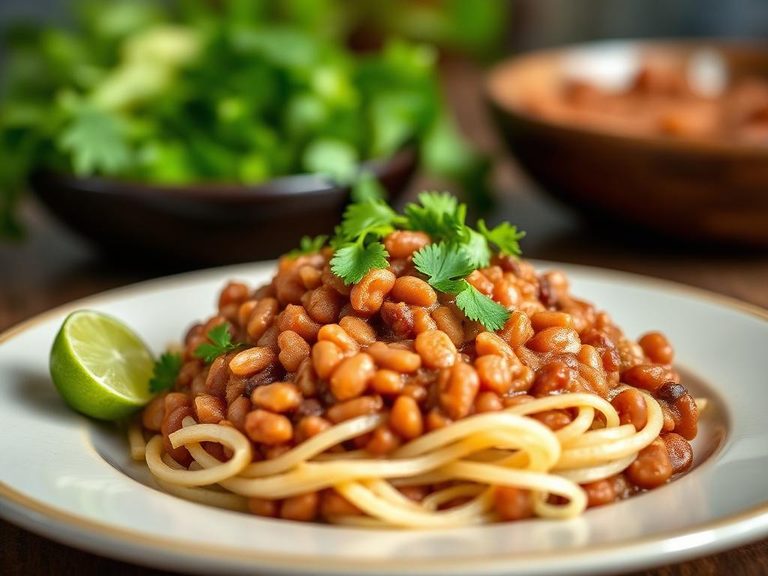
🍽️ Popular dishes
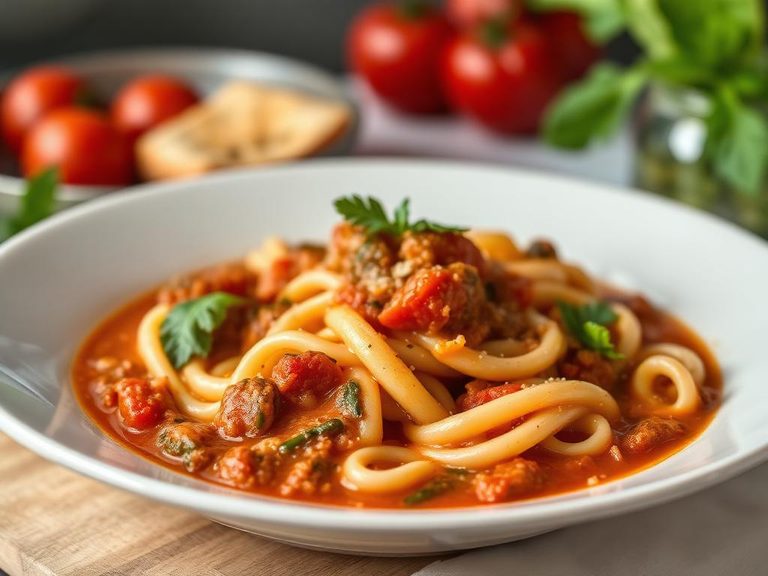
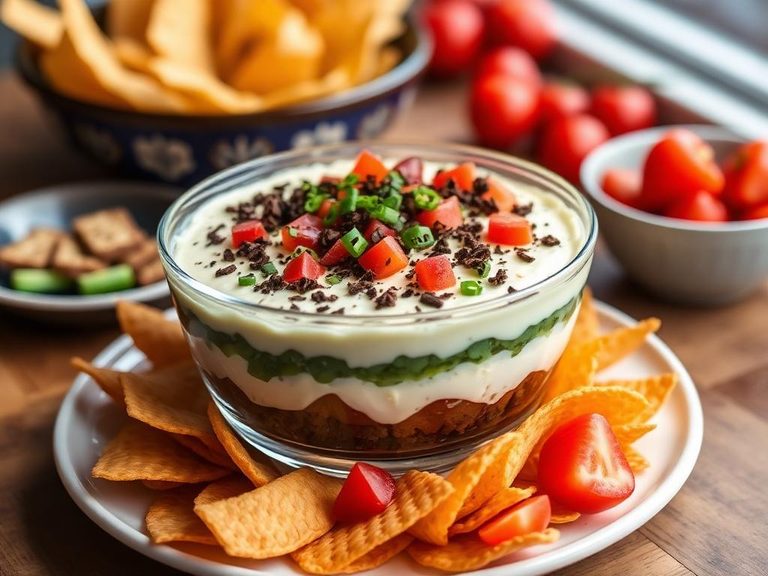
🌍 Where it's eaten
💡 Did you know?
Pinto beans get their name from their appearance; 'pinto' means 'painted' in Spanish, referring to their speckled, beige-and-pink skin that turns a uniform brownish-pink when cooked.
Full nutrition (USDA data · scales with serving)
| Water | 58.8 g |
| Energy | 188 kcal |
| Protein | 7.4 g |
| Total lipid (fat) | 7.1 g |
| Carbohydrate, by difference | 24.4 g |
| Fiber, total dietary | 7.4 g |
| Total Sugars | 1.6 g |
| Calcium, Ca | 75.0 mg |
| Iron, Fe | 2.4 mg |
| Magnesium, Mg | 53.0 mg |
| Phosphorus, P | 148 mg |
| Potassium, K | 443 mg |
| Sodium, Na | 234 mg |
| Zinc, Zn | 0.90 mg |
| Copper, Cu | 0.26 mg |
| Selenium, Se | 5.9 ug |
| Vitamin C, total ascorbic acid | 1.1 mg |
| Thiamin | 0.08 mg |
| Riboflavin | 0.02 mg |
| Niacin | 0.41 mg |
| Vitamin B-6 | 0.21 mg |
| Folate, total | 37.0 ug |
| Folic acid | 0.00 ug |
| Folate, food | 37.0 ug |
| Folate, DFE | 37.0 ug |
| Choline, total | 33.4 mg |
| Vitamin B-12 | 0.00 ug |
| Vitamin B-12, added | 0.00 ug |
| Vitamin A, RAE | 0.00 ug |
| Retinol | 0.00 ug |
| Carotene, beta | 0.00 ug |
| Carotene, alpha | 0.00 ug |
| Cryptoxanthin, beta | 0.00 ug |
| Lycopene | 0.00 ug |
| Lutein + zeaxanthin | 0.00 ug |
| Vitamin E (alpha-tocopherol) | 2.1 mg |
| Vitamin E, added | 0.00 mg |
| Vitamin D (D2 + D3) | 0.00 ug |
| Vitamin K (phylloquinone) | 9.6 ug |
| Alcohol, ethyl | 0.00 g |
| Caffeine | 0.00 mg |
| Theobromine | 0.00 mg |
Fat & fatty acid profile (per 100g)
| Fatty acids, total saturated | 1.0 g |
| SFA 4:0 | 0.00 g |
| SFA 6:0 | 0.00 g |
| SFA 8:0 | 0.00 g |
| SFA 10:0 | 0.00 g |
| SFA 12:0 | 0.00 g |
| SFA 14:0 | 0.00 g |
| SFA 16:0 | 0.78 g |
| SFA 18:0 | 0.18 g |
| Fatty acids, total monounsaturated | 2.8 g |
| MUFA 16:1 | 0.02 g |
| MUFA 18:1 | 2.8 g |
| MUFA 20:1 | 0.04 g |
| MUFA 22:1 | 0.00 g |
| Fatty acids, total polyunsaturated | 2.7 g |
| PUFA 18:2 | 2.3 g |
| PUFA 18:3 | 0.46 g |
| PUFA 18:4 | 0.00 g |
| PUFA 20:4 | 0.00 g |
| PUFA 20:5 n-3 (EPA) | 0.00 g |
| PUFA 22:5 n-3 (DPA) | 0.00 g |
| PUFA 22:6 n-3 (DHA) | 0.00 g |
| Cholesterol | 0.00 mg |
Amino acid profile (per 100g)
Estimated from Beans, pinto, mature seeds, sprouted, cooked, boiled, drained, with salt — USDA does not publish this profile for Pinto beans.
| Tryptophan | 0.02 g |
| Threonine | 0.08 g |
| Isoleucine | 0.08 g |
| Leucine | 0.13 g |
| Lysine | 0.11 g |
| Methionine | 0.02 g |
| Cystine | 0.02 g |
| Phenylalanine | 0.09 g |
| Tyrosine | 0.06 g |
| Valine | 0.10 g |
| Arginine | 0.10 g |
| Histidine | 0.05 g |
| Alanine | 0.08 g |
| Aspartic acid | 0.24 g |
| Glutamic acid | 0.23 g |
| Glycine | 0.06 g |
| Proline | 0.07 g |
| Serine | 0.10 g |
FAQ
Do I need to cook canned pinto beans?
No, they are fully cooked and ready to eat. You can use them directly from the can after rinsing. Heating them is optional but recommended for most recipes to meld flavors.
How do I reduce the sodium in canned pinto beans?
The most effective method is to rinse them thoroughly under cold running water in a colander for about a minute. This can reduce sodium content by up to 40%. Choosing the 'reduced sodium' or 'no salt added' versions is also key.
Can I substitute canned pinto beans for dried beans in recipes?
Yes, with adjustments. One 15-ounce can (about 1.5 cups drained) is roughly equivalent to 1 cup of cooked dried beans. Add canned beans later in the cooking process since they are already soft, and account for the extra liquid from the can if needed.
Nutrient density (calculated · NRF9.3)
Nutrient Rich Foods index: beneficial nutrients (protein, fiber, vitamins, minerals) minus saturated fat, added sugar & sodium, per 100 kcal.
NRF9.3 index — Fulgoni, Keast & Drewnowski, 2009. Computed from USDA nutrients.
Weight-loss friendliness (composite index)
Energy density 1.88 kcal/g · 16% calories from protein · 7.4 g fiber · 1.6 g sugar per 100 g.
Composite of energy density (Rolls et al., 1999), protein & fiber satiety, minus sugar. A calculated heuristic — ranks satiety-per-calorie, not a clinical measure.
Dietary load (calculated from USDA values)
Potential renal acid load. Positive = acid-forming, negative = alkaline-forming.
Sodium-to-potassium ratio: 0.53 (lower is better — aim for ≤ 1)
Sodium:potassium per WHO potassium guidance. Computed from USDA nutrients.