

Peanut butter
Common food
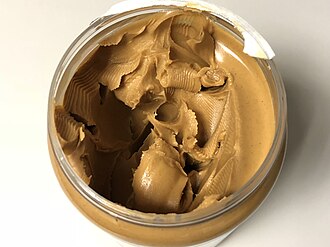
Photo: Wikipedia
Peanut butter is a thick, creamy paste made from dry-roasted ground peanuts, offering a rich, nutty flavor with a smooth or crunchy texture. It's a calorie-dense food, packing over 500 kcal per 100g, with a substantial 51g of healthy fats and a solid 22g of plant-based protein. Its natural sweetness comes from about 10g of sugar per 100g, complemented by 5g of fiber.
Calorie split: 14% protein · 14% carbs · 72% fat
↓ Full nutrition💚 Why it's loved
People adore peanut butter for its deeply satisfying, savory-sweet flavor and incredibly versatile nature, from spreading on toast to blending into sauces. It's a nostalgic comfort food in many cultures, especially in the United States, where it's a staple in pantries and lunchboxes.
⚠️ Watch-outs & how to enjoy it better
As a common and potent allergen, it must be strictly avoided by those with peanut allergies. Its high fat and calorie density can lead to overconsumption, and some commercial brands contain added sugars and sodium. To counteract this, practice portion control (1-2 tablespoons) and choose natural varieties with no added ingredients. Pairing it with fiber-rich foods like apple slices or celery can also help moderate blood sugar response.
Key benefits
- Excellent source of plant-based protein for muscle maintenance.
- Rich in heart-healthy monounsaturated fats.
- Provides dietary fiber for digestive health.
- Contains important vitamins like niacin (B3) and minerals like magnesium.
- Offers sustained energy due to its balanced macronutrient profile.
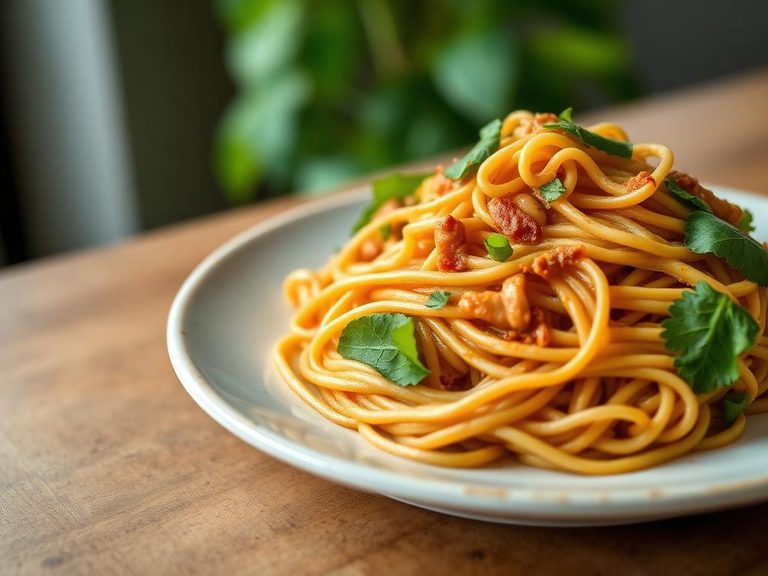
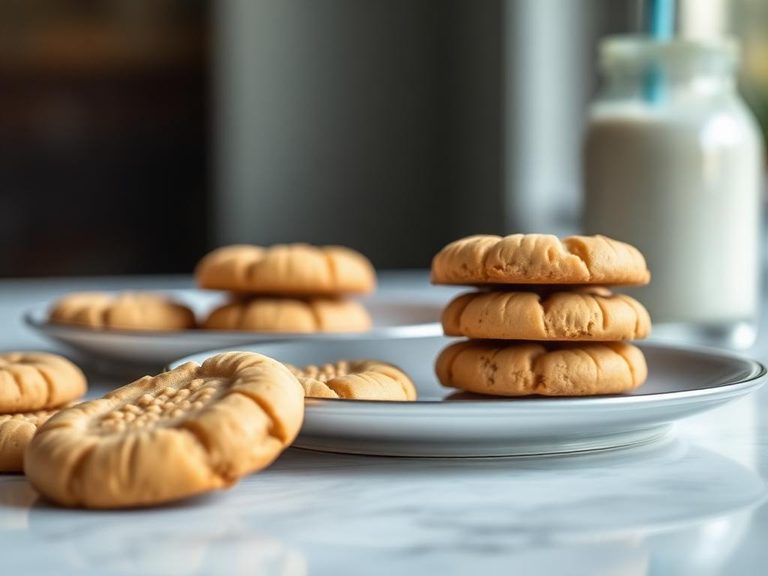
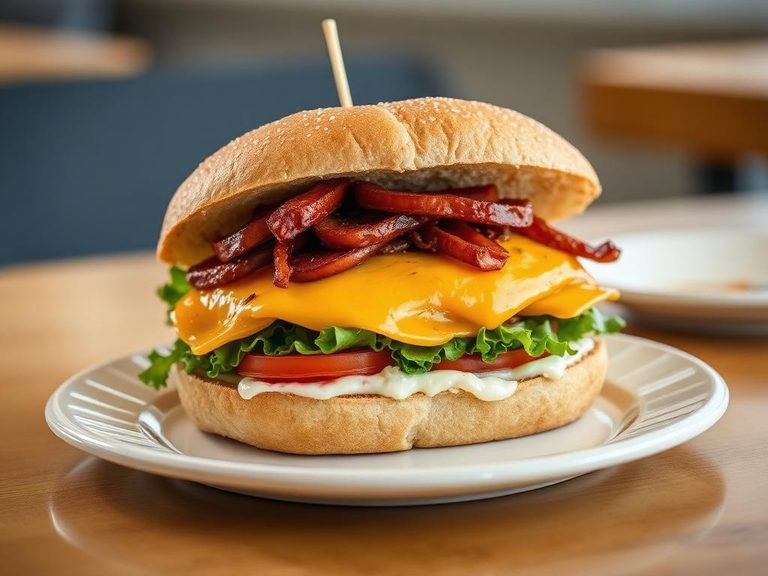
🍽️ Popular dishes
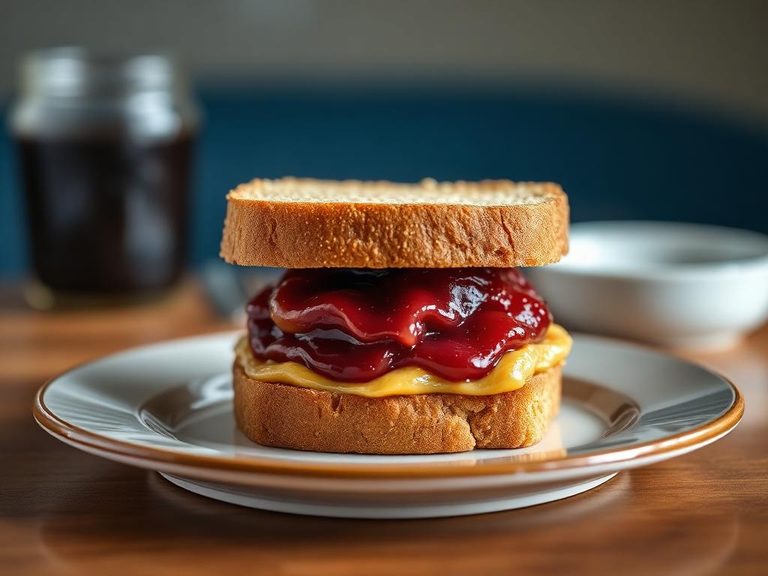
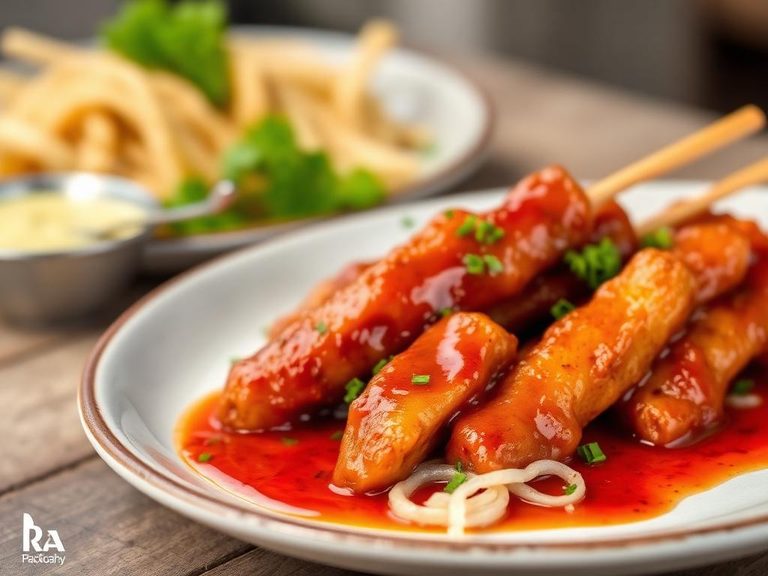
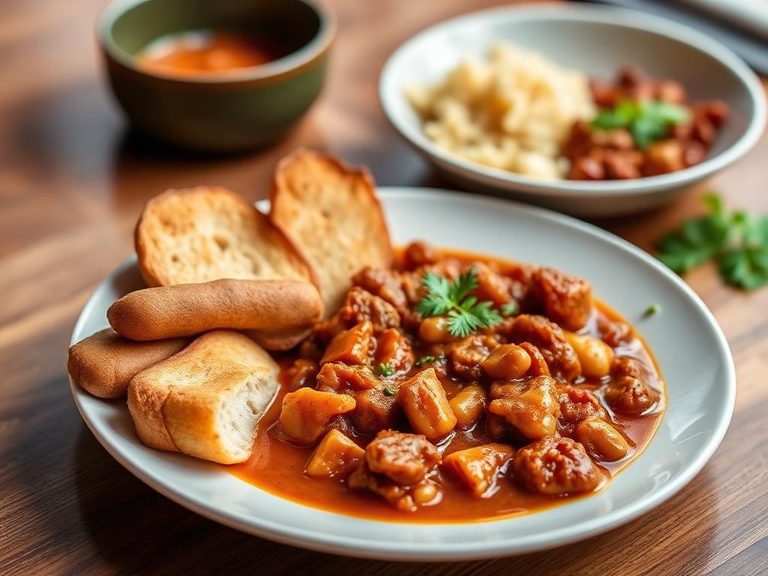
🌍 Where it's eaten
💡 Did you know?
It takes about 540 peanuts to make one standard 12-ounce jar of peanut butter.
Full nutrition (USDA data · scales with serving)
| Water | 1.2 g |
| Energy | 598 kcal |
| Protein | 22.2 g |
| Total lipid (fat) | 51.4 g |
| Carbohydrate, by difference | 22.3 g |
| Fiber, total dietary | 5.0 g |
| Total Sugars | 10.5 g |
| Calcium, Ca | 49.0 mg |
| Iron, Fe | 1.7 mg |
| Magnesium, Mg | 168 mg |
| Phosphorus, P | 335 mg |
| Potassium, K | 558 mg |
| Sodium, Na | 426 mg |
| Zinc, Zn | 2.5 mg |
| Copper, Cu | 0.42 mg |
| Selenium, Se | 4.1 ug |
| Vitamin C, total ascorbic acid | 0.00 mg |
| Thiamin | 0.15 mg |
| Riboflavin | 0.19 mg |
| Niacin | 13.1 mg |
| Vitamin B-6 | 0.44 mg |
| Folate, total | 87.0 ug |
| Folic acid | 0.00 ug |
| Folate, food | 87.0 ug |
| Folate, DFE | 87.0 ug |
| Choline, total | 63.0 mg |
| Vitamin B-12 | 0.00 ug |
| Vitamin B-12, added | 0.00 ug |
| Vitamin A, RAE | 0.00 ug |
| Retinol | 0.00 ug |
| Carotene, beta | 0.00 ug |
| Carotene, alpha | 0.00 ug |
| Cryptoxanthin, beta | 0.00 ug |
| Lycopene | 0.00 ug |
| Lutein + zeaxanthin | 0.00 ug |
| Vitamin E (alpha-tocopherol) | 9.1 mg |
| Vitamin E, added | 0.00 mg |
| Vitamin D (D2 + D3) | 0.00 ug |
| Vitamin K (phylloquinone) | 0.30 ug |
| Alcohol, ethyl | 0.00 g |
| Caffeine | 0.00 mg |
| Theobromine | 0.00 mg |
Fat & fatty acid profile (per 100g)
| Fatty acids, total saturated | 10.3 g |
| SFA 4:0 | 0.00 g |
| SFA 6:0 | 0.00 g |
| SFA 8:0 | 0.00 g |
| SFA 10:0 | 0.00 g |
| SFA 12:0 | 0.00 g |
| SFA 14:0 | 0.02 g |
| SFA 16:0 | 4.7 g |
| SFA 18:0 | 2.2 g |
| Fatty acids, total monounsaturated | 25.9 g |
| MUFA 16:1 | 0.03 g |
| MUFA 18:1 | 24.8 g |
| MUFA 20:1 | 0.58 g |
| MUFA 22:1 | 0.05 g |
| Fatty acids, total polyunsaturated | 12.5 g |
| PUFA 18:2 | 12.3 g |
| PUFA 18:3 | 0.03 g |
| PUFA 18:4 | 0.00 g |
| PUFA 20:4 | 0.02 g |
| PUFA 20:5 n-3 (EPA) | 0.00 g |
| PUFA 22:5 n-3 (DPA) | 0.00 g |
| PUFA 22:6 n-3 (DHA) | 0.00 g |
| Cholesterol | 0.00 mg |
Amino acid profile (per 100g)
Estimated from Cookies, peanut butter, refrigerated dough, baked — USDA does not publish this profile for Peanut butter.
| Tryptophan | 0.11 g |
| Threonine | 0.30 g |
| Isoleucine | 0.36 g |
| Leucine | 0.63 g |
| Lysine | 0.37 g |
| Methionine | 0.14 g |
| Cystine | 0.16 g |
| Phenylalanine | 0.45 g |
| Tyrosine | 0.32 g |
| Valine | 0.41 g |
| Arginine | 0.69 g |
| Histidine | 0.21 g |
| Alanine | 0.35 g |
| Aspartic acid | 0.77 g |
| Glutamic acid | 2.2 g |
| Glycine | 0.41 g |
| Proline | 0.64 g |
| Serine | 0.49 g |
FAQ
Is peanut butter healthy?
Yes, natural peanut butter (just peanuts and salt) is nutritious, offering protein, healthy fats, and fiber. However, it's calorie-dense, so portion control is key. Avoid varieties with added sugars and hydrogenated oils.
What's the difference between crunchy and smooth peanut butter?
Smooth (or creamy) peanut butter is ground to a uniform paste. Crunchy (or chunky) has small pieces of peanut added back in for texture. Nutritionally, they are very similar.
Why does the oil separate in natural peanut butter?
Natural peanut butter contains no stabilizers, so the peanut oil naturally separates and rises to the top. Simply stir it back in before use, or store the jar upside down to mix.
Nutrient density (calculated · NRF9.3)
Nutrient Rich Foods index: beneficial nutrients (protein, fiber, vitamins, minerals) minus saturated fat, added sugar & sodium, per 100 kcal.
NRF9.3 index — Fulgoni, Keast & Drewnowski, 2009. Computed from USDA nutrients.
Weight-loss friendliness (composite index)
Energy density 5.98 kcal/g · 15% calories from protein · 5.0 g fiber · 10.5 g sugar per 100 g.
Composite of energy density (Rolls et al., 1999), protein & fiber satiety, minus sugar. A calculated heuristic — ranks satiety-per-calorie, not a clinical measure.
Dietary load (calculated from USDA values)
Potential renal acid load. Positive = acid-forming, negative = alkaline-forming.
Sodium-to-potassium ratio: 0.76 (lower is better — aim for ≤ 1)
Sodium:potassium per WHO potassium guidance. Computed from USDA nutrients.