

Pasta, whole grain, with tomato-based sauce, ready-to-heat
Common food

Photo: Wikipedia
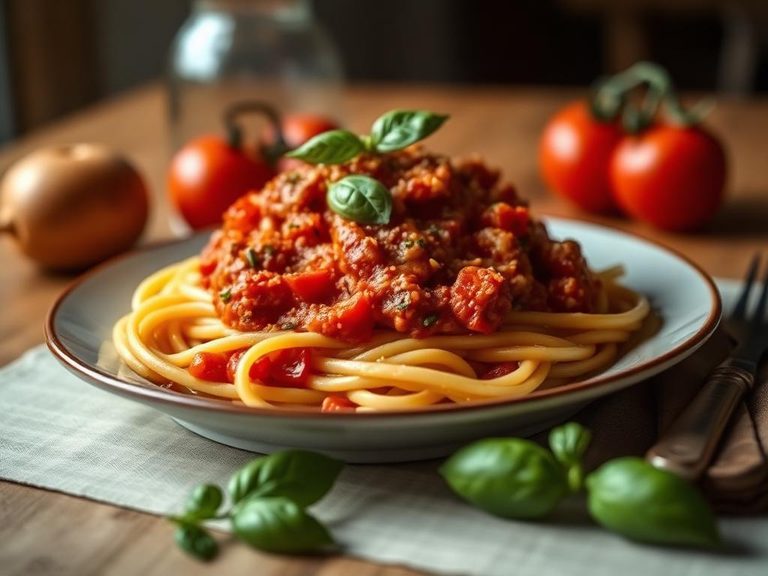
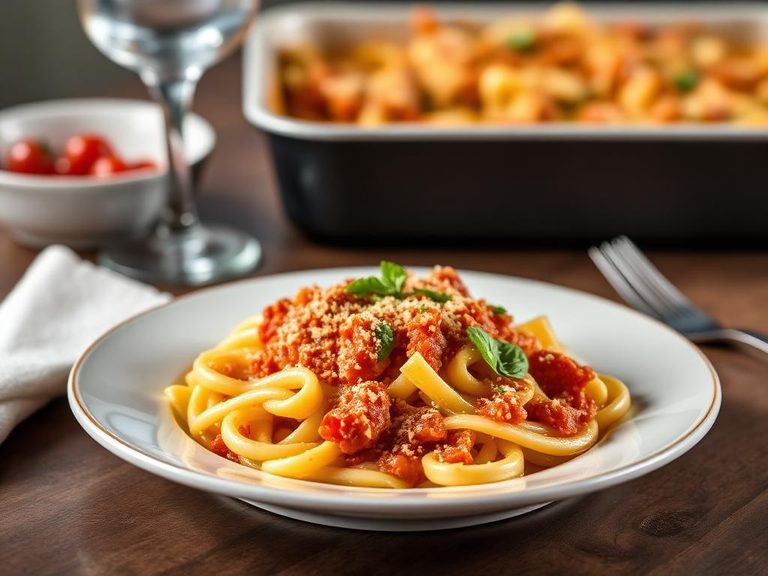
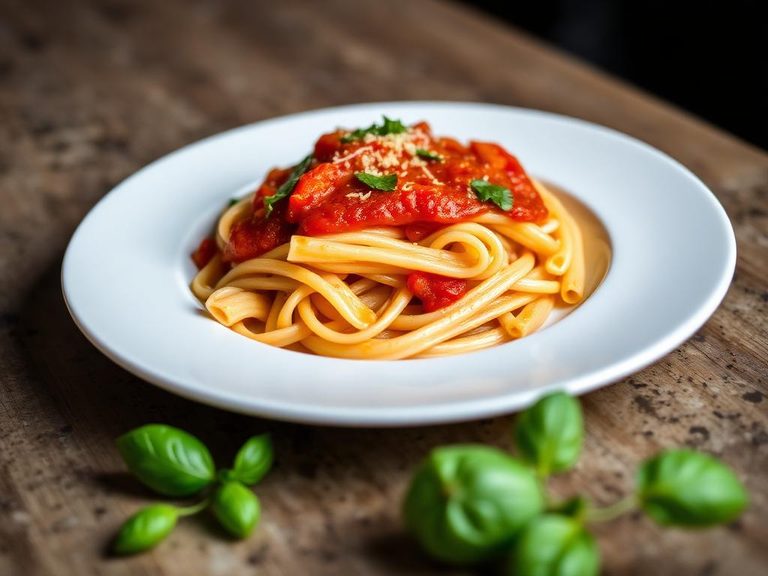
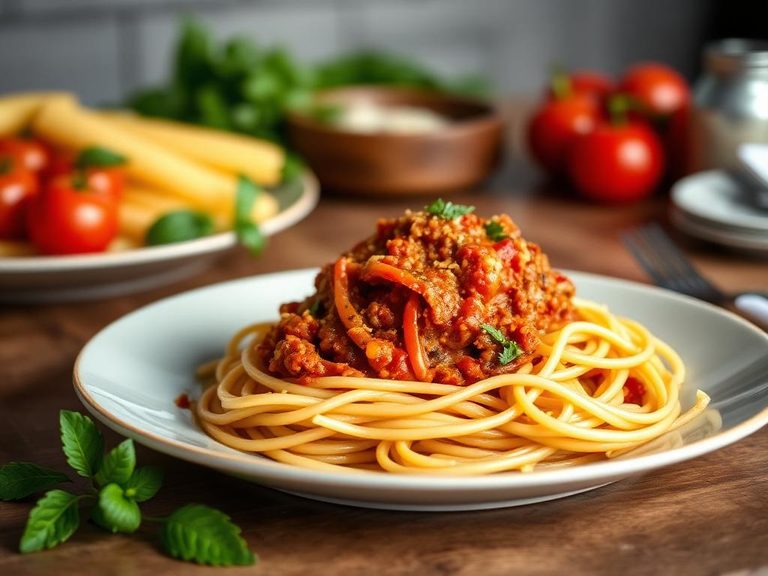
This is a convenient, ready-to-heat meal of whole wheat pasta tossed in a savory tomato-based sauce. The whole grain pasta offers a pleasantly chewy texture and nutty flavor, while the sauce provides a tangy, savory backbone. It's a balanced, fiber-rich option with a moderate calorie count for a quick meal.
Calorie split: 12% protein · 63% carbs · 25% fat
↓ Full nutrition💚 Why it's loved
People love it for its comforting, familiar flavors and the satisfying chew of whole grain pasta, making it a quick, wholesome meal. It's incredibly versatile, serving as a base for added vegetables, proteins, or a sprinkle of cheese.
⚠️ Watch-outs & how to enjoy it better
The sodium content in the sauce can be high, and the natural sugars in tomatoes may cause a mild blood-sugar rise for some. To counteract this, pair it with a side of lean protein (like chicken or beans) and non-starchy vegetables to slow digestion and enhance satiety.
Key benefits
- Provides dietary fiber from whole grain pasta for digestive health.
- Offers a balanced mix of complex carbs, protein, and healthy fats.
- Convenient, pre-cooked meal that requires minimal preparation.
- Lower in glycemic impact than refined pasta due to whole grains.
- Contains lycopene, an antioxidant from the cooked tomato sauce.
🍽️ Popular dishes
🌍 Where it's eaten
💡 Did you know?
The lycopene in the tomato sauce becomes more bioavailable and easier for your body to absorb after being cooked and combined with a little fat, like the olive oil often used in the sauce.
Full nutrition (USDA data · scales with serving)
| Water | 72.5 g |
| Energy | 116 kcal |
| Protein | 3.7 g |
| Total lipid (fat) | 3.4 g |
| Carbohydrate, by difference | 19.1 g |
| Fiber, total dietary | 2.8 g |
| Total Sugars | 3.0 g |
| Calcium, Ca | 19.0 mg |
| Iron, Fe | 1.2 mg |
| Magnesium, Mg | 36.0 mg |
| Phosphorus, P | 80.0 mg |
| Potassium, K | 199 mg |
| Sodium, Na | 340 mg |
| Zinc, Zn | 0.77 mg |
| Copper, Cu | 0.15 mg |
| Selenium, Se | 19.1 ug |
| Vitamin C, total ascorbic acid | 0.90 mg |
| Thiamin | 0.09 mg |
| Riboflavin | 0.08 mg |
| Niacin | 3.4 mg |
| Vitamin B-6 | 0.13 mg |
| Folate, total | 17.0 ug |
| Folic acid | 0.00 ug |
| Folate, food | 17.0 ug |
| Folate, DFE | 17.0 ug |
| Choline, total | 9.8 mg |
| Vitamin B-12 | 0.00 ug |
| Vitamin B-12, added | 0.00 ug |
| Vitamin A, RAE | 15.0 ug |
| Retinol | 0.00 ug |
| Carotene, beta | 185 ug |
| Carotene, alpha | 0.00 ug |
| Cryptoxanthin, beta | 0.00 ug |
| Lycopene | 5982 ug |
| Lutein + zeaxanthin | 137 ug |
| Vitamin E (alpha-tocopherol) | 1.6 mg |
| Vitamin E, added | 0.00 mg |
| Vitamin D (D2 + D3) | 0.00 ug |
| Vitamin K (phylloquinone) | 8.7 ug |
| Alcohol, ethyl | 0.00 g |
| Caffeine | 0.00 mg |
| Theobromine | 0.00 mg |
Fat & fatty acid profile (per 100g)
| Fatty acids, total saturated | 0.45 g |
| SFA 4:0 | 0.00 g |
| SFA 6:0 | 0.00 g |
| SFA 8:0 | 0.00 g |
| SFA 10:0 | 0.00 g |
| SFA 12:0 | 0.00 g |
| SFA 14:0 | 0.00 g |
| SFA 16:0 | 0.33 g |
| SFA 18:0 | 0.08 g |
| Fatty acids, total monounsaturated | 1.0 g |
| MUFA 16:1 | 0.01 g |
| MUFA 18:1 | 1.0 g |
| MUFA 20:1 | 0.02 g |
| MUFA 22:1 | 0.00 g |
| Fatty acids, total polyunsaturated | 1.2 g |
| PUFA 18:2 | 1.1 g |
| PUFA 18:3 | 0.14 g |
| PUFA 18:4 | 0.00 g |
| PUFA 20:4 | 0.00 g |
| PUFA 20:5 n-3 (EPA) | 0.00 g |
| PUFA 22:5 n-3 (DPA) | 0.00 g |
| PUFA 22:6 n-3 (DHA) | 0.00 g |
| Cholesterol | 1.0 mg |
Amino acid profile (per 100g)
Estimated from Restaurant, Italian, chicken parmesan without pasta — USDA does not publish this profile for Pasta.
| Tryptophan | 0.20 g |
| Threonine | 0.66 g |
| Isoleucine | 0.72 g |
| Leucine | 1.3 g |
| Lysine | 1.3 g |
| Methionine | 0.41 g |
| Cystine | 0.20 g |
| Phenylalanine | 1.1 g |
| Tyrosine | 0.53 g |
| Valine | 0.81 g |
| Arginine | 0.93 g |
| Histidine | 0.50 g |
| Alanine | 0.79 g |
| Aspartic acid | 1.4 g |
| Glutamic acid | 2.8 g |
| Glycine | 0.61 g |
| Proline | 1.3 g |
| Serine | 0.70 g |
| Hydroxyproline | 0.04 g |
FAQ
Is this a good source of protein?
At 3.7g per 100g, it provides a modest amount of plant-based protein. For a more substantial protein boost, consider adding beans, lentils, or a lean meat topping.
How does the whole grain pasta differ from regular pasta?
Whole grain pasta is made from flour that includes the entire wheat kernel, providing more fiber, vitamins, and minerals than refined pasta, which uses only the endosperm.
Can I freeze the leftovers?
Yes, it freezes well. Portion it into airtight containers and freeze for up to 3 months. Reheat thoroughly in the microwave or on the stovetop, adding a splash of water if needed.
Nutrient density (calculated · NRF9.3)
Nutrient Rich Foods index: beneficial nutrients (protein, fiber, vitamins, minerals) minus saturated fat, added sugar & sodium, per 100 kcal.
NRF9.3 index — Fulgoni, Keast & Drewnowski, 2009. Computed from USDA nutrients.
Weight-loss friendliness (composite index)
Energy density 1.16 kcal/g · 13% calories from protein · 2.8 g fiber · 3.0 g sugar per 100 g.
Composite of energy density (Rolls et al., 1999), protein & fiber satiety, minus sugar. A calculated heuristic — ranks satiety-per-calorie, not a clinical measure.
Dietary load (calculated from USDA values)
Potential renal acid load. Positive = acid-forming, negative = alkaline-forming.
Sodium-to-potassium ratio: 1.71 (lower is better — aim for ≤ 1)
Sodium:potassium per WHO potassium guidance. Computed from USDA nutrients.