

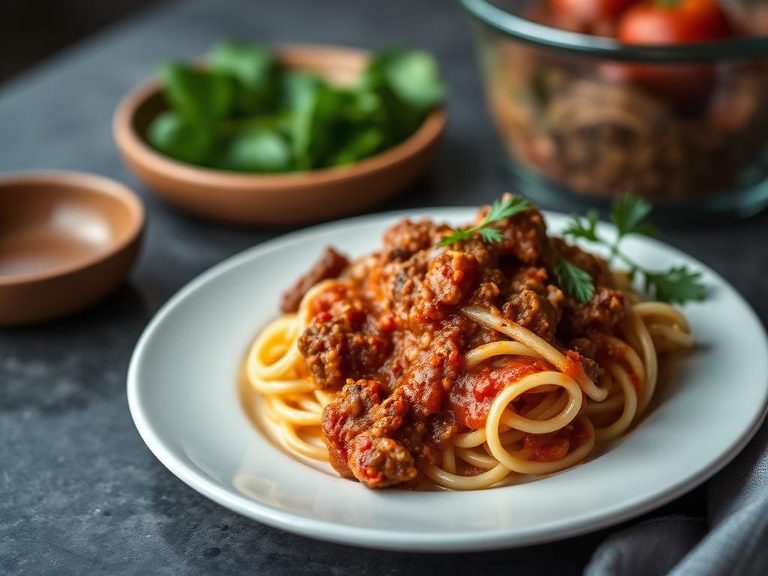
Pasta, whole grain, with tomato-based sauce and poultry, ready-to-heat
Common food

Photo: Wikipedia
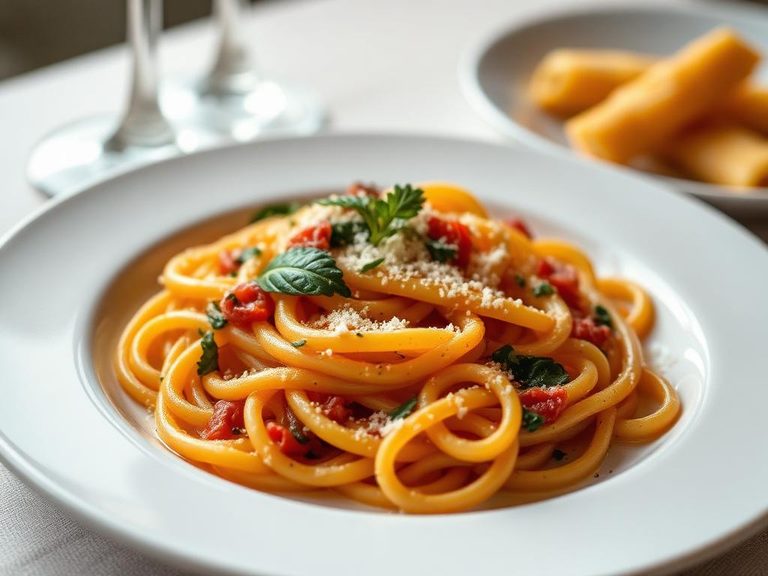
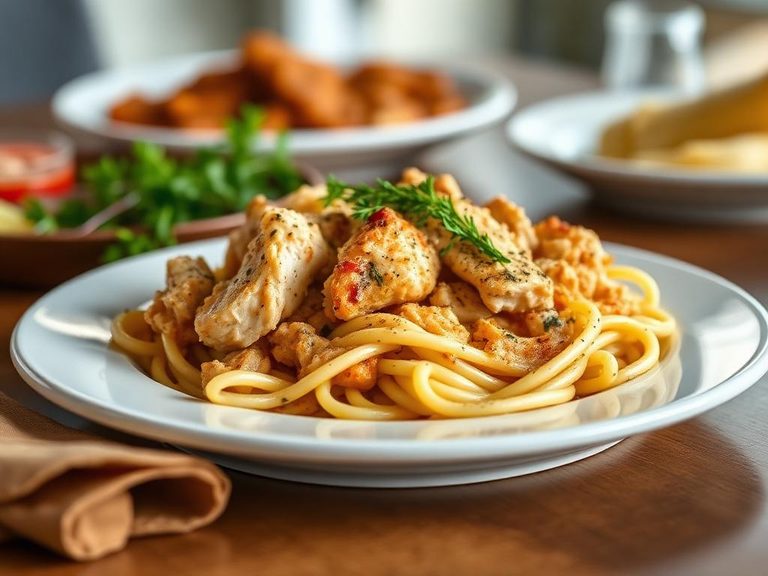
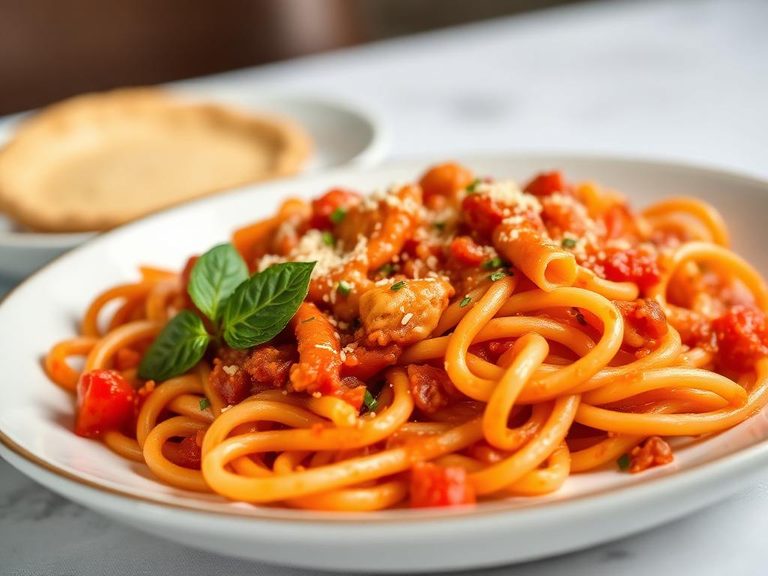
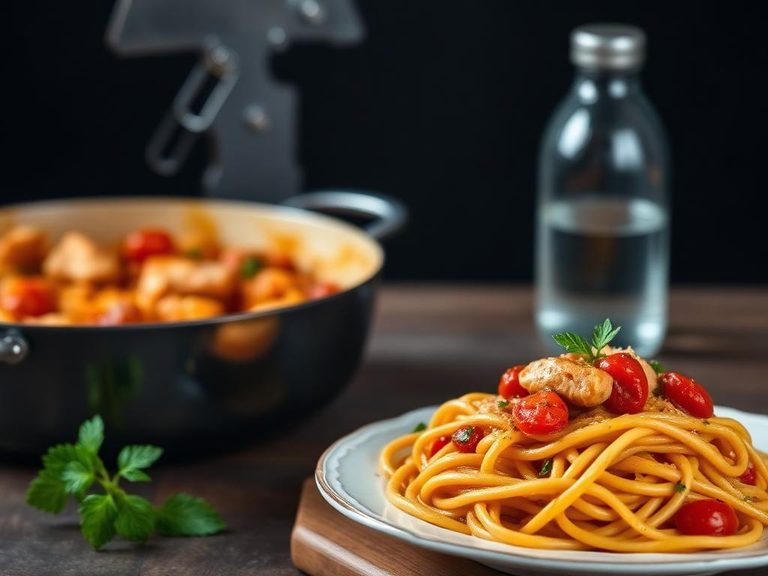
This is a comforting, ready-to-heat meal of whole grain pasta tossed in a savory tomato-based sauce with tender pieces of poultry. The whole wheat pasta offers a pleasantly chewy texture and nutty flavor, while the sauce provides a tangy, savory backdrop. It's a balanced, fiber-rich option with a solid protein punch for a quick meal.
Calorie split: 18% protein · 55% carbs · 27% fat
↓ Full nutrition💚 Why it's loved
People love this dish for its familiar, hearty comfort-food appeal and the satisfying combination of chewy pasta, savory sauce, and protein. It's a versatile base that can be easily customized with extra vegetables or spices.
⚠️ Watch-outs & how to enjoy it better
The convenience format may contain higher sodium than homemade versions, which can be a concern for those monitoring blood pressure. The tomato sauce and refined carbohydrates can also cause blood-sugar spikes in some individuals. To counteract this, pair it with a side salad or extra vegetables to add volume and fiber, and be mindful of portion size.
Key benefits
- Good source of plant-based fiber from whole grain pasta
- Provides lean protein from poultry
- Relatively low in fat for a complete meal
- Convenient ready-to-heat format saves time
- Contains less than 3g of sugar per serving
🍽️ Popular dishes
🌍 Where it's eaten
💡 Did you know?
The process of making pasta 'al dente'—firm to the bite—not only improves texture but also results in a lower glycemic index compared to overcooked pasta.
Full nutrition (USDA data · scales with serving)
| Water | 70.5 g |
| Energy | 127 kcal |
| Protein | 6.0 g |
| Total lipid (fat) | 3.9 g |
| Carbohydrate, by difference | 18.3 g |
| Fiber, total dietary | 2.7 g |
| Total Sugars | 2.5 g |
| Calcium, Ca | 19.0 mg |
| Iron, Fe | 1.3 mg |
| Magnesium, Mg | 37.0 mg |
| Phosphorus, P | 100 mg |
| Potassium, K | 197 mg |
| Sodium, Na | 335 mg |
| Zinc, Zn | 0.96 mg |
| Copper, Cu | 0.15 mg |
| Selenium, Se | 21.2 ug |
| Vitamin C, total ascorbic acid | 0.80 mg |
| Thiamin | 0.10 mg |
| Riboflavin | 0.09 mg |
| Niacin | 3.9 mg |
| Vitamin B-6 | 0.15 mg |
| Folate, total | 16.0 ug |
| Folic acid | 0.00 ug |
| Folate, food | 16.0 ug |
| Folate, DFE | 16.0 ug |
| Choline, total | 14.6 mg |
| Vitamin B-12 | 0.10 ug |
| Vitamin B-12, added | 0.00 ug |
| Vitamin A, RAE | 14.0 ug |
| Retinol | 2.0 ug |
| Carotene, beta | 150 ug |
| Carotene, alpha | 0.00 ug |
| Cryptoxanthin, beta | 0.00 ug |
| Lycopene | 4860 ug |
| Lutein + zeaxanthin | 120 ug |
| Vitamin E (alpha-tocopherol) | 1.4 mg |
| Vitamin E, added | 0.00 mg |
| Vitamin D (D2 + D3) | 0.00 ug |
| Vitamin K (phylloquinone) | 7.4 ug |
| Alcohol, ethyl | 0.00 g |
| Caffeine | 0.00 mg |
| Theobromine | 0.00 mg |
Fat & fatty acid profile (per 100g)
| Fatty acids, total saturated | 0.60 g |
| SFA 4:0 | 0.00 g |
| SFA 6:0 | 0.00 g |
| SFA 8:0 | 0.00 g |
| SFA 10:0 | 0.00 g |
| SFA 12:0 | 0.00 g |
| SFA 14:0 | 0.01 g |
| SFA 16:0 | 0.44 g |
| SFA 18:0 | 0.12 g |
| Fatty acids, total monounsaturated | 1.2 g |
| MUFA 16:1 | 0.04 g |
| MUFA 18:1 | 1.2 g |
| MUFA 20:1 | 0.02 g |
| MUFA 22:1 | 0.00 g |
| Fatty acids, total polyunsaturated | 1.4 g |
| PUFA 18:2 | 1.2 g |
| PUFA 18:3 | 0.14 g |
| PUFA 18:4 | 0.00 g |
| PUFA 20:4 | 0.01 g |
| PUFA 20:5 n-3 (EPA) | 0.00 g |
| PUFA 22:5 n-3 (DPA) | 0.00 g |
| PUFA 22:6 n-3 (DHA) | 0.00 g |
| Cholesterol | 9.0 mg |
Amino acid profile (per 100g)
Estimated from Restaurant, Italian, chicken parmesan without pasta — USDA does not publish this profile for Pasta.
| Tryptophan | 0.20 g |
| Threonine | 0.66 g |
| Isoleucine | 0.72 g |
| Leucine | 1.3 g |
| Lysine | 1.3 g |
| Methionine | 0.41 g |
| Cystine | 0.20 g |
| Phenylalanine | 1.1 g |
| Tyrosine | 0.53 g |
| Valine | 0.81 g |
| Arginine | 0.93 g |
| Histidine | 0.50 g |
| Alanine | 0.79 g |
| Aspartic acid | 1.4 g |
| Glutamic acid | 2.8 g |
| Glycine | 0.61 g |
| Proline | 1.3 g |
| Serine | 0.70 g |
| Hydroxyproline | 0.04 g |
FAQ
Is whole grain pasta significantly healthier than regular pasta?
Yes, whole grain pasta retains the bran and germ, providing more fiber, vitamins, and minerals than refined pasta. This can aid digestion and help you feel fuller longer.
Can I improve the nutritional value of this ready meal?
Absolutely. Stir in a handful of fresh spinach, some frozen peas, or top with a sprinkle of Parmesan cheese to add more nutrients, fiber, and flavor without much extra effort.
Is this suitable for a low-carb diet?
Not typically. With over 18g of carbohydrates per 100g, this is a carbohydrate-focused meal. Those on strict low-carb diets would likely need to choose a different option.
Nutrient density (calculated · NRF9.3)
Nutrient Rich Foods index: beneficial nutrients (protein, fiber, vitamins, minerals) minus saturated fat, added sugar & sodium, per 100 kcal.
NRF9.3 index — Fulgoni, Keast & Drewnowski, 2009. Computed from USDA nutrients.
Weight-loss friendliness (composite index)
Energy density 1.27 kcal/g · 19% calories from protein · 2.7 g fiber · 2.5 g sugar per 100 g.
Composite of energy density (Rolls et al., 1999), protein & fiber satiety, minus sugar. A calculated heuristic — ranks satiety-per-calorie, not a clinical measure.
Dietary load (calculated from USDA values)
Potential renal acid load. Positive = acid-forming, negative = alkaline-forming.
Sodium-to-potassium ratio: 1.70 (lower is better — aim for ≤ 1)
Sodium:potassium per WHO potassium guidance. Computed from USDA nutrients.