

Pasta, whole grain, with tomato-based sauce and meat, ready-to-heat
Common food

Photo: Wikipedia
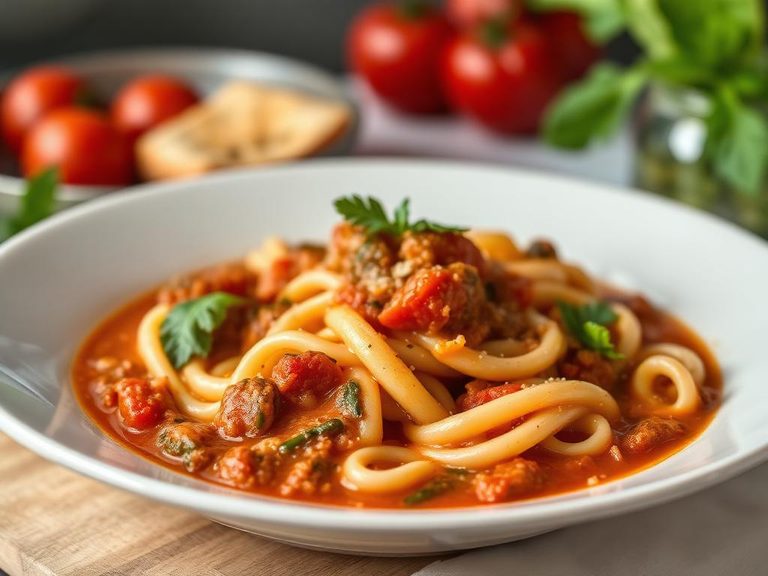
This is a hearty, ready-to-heat meal of whole grain pasta tossed in a savory tomato-based sauce with ground meat. The whole wheat pasta offers a pleasantly chewy texture and nutty flavor, while the sauce provides a rich, savory, and slightly tangy taste. Nutritionally, it's a balanced option with a good source of fiber and protein for a satisfying, lower-calorie meal.
Calorie split: 17% protein · 53% carbs · 31% fat
↓ Full nutrition💚 Why it's loved
People love it for the comforting, familiar combination of savory meat sauce and hearty pasta, offering a quick and satisfying meal that feels homemade. It's a versatile base that can be easily customized with extra vegetables or spices.
⚠️ Watch-outs & how to enjoy it better
The convenience may come with higher sodium content typical of prepared foods, and the tomato sauce can be acidic for some. For those monitoring blood sugar, the carbohydrate content is notable. To counteract, pair with a side salad or steamed vegetables to add volume and nutrients, and be mindful of portion sizes.
Key benefits
- Good source of dietary fiber from whole grain pasta
- Provides protein from the meat component
- Convenient, ready-to-heat meal solution
- Lower in calories than many creamy pasta dishes
- Contains lycopene from the tomato-based sauce
🍽️ Popular dishes
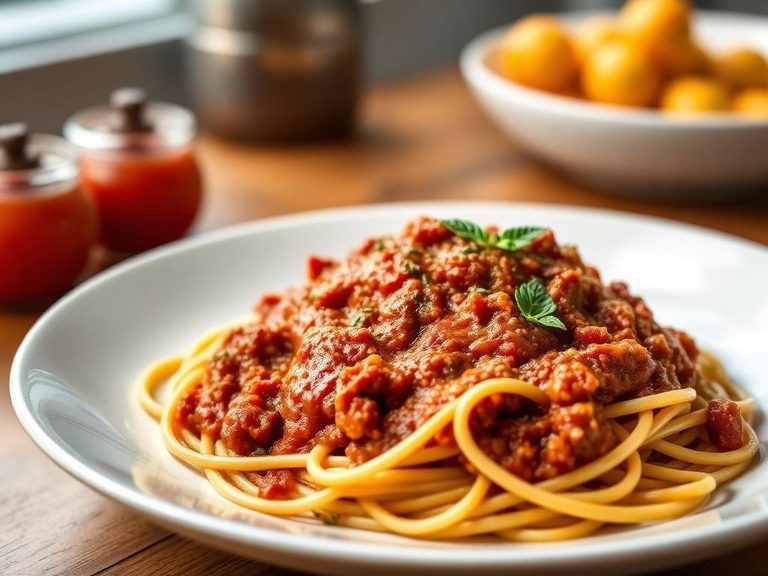
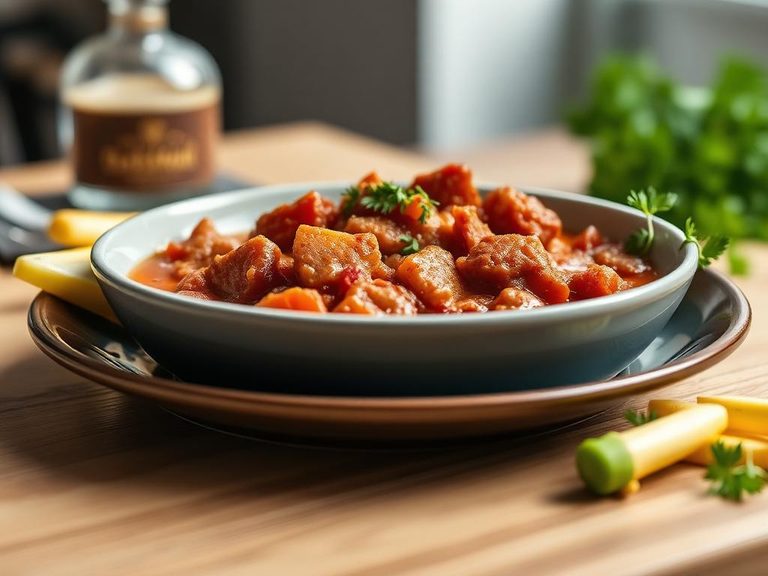
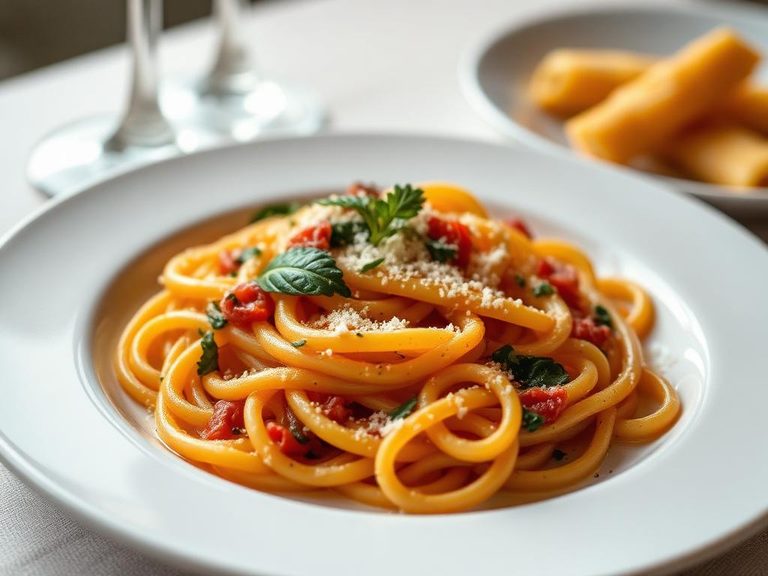

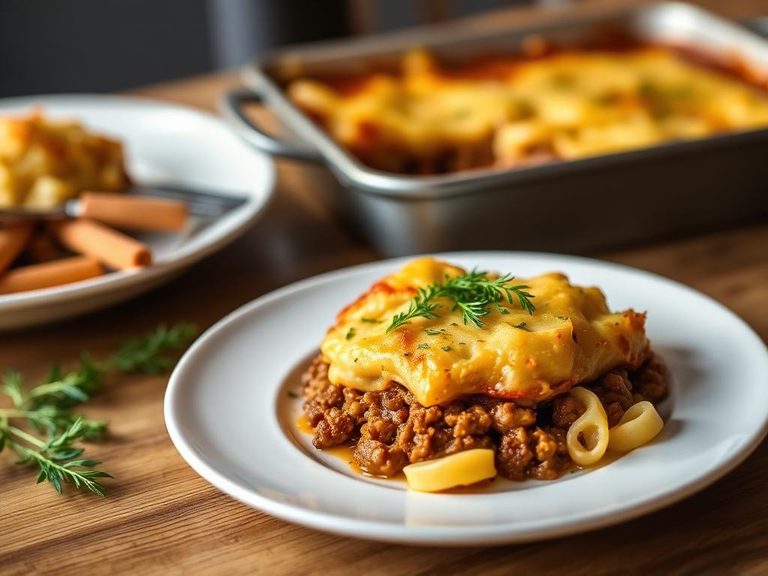
🌍 Where it's eaten
💡 Did you know?
The combination of tomatoes and pasta, now a global staple, is a relatively modern Italian invention; tomatoes were only widely adopted in Italian cooking in the 18th century after initially being grown as ornamental plants.
Full nutrition (USDA data · scales with serving)
| Water | 69.8 g |
| Energy | 134 kcal |
| Protein | 5.8 g |
| Total lipid (fat) | 4.7 g |
| Carbohydrate, by difference | 18.3 g |
| Fiber, total dietary | 2.7 g |
| Total Sugars | 2.5 g |
| Calcium, Ca | 19.0 mg |
| Iron, Fe | 1.4 mg |
| Magnesium, Mg | 36.0 mg |
| Phosphorus, P | 94.0 mg |
| Potassium, K | 197 mg |
| Sodium, Na | 336 mg |
| Zinc, Zn | 1.3 mg |
| Copper, Cu | 0.15 mg |
| Selenium, Se | 20.8 ug |
| Vitamin C, total ascorbic acid | 0.80 mg |
| Thiamin | 0.09 mg |
| Riboflavin | 0.09 mg |
| Niacin | 3.5 mg |
| Vitamin B-6 | 0.15 mg |
| Folate, total | 16.0 ug |
| Folic acid | 0.00 ug |
| Folate, food | 16.0 ug |
| Folate, DFE | 16.0 ug |
| Choline, total | 15.6 mg |
| Vitamin B-12 | 0.24 ug |
| Vitamin B-12, added | 0.00 ug |
| Vitamin A, RAE | 13.0 ug |
| Retinol | 0.00 ug |
| Carotene, beta | 150 ug |
| Carotene, alpha | 0.00 ug |
| Cryptoxanthin, beta | 0.00 ug |
| Lycopene | 4860 ug |
| Lutein + zeaxanthin | 120 ug |
| Vitamin E (alpha-tocopherol) | 1.4 mg |
| Vitamin E, added | 0.00 mg |
| Vitamin D (D2 + D3) | 0.00 ug |
| Vitamin K (phylloquinone) | 7.6 ug |
| Alcohol, ethyl | 0.00 g |
| Caffeine | 0.00 mg |
| Theobromine | 0.00 mg |
Fat & fatty acid profile (per 100g)
| Fatty acids, total saturated | 1.0 g |
| SFA 4:0 | 0.00 g |
| SFA 6:0 | 0.00 g |
| SFA 8:0 | 0.00 g |
| SFA 10:0 | 0.00 g |
| SFA 12:0 | 0.00 g |
| SFA 14:0 | 0.05 g |
| SFA 16:0 | 0.64 g |
| SFA 18:0 | 0.25 g |
| Fatty acids, total monounsaturated | 1.7 g |
| MUFA 16:1 | 0.06 g |
| MUFA 18:1 | 1.5 g |
| MUFA 20:1 | 0.02 g |
| MUFA 22:1 | 0.00 g |
| Fatty acids, total polyunsaturated | 1.2 g |
| PUFA 18:2 | 1.1 g |
| PUFA 18:3 | 0.13 g |
| PUFA 18:4 | 0.00 g |
| PUFA 20:4 | 0.00 g |
| PUFA 20:5 n-3 (EPA) | 0.00 g |
| PUFA 22:5 n-3 (DPA) | 0.00 g |
| PUFA 22:6 n-3 (DHA) | 0.00 g |
| Cholesterol | 8.0 mg |
Amino acid profile (per 100g)
Estimated from Restaurant, Italian, chicken parmesan without pasta — USDA does not publish this profile for Pasta.
| Tryptophan | 0.20 g |
| Threonine | 0.66 g |
| Isoleucine | 0.72 g |
| Leucine | 1.3 g |
| Lysine | 1.3 g |
| Methionine | 0.41 g |
| Cystine | 0.20 g |
| Phenylalanine | 1.1 g |
| Tyrosine | 0.53 g |
| Valine | 0.81 g |
| Arginine | 0.93 g |
| Histidine | 0.50 g |
| Alanine | 0.79 g |
| Aspartic acid | 1.4 g |
| Glutamic acid | 2.8 g |
| Glycine | 0.61 g |
| Proline | 1.3 g |
| Serine | 0.70 g |
| Hydroxyproline | 0.04 g |
FAQ
Is whole grain pasta significantly healthier than regular pasta?
Yes, whole grain pasta retains the bran and germ, providing more fiber, B vitamins, and minerals like magnesium and iron compared to refined pasta, which can aid in digestion and provide more sustained energy.
How can I improve the nutritional profile of this ready-to-heat meal?
You can boost its nutrition by stirring in a handful of fresh spinach or other greens while heating, topping it with a sprinkle of Parmesan for extra protein, or serving it with a side of roasted vegetables.
What is the typical sodium content in these products?
Sodium content can vary widely by brand, often ranging from 400mg to over 800mg per serving. Checking the nutrition label is key, especially for those on a low-sodium diet.
Nutrient density (calculated · NRF9.3)
Nutrient Rich Foods index: beneficial nutrients (protein, fiber, vitamins, minerals) minus saturated fat, added sugar & sodium, per 100 kcal.
NRF9.3 index — Fulgoni, Keast & Drewnowski, 2009. Computed from USDA nutrients.
Weight-loss friendliness (composite index)
Energy density 1.34 kcal/g · 17% calories from protein · 2.7 g fiber · 2.5 g sugar per 100 g.
Composite of energy density (Rolls et al., 1999), protein & fiber satiety, minus sugar. A calculated heuristic — ranks satiety-per-calorie, not a clinical measure.
Dietary load (calculated from USDA values)
Potential renal acid load. Positive = acid-forming, negative = alkaline-forming.
Sodium-to-potassium ratio: 1.71 (lower is better — aim for ≤ 1)
Sodium:potassium per WHO potassium guidance. Computed from USDA nutrients.