

Orange juice, 100%, frozen, not reconstituted
Common food

Photo: Wikipedia
This is a concentrated, icy block of pure orange essence, made by freezing fresh-squeezed juice without adding water. It has a smooth, slushy texture when partially thawed and delivers an intensely bright, tangy-sweet citrus punch. Nutritionally, it's a powerhouse of natural sugars and carbohydrates, offering a quick energy boost with virtually no fat.
Calorie split: 6% protein · 92% carbs · 1% fat
↓ Full nutrition💚 Why it's loved
People love it for its vibrant, authentic orange flavor that tastes fresher than shelf-stable juice, and its versatility as a base for smoothies, cocktails, or a quick, refreshing drink. It's a staple in many kitchens for its convenience and ability to capture summer citrus year-round.
⚠️ Watch-outs & how to enjoy it better
The high natural sugar content (nearly 30g per 100g) can cause rapid blood-sugar spikes, making it a cautionary choice for diabetics or those managing insulin resistance. To counteract this, always pair a small portion with a source of protein or healthy fat (like a handful of nuts or yogurt) to slow sugar absorption, and practice strict portion control.
Key benefits
- Excellent source of Vitamin C for immune support
- Provides natural sugars for quick energy
- Contains potassium for fluid balance
- No added sugars or preservatives
- Concentrated form preserves antioxidants
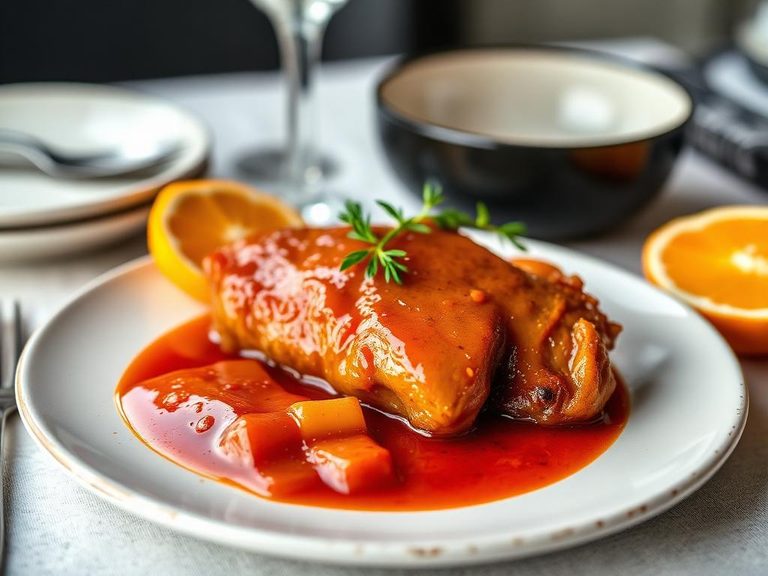
🍽️ Popular dishes

🌍 Where it's eaten
💡 Did you know?
The process of making frozen juice concentrate was popularized in the 1940s by the USDA as a way to efficiently ship Vitamin C to troops during World War II.
Full nutrition (USDA data · scales with serving)
| Water | 60.6 g |
| Energy | 148 kcal |
| Protein | 2.4 g |
| Total lipid (fat) | 0.25 g |
| Carbohydrate, by difference | 35.2 g |
| Fiber, total dietary | 1.0 g |
| Total Sugars | 29.7 g |
| Calcium, Ca | 38.0 mg |
| Iron, Fe | 0.33 mg |
| Magnesium, Mg | 35.0 mg |
| Phosphorus, P | 61.0 mg |
| Potassium, K | 629 mg |
| Sodium, Na | 7.0 mg |
| Zinc, Zn | 0.16 mg |
| Copper, Cu | 0.06 mg |
| Selenium, Se | 0.40 ug |
| Vitamin C, total ascorbic acid | 145 mg |
| Thiamin | 0.28 mg |
| Riboflavin | 0.17 mg |
| Niacin | 1.1 mg |
| Vitamin B-6 | 0.26 mg |
| Folate, total | 77.0 ug |
| Folic acid | 0.00 ug |
| Folate, food | 77.0 ug |
| Folate, DFE | 77.0 ug |
| Choline, total | 20.0 mg |
| Vitamin B-12 | 0.00 ug |
| Vitamin B-12, added | 0.00 ug |
| Vitamin A, RAE | 13.0 ug |
| Retinol | 0.00 ug |
| Carotene, beta | 53.0 ug |
| Carotene, alpha | 19.0 ug |
| Cryptoxanthin, beta | 191 ug |
| Lycopene | 1.0 ug |
| Lutein + zeaxanthin | 333 ug |
| Vitamin E (alpha-tocopherol) | 0.60 mg |
| Vitamin E, added | 0.00 mg |
| Vitamin D (D2 + D3) | 0.00 ug |
| Vitamin K (phylloquinone) | 0.40 ug |
| Alcohol, ethyl | 0.00 g |
| Caffeine | 0.00 mg |
| Theobromine | 0.00 mg |
Fat & fatty acid profile (per 100g)
| Fatty acids, total saturated | 0.06 g |
| SFA 4:0 | 0.00 g |
| SFA 6:0 | 0.00 g |
| SFA 8:0 | 0.00 g |
| SFA 10:0 | 0.00 g |
| SFA 12:0 | 0.00 g |
| SFA 14:0 | 0.00 g |
| SFA 16:0 | 0.04 g |
| SFA 18:0 | 0.01 g |
| Fatty acids, total monounsaturated | 0.05 g |
| MUFA 16:1 | 0.01 g |
| MUFA 18:1 | 0.04 g |
| MUFA 20:1 | 0.00 g |
| MUFA 22:1 | 0.00 g |
| Fatty acids, total polyunsaturated | 0.06 g |
| PUFA 18:2 | 0.05 g |
| PUFA 18:3 | 0.02 g |
| PUFA 18:4 | 0.00 g |
| PUFA 20:4 | 0.00 g |
| PUFA 20:5 n-3 (EPA) | 0.00 g |
| PUFA 22:5 n-3 (DPA) | 0.00 g |
| PUFA 22:6 n-3 (DHA) | 0.00 g |
| Cholesterol | 0.00 mg |
Amino acid profile (per 100g)
Estimated from Beverages, Orange drink, breakfast type, with juice and pulp, frozen concentrate — USDA does not publish this profile for Orange juice.
| Tryptophan | 0.00 g |
| Threonine | 0.00 g |
| Isoleucine | 0.00 g |
| Leucine | 0.01 g |
| Lysine | 0.01 g |
| Methionine | 0.00 g |
| Cystine | 0.00 g |
| Phenylalanine | 0.01 g |
| Tyrosine | 0.00 g |
| Valine | 0.01 g |
| Arginine | 0.03 g |
| Histidine | 0.00 g |
| Alanine | 0.01 g |
| Aspartic acid | 0.04 g |
| Glutamic acid | 0.02 g |
| Glycine | 0.01 g |
| Proline | 0.02 g |
| Serine | 0.01 g |
FAQ
Is frozen orange juice as nutritious as fresh?
Yes, it can be equally or even more nutritious. Flash-freezing shortly after juicing locks in vitamins and antioxidants that can degrade in fresh juice over time. The key is that it's 100% juice with no added sugars.
How do I use the frozen block?
You can thaw it in the refrigerator, run warm water over the container, or partially thaw it for a slushy consistency. It's ready to drink, or you can blend it directly into smoothies or use it in cooking and baking.
Why does it taste different from carton juice?
Frozen concentrate is typically made from juice that has been pasteurized and then reduced in volume by evaporating water. This concentration process can slightly alter the flavor profile, often making it taste more 'cooked' or intensely sweet compared to some not-from-concentrate chilled juices.
Nutrient density (calculated · NRF9.3)
Nutrient Rich Foods index: beneficial nutrients (protein, fiber, vitamins, minerals) minus saturated fat, added sugar & sodium, per 100 kcal.
NRF9.3 index — Fulgoni, Keast & Drewnowski, 2009. Computed from USDA nutrients.
Weight-loss friendliness (composite index)
Energy density 1.48 kcal/g · 6% calories from protein · 1.0 g fiber · 29.7 g sugar per 100 g.
Composite of energy density (Rolls et al., 1999), protein & fiber satiety, minus sugar. A calculated heuristic — ranks satiety-per-calorie, not a clinical measure.
Dietary load (calculated from USDA values)
Potential renal acid load. Positive = acid-forming, negative = alkaline-forming.
Sodium-to-potassium ratio: 0.01 (lower is better — aim for ≤ 1)
Sodium:potassium per WHO potassium guidance. Computed from USDA nutrients.