

Orange juice, 100%, with calcium added, frozen, reconstituted
Common food

Photo: Wikipedia
This is a vibrant, chilled beverage made from 100% orange juice that has been flash-frozen and reconstituted, delivering a bright, tangy-sweet flavor and a smooth, pulp-free texture. It's fortified with calcium, adding a nutritional boost to its classic citrus profile. A standard 100g serving provides a quick source of energy from natural sugars and a notable dose of the mineral essential for bone health.
Calorie split: 6% protein · 92% carbs · 1% fat
↓ Full nutrition💚 Why it's loved
People love its refreshing, authentic citrus taste that instantly evokes a sense of morning freshness and vitality. It's a versatile staple, enjoyed on its own, as a base for smoothies, or in cocktails like mimosas.
⚠️ Watch-outs & how to enjoy it better
The high natural sugar content can cause rapid blood-sugar spikes, especially when consumed alone. To mitigate this, pair it with a source of protein or healthy fat (like eggs or nuts) to slow absorption, or dilute it with water or sparkling water. Those monitoring oxalate intake should also note citrus juices can contain moderate levels.
Key benefits
- Excellent source of vitamin C, supporting immune function.
- Fortified with calcium for bone and teeth maintenance.
- Provides natural potassium, important for fluid balance.
- No added sugars, containing only the fruit's natural fructose.
- Convenient way to consume fruit servings year-round.
🍽️ Popular dishes


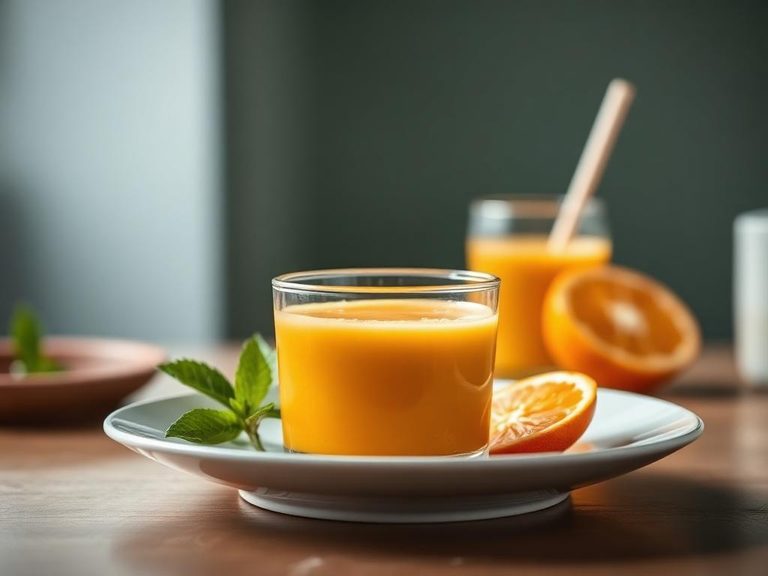
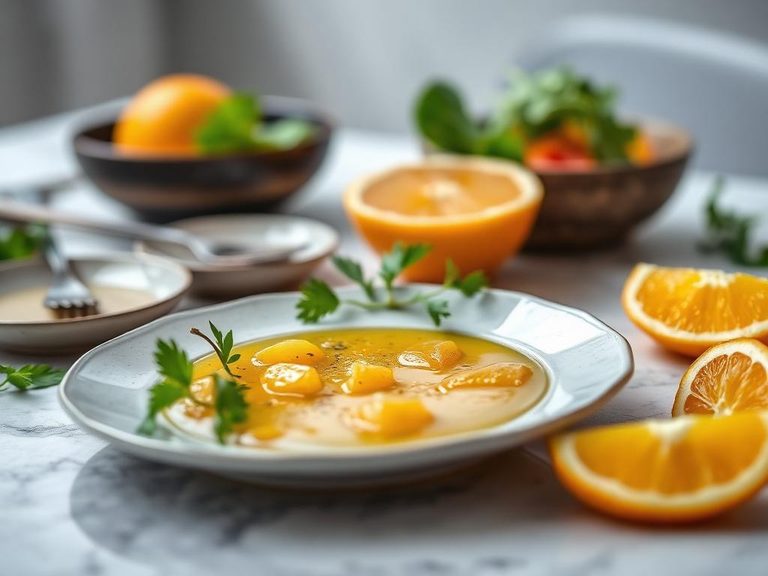
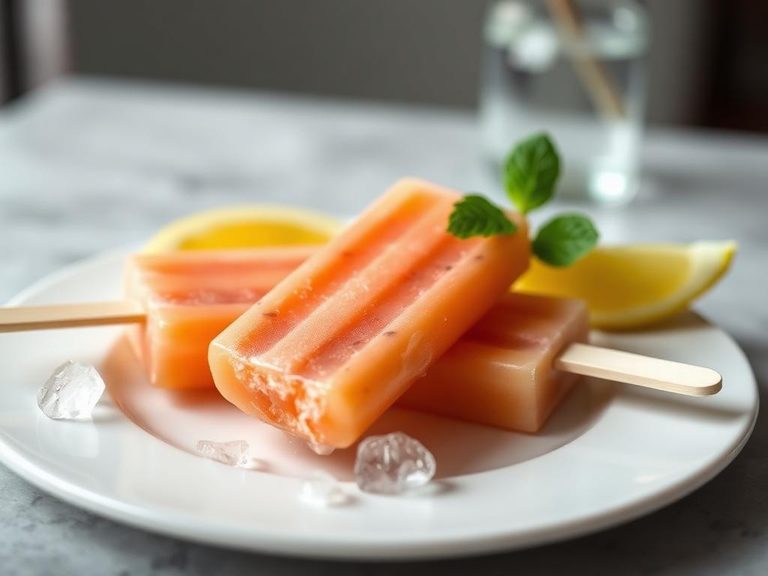
🌍 Where it's eaten
💡 Did you know?
Frozen orange juice concentrate was a major innovation in the 1940s, developed to transport surplus Florida oranges to troops during World War II.
Full nutrition (USDA data · scales with serving)
| Water | 88.7 g |
| Energy | 42.0 kcal |
| Protein | 0.68 g |
| Total lipid (fat) | 0.07 g |
| Carbohydrate, by difference | 9.7 g |
| Fiber, total dietary | 0.30 g |
| Total Sugars | 8.5 g |
| Calcium, Ca | 167 mg |
| Iron, Fe | 0.09 mg |
| Magnesium, Mg | 11.0 mg |
| Phosphorus, P | 89.0 mg |
| Potassium, K | 180 mg |
| Sodium, Na | 5.0 mg |
| Zinc, Zn | 0.05 mg |
| Copper, Cu | 0.02 mg |
| Selenium, Se | 0.10 ug |
| Vitamin C, total ascorbic acid | 41.4 mg |
| Thiamin | 0.08 mg |
| Riboflavin | 0.05 mg |
| Niacin | 0.31 mg |
| Vitamin B-6 | 0.07 mg |
| Folate, total | 22.0 ug |
| Folic acid | 0.00 ug |
| Folate, food | 22.0 ug |
| Folate, DFE | 22.0 ug |
| Choline, total | 5.7 mg |
| Vitamin B-12 | 0.00 ug |
| Vitamin B-12, added | 0.00 ug |
| Vitamin A, RAE | 4.0 ug |
| Retinol | 0.00 ug |
| Carotene, beta | 15.0 ug |
| Carotene, alpha | 5.0 ug |
| Cryptoxanthin, beta | 55.0 ug |
| Lycopene | 0.00 ug |
| Lutein + zeaxanthin | 95.0 ug |
| Vitamin E (alpha-tocopherol) | 0.17 mg |
| Vitamin E, added | 0.00 mg |
| Vitamin D (D2 + D3) | 0.00 ug |
| Vitamin K (phylloquinone) | 0.10 ug |
| Alcohol, ethyl | 0.00 g |
| Caffeine | 0.00 mg |
| Theobromine | 0.00 mg |
Fat & fatty acid profile (per 100g)
| Fatty acids, total saturated | 0.02 g |
| SFA 4:0 | 0.00 g |
| SFA 6:0 | 0.00 g |
| SFA 8:0 | 0.00 g |
| SFA 10:0 | 0.00 g |
| SFA 12:0 | 0.00 g |
| SFA 14:0 | 0.00 g |
| SFA 16:0 | 0.01 g |
| SFA 18:0 | 0.00 g |
| Fatty acids, total monounsaturated | 0.01 g |
| MUFA 16:1 | 0.00 g |
| MUFA 18:1 | 0.01 g |
| MUFA 20:1 | 0.00 g |
| MUFA 22:1 | 0.00 g |
| Fatty acids, total polyunsaturated | 0.02 g |
| PUFA 18:2 | 0.01 g |
| PUFA 18:3 | 0.01 g |
| PUFA 18:4 | 0.00 g |
| PUFA 20:4 | 0.00 g |
| PUFA 20:5 n-3 (EPA) | 0.00 g |
| PUFA 22:5 n-3 (DPA) | 0.00 g |
| PUFA 22:6 n-3 (DHA) | 0.00 g |
| Cholesterol | 0.00 mg |
Amino acid profile (per 100g)
Estimated from Beverages, Orange drink, breakfast type, with juice and pulp, frozen concentrate — USDA does not publish this profile for Orange juice.
| Tryptophan | 0.00 g |
| Threonine | 0.00 g |
| Isoleucine | 0.00 g |
| Leucine | 0.01 g |
| Lysine | 0.01 g |
| Methionine | 0.00 g |
| Cystine | 0.00 g |
| Phenylalanine | 0.01 g |
| Tyrosine | 0.00 g |
| Valine | 0.01 g |
| Arginine | 0.03 g |
| Histidine | 0.00 g |
| Alanine | 0.01 g |
| Aspartic acid | 0.04 g |
| Glutamic acid | 0.02 g |
| Glycine | 0.01 g |
| Proline | 0.02 g |
| Serine | 0.01 g |
FAQ
Is reconstituted orange juice as nutritious as fresh-squeezed?
Generally, yes. The freezing process preserves most nutrients, especially vitamin C. However, some volatile flavor compounds may be lost, and the calcium is an added fortification not naturally present in such high amounts.
Why is calcium added to orange juice?
Calcium is added to enhance the nutritional profile, making the juice a significant source of this bone-building mineral, especially for those who may not consume enough dairy products.
How does the sugar in this juice compare to soda?
While the total sugar grams may be similar, the sugar in 100% orange juice is naturally occurring fructose and glucose, not added high-fructose corn syrup. It also provides vitamins and minerals, unlike soda.
Nutrient density (calculated · NRF9.3)
Nutrient Rich Foods index: beneficial nutrients (protein, fiber, vitamins, minerals) minus saturated fat, added sugar & sodium, per 100 kcal.
NRF9.3 index — Fulgoni, Keast & Drewnowski, 2009. Computed from USDA nutrients.
Weight-loss friendliness (composite index)
Energy density 0.42 kcal/g · 6% calories from protein · 0.3 g fiber · 8.5 g sugar per 100 g.
Composite of energy density (Rolls et al., 1999), protein & fiber satiety, minus sugar. A calculated heuristic — ranks satiety-per-calorie, not a clinical measure.
Dietary load (calculated from USDA values)
Potential renal acid load. Positive = acid-forming, negative = alkaline-forming.
Sodium-to-potassium ratio: 0.03 (lower is better — aim for ≤ 1)
Sodium:potassium per WHO potassium guidance. Computed from USDA nutrients.