

Okra, fresh, cooked, no added fat
Common food

Photo: Wikipedia
Okra, when cooked without added fat, is a tender, slightly grassy vegetable with a unique, subtly mucilaginous texture that softens into a silky, satisfying bite. It is remarkably low in calories and a good source of dietary fiber, making it a nutrient-dense addition to any meal. Its mild flavor allows it to absorb the spices and sauces of the dishes it's cooked in.
Calorie split: 20% protein · 76% carbs · 4% fat
↓ Full nutrition💚 Why it's loved
People love okra for its versatile, mild flavor that readily takes on the character of surrounding ingredients, and for its cultural significance in cuisines from the American South to West Africa and India. Its unique texture, when cooked properly, adds a pleasant, silky body to stews and curries.
⚠️ Watch-outs & how to enjoy it better
The primary dislike is its mucilaginous texture, which some find unpleasantly slimy. To counteract this, cook it quickly at high heat (like sautéing or roasting), add an acidic ingredient like lemon juice or tomatoes, or pair it with acidic foods. Those watching their intake of certain antinutrients like oxalates should be mindful, as okra contains them, but cooking and pairing with calcium-rich foods can help mitigate this.
Key benefits
- Excellent source of dietary fiber (3.4g per 100g)
- Very low in calories (35 kcal per 100g)
- Contains vitamin C and folate
- Good source of plant-based protein (2.07g per 100g)
- Low in fat (0.2g per 100g)
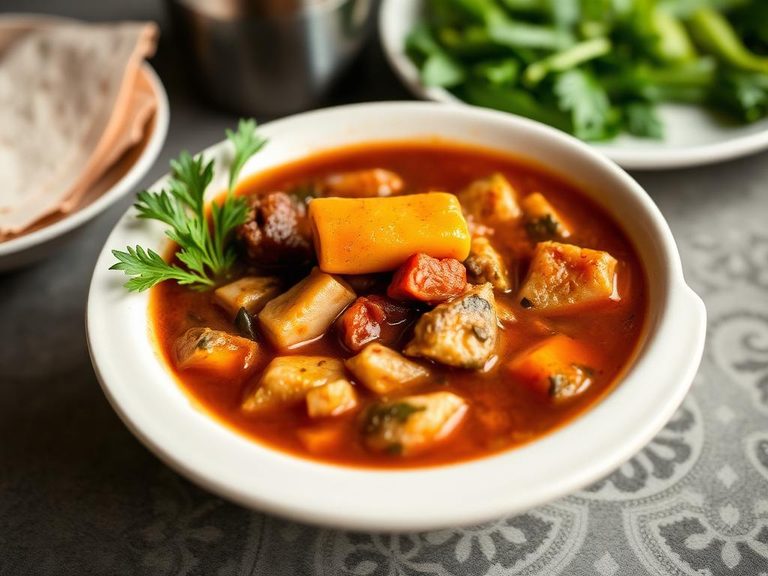
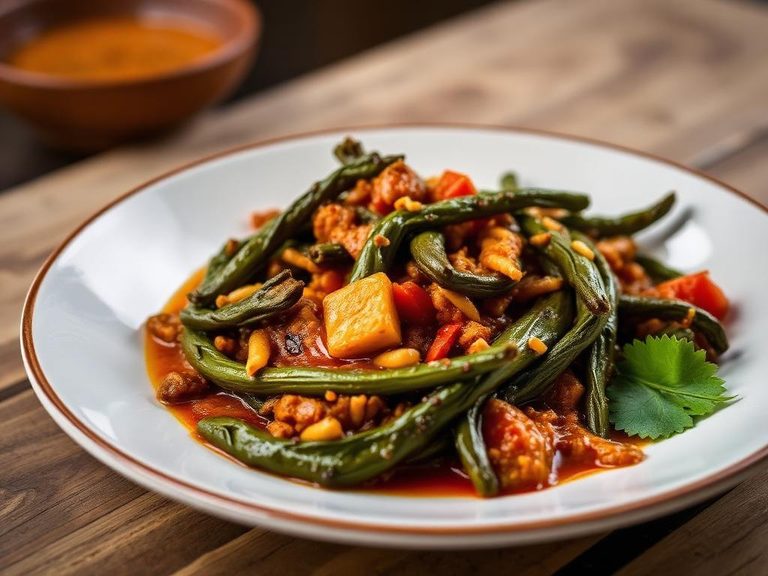
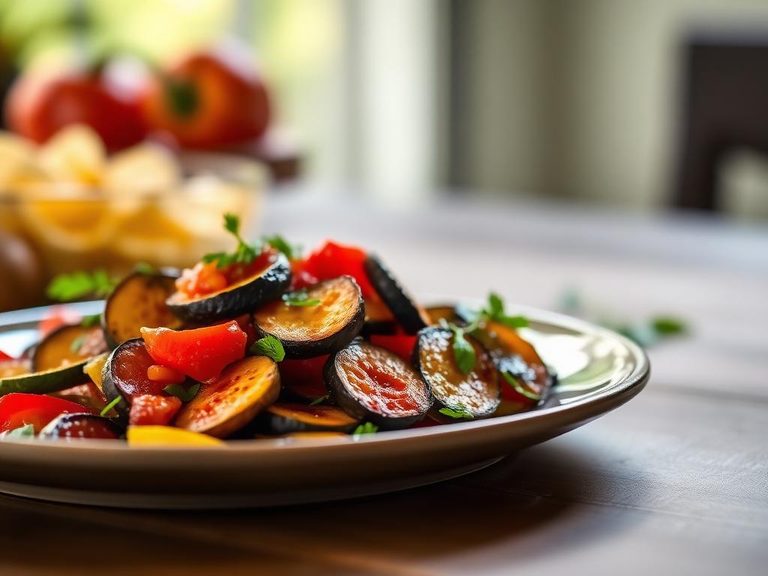
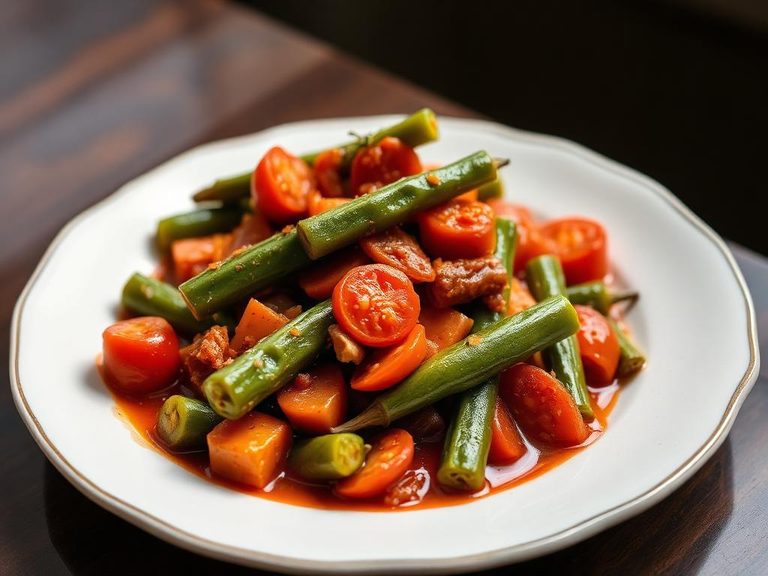
🍽️ Popular dishes


🌍 Where it's eaten
💡 Did you know?
The word 'okra' comes from the Igbo word 'ọkụrụ', meaning 'gumbo', which itself is derived from the Bantu word 'ki ngombo' for the plant.
Full nutrition (USDA data · scales with serving)
| Water | 88.5 g |
| Energy | 35.0 kcal |
| Protein | 2.1 g |
| Total lipid (fat) | 0.20 g |
| Carbohydrate, by difference | 8.0 g |
| Fiber, total dietary | 3.4 g |
| Total Sugars | 1.6 g |
| Calcium, Ca | 88.0 mg |
| Iron, Fe | 0.66 mg |
| Magnesium, Mg | 61.0 mg |
| Phosphorus, P | 65.0 mg |
| Potassium, K | 321 mg |
| Sodium, Na | 132 mg |
| Zinc, Zn | 0.62 mg |
| Copper, Cu | 0.12 mg |
| Selenium, Se | 0.80 ug |
| Vitamin C, total ascorbic acid | 21.0 mg |
| Thiamin | 0.19 mg |
| Riboflavin | 0.06 mg |
| Niacin | 1.0 mg |
| Vitamin B-6 | 0.21 mg |
| Folate, total | 55.0 ug |
| Folic acid | 0.00 ug |
| Folate, food | 55.0 ug |
| Folate, DFE | 55.0 ug |
| Choline, total | 13.2 mg |
| Vitamin B-12 | 0.00 ug |
| Vitamin B-12, added | 0.00 ug |
| Vitamin A, RAE | 37.0 ug |
| Retinol | 0.00 ug |
| Carotene, beta | 424 ug |
| Carotene, alpha | 27.0 ug |
| Cryptoxanthin, beta | 0.00 ug |
| Lycopene | 0.00 ug |
| Lutein + zeaxanthin | 285 ug |
| Vitamin E (alpha-tocopherol) | 0.29 mg |
| Vitamin E, added | 0.00 mg |
| Vitamin D (D2 + D3) | 0.00 ug |
| Vitamin K (phylloquinone) | 33.6 ug |
| Alcohol, ethyl | 0.00 g |
| Caffeine | 0.00 mg |
| Theobromine | 0.00 mg |
Fat & fatty acid profile (per 100g)
| Fatty acids, total saturated | 0.03 g |
| SFA 4:0 | 0.00 g |
| SFA 6:0 | 0.00 g |
| SFA 8:0 | 0.00 g |
| SFA 10:0 | 0.00 g |
| SFA 12:0 | 0.00 g |
| SFA 14:0 | 0.00 g |
| SFA 16:0 | 0.02 g |
| SFA 18:0 | 0.00 g |
| Fatty acids, total monounsaturated | 0.02 g |
| MUFA 16:1 | 0.00 g |
| MUFA 18:1 | 0.02 g |
| MUFA 20:1 | 0.00 g |
| MUFA 22:1 | 0.00 g |
| Fatty acids, total polyunsaturated | 0.03 g |
| PUFA 18:2 | 0.03 g |
| PUFA 18:3 | 0.00 g |
| PUFA 18:4 | 0.00 g |
| PUFA 20:4 | 0.00 g |
| PUFA 20:5 n-3 (EPA) | 0.00 g |
| PUFA 22:5 n-3 (DPA) | 0.00 g |
| PUFA 22:6 n-3 (DHA) | 0.00 g |
| Cholesterol | 0.00 mg |
Amino acid profile (per 100g)
Estimated from Okra, raw — USDA does not publish this profile for Okra.
| Tryptophan | 0.02 g |
| Threonine | 0.07 g |
| Isoleucine | 0.07 g |
| Leucine | 0.10 g |
| Lysine | 0.08 g |
| Methionine | 0.02 g |
| Cystine | 0.02 g |
| Phenylalanine | 0.07 g |
| Tyrosine | 0.09 g |
| Valine | 0.09 g |
| Arginine | 0.08 g |
| Histidine | 0.03 g |
| Alanine | 0.07 g |
| Aspartic acid | 0.14 g |
| Glutamic acid | 0.27 g |
| Glycine | 0.04 g |
| Proline | 0.04 g |
| Serine | 0.04 g |
FAQ
How can I reduce the sliminess of okra?
Cook it quickly at high heat, add an acid like lemon juice or tomatoes, or pair it with acidic foods. Slicing it and letting it sit in vinegar or salt water before cooking can also help.
Is okra good for digestion?
Yes, its high fiber content (3.4g per 100g) supports healthy digestion and can help maintain regular bowel movements.
Can I eat okra raw?
While it's edible raw, it's more commonly cooked. Raw okra can be tough and have a stronger mucilaginous texture.
Is okra a good source of protein?
For a vegetable, yes, it contains a respectable 2.07g of protein per 100g, making it a good plant-based protein source.
Nutrient density (calculated · NRF9.3)
Nutrient Rich Foods index: beneficial nutrients (protein, fiber, vitamins, minerals) minus saturated fat, added sugar & sodium, per 100 kcal.
NRF9.3 index — Fulgoni, Keast & Drewnowski, 2009. Computed from USDA nutrients.
Weight-loss friendliness (composite index)
Energy density 0.35 kcal/g · 24% calories from protein · 3.4 g fiber · 1.6 g sugar per 100 g.
Composite of energy density (Rolls et al., 1999), protein & fiber satiety, minus sugar. A calculated heuristic — ranks satiety-per-calorie, not a clinical measure.
Dietary load (calculated from USDA values)
Potential renal acid load. Positive = acid-forming, negative = alkaline-forming.
Sodium-to-potassium ratio: 0.41 (lower is better — aim for ≤ 1)
Sodium:potassium per WHO potassium guidance. Computed from USDA nutrients.