

Oil, tomatoseed
Whole food · Fats and Oils

Photo: Wikipedia
Tomato seed oil is a rare, golden-hued culinary oil cold-pressed from the seeds of tomatoes, typically as a byproduct of tomato processing. It has a mild, subtly nutty flavor with a light, fruity finish and a smooth, pourable texture. Nutritionally, it is almost pure fat (100g per 100g), providing a concentrated source of calories and lipids.
Calorie split: 0% protein · 0% carbs · 100% fat
↓ Full nutrition💚 Why it's loved
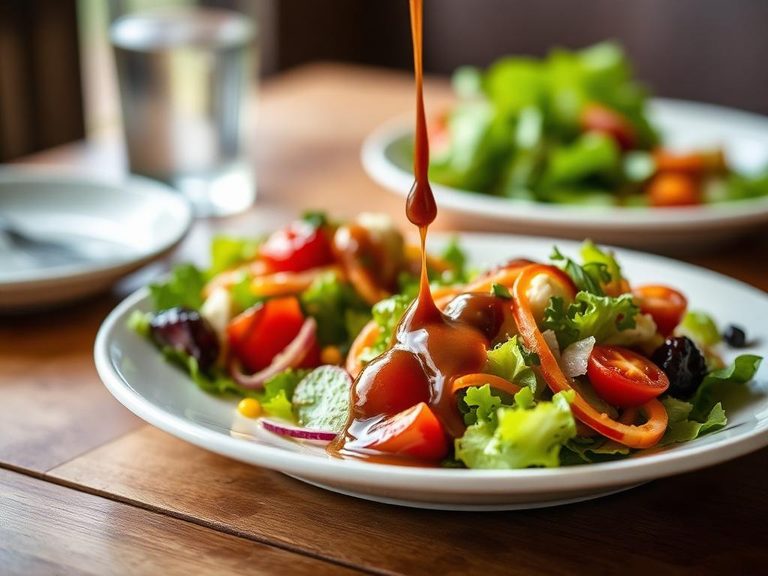
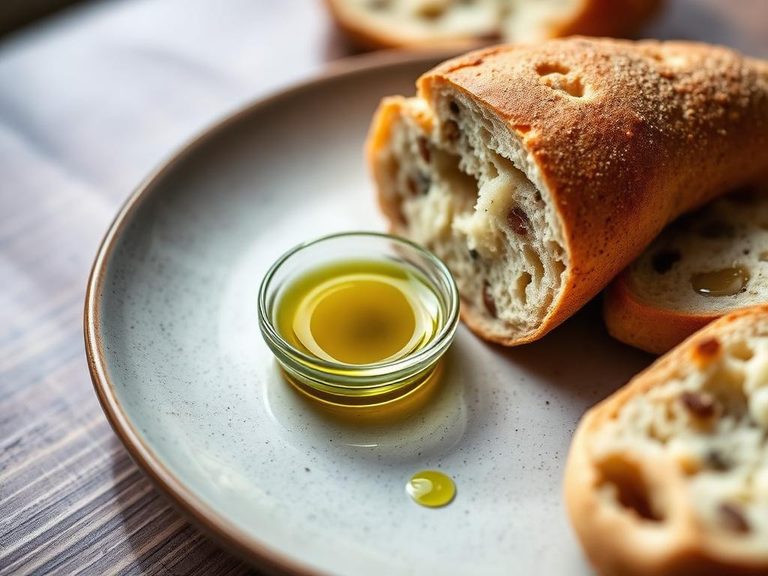
People love it for its delicate, non-greasy mouthfeel and neutral taste that doesn't overpower dishes. It's prized by chefs for its versatility in both cooking and as a finishing oil, adding a subtle richness without dominating flavors.
⚠️ Watch-outs & how to enjoy it better
As a pure fat, it is extremely calorie-dense (884 kcal per 100g), which requires strict portion control for those managing weight. Its high fat content can also exacerbate digestive issues like gallbladder problems or pancreatitis in susceptible individuals. To counteract, use it sparingly—measure by the teaspoon—and always pair it with fiber-rich foods to promote satiety and slow absorption.
Key benefits
- Rich in unsaturated fatty acids, including linoleic acid.
- Contains lycopene, a potent antioxidant, in small amounts.
- Offers a high smoke point suitable for various cooking methods.
- Utilizes a food waste byproduct, promoting sustainability.
🍽️ Popular dishes

🌍 Where it's eaten
💡 Did you know?
Producing just one liter of tomato seed oil requires processing the seeds from approximately 2.5 tons of fresh tomatoes, making it a highly concentrated and resource-intensive product.
Full nutrition (USDA data · scales with serving)
| Water | 0.00 g |
| Energy | 884 kcal |
| Energy | 3699 kj |
| Protein | 0.00 g |
| Total lipid (fat) | 100 g |
| Ash | 0.00 g |
| Carbohydrate, by difference | 0.00 g |
| Fiber, total dietary | 0.00 g |
| Total Sugars | 0.00 g |
| Calcium, Ca | 0.00 mg |
| Iron, Fe | 0.00 mg |
| Magnesium, Mg | 0.00 mg |
| Phosphorus, P | 0.00 mg |
| Potassium, K | 0.00 mg |
| Sodium, Na | 0.00 mg |
| Zinc, Zn | 0.00 mg |
| Selenium, Se | 0.00 ug |
| Vitamin C, total ascorbic acid | 0.00 mg |
| Thiamin | 0.00 mg |
| Riboflavin | 0.00 mg |
| Niacin | 0.00 mg |
| Pantothenic acid | 0.00 mg |
| Vitamin B-6 | 0.00 mg |
| Folate, total | 0.00 ug |
| Folic acid | 0.00 ug |
| Folate, food | 0.00 ug |
| Folate, DFE | 0.00 ug |
| Vitamin B-12 | 0.00 ug |
| Vitamin A, RAE | 0.00 ug |
| Retinol | 0.00 ug |
| Carotene, beta | 0.00 ug |
| Carotene, alpha | 0.00 ug |
| Cryptoxanthin, beta | 0.00 ug |
| Vitamin A, IU | 0.00 iu |
| Lycopene | 0.00 ug |
| Lutein + zeaxanthin | 0.00 ug |
| Vitamin E (alpha-tocopherol) | 3.8 mg |
| Alcohol, ethyl | 0.00 g |
| Caffeine | 0.00 mg |
| Theobromine | 0.00 mg |
Fat & fatty acid profile (per 100g)
| Fatty acids, total saturated | 19.7 g |
| SFA 4:0 | 0.00 g |
| SFA 6:0 | 0.00 g |
| SFA 8:0 | 0.00 g |
| SFA 10:0 | 0.00 g |
| SFA 12:0 | 0.00 g |
| SFA 14:0 | 0.20 g |
| SFA 16:0 | 15.0 g |
| SFA 18:0 | 4.4 g |
| Fatty acids, total monounsaturated | 22.8 g |
| MUFA 16:1 | 0.50 g |
| MUFA 18:1 | 21.9 g |
| MUFA 20:1 | 0.00 g |
| MUFA 22:1 | 0.00 g |
| Fatty acids, total polyunsaturated | 53.1 g |
| PUFA 18:2 | 50.8 g |
| PUFA 18:3 | 2.3 g |
| PUFA 18:4 | 0.00 g |
| PUFA 20:4 | 0.00 g |
| PUFA 20:5 n-3 (EPA) | 0.00 g |
| PUFA 22:5 n-3 (DPA) | 0.00 g |
| PUFA 22:6 n-3 (DHA) | 0.00 g |
| Cholesterol | 0.00 mg |
| Phytosterols | 100 mg |
Amino acid profile (per 100g)
| Tryptophan | 0.00 g |
| Threonine | 0.00 g |
| Isoleucine | 0.00 g |
| Leucine | 0.00 g |
| Lysine | 0.00 g |
| Methionine | 0.00 g |
| Cystine | 0.00 g |
| Phenylalanine | 0.00 g |
| Tyrosine | 0.00 g |
| Valine | 0.00 g |
| Arginine | 0.00 g |
| Histidine | 0.00 g |
| Alanine | 0.00 g |
| Aspartic acid | 0.00 g |
| Glutamic acid | 0.00 g |
| Glycine | 0.00 g |
| Proline | 0.00 g |
| Serine | 0.00 g |
FAQ
How does tomato seed oil differ from olive oil?
Tomato seed oil typically has a milder, nuttier flavor and a slightly higher smoke point than many olive oils. Its fatty acid profile is also distinct, with a different balance of polyunsaturated and monounsaturated fats.
Is tomato seed oil good for high-heat cooking?
Yes, it generally has a high smoke point (around 215°C/420°F), making it suitable for sautéing, roasting, and frying. However, like any oil, it should not be heated past its smoke point to avoid degradation.
Where can I find tomato seed oil?
It is a specialty product often found in gourmet food stores, online retailers, or shops focused on sustainable or upcycled foods. It is less common in mainstream supermarkets.
Nutrient density (calculated · NRF9.3)
Nutrient Rich Foods index: beneficial nutrients (protein, fiber, vitamins, minerals) minus saturated fat, added sugar & sodium, per 100 kcal.
NRF9.3 index — Fulgoni, Keast & Drewnowski, 2009. Computed from USDA nutrients.
Weight-loss friendliness (composite index)
Energy density 8.84 kcal/g · 0% calories from protein · 0.0 g fiber · 0.0 g sugar per 100 g.
Composite of energy density (Rolls et al., 1999), protein & fiber satiety, minus sugar. A calculated heuristic — ranks satiety-per-calorie, not a clinical measure.
Dietary load (calculated from USDA values)
Potential renal acid load. Positive = acid-forming, negative = alkaline-forming.
Sodium:potassium per WHO potassium guidance. Computed from USDA nutrients.